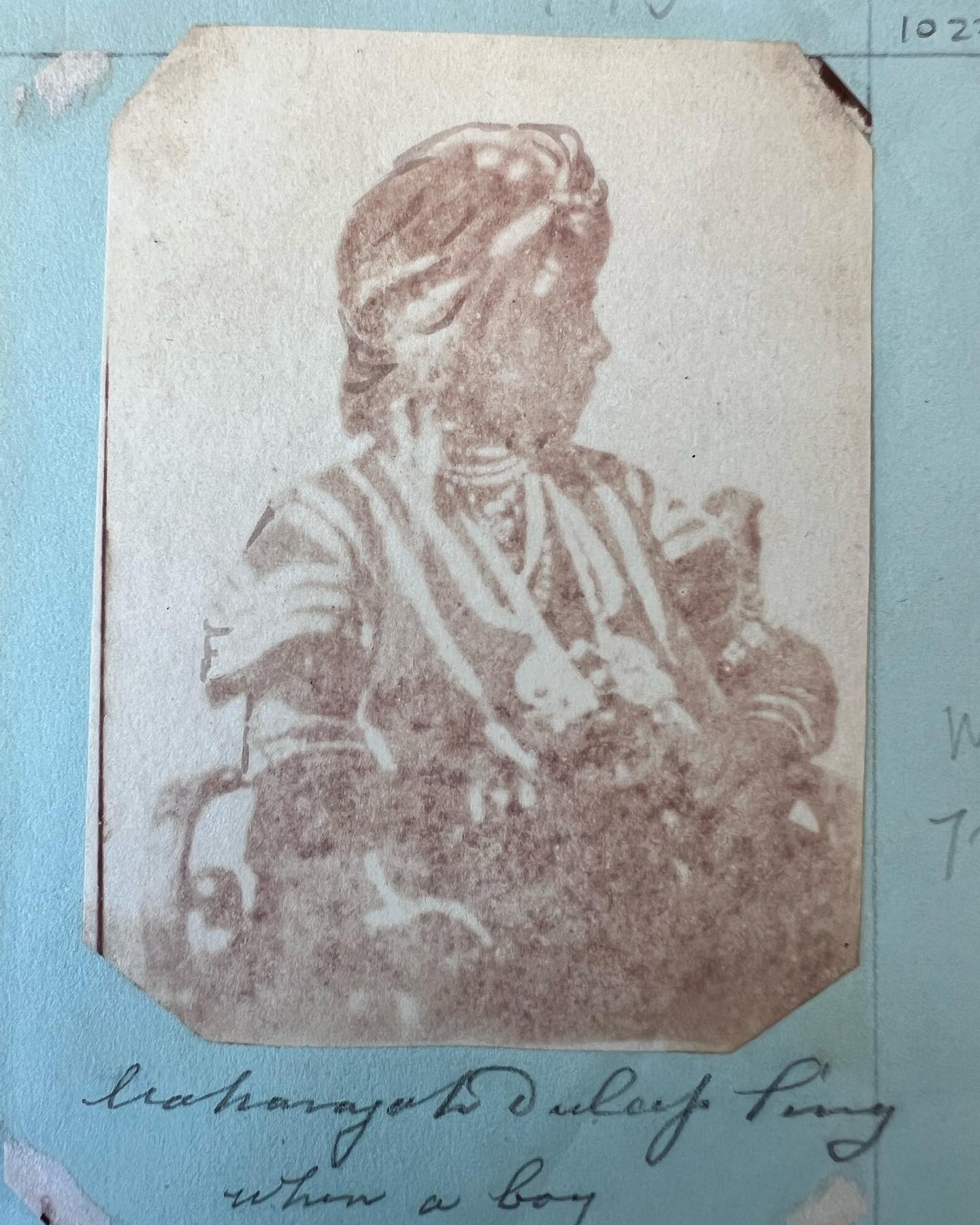
In short
- What it was
- The absorption of the Sikh-ruled kingdom of Lahore into the territories of the East India Company, at the end of the Second Anglo-Sikh War. It closed ten years of upheaval that began with the death of Maharaja Ranjit Singh in 1839, and it was the last major kingdom on the subcontinent that the Company took by war
- When
- 29 March 1849, when the Maharaja signed the terms in the fort at Lahore (most of his council had signed the evening before) and the annexation was proclaimed. The Governor-General ratified the terms on 5 April 1849
- Decided by
- Lord Dalhousie, Governor-General of India, "on my own responsibility", as he wrote the next day. London approved afterwards
- The ruler deposed
- Maharaja Duleep Singh, born in September 1838, ten and a half years old
- The terms
- The Maharaja renounced sovereignty; all state property went to the Company; the Koh-i-Noor diamond was to be surrendered to Queen Victoria; a pension of four to five lakh rupees a year was set aside for him, his relatives and the servants of the state, his own share of it to depend on his obedience
- What followed
- The Punjab was disarmed, governed by a three-man Board of Administration, and remained a British province until it was partitioned between India and Pakistan in 1947
- Why it is still argued over
- Under the treaty of 1846 the British had made themselves the boy's guardians and the masters of his government. Critics then and since have asked how a guardian could lawfully take its ward's kingdom
- How sure we can be
- Of the dates, the treaties, the battles and the terms: Well-established. Of the motives of Lal Singh, Tej Singh, Mulraj and Dalhousie: Contested, and labelled where they come up
Where the kind of evidence matters, we label it, using the categories explained in our editorial standards, and say how sure we can be. Hover over or tap a Punjabi word to see it in both scripts. The poet Shah Muhammad, who lived through these years, is quoted in his own Punjabi; that text, and every Punjabi word on the page, awaits a second reader's review. Where the only evidence is a British record, we say so: first-hand Punjabi sources for this decade are few, a poem, a handful of letters, a proclamation, and they are quoted wherever they survive.
Seven o'clock, the Hall of Audience
The darbar was set for seven in the morning. Henry Elliot, Lord Dalhousie's foreign secretary, went up to the fort at Lahore with the British Resident, Sir Henry Lawrence, escorted by a squadron of the Governor-General's bodyguard; the troops had been made ready, as Elliot put it in his report that day, "against possible tumult". The boy met them outside the gate of the citadel, and they led him to a seat at the end of the Hall of Audience and sat down on either side of him. The hall was full: the Europeans ranged themselves on the right, the Punjabis on the left.
The boy was Duleep Singh, youngest son of Maharaja Ranjit Singh, who had made Lahore the capital of a state reaching from the Sutlej to the Khyber Pass and from Multan to Kashmir. Duleep Singh had been maharaja since he was five. That morning he was ten and a half.
Most of the work had been done the night before. At the Residency, Elliot told the two leading members of the Council of Regency, Raja Tej Singh and Raja Dina Nath, still called the Diwan from his years as the state's finance minister, that the Punjab would be annexed in any case; all they could decide was whether it happened on agreed terms or on none. Dina Nath objected above all to the boy's exile. Elliot assured them they would keep their jagirs and salaries if they signed. They signed, "not without evident sorrow and repugnance on the part of the Dewan", and two more members of the council signed after them. Earlier that evening Henry Lawrence, the Resident, had told Elliot that he regarded himself as president of the council and would not advise it to sign; Elliot answered that no treaty had made him so, and Lawrence undertook only to put no obstacle in the way. Dalhousie's biographer, Lee-Warner, tells this part from Dalhousie's papers.
Now, in the hall, a statement of the Governor-General's reasons was read out in Persian and then translated into Hindustani, "for the comprehension of every one present", as Elliot put it. There was silence for a few minutes. Then Dina Nath spoke. The decision was just, he said, and should be obeyed. But if France, after the defeat of Bonaparte, had been restored to its rightful ruler, though it yielded thirty crores of revenue, it "would be no very extraordinary act of British clemency if the Punjab, which yielded less than three crores, should be restored to the Maharajah. However, let the Governor-General's will be done." Elliot replied "that the time of concession and clemency was gone".
The terms were read in the same two languages. The Maharaja was to give up the sovereignty of the Punjab, for himself and his heirs; all the property of the state; and one named object, a diamond, for the Queen of England. In return he would have a pension, and keep his own share of it only so long as he stayed obedient and lived wherever the Governor-General chose. The agents of the two absent members of the council added their names. Then Tej Singh handed the paper to the boy, who, Elliot wrote, "immediately affixed his signature, by tracing the initials of his name in English letters". The speed with which he took it struck everyone in the room; Elliot thought it possible his advisers had warned him that any hesitation might bring worse terms. Thirty-three years later Duleep Singh answered that: "being then a child, I did not understand what I was signing."
Dalhousie's proclamation was read aloud in the languages of the court. No sardar wore arms, and the jewels and bright robes of the court had been put away. Elliot saw no sorrow on any face but Dina Nath's, and no gladness either. As he left the palace the British colours went up over the citadel under a royal salute from the Company's guns, "sounding the knell of the Khalsa Raj!" Commenting on the report in 1860, John Login, the Scottish surgeon who became the boy's guardian, wrote that it did more credit to the council, "whose personal interests were separately worked upon", than to "the British official, who describes the scene with so much undignified exultation".
Some of the people in that hall knew there was something odd about it. For more than two years the British had been, in their own Governor-General's word, the boy's "guardian", and by treaty their Resident held full authority over every department of his government. The war that had just ended had been fought, officially, against rebels who defied that government. Yet it was the ward who was punished.
How did a kingdom fall so completely in ten years? How did an army that British officers ranked among the most formidable they had faced in India win battles and still lose its country? Why did the British official who knew the Punjab best think the annexation wrong? And what became of the boy, of his mother, who within three weeks would slip out of a British fortress in disguise, and of the diamond?
Some of the answers are documented to the day. Some are still argued over. A few are legends, and some of the legends are better known than the truth. This article keeps them apart, and tells you which is which.
The kingdom Ranjit Singh built, 1799–1839
To understand what was lost in 1849, start with what had been built, and how fast.
In July 1799 an eighteen-year-old Sikh chief, Ranjit Singh, took Lahore, and in 1801 he was proclaimed Maharaja. At the darbar held for the occasion, the historian Syad Muhammad Latif recorded, he declared that in all public correspondence he should be styled Sarkār, "signifying power and state": the government, and the master who embodied it. Over the next four decades he absorbed the rival Sikh confederacies, the misls, that had divided the Punjab between them in the eighteenth century, and pushed his frontiers outward: Multan in 1818, Kashmir in 1819, and across the Indus to Peshawar, annexed outright in 1834. To the east the British stopped him. By the Treaty of Amritsar of 1809 he accepted the Sutlej as the limit of his ambitions, and for thirty years he never gave the Company an excuse to cross it.
His rupees, like the misls' coins before them, carried a Persian couplet in the names of Guru Nanak and Guru Gobind Singh rather than his own, and modern historians often call his state the Sarkar-i-Khalsa, "the Government of the Khalsa". In Mughal revenue language khālisa land was held directly by the crown; after Guru Gobind Singh constituted the Khalsa in 1699, the word named a community answerable to the Guru alone, and by Ranjit Singh's time Khālsā meant both the initiated Sikhs and the collective in whose name the state spoke. Keep the word Sarkar in mind. A poet will use it to devastating effect later in this story.
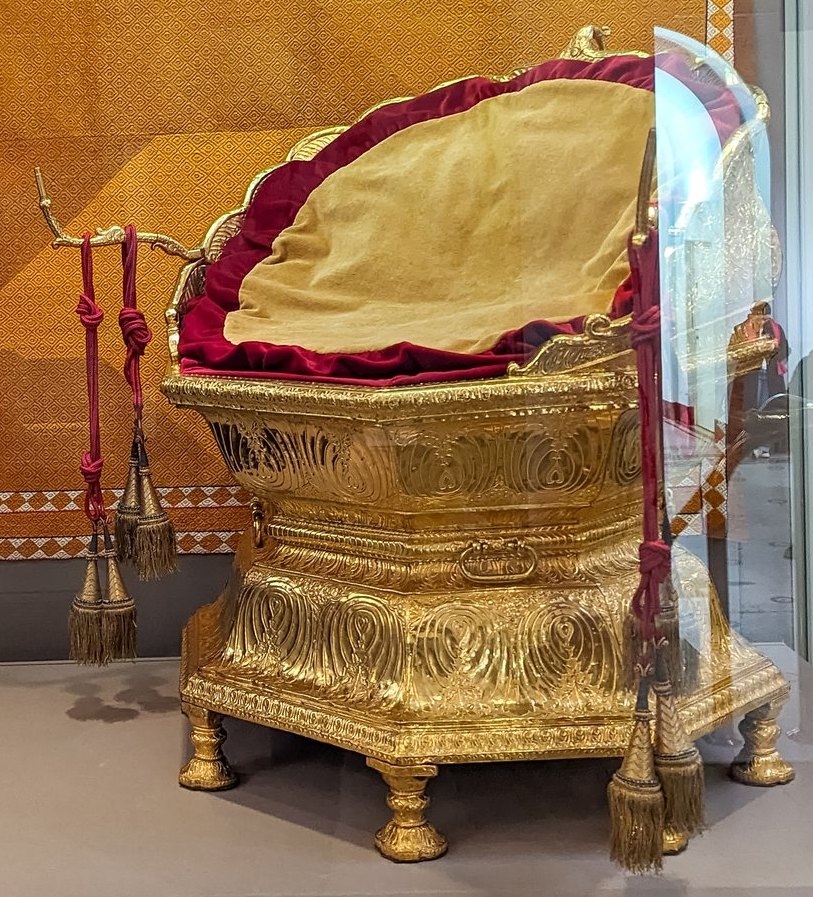
It was a Sikh-ruled state, not a state of Sikhs alone. Muslims were the largest community among its subjects, and many of its servants were Muslim, from the foreign minister, Fakir Azizuddin, to senior officers of its artillery. Many of its revenue officials were Hindus, and the brothers who dominated its court for two decades, Gulab Singh, Dhian Singh and Suchet Singh, were Dogra Rajputs from Jammu. Its regular army was drilled by veterans of Napoleon's wars. The court itself, the darbar, sat around a golden throne made by a Muslim goldsmith, Hafez Muhammad Multani. It is in the Victoria and Albert Museum in London today, and how it got there is part of this story.
European visitors left vivid accounts of the court, and one detail recurs. The Maharaja drank, and drank hard: a fiery spirit distilled from the grapes of Kabul, which he once assured Alexander Burnes was made up of pearls and precious gems. Emily Eden, the Governor-General's sister, called it "a sort of liquid fire", and when he made her try it at Ferozepur in December 1838, "one drop actually burnt the outside of my lips." Hold on to that detail. It will matter near the end.
He died at Lahore on 27 June 1839, aged fifty-eight, after years of failing health. He had built a state around himself. He had not built a way to hand it on. Within six and a half years four of his successors, counting a regent, were dead, and so were four men who had held the office of wazir, by violence or by something that looked very like it, and his army was across the Sutlej.
Five rulers in six years: the Lahore Darbar after 1839
ਸ਼ਾਹ ਮੁਹੰਮਦਾ ਹੋਈ ਹੁਣ ਮੌਤ ਸਸਤੀ, ਖ਼ਾਲੀ ਨਹੀਂ ਜਾਣਾ ਕੋਈ ਵਾਰ ਮੀਆਂ ।
شاہ محمدا ہوئی ہن موت سستی، خالی نہیں جانا کوئی وار میاں ۔
Shāh Muhammadā, hoī huṇ maut sastī, khālī nahīṅ jāṇā koī vār mīāṅ.
"Shah Muhammad, death has now come cheap; no blow will fall in vain."
Shah Muhammad, Jangnama, stanza 30, on Lahore after the killings of 1843, when "the kingdom came into the hands of ruffians".
The heir, Kharak Singh, held real power for little more than three months. In October 1839 his favourite, Chet Singh, whom he had raised to be wazir, or chief minister, was cut down inside the palace by a party led by the man he had displaced, Ranjit Singh's wazir Dhian Singh, and by Kharak Singh's own son, Nau Nihal Singh. Kharak Singh was left a figurehead. He sickened and died on 5 November 1840 (Griffin has the 4th, with the cremation on the 5th); rumours that he had been slowly poisoned circulated at the time and have never been settled.
On the day of the cremation, returning from it, Nau Nihal Singh was passing under a gateway when part of it fell. He died within hours, and Dhian Singh kept the death hidden for two or three days, until Ranjit Singh's son Sher Singh could reach Lahore. Accident or murder? Contemporaries disagreed, and so do historians. Some point to how neatly it served the Dogra wazir. Others note that the young man beside the prince, Udham Singh, a son of Dhian Singh's own brother Gulab Singh, was killed on the spot: a strange way to plan a murder that benefited his family. Confidence: Well-established for the deaths; Contested for their causes.
What followed was a struggle that the poet Shah Muhammad, writing of its worst years, summed up in one bitter line: death had come cheap. Kharak Singh's widow, Chand Kaur, ruled as regent for about ten weeks, until Sher Singh took Lahore with the army's help in January 1841; in June 1842 she was killed in her own quarters, her skull broken with stones, or bricks in one account, by maidservants said to have been bribed. Sher Singh reigned until 15 September 1843, when a disaffected kinsman, Ajit Singh Sandhanwalia, shot him at a review of troops. The conspirators killed his young son and, the same day, Dhian Singh. Within hours Dhian Singh's son, Hira Singh, had turned the army on the assassins.
In the wreckage the army proclaimed a five-year-old: Duleep Singh, Ranjit Singh's youngest son, born in September 1838 to Jind Kaur, one of his wives. Hira Singh governed in the child's name until he too was killed, in December 1844. Jind Kaur's brother Jawahar Singh became wazir. In September 1845 the soldiers, holding him responsible for the killing of Peshaura Singh, whom Ranjit Singh had acknowledged as his son, called him before the assembled army. He came on an elephant with his nephew, the Maharaja, in his arms. They took the child from him and killed him in front of his sister. A British officer on the frontier, Joseph Davey Cunningham, judged that it "partook of the solemnity and moderation of a judicial process". Others saw a lynching.
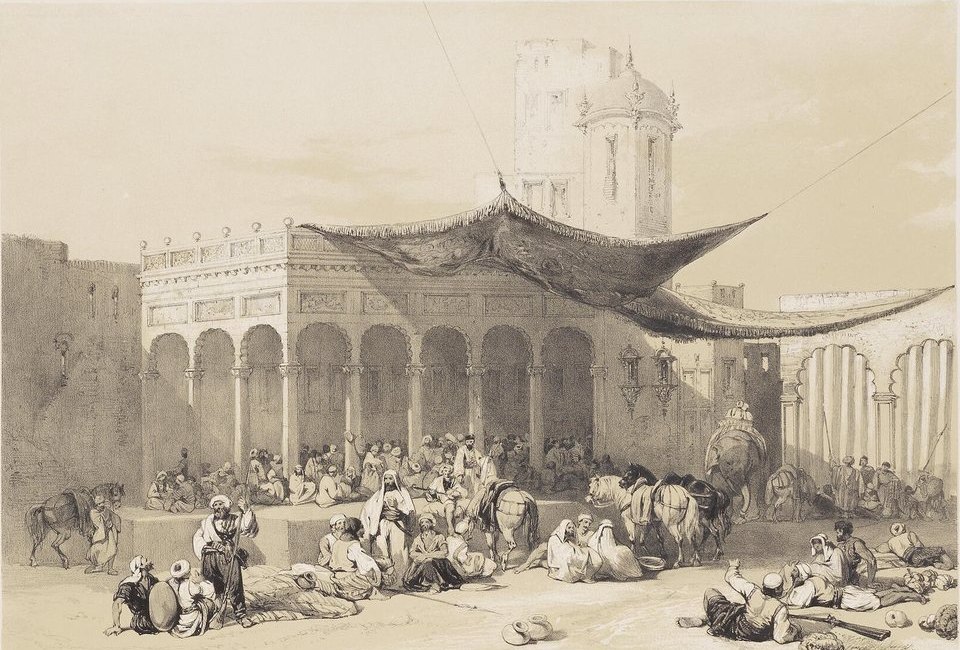
Behind every one of these episodes stood the army. Under Ranjit Singh it had been an instrument; after him it became a power in its own right. Its regiments elected committees called pañch, after the village council of five, and these army panchāyats bargained with whoever held Lahore for pay, promotion and a say in government. Official British despatches called the army a rabble. Cunningham saw an army that "looked upon itself, and was regarded by others, as the representative body of the Sikh people, as the 'Khalsa' itself", the reading many Sikh historians share. There is truth in both. Factions bid for the army's loyalty by enlarging it, and nobody in Lahore could pay it reliably or command it.
Across the Sutlej the British watched, and prepared. Up to 1838, Cunningham noted, the Company kept little more than 2,500 men on that frontier; by December 1845, when the war began, Lord Hardinge had raised it to about 32,000 men and 68 field guns, and boats for bridging a river had been brought up to Ferozepur. Defence against an unstable neighbour, or preparation for conquest? The question opens every account of the First Anglo-Sikh War, and it is the first of several places in this story where you will need to hold two explanations at once.
The First Anglo-Sikh War, 1845–46: victories that became defeat
On 11 December 1845 the Lahore army began crossing the Sutlej. Two days later the Governor-General, Sir Henry Hardinge, declared war. Punjabis remembered him as Ṭuṇḍā Lāṭ, "the one-handed lord", for he had lost his left hand in the Waterloo campaign. The name is in the war poetry itself: Shah Muhammad has him take up the challenge, ਟੁੰਡੇ ਲਾਟ ਨੇ ਚੁਕਿਆ ਆਣ ਬੀੜਾ · ٹنڈے لاٹ نے چکیا آن بیڑا, and boast in broken Hindustani that he will take Lahore in a matter of hours. Lāṭ is the English word "lord", borrowed by ear: the Punjabi name for a great British officer, the Governor-General above all, though Shah Muhammad uses it of a general too.
It was the hardest fighting the Company's army had known in India. At Mudki on 18 December the British won a confused battle fought into the dark. At Ferozeshah on 21 and 22 December they nearly lost everything. They stormed the Sikh entrenchments late in the afternoon, fought through the night among exploding magazines, and by morning were exhausted, their guns almost out of ammunition. Hardinge, expecting defeat, sent orders back to Mudki that every state paper kept there was to be destroyed, and the officials there began, one of them wrote, "concerting measures to make an unconditional surrender to save the wounded". He sent his own sword to the rear: Napoleon's sword, which the Duke of Wellington had given him in 1816.
Then a second Sikh army appeared under Tej Singh, fresh and strong enough to finish the work. Its guns opened on the British, whose artillery, Gough reported, could not answer "with a single shot". It made attacks on the British flank. And then it ceased firing, and withdrew.
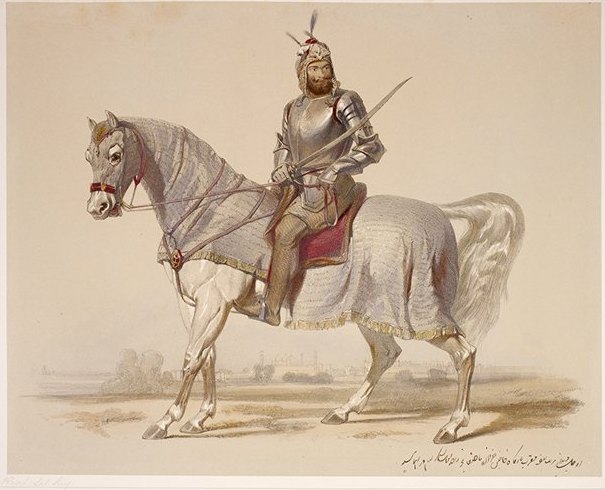
Why Tej Singh withdrew is the most argued question of the war. His soldiers had urged him to attack. Some British officers believed they had been saved by something other than their own efforts; others thought he had taken fright at a cavalry movement that seemed to threaten his line of retreat.
Cunningham said what he thought in print. By then a captain and political officer, he had joined Gough's headquarters after Ferozeshah and served at Aliwal and at Sobraon, and in A History of the Sikhs (1849) he said plainly that Lal Singh and Tej Singh had been in communication with the British and had betrayed their own troops: "Under such circumstances of discreet policy and shameless treason was the battle of Subraon fought." In the same passage he described a British "understanding" with Gulab Singh before that battle, and a footnote added that only those "mixed up with the negotiations" could find it in the Governor-General's own report. In 1850 the Company removed him from his political post and sent him back to regimental duty, chiefly for that footnote, by his own and his family's account. He died at Ambala in 1851, aged thirty-eight, and his brother wrote in the second edition: "The author fell a victim to the truth related in this book." The book is still in print and still cited.
After a Lahore force under Ranjodh Singh Majithia was beaten at Aliwal, near Ludhiana, on 28 January 1846, the decisive battle came at Sobraon on 10 February. The Lahore army fought with the Sutlej at its back, crossed by a bridge of boats and a ford that a sudden rise in the river had made almost impassable. Among its commanders was the old sardar Sham Singh Attariwala. He had sworn, Griffin records, never to leave the trenches alive if the Sikhs were beaten, and that morning he dressed in white; in Cunningham's words he "clothed himself in simple white attire, as one devoted to death". He died in the British assault.
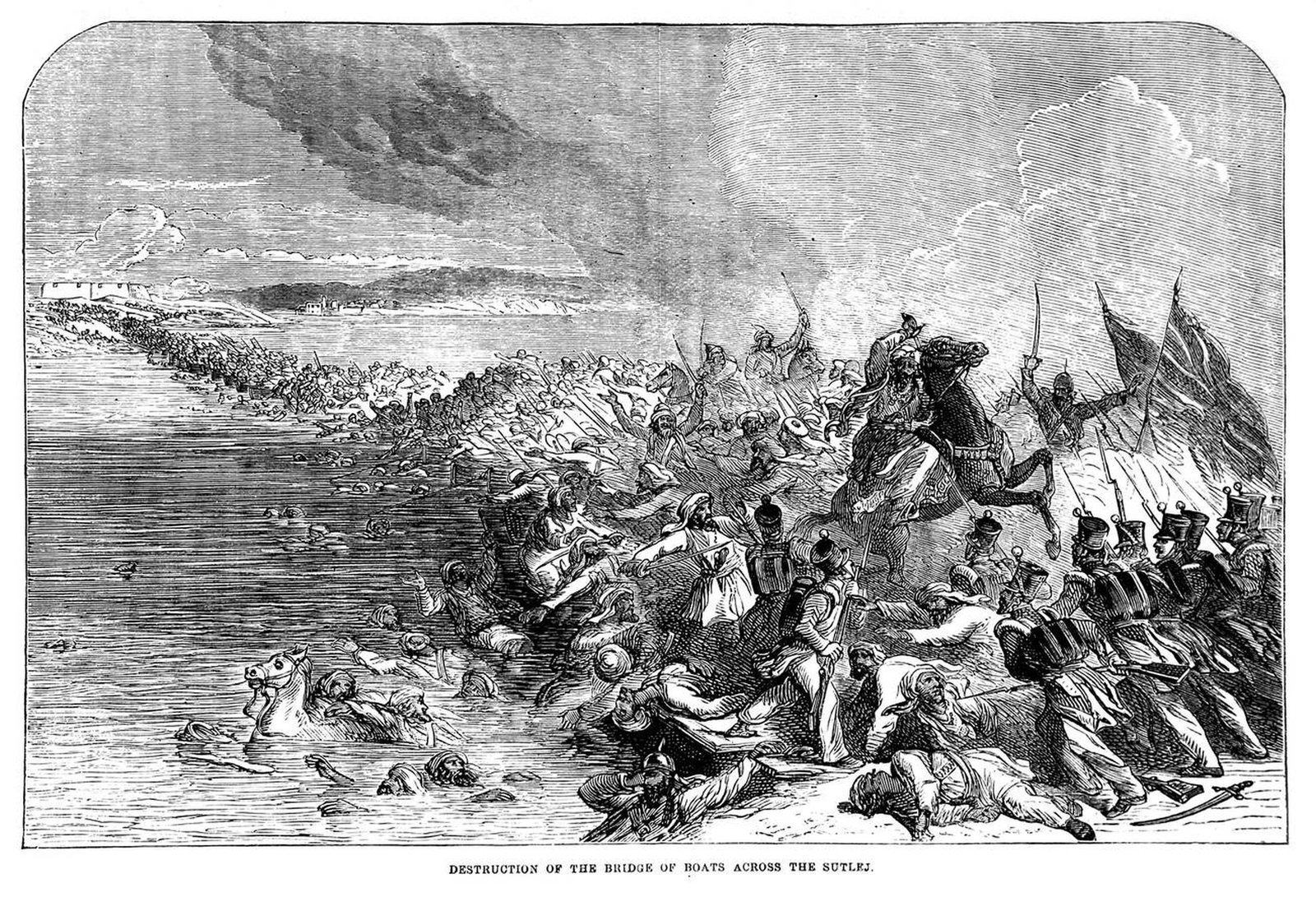
When the British broke in, the bridge failed, and thousands of men drowned or were shot in the river. How it failed is disputed, even among British witnesses. Hardinge's son saw it "overcrowded with guns, horses, and soldiers of all arms, swaying to and fro, till at last with a crash it disappeared". Cunningham wrote that Tej Singh, fleeing early, sank a boat in the middle of it, "either accidentally or by design". Shah Muhammad says flatly that Tej Singh cut it so the army could not run home. Griffin wrote that the story of the sunken boat had "never been supported by a fragment of evidence". Confidence: Contested; the accounts cannot now be tested.
The British commander, Sir Hugh Gough, wrote privately that policy had kept his praise of the Sikh army out of his despatch, and that "were it not from a deep conviction that my country's good required the sacrifice, I would have wept to have witnessed the fearful slaughter of so devoted a body of men". On 20 February British troops marched into Lahore.
The poet who watched: Shah Muhammad's Jangnama
In the months after Sobraon, a Muslim poet from the village of Wadala Viram, in the Majha, the country between the Beas and the Ravi, set the whole catastrophe down in 105 stanzas, finishing, Piara Singh Padam reckons, between June and November 1846. The manuscripts and early printings of Shah Muhammad's poem call it a jaṅgnāmā, a "book of war", most often the Jangnama of the Singhs and the Firangis. A 1957 edition by Sita Ram Kohli and Sewa Singh retitled it the Vār Shāh Muhammad, a name Padam rejected: a vār is sung in pauṛīs, and this poem is not. Firaṅgī, the Punjabi word for Europeans, had travelled a long way to reach the villages of the Majha: from the Franks of medieval Europe, through Arabic and Persian.
Almost everything known of his life comes from one researcher, Maula Bakhsh Kushta, who put his birth in the 1780s and his death in 1862, and found that he was often in Batala among men who had served the Lahore state; one of them, Sher Singh's chief secretary, was kin to a Muslim gunner of the Maharaja's artillery. The historian Sita Ram Kohli checked the poem against the court chronicle of Sohan Lal Suri and against Griffin, and found the officers and gunners it names in the Lahore army's own papers. Even its count of the Sikh guns lost, he wrote, matched the return the British commander signed and sent to his government. Historians still use it as evidence, with care, beside the British records.
He was a Muslim mourning a Sikh-ruled state, and he saw no contradiction in it. He says he wrote because friends in his village asked him to, and near the start he remembers how contentedly Muslims and Hindus had lived together, with calamity falling on both alike. In one famous line he named the war in terms that cut across our categories: not Sikhs against Britons, but Hind against Punjab. Elsewhere it is simply the war with the Firangis. The Company's armies, after all, were made up largely of sepoys from Hindustan.
In the poem this stanza comes straight after the bridge at Sobraon, and its last line, Padam wrote, is the central note of the whole lament.
ਜੰਗ ਹਿੰਦ ਪੰਜਾਬ ਦਾ ਹੋਣ ਲੱਗਾ, ਦੋਵੇਂ ਪਾਤਸ਼ਾਹੀ ਫੌਜਾਂ ਭਾਰੀਆਂ ਨੀ ।
ਅੱਜ ਹੋਵੇ ਸਰਕਾਰ ਤਾਂ ਮੁੱਲ ਪਾਵੇ, ਜਿਹੜੀਆਂ ਖਾਲਸੇ ਨੇ ਤੇਗਾਂ ਮਾਰੀਆਂ ਨੀ ।
ਘੋੜੇ ਆਦਮੀ ਗੋਲਿਆਂ ਨਾਲ ਉੱਡਣ, ਹਾਥੀ ਢਹਿੰਦੇ ਸਣੇ ਅੰਬਾਰੀਆਂ ਨੀ ।
ਸ਼ਾਹ ਮੁਹੰਮਦਾ ਇਕ ਸਰਕਾਰ ਬਾਝੋਂ, ਫੌਜਾਂ ਜਿੱਤ ਕੇ ਅੰਤ ਨੂੰ ਹਾਰੀਆਂ ਨੀ ।
جنگ ہند پنجاب دا ہون لگا، دوویں پاتشاہی فوجاں بھاریاں نی ۔
اج ہووے سرکار تاں ملّ پاوے، جہڑیاں خالصے نے تیغاں ماریاں نی ۔
گھوڑے آدمی گولیاں نال اڈن، ہاتھی ڈھہندے سنے امباریاں نی ۔
شاہ محمدا اک سرکار باجھوں، فوجاں جت کے انت نوں ہاریاں نی ۔
Jaṅg Hind Pañjāb dā hoṇ laggā, doveṅ pātshāhī faujāṅ bhārīāṅ nī.
Ajj hove Sarkār tāṅ mull pāve, jihṛīāṅ Khālse ne tegāṅ mārīāṅ nī.
Ghoṛe ādmī goliāṅ nāl uḍḍaṇ, hāthī ḍhahinde saṇe ambārīāṅ nī.
Shāh Muhammadā, ik Sarkār bājhoṅ, faujāṅ jitt ke ant nūṅ hārīāṅ nī.
"The war of Hind and Punjab began:
two royal armies, both of them mighty.
Were the Sarkar alive today, he would know the worth
of every sword-stroke the Khalsa struck.
Horses and men flew apart under the cannonballs;
elephants went down, howdahs and all.
Shah Muhammad, for want of the one Sarkar,
the armies that had won were beaten in the end."
Shah Muhammad, Jangnama, stanza 92 (1846). Gurmukhi as in the Punjabi Wikisource
text, checked against Piara Singh Padam's edition (first printed 1973); Shahmukhi transliterated after punjabi-kavita.com, not yet checked against a print edition.
Reading the stanza
- Sarkar. Not "a government" in general but the Sarkar: Ranjit Singh, dead almost seven years. Padam's edition glosses it so, as Sher-i-Punjab, the Lion of the Punjab. The word frames the stanza, in its second line and its last. Were the Sarkar alive, he would reward his soldiers; without him, they lost. The poet's whole analysis of the war sits in those two uses of one word.
- Mull pāve. Literally "would put a price on": would value, reward, honour. The complaint is that the Khalsa's courage went unrewarded because it went unled.
- The last line. Ik Sarkār bājhoṅ, faujāṅ jitt ke ant nūṅ hārīāṅ: for want of the one Sarkar, the armies won, and in the end were beaten. It is a paradox and a verdict.
- The form. Baint, the long-lined metre of the Punjabi qissā, or verse romance. One rhyme (-ārīāṅ) binds the stanza, and each line ends on nī, which works here as the verb "they are" or "they have". As is usual in the qissa and in verse of its kind, the last line carries the poet's own name, Shāh Muhammadā, addressed to himself.
- Date and text. The poem's last stanza dates the war to Samvat 1902 of the Bikrami calendar, that is, 1845–46. The editions differ in small things (Padam's prints pādshāhī for pātshāhī, both meaning "royal"), but stanzas 30, 92 and 104 are numbered alike in both editions we used. Confidence that the poem is Shah Muhammad's and dates from 1846: Well-established.
The peace that wasn't: the treaties of 1846
The settlement came in three treaties and a supplementary agreement, and each pulled the knot tighter.
The Treaty of Lahore (9 March 1846) took the Jalandhar Doab, the fertile country between the Beas and the Sutlej, and demanded an indemnity of one and a half crore rupees. Lahore could not pay it all, so besides fifty lakh in cash the treaty took, as the equivalent of one crore, all the hill country between the Beas and the Indus, Kashmir and Hazara included. The army was capped at twenty-five battalions of infantry and twelve thousand cavalry. Two days later a supplementary agreement, which its preamble presents as made at the Darbar's own request, put British troops in possession of the fort and city of Lahore until the end of the year, Lahore paying the extra cost.
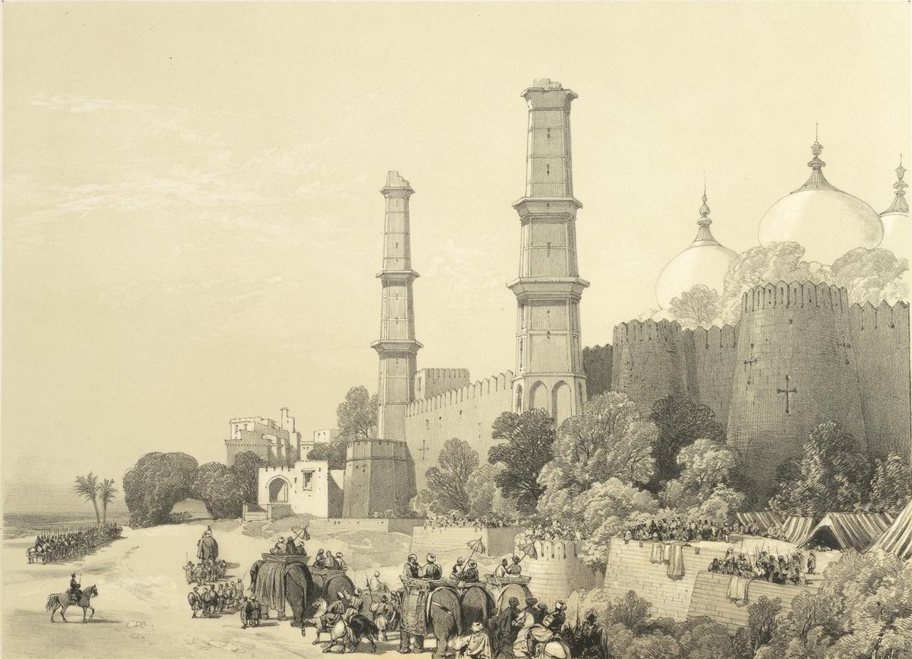
A week later, by the Treaty of Amritsar (16 March 1846), the British sold the hill country between the Indus and the Ravi, Kashmir with it, to Gulab Singh of Jammu for seventy-five lakh Nanakshahi rupees. Gulab Singh had kept his forces out of the fighting and helped negotiate the peace. The British kept the hills between the Ravi and the Beas, which is why the price was a quarter less than the crore at which the whole had been valued. The modern history of Jammu and Kashmir as a single princely state begins with that sale.
The Treaty of Bhyrowal finished the work. It was signed at Lahore on 16 December 1846 and ratified by Hardinge at Bhyrowal Ghat on the Beas ten days later. Its preamble says the Darbar asked for it. Hardinge's private letters show him arranging the asking: "this solicitation must clearly be their act," he told his negotiator, Frederick Currie. Jind Kaur was removed as regent and pensioned. A Council of Regency of leading sardars was appointed, but real power went to the British Resident, who was given "full authority to direct and control all matters in every Department of the State". British troops would stay in Lahore, at the Darbar's expense, until the Maharaja turned sixteen, which the treaty set at 4 September 1854.
Remember that date. On paper, the British had undertaken to hand the Punjab back to Duleep Singh within eight years. Privately, Hardinge was blunter about what even the first treaty had made of the state: "the Punjaub never was intended to be an independent State ... the native Prince is in fetters, and under our protection, and must do our bidding," he wrote to the Resident in October 1847. It never came to September 1854.
The Resident, Henry Lawrence, was an artillery officer turned political agent: devout, energetic and genuinely attached to the Punjab. He governed through assistants posted across the kingdom, Herbert Edwardes, James Abbott and John Nicholson among them, whom later British writers made into heroes. To many Punjabi notables they looked less heroic: foreigners, most of them in their twenties, overruling men who had governed provinces for Ranjit Singh. Lal Singh was already gone, tried by a British court of inquiry for encouraging the governor of Kashmir to resist the handover to Gulab Singh, and sent out of the Punjab.
The person the British feared most was the Maharaja's mother. Jind Kaur was the daughter of Manna Singh Aulakh, a Jat from near Gujranwala in Ranjit Singh's service; a hostile British account of 1847 says he began as Ranjit Singh's dog-keeper. From the end of 1844 she was the effective head of the Lahore government, and after her brother's killing she held court herself and faced down the army's committees. British writers called her "the Messalina of the Punjab", which tells you more about British writers than about her. Henry Lawrence reported that the Sikhs regarded her as "the mother of the Khalsa"; by August 1847 he had decided she was "the only effective enemy to our policy that I know of in the country". Modern historians, notably Priya Atwal in Royals and Rebels (2020), have taken her more seriously: a regent defending her son's throne with the few weapons a widowed queen had.
On 7 August 1847 the eight-year-old Maharaja was told, in open darbar, to mark the saffron tilak on Tej Singh's forehead that would make him Raja of Sialkot. He would not. Hardinge heard that the boy "tucked his little hands behind him, threw himself back in his chair, and one of the priests performed the ceremony". Lawrence blamed the mother. Within days she was confined in the Samman Burj of the Lahore Fort, then removed to the fort at Sheikhupura, her allowance cut from a lakh and a half to 48,000 rupees.
Her letters survive, in Ganda Singh's translation. To "Lawrence Sahib", by then John Lawrence, acting for his brother, from Sheikhupura: "You could have kept me in prison. You could have dismissed my men. ... But you should not have separated my son from me." Of the boy: "He has no sister, no brother. He has no uncle, senior or junior. His father he has lost. To whose care has he been entrusted?" She would not see him again for thirteen and a half years.
In May 1848 the next Resident, Sir Frederick Currie, sent her out of the Punjab altogether, to confinement at Benares. Even the Amir of Afghanistan, Dost Mohammad Khan, protested that the mother of Maharaja Duleep Singh had been "imprisoned and ill-treated. Such treatment is considered objectionable by all creeds". Punjabi soldiers remembered it.
Shah Muhammad had finished his poem in 1846, early in this uneasy peace. Near its close, ordinary people sit and talk about the Firangi cantonment they have seen, and he admits he cannot see what comes next:
ਸ਼ਾਹ ਮੁਹੰਮਦਾ ਨਹੀਂ ਮਾਲੂਮ ਸਾਨੂੰ, ਅਗੇ ਹੋਰ ਕੀ ਖੇਡ ਰਚਾਵਣੀ ਜੀ ।
شاہ محمدا نہیں معلوم سانوں، اگے ہور کی کھیڈ رچاونی جی ۔
Shāh Muhammadā, nahīṅ mālūm sānūṅ, agge hor kī kheḍ rachāvaṇī jī.
"Shah Muhammad, we do not know what game is still to be played."
Shah Muhammad, Jangnama, stanza 104.
In April 1848, in the old city of Multan, the next move was made.
Multan, 1848: the spark
Multan, in the south-west of the kingdom, was governed by Diwan Mulraj, a Hindu administrator who had inherited the province from his father, Sawan Mal. Pressed by Lahore for arrears and a heavy succession fee, and overruled on appeal by the Resident, he offered to resign, and held to it when Currie gave him the chance to stay. Currie sent a new governor, Sardar Kahn Singh Mann, with two British officers to take over: Patrick Vans Agnew of the Bengal Civil Service, aged twenty-five, and Lieutenant William Anderson.
On 19 April 1848, as they rode out after being shown round the fort, a soldier of the garrison attacked Vans Agnew, and Anderson was cut down by Mulraj's own mounted escort, according to evidence given at a later trial. Both were carried to their camp at the Idgah, a domed and walled prayer hall within cannon-shot of the fort. Mulraj sent word that his own soldiers had stopped him from coming. The next day the guns of the fort opened on the Idgah, Mulraj offered the escort higher pay to desert, and by evening it had gone over to him. At dusk a crowd broke in. Edwardes, who pieced the scene together, gives Vans Agnew's last words: "They can kill us two if they like; but we are not the last of the English; thousands of Englishmen will come down here when we are gone." Both men were killed.
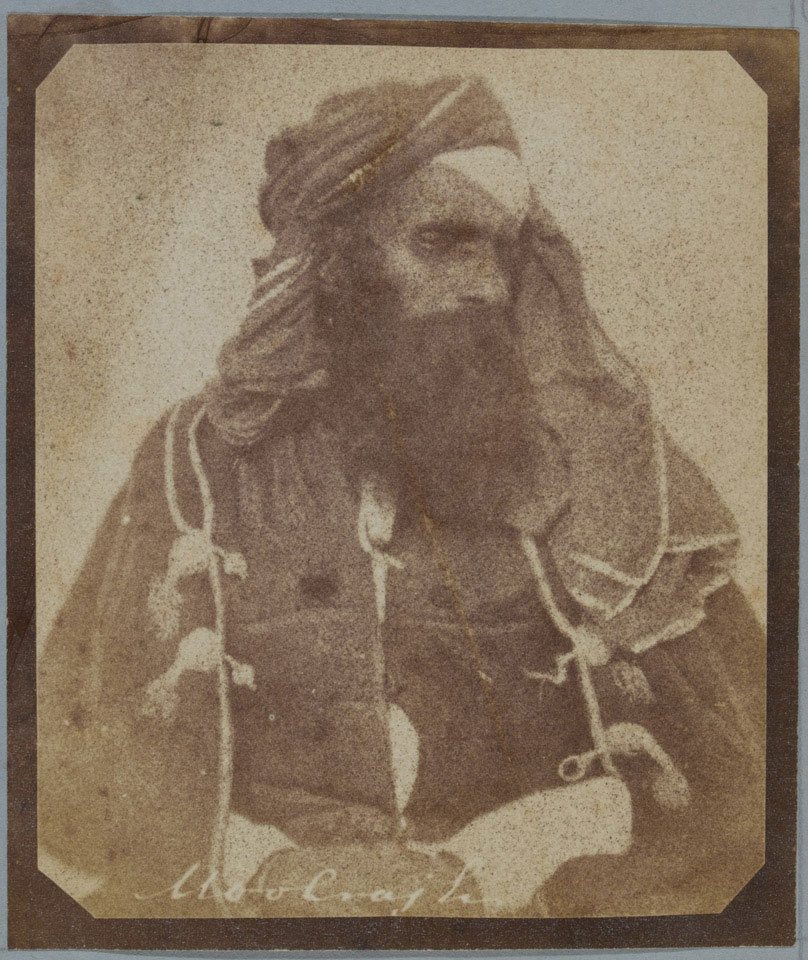
What Mulraj intended is the first great disputed question of the second war. The British tried him for the murders when it was over and sentenced him to death, but the court itself recommended mercy, calling him "the victim of circumstances", and Dalhousie, who concluded that he had not planned the killings, commuted the sentence; Mulraj died a prisoner in 1851. Once the blood was spilt he had two choices: surrender himself to the British, or lead the revolt. He led it. Confidence: Well-established for the killings and for Mulraj's leadership of the revolt; Contested whether he planned it or was carried into it.
Herbert Edwardes, a lieutenant of twenty-eight, answered Vans Agnew's call for help at once, without waiting for Lahore. He raised Pashtun levies, joined forces with the army of the Nawab of Bahawalpur, beat Mulraj's troops at Kineyri on 18 June and at Saddusam on 1 July, and drove them behind the walls of Multan. Then he asked for siege guns, mortars and sappers, offering to take Multan with the troops he already had. Gough, the Commander-in-Chief, backed by the new Governor-General, Lord Dalhousie, would not send a major force into the Punjab until the hot weather and the monsoon were over; a smaller force under General Whish reached Multan in August.
On 5 October 1848, at a ball given for him at Barrackpore before he left for the front, Dalhousie said, as one report has it, that the Sikh nation had called for war, "and on my word, Sirs, they shall have it with a vengeance." To Currie he wrote: "I have drawn the sword, and have thrown away the scabbard." Yet no declaration of war was ever issued against the state of Lahore. Legally the Company remained Duleep Singh's protector, coming to restore order in his kingdom.
By then the revolt had found the leaders Multan lacked. In Hazara, in the far north, the governor was Chattar Singh Attariwala, a sardar of Ranjit Singh's time and the father of Tej Kaur, to whom Duleep Singh had been betrothed since 1843. The British kept putting off a date for the wedding, and in Lahore the delay was read as a sign that they did not expect the boy to have a kingdom to marry into. The reading was not far wrong: Dalhousie, approving Currie's reply, wrote that the Darbar "cannot found on that answer any assertion of a renewed guarantee of the Raj to the present holders". Captain James Abbott, the British officer in Hazara, became convinced that Chattar Singh was plotting and raised the Muslim tribesmen of the district against him. In August Canora, a foreign mercenary commanding the guns at Haripur, refused Chattar Singh's orders, cut down a havildar who would not fire, and was shot. Abbott called it "a cold-blooded murder". John Nicholson, sent to investigate, largely cleared Chattar Singh, yet the Resident confirmed the loss of his governorship and his jagirs. He chose to fight.
His son, Raja Sher Singh Attariwala, was at Multan, commanding Lahore troops sent to help the British besiege the city. On 14 September 1848 he took them over to the rebels. A proclamation sealed by Sher Singh and Mulraj together called on "all others that eat the salt of the Sovereign of the Khalsa, Maharajuh Duleep Sing", the old phrase for those who owed a master their loyalty, to join in "eradicating the Feringhees from this country of the Punjab". In October he marched north to join his father.
Pause on that. The rebels were fighting in the Maharaja's name. The British were fighting, officially, for the Maharaja's government. Both sides claimed the boy.
The Second Anglo-Sikh War, 1848–49: Ramnagar, Chillianwala, Gujrat
Gough's army crossed the Ravi on 16 November 1848, twelve to fourteen thousand men in the field, and over the next three months fought four actions, each on or near a river.
Ramnagar, 22 November 1848. On the Chenab, Gough sent cavalry and horse artillery to drive the Sikh outposts back over the river. A British gun stuck in the sand and had to be abandoned. Then Lieutenant-Colonel William Havelock led the 14th Light Dragoons into the sandy river-bed, where the horses floundered under Sikh fire and he was killed; the cavalry commander, Brigadier-General Charles Cureton, was shot dead riding out to stop the charge. The Sikhs kept the gun and their hold on the river; Dalhousie privately called it "an attack quite without an object, and without a result". A second action followed at Sadulapur on 3 December.
Chillianwala, 13 January 1849. Sher Singh drew up his army near the Jhelum behind scrub and thorn so dense the British could not see what it hid. Gough reached it around midday and attacked at about three; whether he chose to or was forced to by the Sikh guns is still argued. It became one of the bloodiest battles the British fought in India. Brigades lost each other in the bush, and on the right a whole cavalry brigade turned and galloped to the rear, through its own guns. Her Majesty's 24th Regiment of Foot charged a Sikh battery, reached the guns, and was shot to pieces from the scrub. About half the regiment was killed or wounded, among them Brigadier John Pennycuick and his seventeen-year-old son, who fell defending his father's body. The 24th lost its Queen's Colour. British casualties came to about 2,350 killed, wounded and missing; Sikh losses are unknown.
Gough's despatch announced a victory. Dalhousie wrote privately: "We have gained a victory, but like that of the ancients, it is such an one that 'another such would ruin us'." In Britain the news caused uproar, and Sir Charles Napier was sent out to replace Gough. He arrived after the war was over.
Three days of heavy rain stopped any pursuit, and for some weeks the advantage seemed to lie with the Sikhs. Early in January the fort of Attock on the Indus had fallen. The Afghan amir Dost Mohammad Khan, promised the return of Peshawar, had sent a thousand horsemen under his son to the Sikhs' aid: Sikhs and Afghans, who had fought each other for most of a century, were now allies against the Company. On 16 January Chattar Singh, freed by Attock's fall, joined his son, and for a month the two armies faced each other across the plain at Rasul and Chillianwala.
The obelisk on the battlefield, now in Mandi Bahauddin District, Pakistan, honours the dead of both sides in its first sentence, "on both sides did innumerable Warriors pass from this life", and is dedicated to "those who fell in the ranks of the Anglo-Indian Army".
Multan falls. On 22 January 1849, after weeks of bombardment and an assault on the city, Mulraj surrendered the citadel, freeing General Whish's heavy guns to join Gough.
Gujrat, 21 February 1849. In mid-February the Sikh army slipped away towards the town of Gujrat, between the Chenab and the Jhelum, in Pakistan's Punjab (not to be confused with Gujarat in western India). This time Gough did what his critics had urged. For around three hours nearly a hundred guns pounded the Sikh lines, which had no jungle to hide them this time, only two fortified villages and a dry watercourse, and only then did the infantry advance. The Sikh army broke and was pursued for miles. It lost fifty-three guns and, by British estimates, at least three thousand men; British losses were fewer than a hundred killed. It is often called the battle of the guns. Dalhousie's verdict on the men he had beaten was a pun: "They were really singhs (lions) while they stood. But they were fairly cannonaded off the field."
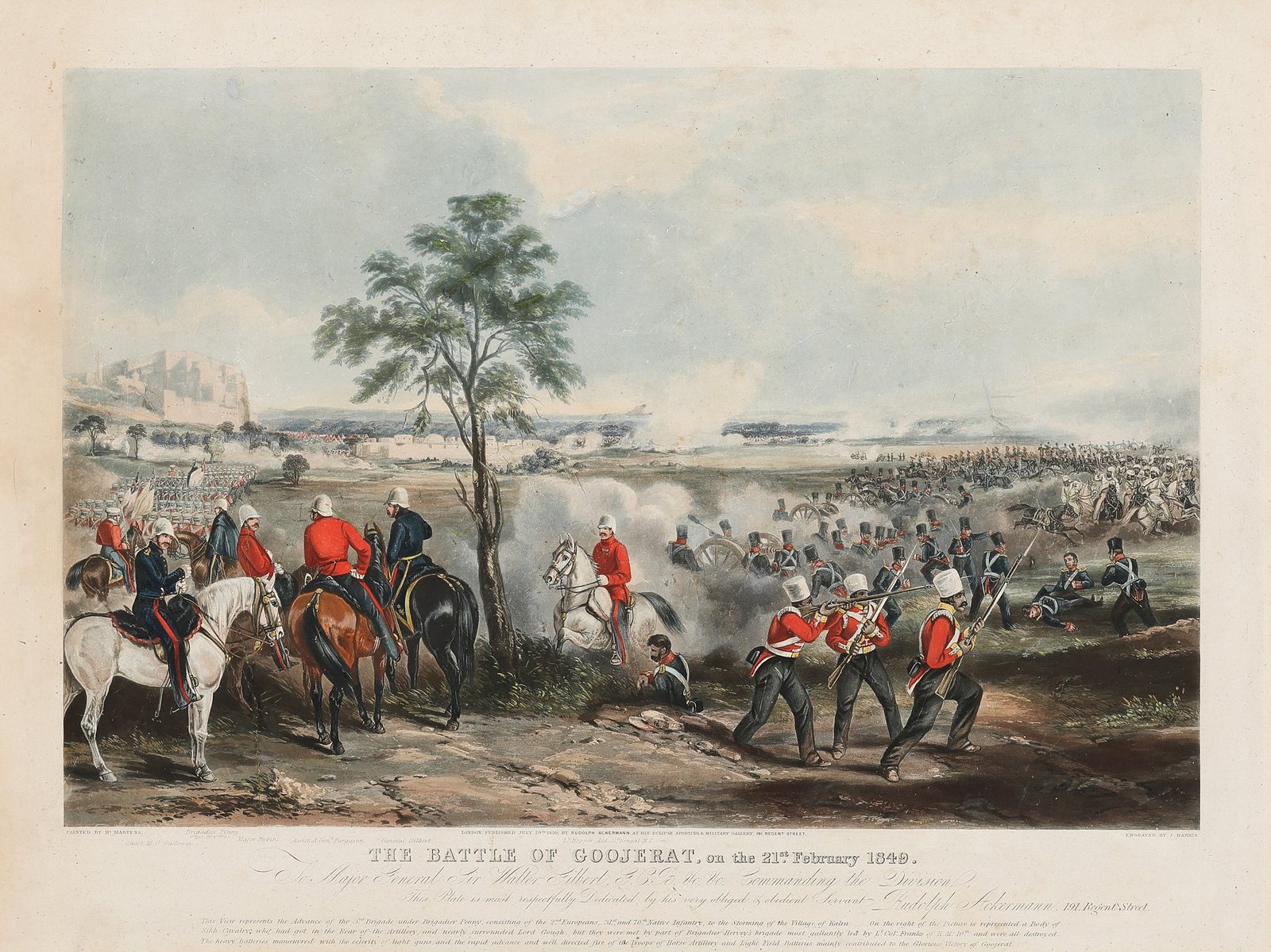
The pursuit ended in the north. On 10 March, by Lee-Warner's and Ganda Singh's accounts (the Governor-General's own order of 17 March says the 14th, and two later histories the 12th), Sher Singh, Chattar Singh and the chief sardars handed their swords to Major-General Walter Gilbert at Hurmuk, and on 14 March, near Rawalpindi, the Sikh soldiers laid down their arms, some sixteen to eighteen thousand of them. The Afghans fell back through the Khyber.
One sentence turns up in many later accounts of that day. As an old soldier set down his weapons, he is said to have spoken the words ਅੱਜ ਰਣਜੀਤ ਸਿੰਘ ਮਰ ਗਿਆ · اج رنجیت سنگھ مر گیا, ajj Raṇjīt Siṅgh mar giā, "today Ranjit Singh has died." It is recorded only in English letters, as "Aj Ranjit Sing mar gaya"; the Punjabi spelling here is ours. The earliest dated version is second-hand but named: Neville Chamberlain, an officer in the campaign, told Dalhousie in 1851 of "one old greybeard" who laid his shield, sword and matchlock on the pile, saluted them and said it, though Dalhousie's biographer printed it only in 1904. An earlier printed account, Bosworth Smith's of 1883, from unnamed eyewitnesses, gives the words to a horseman parting from his horse. Confidence that the surrender happened as described: Well-established. That these words were spoken: Probable. Whoever first said them understood exactly what had happened.
Why did the British annex Punjab? The case for and against
So we come back to the morning of 29 March, and to the question the boy could not ask: by what right?
Dalhousie's answer, set out in his proclamation, was that the Sikh people had made war: "the army of the State and the whole Sikh people, joined by many of the Sirdars in the Punjaub who signed the treaties, and led by a member of the regency itself, have risen in arms against us." The statement read in the hall added that "a continuance of Sikh domination in the Punjab is incompatible with the security of the British territories". He acted without waiting for London. The next day he wrote to a friend: "What I have done I have done on my own responsibility. I know it to be just, politic, and necessary." And: "It is not every day that an officer of their Government adds four millions of subjects to the British Empire, and places the historical jewel of the Mogul Emperors in the Crown of his own Sovereign."
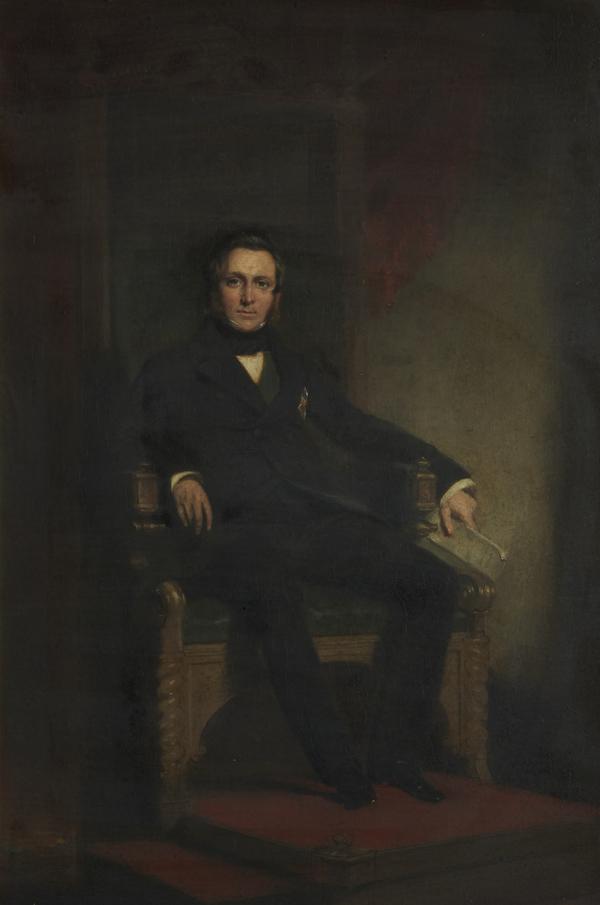
London approved afterwards. Parliament had already voted him its thanks for the war, before news of the annexation could reach it. Later that year he was raised from earl to marquess, with the words "of the Punjab" in the title. They "connect the title with the service done", he wrote.
The case against was made at once, by Britons as well as Punjabis.
Modern historians tend to ask a different question: less whether annexation was lawful than whether a stable, protected Punjab was ever likely. After 1839 the Lahore state had a fiscal and military crisis at its heart: an army bigger than it could pay, a court that could not command it, and a powerful neighbour whose officials believed, correctly, that they would win the next war. British expansion had its own momentum, and Dalhousie was its most energetic agent; within seven years he would also annex Lower Burma, Nagpur, Jhansi and Awadh. Seen this way, 1849 was the end of a process more than a single act. That does not make the guardian argument wrong. It explains why the argument lost.
The terms of 29 March 1849
The document is often called the last Treaty of Lahore, to set it apart from the treaty of 1846, though strictly it was a grant of terms, "granted and accepted at Lahore, on the 29th of March 1849, and ratified by the Right Honorable the Governor-General on the 5th April 1849". In summary, with its own words where they matter:
- The Maharaja resigned "for himself, his heirs, and his successors, all right, title, and claim to the sovereignty of the Punjab, or to any sovereign power whatever."
- All the property of the state, "of whatever description and wheresoever found", was confiscated to the Company, in part payment of the debt Lahore owed the British Government and of the expenses of the war.
- "The Gem called the Koh-i-noor, which was taken from Shah Shooja-ool-Moolk by Maharajah Runjeet Singh, shall be surrendered by the Maharajah of Lahore to the Queen of England."
- A pension of four to five lakh rupees a year, for the Maharaja, his relatives and the servants of the state.
- "His Highness shall be treated with respect and honour." He was to keep his title and his own share of the pension, "provided he shall remain obedient to the British Government, and shall reside at such place as the Governor-General of India may select."
His own share, which the terms leave unstated, was about ten thousand rupees a month while he was a minor: Elliot's figure to the council. Confidence in the terms: Well-established; the text survives.
The boy, the queen and the diamond
Three weeks after her son signed, on 18 April 1849, Jind Kaur disappeared from the fortress of Chunar, where she had lately been moved for safer custody. A British court of inquiry found that she had changed places with a seamstress, whom the officer of the guard, never having seen his secluded prisoner, let out through the iron gate. She reached Nepal, by a British report from Kathmandu, dressed as a faqīrnī, a wandering holy woman. Dalhousie confiscated her jewels and wrote that the escape was "of no great importance now". Jang Bahadur Rana, the prime minister of Nepal, gave her asylum and a house in Kathmandu. She stayed nearly twelve years, watched by the British Resident, waiting.
Her son was moved before the year was out. John Login, the Scottish surgeon who as governor of the Lahore citadel had charge of its treasury, its prisoners and the boy, set out with him in December 1849 for Fatehgarh, on the Ganges, which they reached in February 1850. In May, Login had set the boy an English writing exercise, "Do unto others as you would they should do unto you", and told his wife that, as he could not "put the Bible in his hands yet", he meant to season his studies with such principles. In December 1850, aged twelve, Duleep Singh announced that he wanted to become a Christian. Login made him wait. During the probation his hair, uncut since birth, was cut at his own insistence. He was baptised on 8 March 1853, aged fourteen. Dalhousie's private comment had been: "Politically we could desire nothing better, for it destroys his possible influence for ever." In the same letter he wished it had been deferred, since it "may be represented to have been brought about by tampering with the mind of a child", and insisted it was "his own free act".
Was it his choice? He was a lonely boy surrounded by adults who wanted that outcome, and in 1886 he returned to the Sikh faith. Some historians see the conversion as engineered, others as the real choice of a boy cut off from everything he had known; many see something of both. Confidence: Well-established for the conversion and its date; Contested how free the choice was.
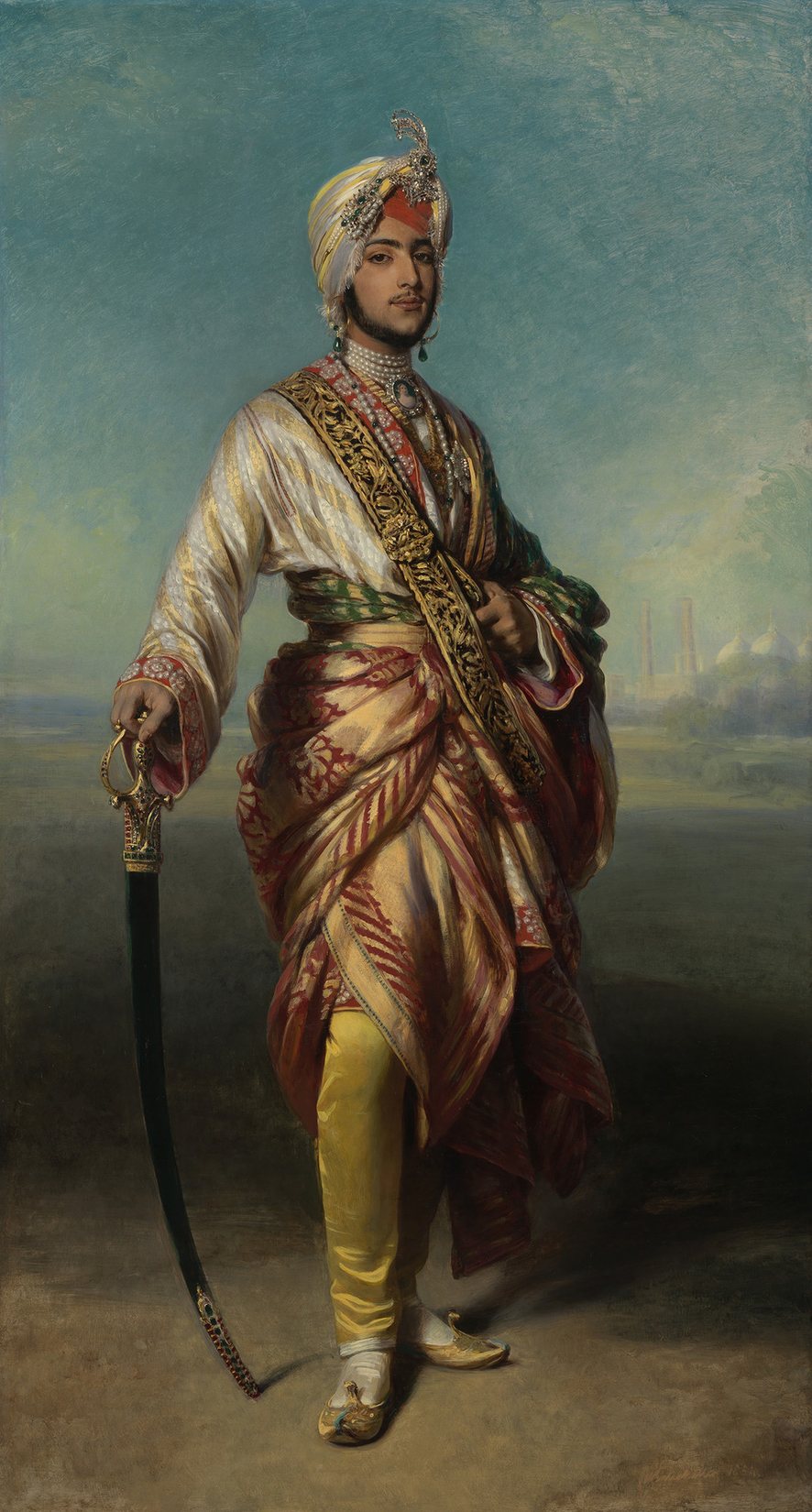
In 1854 he was sent to England, and Queen Victoria was charmed. Franz Xaver Winterhalter painted him in full Punjabi dress, and the Queen noted in her journal how patiently he stood. At one sitting she asked Lady Login to find out, before the next, how he felt about the Koh-i-Noor, newly recut. Riding with him in Richmond Park, Lady Login asked whether he would like to see it. "I was but a child, an infant, when forced to surrender it by treaty," he answered, as she recorded it; "but now that I am a man, I should like to have it in my power to place it myself in her hand!" The next day the Queen gave him the stone to look at, and he handed it back to her. Lady Login, who watched, believed the gesture cost him dear: the loss of the stone, she wrote, "rankled in his mind even more than the loss of his kingdom", and as he turned it in the light she saw "a passion of repressed emotion in his face". What he felt himself, he did not write down.
He lived for years as a British country gentleman, first in Perthshire, then at Mulgrave Castle in Yorkshire, and from 1863 at Elveden in Suffolk. Early in 1861 he was allowed to travel to India to meet his mother. Sikh regiments returning from the war in China heard that Ranjit Singh's son was in Calcutta and crowded round his hotel in thousands, and the Governor-General asked him, as a favour, to leave on the next ship. His mother came to England with him. She was half-blind by then, and in the two years left to her she told her son about the kingdom that had been his.
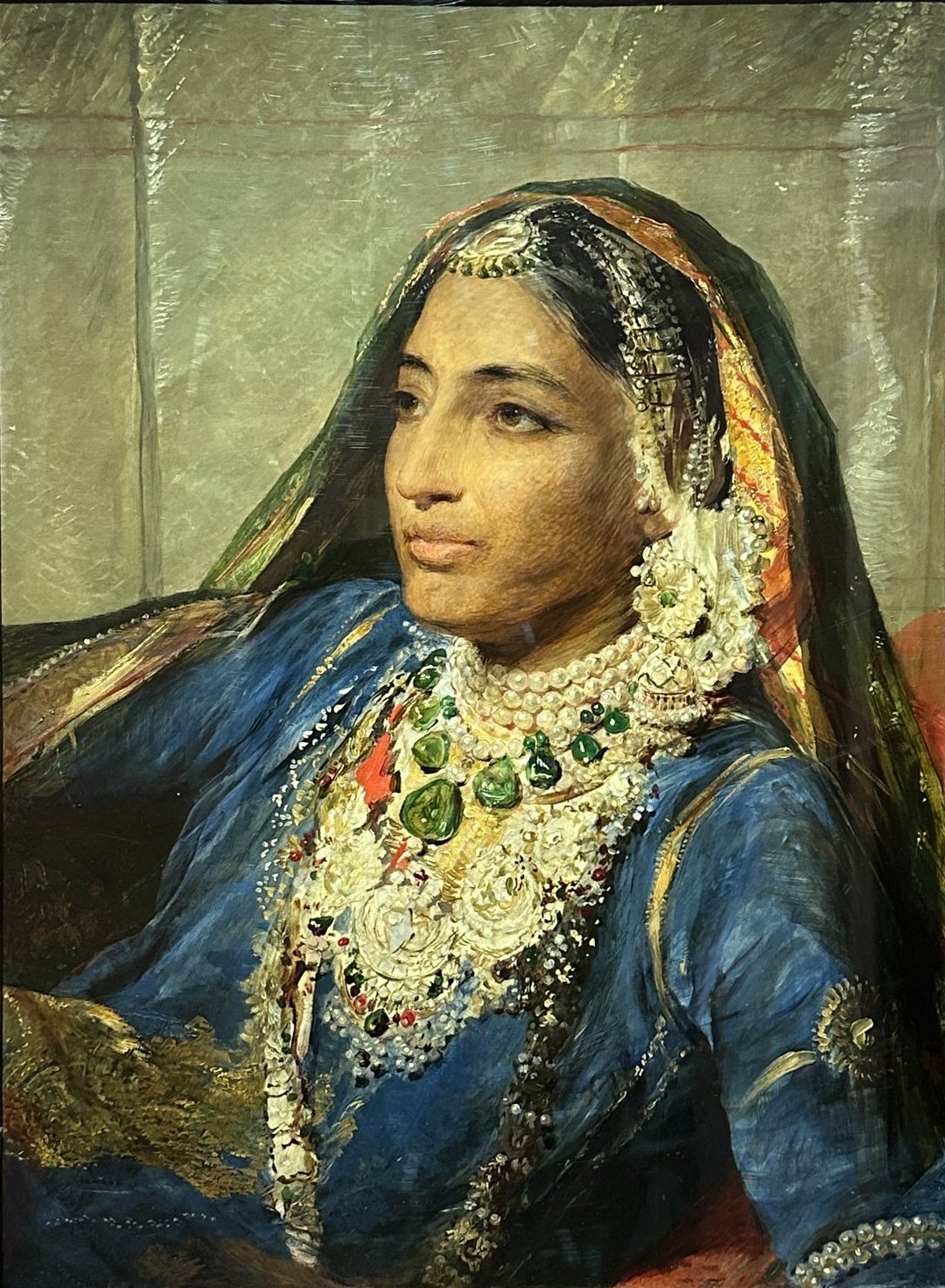
She died in Kensington on 1 August 1863. Her body lay in an unconsecrated vault at Kensal Green until the next year, when her son took it to India; she was cremated, by later accounts at Nasik, and in 1924, it is said, her granddaughter, Princess Bamba, brought her ashes to Lahore, to the precincts of her husband's samādh.
Her stories did their work. In the 1880s Duleep Singh petitioned for his lost property, read the British government's own papers on the annexation, and wrote to The Times. In 1886 he sailed for India; the British stopped him at Aden, and there, on 25 May, five Sikhs initiated him again into the Khalsa. He died in a Paris hotel room on 22 October 1893, after years of debt and intrigue and a late reconciliation with the Queen, and lies in the churchyard at Elveden. His story needs its own article.
The mountain of light
And the diamond? The Koh-i-Noor (Persian for "mountain of light") left the toshākhānā, the Lahore state's store of jewels and valuables. The state treasurer, Misr Makraj, handed it to Login in May 1849. That September, at his eleventh birthday, the boy innocently remarked to Login that on his last birthday he had worn the Koh-i-Noor on his arm.
Dalhousie insisted that the stone go to the Queen as the conquered prince's surrender, not as a present from the Company: "it was more for the honour of the Queen that the Koh-i-noor should be surrendered directly from the hand of the conquered prince into the hands of the sovereign who was his conqueror, than that it should be presented to her as a gift ... by any joint-stock company among her subjects." In his diary he wrote that none of its earlier owners could "boast so just a title to its possession as the Queen of England can claim after two bloody and unprovoked wars".
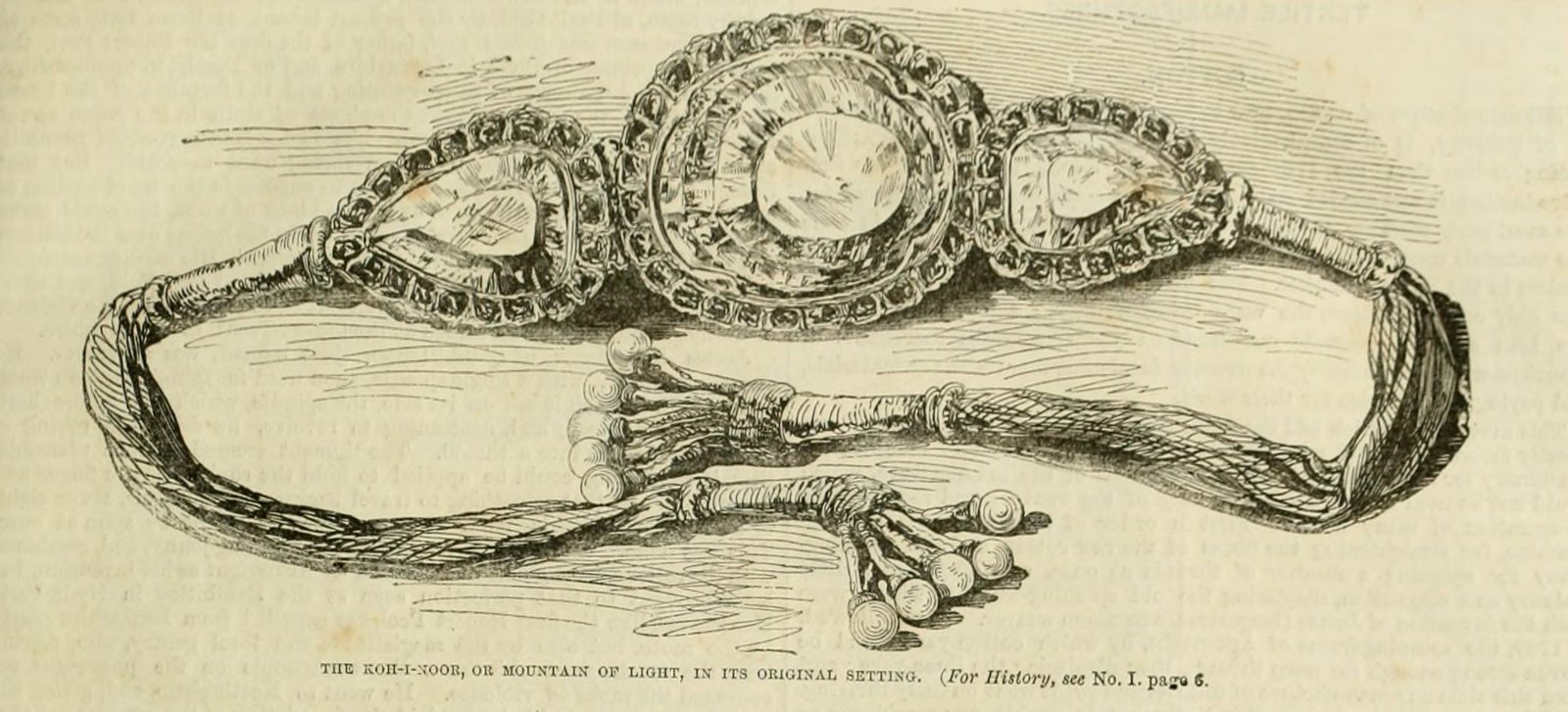
He carried it from Lahore to Bombay himself, down the Indus, in the winter of 1849 to 1850, "sewn and double sewn into a belt secured round my waist, one end through the belt fastened to a chain round my neck". It waited two months at Bombay for a ship, sailed on 6 April, and on 3 July 1850, in the East India Company's 250th year, it was presented to Queen Victoria. At the Great Exhibition of 1851 the crowds found it disappointingly dull, and in 1852 Prince Albert had it recut, from 186 old carats to 105.6 metric carats. It is set today in the crown made for Queen Elizabeth the Queen Mother, in the Tower of London. India, Pakistan, Afghanistan and Iran have each claimed it at one time or another. Confidence: Well-established for the transfer and its terms; Contested whether a transfer signed by a ten-year-old under occupation can be called lawful.
The rest of the toshakhana went less conspicuously, though not without a quarrel: the army's officers, prompted by Lord Ellenborough, claimed the Lahore property as prize, and Dalhousie refused them. Login had it inventoried item by item, with Misr Makraj, and most of it was sold at public auction in Lahore. Ranjit Singh's golden throne was kept back and sent to London, to the East India Company's museum in Leadenhall Street. In 1879 it passed to the South Kensington Museum, now the Victoria and Albert Museum.
Disarming a province: how British rule took hold
Punjab was governed at first not by one man but by three. Dalhousie's Board of Administration (1849–53) gave Henry Lawrence the political work, from disarming the country and dealing with the chiefs to educating the young Maharaja; his younger brother John Lawrence the revenue; and Charles Mansel, soon replaced by Robert Montgomery, the police and the courts. The brothers differed, as Dalhousie put it, "upon many public questions", above all over the jāgīrs, the assignments of land revenue on which the old nobility lived. Henry wanted to conciliate the sardars; John preferred to deal directly with the cultivator. Dalhousie sided with John, abolished the Board in February 1853, sent Henry to Rajputana and made John Chief Commissioner.
Some of what the new government did was designed, openly, to make another rising impossible.
- Disarmament. About six weeks after the annexation a proclamation disarmed the newly annexed districts, except Hazara and the country beyond the Indus, where people were left their weapons against raiders. Nearly 120,000 weapons were seized or surrendered, "from the cannon or the rifle ... down to the quoit or the bows and arrows".
- The army. The Lahore army was disbanded and its men paid off. A new Punjab Irregular Force for the frontier was built mainly on levies raised by British officers in 1848 and on Darbar regiments that had stayed loyal, and at first Dalhousie allowed no more than one man in ten to be a Sikh.
- Grants and estates. Jagirs were investigated one by one. Some were confirmed with deeds of grant; the jagirs of men who had fought, the Attariwalas' among them, were confiscated, and on the rest John Lawrence's view largely prevailed.
- The leaders. Chattar Singh and Sher Singh were arrested in October 1849 and held as prisoners at Allahabad and Calcutta until 1854. Bhai Maharaj Singh, a Sikh holy man who kept resistance alive after the surrender, had 10,000 rupees on his head; he was taken at the end of 1849 and deported to Singapore, where he died in captivity.
- The shrine. From 1849 the Harmandir Sahib at Amritsar, the central shrine of Sikhism, was run by a sarbarāh, a manager appointed under British authority. The arrangement lasted until 1920, and the campaign that ended it, the Gurdwara Reform Movement, became one of the great Punjabi mass movements of the twentieth century.
Other changes are harder to classify. New roads, lighter land-revenue demands in the first years, and later the vast canal colonies of the west won the new rulers real support among cultivators, and within a generation Punjab was the main recruiting ground of the Indian Army. Whether colonial "development" in the Punjab was benevolence, investment in a garrison province, or both, historians still argue: a competing interpretation, Contested.
The most startling consequence came quickly. In May 1857 the Bengal army rose against the Company across the plains of north India. Eight years after Gujrat the Punjab held. Bengal regiments stationed in the province mutinied, and in the Gugera district Ahmad Khan Kharal led a rural rising, but there was no general Punjabi revolt, and Punjabi soldiers, Sikh, Muslim and Pashtun, marched with the British to retake Delhi. Explanations abound. The rebels were the pūrbīā sepoys whom Punjabis remembered fighting for the Company in 1845 and 1848. The rebellion declared for the Mughal emperor, of a dynasty remembered in Sikh tradition for the execution of Guru Tegh Bahadur. British recruiters offered pay, plunder and standing. And there was, as a British officer recorded, "a popular belief" among the Sikhs that with the "hat wearers" from over the sea they would one day conquer Delhi. Not every Sikh stayed loyal: as the historian S. N. Sen observed, if there were Sikhs on the Ridge at Delhi, there were Sikhs inside the city too. Confidence: Well-established that the Punjab held and Punjabi troops served at Delhi; Probable for the reasons, which are competing interpretations. The Sikhs who fought for Delhi's rebels are a story for another article.
Alcohol and opium in colonial Punjab: what the evidence shows
Ask about British rule in many Punjabi families and sooner or later someone will say it: that the British, having beaten the Sikhs on the battlefield, finished the job with drink and drugs, opening liquor shops and pushing opium to sap a martial people. It is told in diaspora homes, repeated in speeches and passed around online, sometimes with quotations attributed to British officials, and it has gained force as Indian Punjab has struggled in recent decades with a serious drug crisis. It deserves a careful answer, because part of it is solidly documented and part of it is not.
What was already there. Intoxicants did not arrive with the British. Ranjit Singh's "liquid fire" burnt Emily Eden's lips in 1838. Opium, afīm, and poppy husk, post, were in common use before 1849, though Cunningham wrote that the province's peasants and soldiers did not "indulge in strong liquors, except upon occasions of rejoicing". Shah Muhammad, describing the British camp before Mudki, has the English hand out dārū to their fighting men, two bottles apiece; then, having drunk their sharāb, the white soldiers made ready for battle. In a contemporary Punjabi account of the war, it is the British who drink. The two bottles are poetry, but before Chillianwala, a British officer recorded, "an extra allowance of grog was distributed to the troops".
ਦਾਰੂ ਵੰਡਿਆ ਜੰਗੀਆਂ ਸੂਰਿਆਂ ਨੂੰ, ਦੋ ਦੋ ਬੋਤਲਾਂ ਕੈਫ਼ ਖ਼ੁਮਾਰ ਮੀਆਂ ।
ਸ਼ਾਹ ਮੁਹੰਮਦਾ ਪੀ ਸ਼ਰਾਬ ਗੋਰੇ, ਹੋਏ ਜੰਗ ਨੂੰ ਤੁਰਤ ਤਿਆਰ ਮੀਆਂ ।
دارو ونڈیا جنگیاں سوریاں نوں، دو دو بوتلاں کیف خمار میاں ۔
شاہ محمدا پی شراب گورے، ہوئے جنگ نوں ترت تیار میاں ۔
Dārū vaṇḍiā jaṅgīāṅ sūriāṅ nūṅ, do do botlāṅ kaif khumār mīāṅ.
Shāh Muhammadā, pī sharāb gore, hoe jaṅg nūṅ turat tiār mīāṅ.
"Liquor was handed out to the fighting heroes, two bottles each, to make them drunk.
Shah Muhammad, the white soldiers drank their liquor and were at once ready for battle."
Shah Muhammad, Jangnama, stanza 67 (1846). Gurmukhi as in the Punjabi Wikisource text; Shahmukhi ours, not yet checked against a print edition.
What the British built. After 1849 the Punjab was brought into the Company's excise system, which the Crown inherited in 1858. The state licensed distilleries and shops and taxed liquor and drugs, and the right to sell in a district was "usually leased out ... to a number of small contractors", as the province's own report for 1852–53 put it. The official doctrine, laid down by the Secretary of State in April 1888, was to discourage any spread of drinking, to tax liquor as heavily as smuggling allowed and, subject to that, to raise "a maximum revenue ... from a minimum consumption". Critics said the incentives ran the other way. In a House of Commons debate on 30 April 1889 the temperance MP Samuel Smith put it in a sentence: "The man who sells most drink gets the contract." His seconder, W. S. Caine, quoted a liquor contractor in Ahmedabad: "we must sell the liquor to get the Revenue." The Under-Secretary for India told the House that the Punjab had 1,939 licensed spirit shops, and that the excise raised per head in Lower Burma was eleven times that raised in the Punjab. The Commons voted against the government that night, 113 to 103.
Opium followed the same logic. The Company monopolised its production in Bengal, taxed the rest, and licensed its sale across British India. In 1893–94 a Royal Commission on Opium took evidence across north India, at Ambala and Lahore among other places. Colonel W. W. Biscoe of the 19th Bengal Lancers told it that moderate use among Sikh soldiers was "considerable", rising to 70 or 80 per cent on campaign, but that "it is very rare for a young Sikh to take opium at all. The habit is chiefly amongst middle-aged and old men." The commission found consumption per head in the Sikh princely state of Patiala more than ten times that in British Punjab, and concluded that opium was mostly used in moderation and prohibition was unnecessary, conclusions that anti-opium campaigners attacked in Parliament.
How Punjabis answered. Abstinence became one of the great themes of Punjabi reform. The Namdhari (Kuka) movement, which its own tradition dates to Baba Ram Singh in 1857, enjoined its followers to give up liquor. The Singh Sabha reformers, from 1873, and later the Akali movement made the rejection of intoxicants a mark of Khalsa discipline, though as late as 1894 the Sikh leader Baba Khem Singh Bedi told the opium commission, through an interpreter, that "Alcohol is prohibited, and smoking is strictly prohibited; bang and opium are not expressly prohibited." The modern Sikh code of conduct, the Rehat Maryada, approved in 1945, forbids alcohol, tobacco, opium and cannabis outright. The Indian National Congress passed temperance resolutions from 1888, and picketing liquor shops became a standard tactic of the national movement.
The language remembers, too. The everyday Punjabi word for a liquor shop is ṭhekā, whose first meaning is a contract or lease: the shop is named after the system. And the opium-eater, the amlī, from amal, a habit, became a familiar comic figure of Punjabi village humour.
The story's roots are older than social media. In that same 1889 debate the veteran temperance campaigner Sir Wilfrid Lawson offered the House an epitaph for British rule that he said he could not attribute: "England found India sober and left it drunk." The charge began as an argument by reformers and nationalists against a revenue system, and it was a fair argument. Over a century it has hardened, in popular memory, into the story of a plot. The documented history is less dramatic and, in its way, more damning. No conspiracy was needed. A government that depended on the revenue had every reason not to look too closely at what selling drink was doing.
What ended in 1849, and what did not
The province built around Dalhousie's annexation, enlarged in 1858 by the Delhi territory and shorn of its frontier districts in 1901, lasted until 1947. Then it was cut in two, along a line that runs, as it happens, between the battlefields of the two Anglo-Sikh wars: Mudki, Ferozeshah, Aliwal and Sobraon lie in India; Multan, Ramnagar, Chillianwala and Gujrat in Pakistan. Shah Muhammad's village is on the Indian side, close to the border; Lahore, where his Sarkar ruled, is on the other. Partition is another story, but it was this province, assembled in 1849, that was divided.
Some of what was taken can still be seen. The throne is in South Kensington. The diamond is in the Tower of London. The boy who signed is buried in a Suffolk churchyard, and a bronze statue of him on horseback stands in Thetford, a few miles from Elveden. His mother's ashes lie in Lahore, by her husband's samadh, beside the fort where her son sat in his father's hall for the last time.
Shah Muhammad had written the epitaph three years before the end, about an earlier defeat: ਇਕ ਸਰਕਾਰ ਬਾਝੋਂ, ਫੌਜਾਂ ਜਿੱਤ ਕੇ ਅੰਤ ਨੂੰ ਹਾਰੀਆਂ · اک سرکار باجھوں، فوجاں جت کے انت نوں ہاریاں, ik Sarkār bājhoṅ, faujāṅ jitt ke ant nūṅ hārīāṅ: for want of the one Sarkar, the armies that had won were beaten in the end. The kingdom of the Punjab was not lost on any one battlefield. It was lost in a decade of killing at the top, in two wars fought by soldiers better than their commanders, and finally in a crowded hall in the Lahore fort, at seven on a spring morning, with a boy tracing his initials in a foreign alphabet.
Timeline: the annexation of Punjab, 1799–1947
| Date | Event | Where (today) |
|---|---|---|
| July 1799 | Ranjit Singh takes Lahore | Lahore, Punjab, Pakistan |
| 1801 | Proclaimed Maharaja; to be styled Sarkar | Lahore |
| 1809 | Treaty of Amritsar: the Sutlej becomes the limit with the Company | Amritsar, Punjab, India |
| 1818–1819 | Multan and Kashmir taken | Punjab, Pakistan; Kashmir |
| 27 June 1839 | Death of Ranjit Singh | Lahore |
| 5 November 1840 | Death of Kharak Singh; Nau Nihal Singh killed by a falling gateway | Lahore |
| January 1841 | Sher Singh takes power | Lahore |
| June 1842 | Chand Kaur killed | Lahore |
| 15–18 September 1843 | Sher Singh and Dhian Singh assassinated; Hira Singh's army retakes the fort and proclaims Duleep Singh, aged five | Lahore |
| 21 September 1845 | Wazir Jawahar Singh killed by the army | Lahore |
| 11–13 December 1845 | Lahore army crosses the Sutlej; Britain declares war | near Ferozepur, Punjab, India |
| 18 December 1845 | Battle of Mudki | Ferozepur district, India |
| 21–22 December 1845 | Battle of Ferozeshah | Ferozepur district, India |
| 28 January 1846 | Battle of Aliwal | near Ludhiana, India |
| 10 February 1846 | Battle of Sobraon | on the Sutlej, India |
| 9 and 11 March 1846 | Treaty of Lahore and its supplementary agreement | Lahore |
| 16 March 1846 | Treaty of Amritsar: Kashmir and the hills sold to Gulab Singh | Amritsar |
| 16 December 1846 | Treaty of Bhyrowal: the Resident takes control (ratified 26 December) | signed at Lahore; ratified at Bhyrowal Ghat on the Beas, India |
| August 1847 | Jind Kaur confined, then removed to Sheikhupura | Lahore; Sheikhupura, Pakistan |
| 19–20 April 1848 | Vans Agnew and Anderson attacked and killed | Multan, Pakistan |
| 14 September 1848 | Sher Singh Attariwala joins the revolt | Multan |
| 22 November 1848 | Battle of Ramnagar | Ramnagar (Rasulnagar) on the Chenab, Gujranwala District, Pakistan |
| 13 January 1849 | Battle of Chillianwala | Mandi Bahauddin District, Pakistan |
| 22 January 1849 | Multan surrenders | Multan |
| 21 February 1849 | Battle of Gujrat | Gujrat, Punjab, Pakistan |
| 10–14 March 1849 | The sardars surrender; the Sikh army lays down its arms | Hurmuk and Rawalpindi, Pakistan |
| 29 March 1849 | Terms signed; annexation proclaimed | Lahore Fort |
| 5 April 1849 | Terms ratified by Dalhousie | Dalhousie's camp |
| 18 April 1849 | Jind Kaur escapes from Chunar | Uttar Pradesh, India, to Nepal |
| December 1849–February 1850 | Duleep Singh moved from Lahore to Fatehgarh | Uttar Pradesh, India |
| 3 July 1850 | Koh-i-Noor presented to Queen Victoria | London |
| 8 March 1853 | Duleep Singh baptised | Fatehgarh |
| 1854 | Duleep Singh sent to England | Fatehgarh to England |
| 1857 | Punjabi regiments help the British retake Delhi | Delhi |
| 1 August 1863 | Death of Jind Kaur | London |
| 25 May 1886 | Duleep Singh, stopped at Aden, initiated again as a Sikh | Aden, Yemen |
| 22 October 1893 | Death of Duleep Singh | Paris |
| 1947 | Punjab partitioned between India and Pakistan | Punjab, India and Pakistan |
Quick answers
When did the British annex Punjab?
On 29 March 1849. The terms were signed and the annexation proclaimed at a darbar in the Lahore Fort that morning, and Lord Dalhousie ratified the terms on 5 April 1849.
Who annexed Punjab?
The East India Company, through its Governor-General, Lord Dalhousie, who took the decision on his own responsibility. London approved afterwards, and he was made a marquess, "of the Punjab".
Why did the British annex Punjab?
Officially, because the Sikh state's army and many of its sardars had made war on the Company in 1848–49. Critics argued that the British, as guardians of the child Maharaja under the 1846 Treaty of Bhyrowal, had no right to confiscate their ward's kingdom for a revolt against a government they themselves controlled; Henry Lawrence, the British Resident, thought it "unjust" and then "impolitic". Most historians also point to the Company's long expansion and to the instability of the Lahore state after 1839.
How old was Maharaja Duleep Singh when Punjab was annexed?
Ten and a half, by the reckoning of his guardian, John Login, and of the 1846 treaty, which counted his sixteenth birthday from 4 September 1838; some later sources say the 6th. Two Victorian accounts, Smyth (1847, hostile to his mother) and Griffin (1865), put his birth in February 1837, which would have made him twelve.
What happened to the Koh-i-Noor?
Under the 1849 terms it was surrendered to Queen Victoria. Dalhousie carried it to Bombay sewn into a belt; it reached the Queen on 3 July 1850, was recut in 1852, and is set today in the crown of Queen Elizabeth the Queen Mother in the Tower of London. India, Pakistan, Afghanistan and Iran have all claimed it.
Did the British deliberately use alcohol and opium to weaken Punjabis?
The colonial state licensed and profited from the sale of liquor and opium throughout India, the Punjab included, and critics at the time said its revenue system encouraged drinking. We know of no document that shows a deliberate plan to weaken Sikhs or Punjabis this way, and the quotations offered online as proof are, as far as we can trace them, unsourced. That version is a modern popular narrative, and this article explains where it came from.
Where were the Anglo-Sikh wars fought?
The battles of 1845–46 (Mudki, Ferozeshah, Aliwal, Sobraon) were fought in what is now Indian Punjab; those of 1848–49 (Multan, Ramnagar, Chillianwala, Gujrat) in what is now Pakistan's Punjab.
Punjabi words in this article
Every word is given in both scripts, and each links to its entry in our word archive. The Shahmukhi is awaiting review by a native reader.
| Word | Say it | Meaning |
|---|---|---|
| sarkārਸਰਕਾਰ · سرکار | "sur-KAAR" | government; the master: Ranjit Singh himself, in speech and in Shah Muhammad's poem |
| khālsāਖ਼ਾਲਸਾ · خالصہ | "KHAAL-saa" | "pure": the order of initiated Sikhs, and the collective in whose name the state spoke |
| darbārਦਰਬਾਰ · دربار | "dur-BAAR" | court; the Lahore government |
| vazīrਵਜ਼ੀਰ · وزیر | "vuh-ZEER" | minister; the chief minister of the Lahore state |
| pañchਪੰਚ · پنچ | "punch" | "five": a member of a council of five; the army's committees from 1841 |
| lāṭਲਾਟ · لاٹ | "laaṭ", the ṭ with the tongue curled back | "lord": a great British officer; Ṭuṇḍā Lāṭ, Hardinge |
| firaṅgīਫ਼ਿਰੰਗੀ · فرنگی | "fi-RUNG-ee" | "a Frank": a European; the British |
| jaṅgnāmāਜੰਗਨਾਮਾ · جنگ نامہ | "jung-NAA-maa" | "war-book": a narrative poem of war; Shah Muhammad's poem |
| vārਵਾਰ · وار | "vaar" | a ballad of heroism |
| baintਬੈਂਤ · بیت | "baint" | the long-lined metre of the qissa |
| qissāਕਿੱਸਾ · قصہ | "KIS-saa" | a verse romance |
| toshākhānāਤੋਸ਼ਾਖ਼ਾਨਾ · توشہ خانہ | "TOE-shaa-KHAA-naa" | "provisions-house": the store of royal jewels and valuables |
| jāgīrਜਾਗੀਰ · جاگیر | "jaa-GEER" | an assignment of land revenue |
| samādhਸਮਾਧ · سمادھ | "suh-MAADH" | a memorial over the ashes of a revered person |
| pūrbīāਪੂਰਬੀਆ · پوربیا | "POOR-bee-aa" | "easterner": the Company's sepoys from Hindustan |
| afīmਅਫ਼ੀਮ · افیم | "uh-FEEM" | opium |
| postਪੋਸਤ · پوست | "post" | "husk": poppy husk |
| dārūਦਾਰੂ · دارو | "DAA-roo" | liquor; from a word for medicine |
| sharābਸ਼ਰਾਬ · شراب | "shuh-RAAB" | wine, liquor |
| ṭhekāਠੇਕਾ · ٹھیکا | "THAY-kaa", the ṭh with the tongue curled back | a contract; a licensed liquor shop |
| amlīਅਮਲੀ · عملی | "UM-lee" | one with a habit; an opium-eater |