In short
- What happened
- At the end of British rule in August 1947, the province of Punjab was divided between the two new states of India and Pakistan. The boundary was drawn by a commission chaired by Sir Cyril Radcliffe, signed on 12 August and published on 17 August, two days after independence.
- Why Punjab was divided
- Muslims were a clear majority of the British province, about 57 per cent in 1941, concentrated in the west. Hindus and Sikhs were concentrated in the east. In March 1947, as the division of India came to look likely, the Congress and the Sikh leadership demanded that if India were divided, Punjab must be divided too.
- The dead
- Unknown, and unknowable with precision. Estimates made at the time and since run from about 200,000 to a million and more, and most of the dead were Punjabis. Many historians now work with half a million to a million for the subcontinent: Contested on any single figure; Well-established that the dead numbered in the hundreds of thousands.
- The uprooted
- A census-based reconstruction finds about 17.9 million people leaving their homes across the subcontinent and 14.5 million arriving. In Punjab alone, somewhere between eight and ten million people crossed the new border, most of them between August and November 1947: Probable.
- The women
- The figures most often quoted are about 50,000 Muslim women abducted and held in India and 33,000 Hindu and Sikh women in Pakistan. Each was one government's claim, and the true numbers are not known.
- What it left
- Two Punjabs; a fortified border; a divided river system; families and sacred places on opposite sides of a line; and a long silence that oral historians are still working to break.
Partition is remembered differently in Lahore and Amritsar, in Delhi and Faisalabad, in Southall and Brampton. We have tried to hold all of that memory without letting any single version stand in for the evidence. Where historians agree, we say so. Where they disagree, we set out the main positions and do not pick a winner unless the evidence does. Oral history, religious tradition and the commemorations of the two states are labelled as such, because each tells us something true about how Partition is remembered, even when it cannot settle what happened. Figures are given as ranges, with their sources named in the text and listed in the drawer at the foot of the page. Where a figure comes from an account compiled by one side, we say whose it is. The labels are explained in our editorial standards. Hover over or tap a Punjabi word to see it in both scripts; the Shahmukhi spellings await a native reader's review.
Prologue: three days in August
On 15 August 1947, the market town of Gurdaspur, on the plain between the Ravi and the Beas, woke up in Pakistan, or believed it had. The day before, a Muslim officer named Mushtaq Ahmed Cheema had taken charge as the district's deputy commissioner. In the town and the villages around it, people who had hoped for Pakistan believed they were now living in it. Families who had feared it believed it too, and wondered what to do.
They had reason to believe it. Gurdaspur district had a Muslim majority, though only just: 50.4 per cent in 1941. The Act of Parliament that created the two new states had placed it, provisionally, in West Punjab. The real boundary had been signed in New Delhi on 12 August by a British lawyer, but the Viceroy had decided to hold it back until the celebrations were over. Rumours had reached both sides. Pakistan's prime minister, Liaquat Ali Khan, sent word through Lord Ismay that if Gurdaspur went to India, and it turned out to be "a political and not a judicial decision", this would amount to "so grave a breach of faith" as to imperil Pakistan's friendly relations with the British.
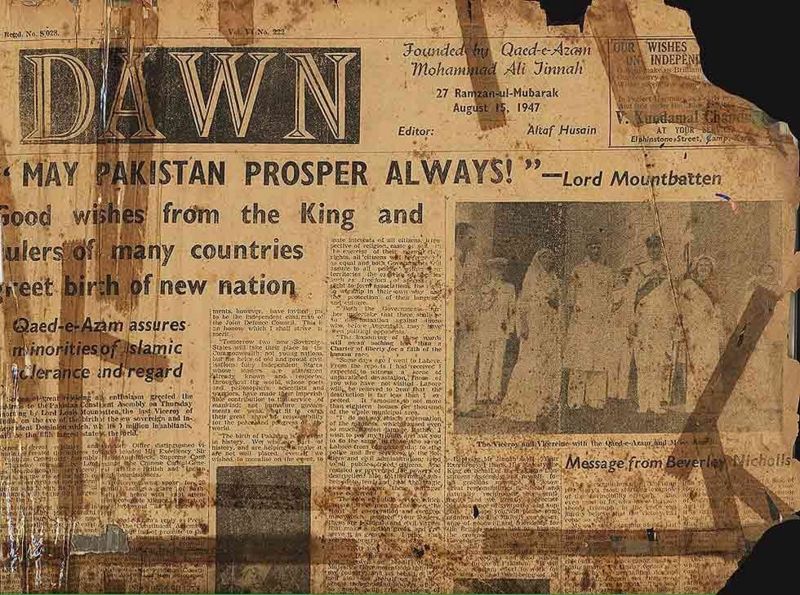
On 17 August it was published. Three of Gurdaspur's four tehsils, the sub-districts into which every Punjab district was divided, had been awarded to India. Only Shakargarh, on the far bank of the Ravi, went to Pakistan. Cheema handed the district to an Indian successor and went west; his name, with the dates 14 to 17 August 1947, is still on the board of deputy commissioners in the district office. Over the following months most of the Muslim families of the three tehsils left for Pakistan, and Hindu and Sikh families left Shakargarh for India.
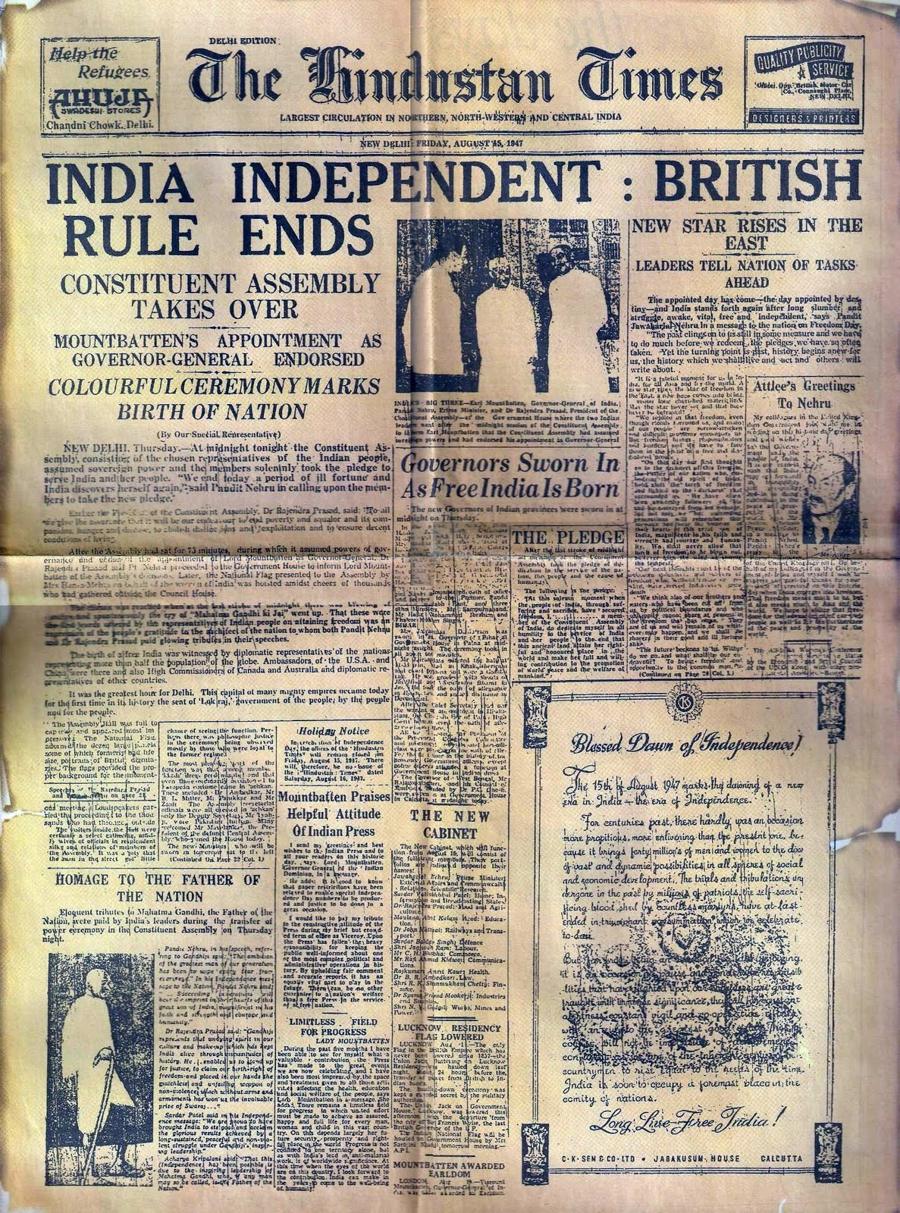
Gurdaspur is a small story inside an enormous one, but it holds the whole shape of the thing. A line was decided far away, by people who would never have to live beside it. A population learned which country it belonged to two days after that country had been born. And neighbours became refugees with a speed that still unsettles the historians who study it.
For those three days, millions of Punjabis could not say for certain which state they lived in. Many no longer needed to be told. In Lahore, Hindu and Sikh families had been leaving since the spring and were now going by the thousand; by 25 August, Jawaharlal Nehru told Gandhi, not more than a tenth remained. In Amritsar, fifty kilometres east, Muslims were going the same way. By the end of the year between eight and ten million people had crossed the new border in Punjab. Estimates of the dead in Punjab alone run from under two hundred thousand to eight hundred thousand, and demographers count more than two million people missing along the Punjab border, not all of whom died. No one counted them as they died, and no one ever will.
Fikr Taunsvi, an Urdu satirist born Ram Lal Bhatia, stayed on in Lahore until November and kept a journal as the city emptied around him. He gave that season its exact name. Punjab means "five waters"; he called his journal Chhaṭā Daryā, The Sixth River. It was published in 1948, by which time he was himself a refugee on the other side of the line.
This article is about that sixth river: where it rose, why it ran through Punjab more violently than anywhere else in the subcontinent, what it carried away, and what people built on its banks afterwards. It begins a century before 1947, because the line drawn that August was the last of many decisions, British and Indian, each of which made the next more likely. It ends in the present, because the river has not entirely run dry.
One word before we start. Punjabis call what happened the vaṇḍ, the division. In everyday speech the same word means a share: the portion of land, food or inheritance that is yours to give or to receive. In the Sikh precept vaṇḍ chhakṇā it names the duty of sharing what one has. One word holds both the partition of a country and the sharing of bread. Both meanings return before the end.
I. Before the line: the Punjab of five rivers
Five rivers come down from the Himalaya and cross the plain to the Indus: from west to east the Jhelum, the Chenab, the Ravi, the Beas and the Sutlej. They give the land its name, from the Persian panj, five, and āb, water. Between each pair lies a doāb, a "two-waters" country; the one between the Beas and the Sutlej is called simply the Doaba. The land and its waters have their own article on the five rivers of Punjab.
In 1941 the British province of Punjab held about 28.4 million people. The census counted them by religion: Muslims 57 per cent; Hindus, with the Scheduled Castes and the Ad-Dharmis, about 28; Sikhs 13; Christians about 2. With the princely states attached to it, the region held about 34 million, with Muslims nearer 53 per cent and Sikhs 15. It matters which set is meant, because the line was drawn through the British province alone. Either way, the numbers hide nearly everything that mattered.
They hide the geography. Muslims were a large majority in the west; in Rawalpindi district they were more than four people in every five. Hindus and Sikhs together were a majority in the east. In the centre, in the districts of Lahore, Amritsar, Gurdaspur, Jalandhar and Ferozepur, the communities lived interleaved, village by village and street by street. Any line drawn through the centre would leave millions on its wrong side.
They hide the predicament of the Sikhs, about one Punjabi in seven. They made up more than a tenth of the people in eleven districts but a majority in none, and were the largest community only in Ludhiana; even in Amritsar district they were 36 per cent. Many of their most sacred places lay in the west: Nankana Sahib, where Guru Nanak was born; Panja Sahib at Hasan Abdal; Kartarpur on the Ravi, where he spent his last years. Their holiest shrine, the Harmandir Sahib in Amritsar, lay in the east. From the 1880s, tens of thousands of Sikh farming families had settled on the newly irrigated lands of the western canal colonies, around Lyallpur (today's Faisalabad) and Montgomery (today's Sahiwal). No line could keep Sikh Punjab whole.
And they hide the cities. Lahore, a seat of government since the eleventh century and the cultural centre of the region, was about 64 per cent Muslim in 1941. Yet Hindus and Sikhs owned much of its property and ran much of its commerce, colleges and newspapers; when Lahore's future was argued, the Congress and Sikh case pointed out that only three of its ninety bank branches belonged to Muslims. Amritsar was its mirror: a Sikh holy city in a district nearly half Muslim. The twin cities were joined by a road, a railway and countless family ties. In 1947 a border was drawn between them.
Beneath the numbers lay a shared world and a divided one, at the same time.
The shared world is the one most survivors remember. People of all three faiths spoke the same language, ate the same food and sang the same wedding songs. Heer, the verse romance Waris Shah completed in 1766, was recited by all of them. Verses under the name of Baba Farid, the thirteenth-century Sufi of Pakpattan, are part of the Sikh scripture. Hindus and Sikhs sought blessings at Sufi tombs, and Muslims came to fairs on Hindu and Sikh holy days. In thousands of villages, farmers of different faiths worked neighbouring fields and stood at each other's weddings and funerals.
The divided world was just as real. People who shared a lane often would not share a meal, and survivors remember station vendors calling "Hindu water" and "Muslim water" from separate pitchers. Caste ran through every community. Money divided too: almost all rural lending was done by Hindus and Sikhs, and more than half the debt was owed by Muslims, as the economist Malcolm Darling found. The Punjab Alienation of Land Act of 1900 barred members of listed "agricultural tribes", of every religion, from selling their land to outsiders, chiefly the moneylending castes: a protection for indebted peasants that also wrote a new division into law. From the 1870s, reform movements built schools, presses and newspapers: the Arya Samaj among Hindus, the Singh Sabhas among Sikhs, and, among Muslims, bodies such as Lahore's Anjuman-i-Himayat-i-Islam and the Ahmadiyya movement of Qadian. They argued loudly, in print, about where one religion ended and another began.
The British came late to Punjab and changed a great deal. They annexed it in 1849, after two wars against the Sikh kingdom of Maharaja Ranjit Singh, and within a generation had made it their most valued province in the north. Engineers cut canals across the dry bar country between the rivers and settled colonists on the new land by the hundred thousand. Recruiters made Punjab the army's heartland: when the Second World War broke out, more than half of the Indian Army was Punjabi, by the India Office's own count. When the war ended, a great many men trained in modern warfare came home to a province with too little work for them.
Politics had a Punjabi shape too. The Unionist Party, founded in 1923, held office in some form from the mid-1920s and governed outright from 1937 to March 1947: an alliance of Muslim, Hindu and Sikh landed interests, led by men such as Sir Fazl-i-Husain, Sir Chhotu Ram and Sir Sikandar Hayat Khan, that governed on class rather than creed. In 1937 the Unionists won about ninety-five of the assembly's 175 seats. The Muslim League, the party that would one day demand Pakistan, won two.
Within nine years the League would hold nearly every Muslim seat in that same assembly. Within ten, the province would be cut in two. How that happened is the next part of the story.
II. Why Punjab was partitioned: the long causes
There are three short answers to why Partition happened, each repeated with great confidence. The British divided and ruled. The Muslim League demanded a separate state and would accept nothing less. The Congress would not share power and drove the League away. Each contains something true, and none survives the evidence on its own. Most historians now see Partition as long-running structures, colonial and Indian, meeting short-run decisions in 1946 and 1947 that could have gone otherwise. They disagree about the weights. This chapter sets out the long causes; the next takes up the short ones.
Counting, classifying, voting
The British ruled India partly by counting it, by religion and caste, every ten years from 1881. In 1909 the Morley–Minto reforms gave Muslims separate electorates, in which Muslim voters chose Muslim representatives. The principle was extended in 1919, when Punjab's Sikhs received separate seats, and again in 1932. Political competition was organised along religious lines a generation before 1947.
The competition reached the alphabet. Urdu in the Perso-Arabic script was the language of Punjab's courts, offices and government schools; Hindu reformers campaigned for Hindi in Devanagari, and Sikh reformers for Punjabi in Gurmukhi. Each script came to be tied to a community, until the census despaired: where the Hindi–Urdu quarrel had entered, its commissioner wrote of the count of 1941, the returns of language were worthless. Partition drew a border across that quarrel, but in Indian Punjab it ran on for twenty more years.
The idea of Pakistan
In December 1930 the poet and philosopher Muhammad Iqbal, presiding over the League's session at Allahabad, said he would like to see Punjab, the North-West Frontier Province, Sindh and Baluchistan amalgamated into a single state, self-governing "within the British Empire or without the British Empire". Most historians read this as a Muslim province within a loose Indian federation; in the same address he called a unitary form of government for India "simply unthinkable". In 1933 a Cambridge student, Choudhry Rahmat Ali, went further, calling for a separate Muslim nation in the north-west, and named it from its parts: P for Punjab, A for the Afghan frontier province, K for Kashmir, S for Sindh, and the ending of Baluchistan. The name was spelled Pakstan at first; with an i added, it could be read as the land of the pāk, the pure.
On 23 March 1940 the League, meeting at Minto Park in Lahore (today's Iqbal Park, where the Minar-e-Pakistan stands), resolved that the Muslim-majority areas of the north-west and east should be grouped into "independent states". The word was plural, and "Pakistan" was not used; the resolution soon became known by that name, and the League came to accept it. Only in April 1946 did a convention of League legislators speak of a single sovereign state.
The province that held out
Jinnah's demand had a Punjab problem: the Unionists. Under the Sikandar–Jinnah Pact of October 1937, Unionist Muslims would follow the League on all-India questions while Sikandar kept control of the province. Sikandar died in December 1942. His successor, Malik Khizr Hayat Tiwana, would not place the Punjab government under Jinnah, and in 1944 Jinnah expelled him from the League.
The Viceroy Lord Wavell's Simla Conference of June and July 1945, called to form an all-party government, foundered partly on Jinnah's insistence that the League alone nominate every Muslim member. That would have shut out Khizr's Unionist Muslims, and the Unionist premier of Punjab was one of the rocks on which the talks broke.
The Sikh dilemma
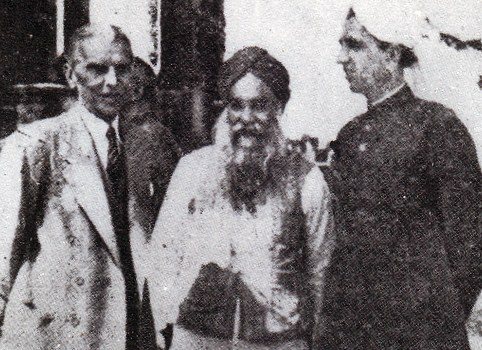
For Sikhs, a Pakistan containing the whole of Punjab meant becoming a small minority in a Muslim state that held many of their shrines and much of their land. Their leaders, Master Tara Singh of the Akali Dal foremost among them, answered with an "Azad Punjab" scheme in 1943, which would have redrawn the province so that no community dominated, and in 1946 with resolutions for a Sikh state. Older memories were close to the surface. In July 1935 Lahore had been convulsed when an eighteenth-century mosque inside the precincts of Gurdwara Shahidganj, a site the courts had awarded to the Sikhs, was pulled down. Every community in Punjab could tell a story in which it had been the one in danger.
The war years
When war came in 1939, the Congress ministries resigned in protest at India being committed without consultation; the League did not. In 1942 Sir Stafford Cripps offered provinces the right to stay out of a post-war Indian union, which many read as conceding Pakistan in principle. That August the Congress launched Quit India and its leaders spent most of the war in prison, while the League, organising freely, grew across the Muslim-majority provinces.
1946: the election that remade Punjab
The election of the winter of 1945–46 was the turning point. The League campaigned on Pakistan as a cause of faith as much as politics, and pirs, the Sufi guides whose followers could run to many thousands, came out for it; the historian David Gilmartin has shown how the League turned these networks of religious authority into votes. The result was a landslide among Muslim voters:
| Party | Seats in 1937 | Seats in 1946 |
|---|---|---|
| Muslim League | 2 | about 75, rising to 79 within weeks |
| Unionists | about 95 | about 20 |
| Congress | 18 | 51 |
| Panthic Akalis | 10 | 21 or 22 |
Counts differ over when independents are counted under a party. The League won most of the 86 Muslim seats but not a majority of the house, and could not find partners; the Akalis wanted assurances about a Sikh state. In March 1946 Khizr formed a coalition with the Congress and the Akalis, and the party most Punjabi Muslims had voted for had no place in government.
The plan that failed
In May 1946 a British Cabinet Mission proposed a loose federation for a united India, with Punjab grouped with Sindh, the Frontier province and Baluchistan, a prospect that alarmed the Sikhs. The League accepted in June; the Congress accepted with reservations. On 10 July Nehru told a press conference that the Congress would enter the constituent assembly free to change the plan. On 29 July the League withdrew and called for "Direct Action" on 16 August. "This day we bid good-bye to constitutional methods," Jinnah said, though on 14 August he told Muslims that the day was not for direct action "in any form or shape".
In Calcutta over the next four days at least four thousand people were killed, and both communities suffered terribly. The killing spread: in October to Noakhali in eastern Bengal, where Hindus were the victims; in October and November to Bihar, where Muslims were killed in their thousands, and to Garhmukteshwar in the United Provinces, where Muslims at a Hindu fair and then in the town were massacred; and in December and January to Hazara in the Frontier province, where Sikhs and Hindus were attacked and survivors fled into Punjab.
By the end of 1946 the killing had a map, and Punjab, the province of the soldiers, was not yet on it. In the first week of March 1947, it would be.
III. The spring of 1947: Rawalpindi, Lahore and the demand to divide
On 24 January 1947 Khizr's government banned two private armies in the making: the Muslim League National Guards and the Rashtriya Swayamsevak Sangh (RSS), a Hindu nationalist volunteer movement. The League answered with civil disobedience. The bans were withdrawn within days, but the agitation ran on until the ministry came to terms with the League in late February.
On 20 February the British prime minister, Clement Attlee, announced that Britain would leave India by June 1948. The question in Punjab was no longer who governed under the British but who would inherit from them, and Khizr's coalition lost its purpose. On 2 March he resigned, and League supporters celebrated in the streets.
On the night of 3 March a great meeting of Hindus and Sikhs in Lahore heard violent speeches against the League. The governor, Sir Evan Jenkins, gave the Viceroy his verdict: "At this point the non-Muslims were undoubtedly to blame; but they had put up with 34 days of League agitation and were in a hysterical state." On the Assembly steps, on the 3rd or the 4th (accounts differ), Master Tara Singh drew his kirpān, the blade carried by initiated Sikhs, and flourished it at a League crowd. Moon and the West Punjab government record the cry Pakistan murdābād, "death to Pakistan"; the Indian government's fact-finding report gives a vow that Sikhs would die before they conceded Pakistan. On the 4th Lahore erupted; on the 5th Amritsar and Multan; on the 6th Rawalpindi and Jullundur. On 5 March the governor took power into his own hands, and kept it until the British left.
From 6 and 7 March the violence took a different form. In the villages of Rawalpindi district, around Kahuta and beyond, and in Attock and Jhelum, crowds from the surrounding Muslim villages attacked Sikh and Hindu villages: Thoha Khalsa, Choa Khalsa, Doberan, Thamali and many more. Contemporary reports name men of the Muslim League National Guards, local notables, former soldiers and, in places, policemen among the organisers. Houses and gurdwaras were burned. Men, women and children were killed, some burned alive. Sikh men had their hair cut and were forcibly converted. Women were abducted, raped and forcibly converted.
When Mountbatten visited Kahuta in April, he was told that a patrol had found the town peaceful on the night of 6 March, its people on their usual friendly terms. On the 7th it was ablaze.
How many died is disputed, and the range is a lesson in sources. A police count by the Punjab Home Secretary in July 1947 gave 2,263 Hindus and Sikhs and 38 Muslims killed in Rawalpindi district, and he warned that it left out whole families wiped out with no one left to report them. The Indian government's fact-finding report estimated 2,500 dead in 110 villages. A compilation published by the Shiromani Gurdwara Parbandhak Committee (SGPC) in 1950, the work of Gurbachan Singh Talib, counted 7,000 dead in 128 villages and about a thousand women abducted; it was compiled by one side. Ishtiaq Ahmed puts the dead of 6 to 13 March in Rawalpindi, Attock and Jhelum districts at between 2,000 and 5,000 Hindus and Sikhs. Across the province, the official count of deaths since 4 March stood at 3,410 on 23 May; Jenkins thought it nearer 3,600, of whom probably not more than 600 were Muslims.
In Thoha Khalsa, after days under siege, Sikh women went into a well rather than fall into the attackers' hands. The Statesman reported a month later that ninety women had jumped, and only three were saved, because there was not enough water to drown them all. Some women and girls had already been killed by men of their own families. One who jumped, Basant Kaur, survived because the well had filled; half a century later she told the historian Urvashi Butalia what she had seen.
Survivors crowded into camps in Rawalpindi and further east; elsewhere in the west, most Hindus and Sikhs stayed put, for now. The political response came while the killing was still going on. On 8 March, citing the riots in Amritsar and Multan, the Congress Working Committee resolved that Punjab should be divided into Muslim-majority and non-Muslim-majority parts, and Sikh leaders endorsed the demand. The argument for Pakistan, that a large minority could not be left under a permanent majority, had produced its mirror image. Applied to Punjab, the same logic cut Punjab in two.
The last Viceroy, Lord Louis Mountbatten, arrived on 22 March and soon concluded that India could not be kept whole. On 2 June he put his plan to the Congress, League and Sikh leaders, and on 3 June announced it; the next day he said power would probably pass on 15 August, some ten months before Attlee's deadline. On 23 June Punjab's assembly voted as a whole, by 91 to 77, to join a new constituent assembly, which meant Pakistan's. Then the members from the eastern districts voted, by 50 to 22, to partition the province, and the western members, by 69 to 27, against. Under the plan, one vote for partition was enough.
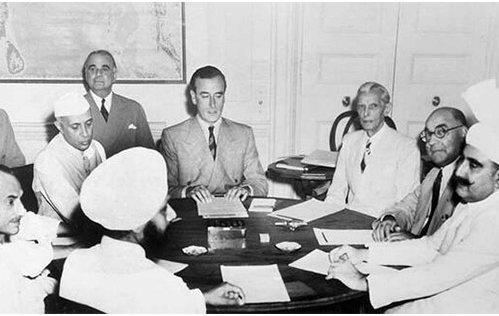
The summer burned. On 21 June two bombs in Lahore's Sabzi Mandi killed nine people; Jenkins judged it the work of Hindus or Sikhs. What followed was the burning of Shah Almi, the old city's great Hindu commercial quarter, and a wave of stabbings that he put down to Muslims. After Shah Almi the confidence of Lahore's Hindus and Sikhs broke, and families began sending women and children east. Jenkins found the RSS among the organisers on the Hindu side in Lahore itself; the League's National Guards organised across the west. From late July, armed Sikh bands called jathas raided Muslim villages around Amritsar, and by early August the raids were organised and daily. British intelligence reports, and historians since, notably Swarna Aiyar and Ian Copland, describe planning, couriers and arms. A British intelligence officer reported in August that arms were being gathered through Sikh army officers and stored in the Sikh-ruled states, and that the Raja of Faridkot had given help with transport; in several of those states, rulers and state forces would take part in what was coming. By midsummer every side in central Punjab was armed.
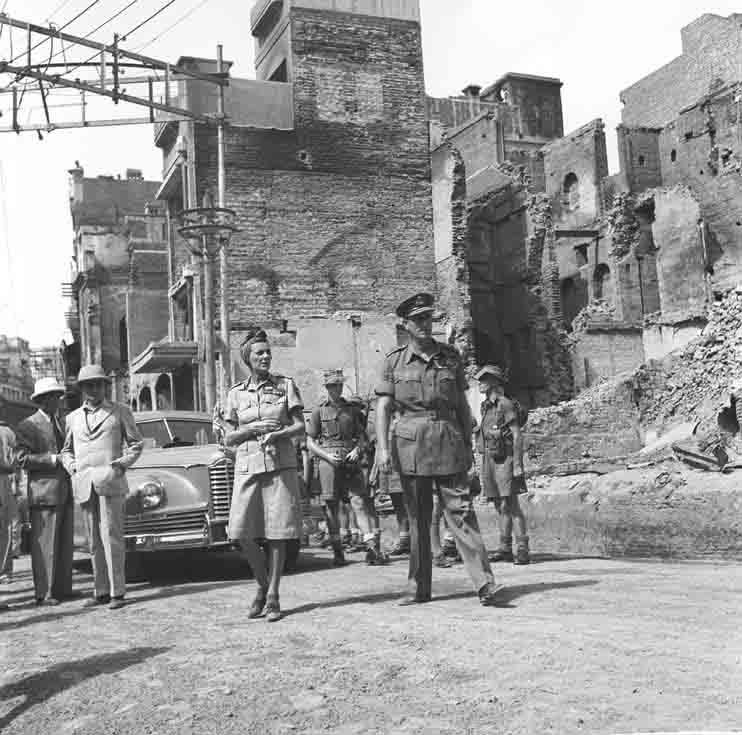
On 30 June the Boundary Commission was constituted; on 18 July the Indian Independence Act became law; on 1 August a Punjab Boundary Force began work in the disputed districts. All of this happened before anyone knew where the line would run. That was the work of a man who landed in Delhi on 8 July and handed in his awards on 13 August.
IV. The Radcliffe Line: how the boundary was drawn
Sir Cyril Radcliffe was forty-eight, one of London's most successful barristers, and the wartime Director-General of the Ministry of Information. He had never been to India. That was the point: the Congress and the League could both accept a chairman who knew no one and owed nothing. He would chair the Punjab and Bengal commissions. In Punjabi the result is simply the lakīr, the line.
The Punjab Boundary Commission had four other members, all judges or former judges of the Lahore High Court:
- Nominated by the Muslim League: Din Muhammad, who had retired from the bench in 1946, and Muhammad Munir.
- Nominated by the Congress: Mehr Chand Mahajan and Teja Singh.
It was instructed to "demarcate the boundaries of the two parts of the Punjab on the basis of ascertaining the contiguous majority areas of Muslims and non-Muslims", and to "take into account other factors". Nobody defined the other factors, and the whole case turned on them. The commission heard arguments in public at Lahore from 21 to 31 July. Radcliffe followed them from the record.
The arguments went like this:
- The Congress and the Sikhs pleaded "other factors" to push the line west, at their fullest towards the Chenab, pointing to the Sikh shrines, the canal colonies Sikh settlers had made fertile, the land, property and taxes of non-Muslims, Lahore's among them.
- The League, its case argued by Sir Muhammad Zafrulla Khan, held to contiguous majorities, claiming the Muslim-majority tehsils of Gurdaspur, Amritsar, Jullundur and Ferozepur, and at its fullest went further, into Hoshiarpur and along the Sutlej towards Ludhiana.
- The judges divided along the lines of the parties that had nominated them, so the decision fell to Radcliffe alone.
He made it with the 1941 census, district maps and a deadline. The census was itself suspect, since every community had campaigned to be counted. There was no time for a survey on the ground.
What the award did
The award was signed on 12 August.
- Lahore went to Pakistan, with almost all of its district; a strip of Kasur tehsil, around Khem Karan, went to India.
- Amritsar went to India, with a margin of territory around it, including the Muslim-majority tehsil of Ajnala (59 per cent Muslim in 1941).
- Gurdaspur district: three tehsils, Gurdaspur, Batala and Pathankot, went to India. Shakargarh, beyond the Ravi, went to Pakistan, and the river became the border.
- Ferozepur district went to India whole, including the Muslim-majority tehsils of Ferozepur (55 per cent) and Zira (65 per cent).
- Jullundur district: the Muslim-majority tehsils of Jullundur (51 per cent) and Nakodar (59 per cent) went to India.
West Punjab received about 62 per cent of the province's area and about 56 per cent of its people. Oskar Spate, a geographer who had helped the Ahmadiyya community argue that Qadian should go to Pakistan, still judged that the award left the minorities on either side close to the smallest possible: some four million people on each side.
The line cut through sacred geography:
- To Pakistan: Nankana Sahib, Panja Sahib and Kartarpur, where Guru Nanak died; in Lahore, the Mughal mosques, the shrine of Data Ganj Bakhsh, and the gurdwaras and samadhi of the Sikh kings.
- To India: Dera Baba Nanak, facing Kartarpur across the river; and Qadian, birthplace of the Ahmadiyya movement, whose leaders moved to Pakistan and built a new centre at Rabwah in 1948.
It also cut through the water. The headworks at Madhopur on the Ravi and Ferozepur on the Sutlej went to India, though many of their canals ran on into Pakistan. Radcliffe hoped the system might be managed jointly. It was not.
Three disputes
Gurdaspur. The charge most often made in Pakistan is that the three eastern tehsils were given to India to provide a road into Jammu and Kashmir, whose ruler had not yet chosen a side. When war broke out there in late October, India flew its troops in; the road through Pathankot, then a poor fair-weather track, was improved over the following months into India's main overland link. The answer most often given is geographical:
- the Ravi was a natural boundary;
- Pathankot tehsil had a non-Muslim majority (Muslims were 39 per cent);
- the three tehsils protected Amritsar, the railway and the Madhopur headworks;
- in February 1946 Lord Wavell, sketching the "genuinely Moslem areas" in case Britain had to impose a line, had already left Gurdaspur out of Pakistan: it "must go with Amritsar for geographical reasons".
Radcliffe later said he had not even been aware of Kashmir when he drew the line, and the historian Lucy Chester finds no evidence that Mountbatten influenced it there.
Ferozepur. Here there is a paper trail.
- On 8 August Mountbatten's private secretary, George Abell, sent the governor in Lahore a sketch of the boundary Radcliffe was expected to draw. It put the Ferozepur and Zira tehsils in Pakistan.
- On 9 August Nehru sent Mountbatten an engineer's note calling it "most dangerous" to let Ferozepur go to Pakistan; Mountbatten refused to pass it to Radcliffe. On 10 August the Maharaja of Bikaner, whose Gang Canal drew from the Ferozepur headworks, telegraphed the Viceroy too.
- Jenkins recalled in April 1948 that on about 10 or 11 August a secraphone message from Viceroy's House reached him in Lahore containing the words "Eliminate salient".
- The published award gave both tehsils to India.
- Radcliffe's private secretary, Christopher Beaumont, said in statements of 1989 to 1992, reported in the Daily Telegraph, that Mountbatten had persuaded Radcliffe to give Ferozepur to India; he believed it was settled at a lunch on 12 August from which he was "deftly excluded".
- In a top-secret letter to Lord Ismay in April 1948, which he asked Ismay to burn, Mountbatten wrote that he had never seen Abell's forecast, and recalled telling Radcliffe that the Sikh attitude had become "rather worse than we had anticipated", and that "any generosity to Pakistan should be given more in Bengal than the Punjab".
- Radcliffe told Kuldip Nayar in 1971 that he had given India Ferozepur and Zira of his own judgement, and that nobody had pressed him, though he had been pressed for the report.
On Beaumont's evidence, Chester concludes that Mountbatten swayed Radcliffe over Ferozepur, though not over Gurdaspur.
Lahore. In that 1971 interview at his London flat, by Nayar's account, Radcliffe told him: "I nearly gave you Lahore." He changed his mind, he said, because Pakistan would otherwise have had no large city; he had already earmarked Calcutta for India. With two or three years, rather than a few weeks, he might have improved on what he did. One interview, written down decades later, is testimony, not proof: Probable at most.
Holding the line back
The award was ready by noon on 13 August, too late, Mountbatten later said, for him to read before he flew to Karachi. He held it until after independence, so as not to spoil the celebrations or have the reaction fall on a British government in its last hours. Critics answer that the delay left officials, soldiers and villagers without the one fact they most needed; defenders, that earlier publication would only have brought the killing earlier. The leaders saw it on 16 August. Every side protested. Liaquat promised to stand up for the Sikhs of West Punjab as much as the Indian leaders stood up for the Sikhs of East Punjab; Vallabhbhai Patel said the only solution was a transfer of population on a large scale. It was published on the 17th, as it stood.
On 31 August, in a broadcast from Lahore, Jinnah called the award "unjust, incomprehensible and even perverse", perhaps "not a judicial but a political award", but said Pakistan had agreed to abide by it. Sikh leaders mourned Nankana Sahib and the canal colonies. Radcliffe had already left India by air, never to return. He destroyed his notes and drafts, as he later confirmed, and is widely reported to have refused his fee. W. H. Auden made him the subject of a short, bitter poem, "Partition" (1966), about asking a stranger to settle a quarrel he had no time to understand.
Historians broadly agree that no line through central Punjab could have avoided leaving millions on its wrong side. But a boundary does nothing by itself. What filled the next ten weeks was done by people, and in many places it had been planned before anyone knew where the line would run.
V. August to November 1947: the sixth river
Many Punjabis, on both sides of the border, still refer to these months simply as the raule: the uproar, the disturbances. It is a modest word for what happened. Perhaps that is the point of it.
What kind of violence was this?
At the time, officials called it rioting. Few historians now find the word adequate: riots are spontaneous and local, and much of what happened between August and November was neither. The killing in central Punjab was carried out in large part by armed groups with leaders, couriers, transport and lists: in the west the Muslim League National Guards and bands raised by landlords and officials; in the east Akali jathas, often mounted and carrying rifles, RSS volunteers in the towns, and in the Sikh states, the states' own forces and arms; everywhere, former soldiers and deserters. In both Punjabs the police too often joined their own community; Ian Talbot documents police killing, looting and rape on both sides.
Against this stood the Punjab Boundary Force under Major-General T. W. "Pete" Rees. It was often called 50,000 or 55,000 strong, but India's Defence Minister later put it at about 25,800 of all ranks, administrative units included, and a week before independence Jenkins reckoned it at about 7,500 effective rifles. With those men it was to police twelve districts holding some fourteen and a half million people, in the monsoon, while its soldiers were themselves being divided between two armies. It was disbanded at midnight on 31 August. "In the Punjab we have 55 thousand soldiers and large-scale rioting on our hands," Mountbatten wrote to Gandhi, then in Calcutta, on 26 August. "In Bengal our forces consist of one man, and there is no rioting."
The cities empty
By the last week of August, Lahore and Amritsar were mirror images. On 25 August Nehru, now India's prime minister, wrote to Gandhi after his second visit to Punjab. "Not more than 10% of the original Hindu-Sikh population remains in Lahore," he reported, "and perhaps even less than 10% of the original Muslims are now in Amritsar." He thought that over the previous three weeks more Muslims had been killed in East Punjab than Hindus and Sikhs in the west, perhaps up to ten thousand, though "we really do not know". And he wrote: "In eastern Punjab probably the Akali Sikhs have indulged in killing more than anyone else."
It is worth pausing on that letter: the head of the Indian government, writing privately about his own side of the line. No honest history of 1947 can tell the story from one bank only.
In Lahore, Fikr Taunsvi kept his journal while old friends turned nationalist and advised him to convert or leave. In November he went into the Lahore refugee camp, and crossed at Wagah on a lorry full of refugees to the camp in Amritsar.
The countryside, east and west
In the east, Muslim villages in Amritsar, Jullundur, Hoshiarpur, Ludhiana and Ferozepur districts were attacked and emptied. In the Sikh princely states, Muslims were killed or driven out in very great numbers, in several with the help of state troops; Ian Copland's study of the Sikh princes is the essential account. Even Khosla's Indian fact-finding report, written to document the other side's guilt, conceded "heavy loss of Muslim life among the Patiala Muslims", and printed a witness's statement that the state's Muslims, about a third of its people, had been "virtually either wiped out or expelled".
In the west, at Sheikhupura between 24 and 26 August, Hindus and Sikhs were massacred in the town and the villages around it after a curfew had been imposed, with troops and police accused of joining in. Nehru went there on 31 August. "I am sick with horror," he wrote to Mountbatten that day: "What we saw was bad, what we heard was worse." Khosla's Indian fact-finding report settled on about ten thousand dead, from estimates of eight to twenty-five thousand; the SGPC said fifteen thousand. The figures cannot be checked, and were compiled by one side.
The same story ran through Gujranwala and Sialkot, where Ilyas Chattha has worked through the police and district records, and through Lyallpur, Montgomery and the south-west.
In October and early November the killing reached Jammu, where Muslims were massacred and driven into West Punjab in numbers still disputed; Pakistan blamed Sikh and RSS bands and the state's forces. On 25 November Nehru told the Indian assembly that Muslim evacuee convoys near Jammu had been attacked by "non-Muslim refugees and others", and that the troops escorting them "did not play a creditable role". In November, tribal raiders and fighters backed by Pakistan massacred Hindus and Sikhs at Rajouri and Mirpur.
The trains
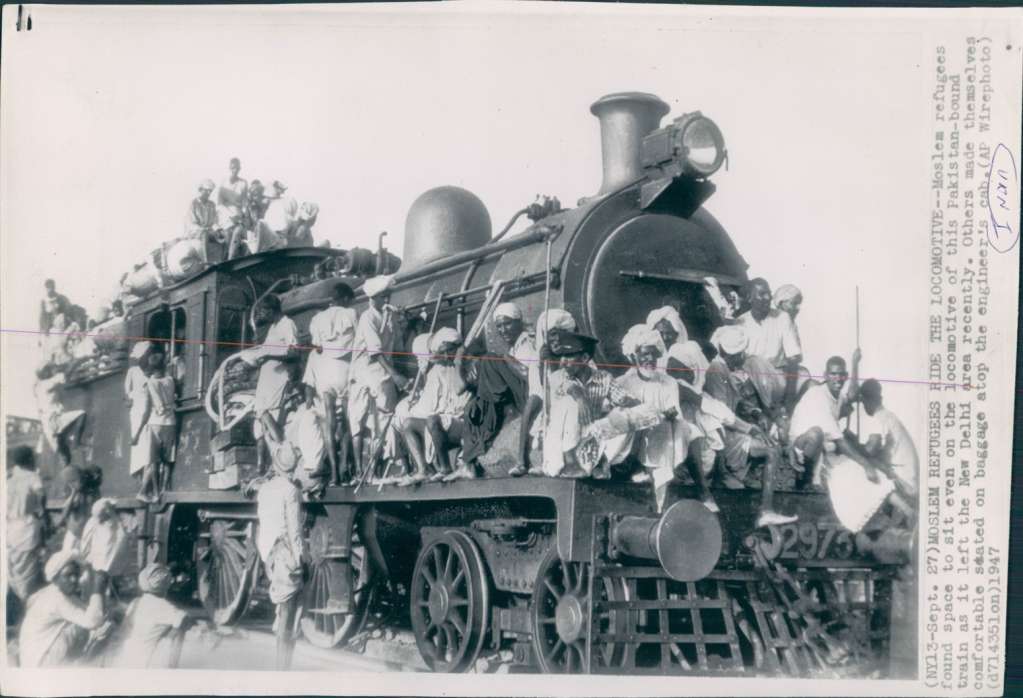
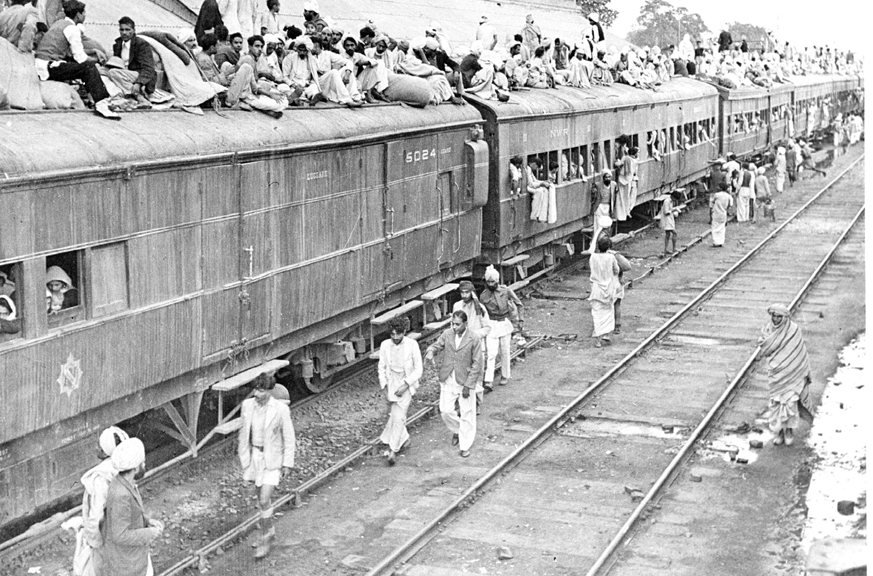
The railway that had joined Lahore to Amritsar became a line of killing grounds. Refugee trains were attacked on both sides, often in reprisal for the last attack on the other. Some arrived with no one alive aboard, and Khushwant Singh made them the centre of Train to Pakistan (1956). A few can stand for many, and every figure is disputed:
| Date | Place | Victims | Reported dead |
|---|---|---|---|
| 22 September 1947 | Amritsar, near Khalsa College | Muslim refugees bound for Pakistan | 1,000 or more of the 2,000 to 2,500 aboard, by a British officer's report of the next day; "very heavy", without a number, by Khosla's; three to four hundred "victims" brought on to Lahore, by the West Punjab government's |
| 24 September 1947 | Kamoke, near Gujranwala | Hindu and Sikh refugees bound for India | about 300 by the West Punjab government's own account; about 1,000 by the SGPC's; nearly all of more than 3,000 aboard, with some 600 girls carried off, by Khosla's |
| 11–12 January 1948 | Gujrat | Hindu and Sikh refugees from Bannu | at least 500 by Khosla's account; Nehru reported about 300 dead and many missing |
The night before the Amritsar attack, a train of Hindus and Sikhs had been attacked at Harbanspura, outside Lahore. A report on East Punjab by Colonel Sher Khan, which reached West Punjab's governor, described the Amritsar train as one in which "every occupant was killed, wounded or abducted", and he wrote that he had himself seen the police join in.
The columns
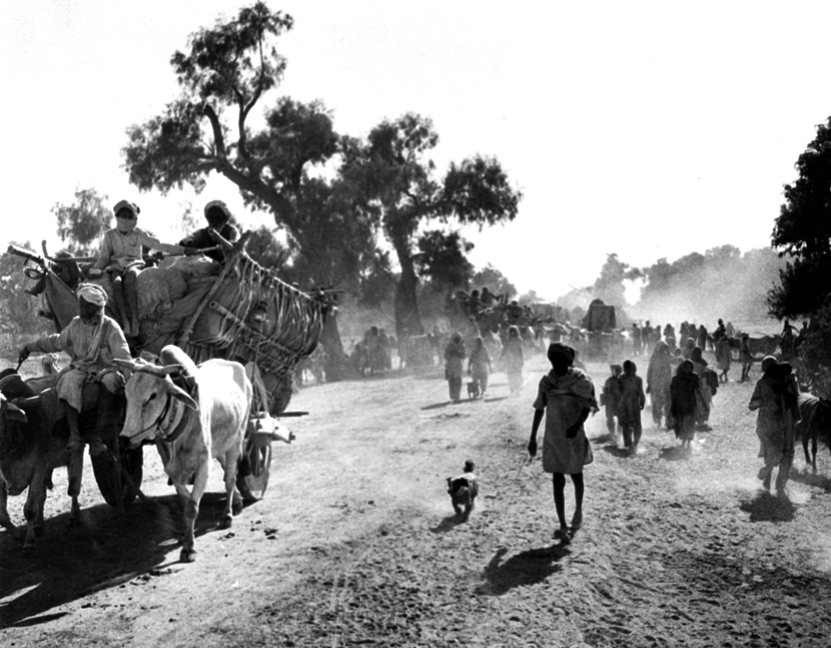
Survivors on both sides call what came next the ujāṛā, the uprooting: the emptying of a settled place. Most Punjabis did not travel by train. They walked, or rode in bullock carts, in columns, each called a qāfilā, a caravan, escorted from early September by the two armies' Military Evacuation Organisation. Between 18 September and 29 October, by East Punjab's count, twenty-four foot columns of Hindus and Sikhs, 849,000 people, crossed into India. The largest, Urvashi Butalia writes, was said to number nearly 400,000 and to have taken eight days to pass a single point; the historian Kirpal Singh puts the biggest, from Lyallpur and Montgomery, at 300,000. At one point, an East Punjab official wrote, the road held at least half a million people over eighty miles. Muslim columns moved west along the same roads. Flying over both on 21 September, Mountbatten wrote to the King that the Muslim columns "appeared poor and ill-organised", as if they had been "driven out or fled in panic, as indeed they had". Khosla's own report prints a witness's account of a column of Muslims walking from Kapurthala to Jullundur under a thin escort: armed Sikhs in the fields made sudden sallies and dragged women out, and by the time it arrived almost all its women and girls had been taken.
Then the weather turned. In the second half of September, worst on the 24th and 25th, the Sutlej, the Beas and the Ravi broke their banks; refugees camped on low ground were swept away, and floods breached the railway. Cholera and dysentery followed. In mid-September Nehru reckoned about a million and a quarter had crossed each way; by November, about three million on each side.
At the end of the road were the camps. At Kurukshetra, on the plain the Mahabharata names as its battlefield, a tent camp grew to hold more than 300,000 people; Henri Cartier-Bresson photographed it that autumn. Delhi's camps held both flows at once: Hindu and Sikh refugees from the west at Kingsway and elsewhere, and in the Purana Qila and around Humayun's Tomb some 120,000 of Delhi's own Muslims, driven from their homes, many waiting to leave for Pakistan. In Lahore, Muslim refugees from the east were brought first to the Walton Training School camp and sent on from there, while other camps, among them one in the D.A.V. College, held Hindus and Sikhs waiting to leave. Disease spread through the West Punjab camps faster than doctors could be found, in part because, as Ilyas Chattha has shown, Hindus and Sikhs had supplied more than half the medical officers of colonial West Punjab, and most had gone east.
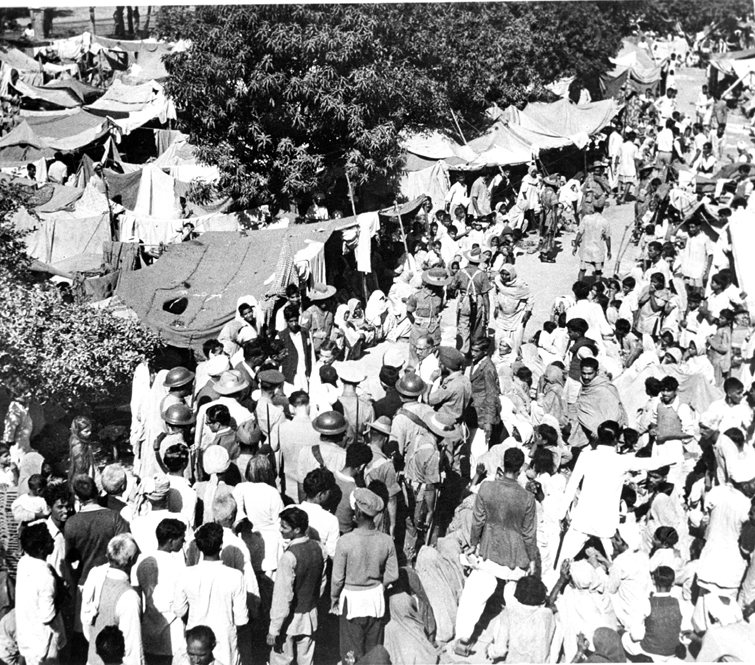
People who would not
Almost every large collection of Partition testimony, from either side, contains rescue: neighbours hidden in grain stores and cattle sheds, families walked to a camp by people of the other faith, village elders who turned a mob away. Gandhi said so at the time: he had "innumerable instances", he told a prayer meeting in October, of Sikhs and Hindus saving Muslims and Muslims saving Sikhs and Hindus by keeping them in their own houses. Rescue rarely makes national memory, because it fits neither side's story of who suffered and who struck. Oral historians find it wherever they look.
One place became famous for it. Malerkotla, a small Muslim-ruled state south of Ludhiana, was almost untouched while the Sikh-ruled states around it were convulsed.
Of all who suffered in these months, one group was singled out deliberately, on every side. "Worse than the killing," Nehru wrote in the same letter of 25 August, "have been the horrible outrages on women on both sides."
VI. The women of 1947
In 1947 the bodies of women were treated as the territory of their communities, to be captured, defended or destroyed, and the izzat, the honour, of a family or a faith was made to rest on them. On every side, women were abducted, raped, mutilated, sold, forcibly converted and married, and killed. Many were killed by their own families, or killed themselves, to escape capture; the best-recorded cases are among Sikh and Hindu families in the west, at Thoha Khalsa and Choa Khalsa in March, and at Sheikhupura, Sialkot and Gujranwala that summer. Mountbatten, after his visit to Kahuta, wrote that many Hindu and Sikh women had "taken their lives rather than be raped or forcibly converted".
Many women were not killed but kept, across the new border or in villages on the wrong side of it, as captives, servants or wives. The figures most often quoted, about 50,000 Muslim women held in India and 33,000 Hindu and Sikh women in Pakistan, were not a joint count: each was one government's estimate of its own community's women held across the border. Some of the women who led the search believed the true numbers higher.
In September and December 1947 the two governments agreed to find the abducted women and send them "home". The December agreement, made at Lahore, was blunt: conversions after 1 March 1947 would not be recognised, and "The wishes of the persons concerned are irrelevant." In India an ordinance of January 1949, then the Abducted Persons (Recovery and Restoration) Act of that December, gave the search the force of law; Pakistan passed no matching law. The Act defined an abducted woman by the cut-off of 1 March 1947, so later conversions and marriages counted for nothing; a recovered woman had no choice of where she went; and the courts were kept out.
Police and social workers searched villages on both sides. The work in India was led by women such as Mridula Sarabhai and Rameshwari Nehru; two who worked with them, Kamlaben Patel and Anis Kidwai, later wrote accounts of it. By the mid-1950s about 30,000 women had been recovered: some 20,700 Muslim women in India and about 9,000 Hindu and Sikh women in Pakistan, by Menon and Bhasin's figures. The governments' own returns, which count children too, give 25,856 and 9,366.
Those numbers conceal the hardest questions of the whole history.
- Some women did not want to be recovered. Years had passed; some had children, and lives they did not want to leave a second time.
- Many feared their own families would not take them back. Gandhi and Nehru appealed to families to receive them without shame; the testimony later recorded shows that some would not.
- Children born to recovered women were often separated from their mothers.
Nehru saw the problem early. "There is the agreement with Pakistan," he wrote in March 1948, "and at the same time I just do not see how you can force these girls to go to Pakistan against their wishes." Only in May 1954 did the governments agree that no woman would be sent across against her will, and India let its Act lapse in 1957.
Butalia, Menon and Bhasin have argued that the states, in reclaiming "their" women, treated them much as the abductors had: as property whose place was decided by men and nations. Others stress that many women were desperate to return and came home only because the states insisted. Both are true of different women.
Writers saw it first. Rajinder Singh Bedi's short story "Lajwanti" follows a man who campaigns for families to take abducted women back into their hearts. When his own wife comes back, he calls her devī, a goddess, will not hear what happened to her, and can no longer treat her as a wife. Amrita Pritam's novel Pinjar (1950) follows Puro, a Hindu girl abducted by a Muslim, Rashid, years before Partition and refused by her own family; in 1947 she helps rescue other abducted women, and when she can go back, she chooses to stay.
For decades these women were spoken about far more often than to. Their own accounts entered the history only in the 1980s and 1990s, when Butalia, Menon, Bhasin and others recorded them. By then many had died. The silence was part of the damage.
How many people, in all, did Partition kill? The honest answer takes a chapter of its own.
VII. Counting the dead
Nobody kept a register. Whole villages were destroyed with everyone in them; bodies went into canals, wells and rivers; families never learned who had fallen where on the road. Thousands more died weeks later of cholera, exposure and hunger, counted, if at all, as dead of disease.
What survives is a set of estimates, each made by someone with a method and a point of view:
| Estimate | Who made it | Scope and basis |
|---|---|---|
| about 180,000, perhaps fewer | Penderel Moon, a former Punjab official who in 1947 was a minister in Bahawalpur State, in Divide and Quit (1961) | the Punjab and its princely states from August 1947; about 200,000 with the neighbouring areas. He later thought even that too high. |
| about 200,000 | H. V. Hodson, The Great Divide (1969) | August to November 1947; he noted that "the figure of a million was popularly bandied about" |
| about half a million | G. D. Khosla, a judge of the East Punjab High Court, in Stern Reckoning (1949), drawing on India's Fact Finding Organisation | the subcontinent from August 1946: 200,000 to 250,000 Hindus and Sikhs in what became Pakistan, and an assumed equal number of Muslims in India; compiled for one side |
| half a million to a million Muslims | The Sikhs in Action (Lahore, 1948), generally attributed to the Government of West Punjab | Muslims killed in Punjab and Kashmir in 1947; a claim made by one side |
| 500,000 to 800,000 in Punjab; about one million in all | Ishtiaq Ahmed, The Punjab Bloodied, Partitioned and Cleansed (2011) | Punjab, both sides; the subcontinent |
| up to two million | the top of the range: "a later Indian estimate", in Urvashi Butalia's words (1998); Ishtiaq Ahmed notes that "some people" have suggested it | the subcontinent; no method published |
Moon's figure rests on a calculation that can be followed. He and Sir Francis Mudie, the governor of West Punjab, each reached about 60,000 dead in West Punjab and Bahawalpur from August onwards. Moon at first assumed East Punjab's toll twice as high, but later concluded that, though certainly higher, it was not double. Nehru's letter of 25 August says much the same, and adds: "We really do not know." But Hindus and Sikhs had already suffered the massacres of March, and any comparison changes with the period chosen. Historians compare in order to understand. It is not a scale on which suffering can be weighed.
Demographers have come at it another way. Prashant Bharadwaj, Asim Ijaz Khwaja and Atif Mian compared the census of 1931 with the 1951 censuses of India and Pakistan, district by district, setting aside the 1941 count as unreliable. They estimate that about 17.9 million people left their homes, but only 14.5 million can be found arriving. That leaves some 3.4 million "missing", more than two million of them along the Punjab border; a study by Kenneth Hill and colleagues reached a figure of the same order. Along the Punjab border, the missing were almost the same share of each group that moved: about 16.1 per cent of migrating Muslims and 15.6 per cent of Hindus and Sikhs. The authors urge caution, since the outflows rest on assumptions about population growth; if those hold, they think most of the gap reflects deaths, including from disease and hunger on the move.
The historian Gyanendra Pandey has pointed out how far apart the estimates run, and argued that the numbers themselves carry the marks of rumour: precise, yet extravagant, and repeated as history. That is not a reason to stop counting. It is a reason to say how we know what we say.
That the dead in Punjab numbered in the hundreds of thousands, and included very large numbers of Muslims, Hindus and Sikhs, is Well-established. Any single total is Contested.
The killing had largely ended by the winter. For the survivors, the questions had only begun: where to live, on what land, among whom, and as what.
VIII. Camps, claims and new cities: the aftermath
The survivors needed a name, and each side chose its own.
- In India they were sharnārthī, "seekers of refuge", a learned word built from Sanskrit; the government's own term was "displaced persons".
- In Pakistan they were above all muhājar, the Arabic word for an emigrant, which echoes the hijra, the Prophet's migration from Mecca to Medina, and so carries a sense of migration made for faith. Urdu's formal word for a refugee is panāh-guzīn, "one who seeks shelter".
The words were argued over at once. In November 1947 refugees in Delhi asked Gandhi why he called them sharnārthī, people seeking shelter, in a country that belonged to them. "So, when they come over here," he told his prayer meeting, "they do so as a matter of right." In Sindh, muhajir later became the name of a distinct Urdu-speaking community; in Punjab it has mostly remained a description of where a family came from.
Land, east of the line
Most refugees were farmers, and the hardest problem was land. Hindu and Sikh landholders had left about 6.7 million acres in West Punjab; the Muslims who left East Punjab and the Sikh states had left about 4.7 million, much of it worse. Of the land abandoned in the west, 4.3 million acres were irrigated, against 1.3 million in the east.
East Punjab's government, with Tarlok Singh as Director-General of Rural Rehabilitation, first gave every refugee farming family a temporary holding, about ten acres, so a crop could be sown; many landless labourers and village servants received land in this first round too. In March 1948 it invited claims, and more than half a million were filed. Officials thought them inflated by about a quarter and checked them through panchayats of the claimants' former neighbours, and the governments on both sides agreed to exchange copies of their village land records. Two devices made the allocation possible:
- The standard acre valued land by what it could produce, so that dry land counted for a fraction of canal land and claims from different districts could be compared.
- The graded cut reduced every claim to fit the smaller pool: the larger the claim, the larger the share removed. Small farmers lost least, and the great estates of the west were not re-created in the east.
By November 1949 a quarter of a million allotments had been made. M. S. Randhawa, a senior official of the period, wrote its history in Out of the Ashes (1954).
Land, west of the line
West Punjab took in more people than it lost: some 1.7 million more, by the reckoning of Chaudhri Muhammad Ali, then a senior Pakistani official. In October 1947 Liaquat Ali Khan moved his headquarters to Lahore for a time, at the head of a Pakistan Punjab Refugee Council, and Jinnah opened a relief fund in his own name. The camps, meant for transit, became more or less permanent: in April 1948 they still held about three-quarters of a million people.
- Custodians took charge of the land and houses that Hindus and Sikhs had left, and refugees were settled on them, at first temporarily.
- Where the refugees went: everyone wanted land in the canal colonies of Lyallpur and Montgomery, and there was not enough; in Montgomery refugees clashed with the police over land already given to earlier arrivals.
- The politics of land: Mian Iftikharuddin, West Punjab's refugees minister, resigned within months. Muhammad Ali says it was partly in protest at the way control of evacuee property was divided between ministers, which made each deputy commissioner "a law unto himself".
- Corruption: Ilyas Chattha, from Pakistan's rehabilitation files and police and court records, shows politicians, officials, notables and organised refugee groups grabbing evacuee property, often by bribery, and argues that the talk of corruption it bred weakened Pakistan's early democracy and was later used to justify military rule.
Who was left out
Nearly every account of resettlement, in both countries, tells of landowners and shopkeepers rebuilding. Ravinder Kaur has shown what that leaves out. The temporary allotments had reached many landless families, but the permanent scheme of 1949 matched land in the east to land held in the west, and leaders of the landless Scheduled Castes argued in vain for land to go to those who tilled it. Since the 1900 Act had kept those outside the "agricultural tribes" from buying land from them, and they held most of the farmland, few Dalits had anything to claim. They arrived landless, were often resettled separately, and are largely missing from the triumphant version of Partition; Kaur argues that the absence is itself evidence of how they were treated.
The cities
Lahore and Amritsar were rebuilt as mirror images, each with a new population and a border on its doorstep; Ian Talbot's Divided Cities is the account of both. Delhi's population nearly doubled between 1941 and 1951, and Punjabi refugees, in colonies laid out for them across the city, remade the capital.
East Punjab had lost its capital, and chose to build a new one rather than enlarge an existing town. Chandigarh, planned first by the American Albert Mayer and redesigned by Le Corbusier and his team from 1951, was built through the 1950s as Punjab's answer to the loss of Lahore. Nehru backed it from the start: "Let this be a new town, symbolic of the freedom of India, unfettered by the traditions of the past," he was quoted as saying in 1950; later versions add, "an expression of the nation's faith in the future".
War and murder
Partition's violence did not end at the border. In October 1947 tribal raiders from Pakistan entered Kashmir and India flew in troops; by May 1948 Pakistan's army was in the fight, and Punjabi soldiers who a year earlier had served in one army were fighting each other. From 13 to 18 January 1948 Gandhi fasted in Delhi for "a reunion of hearts of all communities", and India agreed to pay Pakistan the 550 million rupees it had held back. On 30 January he was shot dead by Nathuram Godse, a Hindu nationalist who blamed him for exactly that.
Relief, meanwhile, was being organised by women on both sides of the border, among them several of the women named in Chapter VI. In Pakistan, Begum Ra'ana Liaquat Ali Khan, the prime minister's wife, led a Women's Voluntary Service to help the refugees, and out of it founded the All-Pakistan Women's Association in February 1949.
The camps closed long ago. Some of what Partition made was built to last.
IX. What still echoes: borders, water, scripts and memory
The border
The line became one of the most heavily guarded borders in the world. Its road crossing at Wagah and Attari, between Lahore and Amritsar, has staged a daily flag-lowering ceremony for more than sixty years. Farmers on both sides till land up to the line; on the Indian side many pass through gates in the fence to reach their own fields. The two armies' Punjabi soldiers met in battle again in 1965, around Lahore and near Khem Karan, and in 1971.
The water
The canal system had been built as one machine for one province, and Partition cut it: the headworks at Madhopur and Ferozepur were in India, the fields many of their canals watered in Pakistan.
- In December 1947 the chief engineers of the two Punjabs signed a standstill agreement to keep the water flowing until 31 March 1948.
- On 1 April 1948, with no new agreement, East Punjab shut off the supply to West Punjab's canals: a lapse of paperwork, or a show of power, depending on who tells it. Sir Patrick Spens, who chaired the tribunal dividing undivided India's assets, said in 1955 that he had been "very much upset", since its awards assumed the flow would not be touched.
- Water flowed again within weeks, and on 4 May an agreement signed in Delhi by Nehru and Pakistan's finance minister, Ghulam Muhammad, set terms for the time being; Pakistan later rejected them.
- On 19 September 1960, after nine years of talks brokered by the World Bank, Nehru and Pakistan's president, Field Marshal Ayub Khan, signed the Indus Waters Treaty in Karachi. It gave the eastern rivers, the Ravi, the Beas and the Sutlej, to India, and the Indus, the Jhelum and the Chenab largely to Pakistan.
The five rivers had been divided again, this time by treaty.
The treaty survived the wars of 1965, 1971 and 1999. In April 2025, after an attack on tourists at Pahalgam in Indian-administered Kashmir, India declared it "in abeyance"; Pakistan rejected the step. On 31 August 2026 a Court of Arbitration at The Hague, in proceedings India refused to join, ruled unanimously that the treaty remains fully in force. India rejected the award the same day, calling the court a body set up "in patent breach of the terms of the Treaty". The dispute was unresolved at the time of writing.
The scripts
The quarrel over scripts was old, and Partition did not end it:
- East of the line, Punjabi in Gurmukhi became bound up with Sikh identity. The quarrel between Hindi and Punjabi grew so bitter that the 1951 census found the language returns "extensively falsified as a result of public agitation" and counted Hindi, Urdu and Punjabi together; in 1961 many Punjabi-speaking Hindus, urged on by campaigners, returned Hindi. In 1966, after a long campaign for a Punjabi-speaking state, the Punjabi Suba, India divided its Punjab again: Haryana was created, and the hill districts joined Himachal Pradesh.
- West of the line, Urdu stayed the language of schools and offices, now as the national language, and Punjabi in Shahmukhi lived on in poetry, theatre, song and the home.
Punjabia prints both scripts side by side for this reason. One language already had two alphabets, and in 1947 a border was drawn between them.
Sacred places across the line
Under a protocol of 1974, organised pilgrims cross to an agreed and since enlarged list of shrines:
- In Pakistan, among others: Nankana Sahib, Panja Sahib, Gurdwara Dera Sahib and Ranjit Singh's samadhi in Lahore, and the Hindu shrines of Katas Raj and Shadani Darbar.
- In India: the Sufi shrines of Ajmer, of Nizamuddin and Amir Khusrau in Delhi, of Shaikh Ahmad Sirhindi at Sirhind, and of Sabir at Kaliyar.
In November 2019 a corridor opened from Dera Baba Nanak to Kartarpur, where Guru Nanak spent his last years, so that Indian pilgrims could cross a few kilometres to the gurdwara without a visa.
It closed during the pandemic, from March 2020 to November 2021. India suspended it again on 7 May 2025, after Pahalgam, and as of October 2026 it remained closed from the Indian side, though Pakistan said its side was open. That a few kilometres of road open and close with the temperature between two capitals is a measure of how close to the surface 1947 remains.
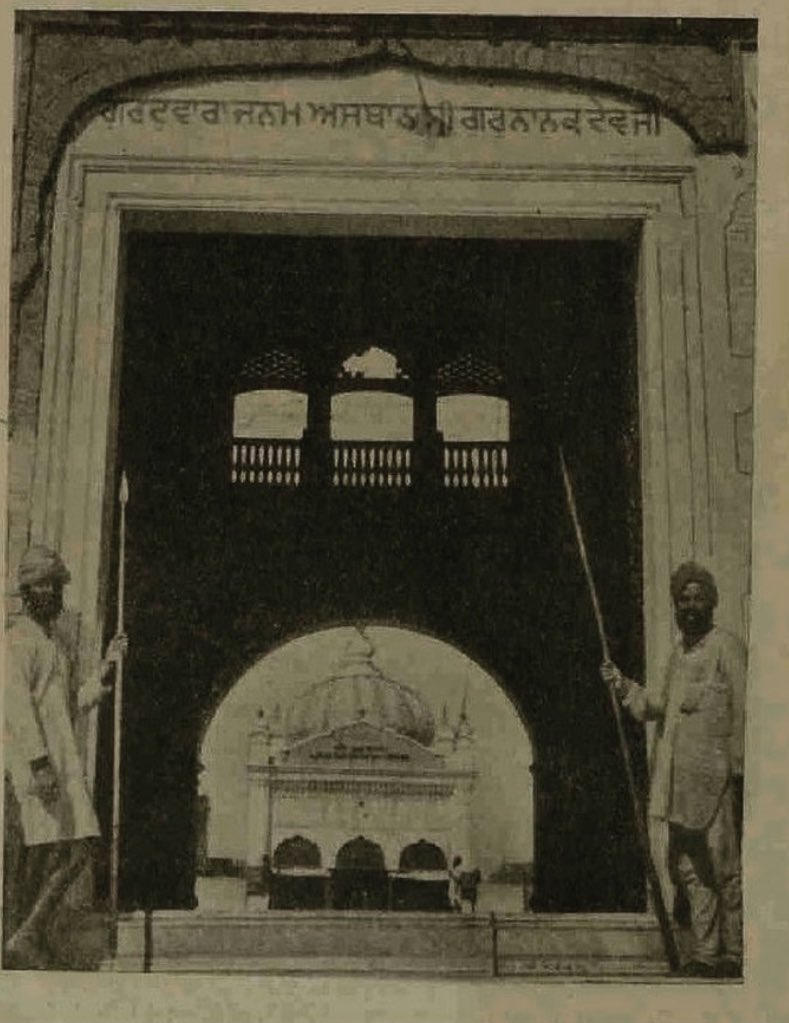
Memory, silence, and the uses of the past
Many survivors said little about 1947 to their children. Some could not; others feared what the telling would do to a family, or to a neighbourhood where people from the other side now lived. Their children grew up with fragments: a town name, a word, a refusal to visit a certain city. That second generation carries what the scholar Marianne Hirsch, writing about the children of other catastrophes, has called "postmemory": the way a catastrophe their parents lived through reaches the next generation, through what was told and what was left unsaid, so strongly that it feels like their own memory.
Both governments took thousands of statements from refugees in 1948 and 1949, to make their own case; recording ordinary memories for their own sake began much later. The 1947 Partition Archive, started in Berkeley, California, by Guneeta Singh Bhalla, says it has preserved more than twelve thousand witness accounts, on both sides and across the diaspora, and the Citizens Archive of Pakistan, founded in 2007, has gathered more than five thousand oral histories. The Partition Museum opened in Amritsar's Town Hall with a preview in October 2016, and in full in August 2017. Aanchal Malhotra traces memory through the objects refugees carried. Every one of these projects describes the same urgency: the last witnesses are now very old.
Partition also travelled, with the families who later moved to Britain, Canada and the United States in the great migrations of the post-war decades. For many diaspora households, 1947 is the reason the family left the village at all.
None of this is the whole story. The rest of it is what people did with what they had left.
X. Rebuilding: the resilience of Punjabis
"Resilience" is a word that can flatter the survivors and excuse what was done to them. Used carefully, it names something real: what people did after they had lost almost everything. On both sides of the line, they did a great deal.
From refuge-seekers to strivers
The refugees who objected to Gandhi's word did not only object. Some in Delhi called themselves puruṣārthī instead: those who strive and stand on their own feet, from the old idea of puruṣārtha, the aims a person pursues in life. Ravinder Kaur, who interviewed Punjabi refugees in Delhi, found that many called themselves refugees only when the label brought help, and dropped it when it did not. How widely puruṣārthī was used is Probable; that the pride it expressed was real is Well-established.
The land
The farmers rebuilt on smaller, drier holdings and brought the habits of canal country to land that had none. Within twenty years East Punjab was at the heart of India's Green Revolution. In the west, refugees from the east crowded into the canal colonies, and Pakistan's Punjab remained the country's granary.
One industry, two cities
Before 1947, Sialkot was the subcontinent's capital of sporting goods. Muslim craftsmen made most of them; Hindu and Sikh merchants owned and sold most of them. Partition cut the trade in two.
- East of the line, owners and skilled workers rebuilt the industry almost from nothing in Jalandhar and Meerut. The Anand brothers, Dwarkanath and Kedarnath, who had founded Sanspareils in Sialkot in 1931, moved between Amritsar, Delhi, Mathura and Agra before starting again in Meerut in 1950. Jalandhar's district administration traces its sports-goods industry to Hindu craftsmen from Sialkot.
- West of the line, Sialkot's trade fell into a depression that took years to climb out of, and was rebuilt by Muslim artisan families who had made the goods for others and now owned the workshops.
Today both sell to the world. The trade that Partition cut became two.
The runner
Milkha Singh was born in Govindpura, a village near Kot Addu in Muzaffargarh district. In 1947, by his own account, his parents, a brother and two sisters were killed in front of him, and his dying father's last words were "Run, Milkha, run". He reached Delhi, where a married sister took him in for a time; by the usual account he spent time in the camp in the Purana Qila, where Delhi's own Muslims had sheltered weeks before, and grew up in the resettlement colony at Shahdara. He was once jailed for a fortnight for travelling without a ticket.
The army took him in, and there he learned to race. In 1960 he was invited to run in Lahore against Pakistan's finest sprinter, Abdul Khaliq. He refused at first, because his family had been killed in what was now Pakistan, and went only when Nehru insisted. He won. Pakistan's president, Ayub Khan, is said to have told him that he had not run but flown, and for the rest of his life he was "the Flying Sikh".
Those who crossed
Two Indian prime ministers were born in what became Pakistan and crossed as refugees: Inder Kumar Gujral, from Jhelum, who flew out of Karachi early in 1948, and Manmohan Singh, from Gah, near Chakwal, whose grandfather was killed there in 1947. Muhammad Zia-ul-Haq, born in Jalandhar, went the other way: his family moved to Pakistan, he joined its army, and he later ruled the country. In both countries a generation of officials, teachers, doctors, traders and soldiers began adult life with nothing but what they carried.
The writers
Literature is where Punjab argued with itself about 1947 when politics would not.
- Amrita Pritam, who fled Lahore for Dehradun and then Delhi, wrote her lament to Waris Shah, the poet of Heer, on a night train soon afterwards. It is still recited on both sides of the border.
- Saadat Hasan Manto, who moved from Bombay to Lahore in January 1948, was tried for obscenity under the British and in Pakistan, where a magistrate convicted him over "Thanda Gosht", a Partition story, before he was acquitted on appeal. His "Toba Tek Singh" (1955) ends with a man who will belong to neither country, lying in the strip of land between them.
- Faiz Ahmad Faiz, in Lahore, wrote "Subh-e-Azadi" ("The Dawn of Freedom"), dated August 1947, refusing to accept that this was the morning that had been promised.
- Nanak Singh published Khoon de Sohile, a novel of the violence in a Pothohar village, in 1948.
- Bhisham Sahni, born in Rawalpindi, turned the March riots into Tamas, which won the Sahitya Akademi Award in 1975.
- Krishna Sobti, born in Gujrat, wrote the village world of west Punjab before the line into Zindaginama (1979).
- Khushwant Singh, who left Lahore a few days before independence, wrote Train to Pakistan (1956).
- Fikr Taunsvi wrote it as it happened, in the journal he kept in Lahore from August to November 1947.
Reunions
In January 2022 two brothers met at the gurdwara in Kartarpur, at the end of the corridor from India. Muhammad Siddique, about eighty, from near Faisalabad, and Muhammad Habib, two years younger, from Indian Punjab, had last seen each other in 1947, when their mother took the younger children to their grandparents' house and the line fell between the two halves of the family. A Sikh social worker in Canada helped trace the brother, and the meeting was filmed by Punjabi Lehar, a YouTube channel founded by Nasir Dhillon of Faisalabad and Bhupinder Singh of Nankana Sahib, which says it has reunited more than two hundred families and friends. Two Muslim brothers, one from each Punjab, met at a Sikh shrine, helped by a Sikh in the diaspora and by a Muslim and a Sikh working together.
What "resilience" leaves out
There is a familiar, proud version of all this: the Punjabi refugee who would not beg, rebuilt from nothing and prospered. Ravinder Kaur has pointed out that it was built mostly from the testimony of people who did recover: landowners, traders and professionals, mostly of higher caste. It leaves out:
- widows and orphans who spent years in camps and "homes";
- women who were recovered, and women who were not;
- Dalit refugees, who arrived with no land to claim;
- the old, who died in the camps;
- people on both sides whose lives never regained their shape.
Resilience is not the same as recovery, and a history that celebrates the first should count the cost of the second.
Which brings us to the keys.
Epilogue: two banks of one river
A few days before independence, before he drove with his wife from Lahore to Delhi, Khushwant Singh locked his house and gave the keys to a friend, whom the friend's son later named as the lawyer Manzur Qadir. He told the 1947 Partition Archive about it sixty-six years later. Families on both sides did the same, locking doors they expected to unlock in a few weeks, once the trouble had passed. Some kept that chābī, the key, for decades in a trunk or a drawer, long after the lock had been broken or the house had gone. The word itself had crossed an ocean long before 1947: chābī came into the languages of India from the Portuguese chave.
What those keys stood for is the word every Punjabi family uses for what it lost: watan, homeland, the place one belongs to whether or not one can return to it. Watan has its own entry in our word archive, and it belongs beside this one.
The rivers still cross the line. The Ravi runs past Kartarpur towards Lahore, its flow much reduced since the treaty of 1960 gave its waters to India. In Punjabi poetry the dariā has always been the image of separation. In the folk romance of Sohni and Mahiwal, Sohni crosses the Chenab at night to reach her lover, holding on to a clay pot; one night it has been swapped for an unfired one, and it dissolves under her. In 1947 a whole people learned what it meant to live on the far bank from what they loved.
At the beginning there was a word, vaṇḍ, that means both division and a share. Punjabis used it to name the catastrophe that divided them. They also went on doing the older thing the word means. On the roads and in the camps that autumn, food was cooked and shared by the langar of the gurdwaras and by relief committees, by neighbours and by strangers, on both sides of a line drawn to separate them. Seventy-four years later, at a Sikh shrine in Pakistan, sweets were handed round for two brothers on the day they found each other again.
The line is real, and so is the water that crosses it. Punjab has always been named for its rivers, not for its borders.
Timeline
| When | What |
|---|---|
| 1849 | Britain annexes Punjab after the Second Anglo-Sikh War. |
| 1880s–1930s | The canal colonies turn the western bar into irrigated farmland. |
| 1900 | The Punjab Alienation of Land Act bars listed "agricultural tribes" from selling land to outsiders. |
| 1909 | Separate electorates for Muslims; Punjab's Sikhs receive separate seats in 1919. |
| 13 April 1919 | The Jallianwala Bagh massacre, Amritsar. |
| 1923 | The cross-communal Unionist Party is founded. |
| December 1930 | Muhammad Iqbal proposes a single Muslim-majority state in the north-west. |
| 1933 | Choudhry Rahmat Ali coins the name "Pakistan". |
| 1937 | The Unionists win a clear majority; the Muslim League wins two seats. Sikandar–Jinnah Pact. |
| 23 March 1940 | The Lahore Resolution calls for "independent states" in Muslim-majority areas. |
| 1942 | Cripps offer; Quit India; death of Sikandar Hayat Khan (December). |
| June–July 1945 | The Simla Conference fails. |
| Winter 1945–46 | Punjab election: the League wins nearly all the Muslim seats. In March 1946 Khizr forms a coalition without it. |
| May–July 1946 | Cabinet Mission plan; the League withdraws its acceptance on 29 July. |
| 16 August 1946 | Direct Action Day; killings in Calcutta. |
| October–November 1946 | Killings in Noakhali, Bihar and Garhmukteshwar. |
| December 1946–January 1947 | Violence against Sikhs and Hindus in Hazara. |
| 24 January 1947 | Punjab bans the Muslim League National Guards and the RSS. |
| 20 February 1947 | Attlee: Britain will leave by June 1948. |
| 2 March 1947 | Khizr resigns. |
| 3–6 March 1947 | Demonstrations and riots in Lahore, Amritsar, Multan, Rawalpindi and Jullundur; Governor's rule from 5 March. |
| From 6–7 March 1947 | Massacres of Sikhs and Hindus in Rawalpindi, Attock and Jhelum districts, including Thoha Khalsa. |
| 8 March 1947 | The Congress Working Committee calls for the partition of Punjab. |
| 22 March 1947 | Mountbatten arrives. |
| 2–4 June 1947 | The partition plan is put to the leaders and announced; transfer of power set for about 15 August. |
| 21–22 June 1947 | Sabzi Mandi bombing; Lahore's Shah Almi quarter burns. |
| 23 June 1947 | Punjab's legislators vote in two sections; partition is decided. |
| 30 June 1947 | Punjab Boundary Commission constituted. |
| 8 July 1947 | Radcliffe arrives in India. |
| 18 July 1947 | Indian Independence Act. |
| 21–31 July 1947 | Public hearings in Lahore. |
| 1 August 1947 | The Punjab Boundary Force begins operations. |
| 12 August 1947 | The Punjab award is signed. |
| 14 August 1947 | Mountbatten addresses Pakistan's Constituent Assembly in Karachi. |
| 15 August 1947 | The appointed day of the Indian Independence Act: India and Pakistan become independent. |
| 16 August 1947 | The leaders are shown the award. |
| 17 August 1947 | The award is published. |
| 24–26 August 1947 | Massacre at Sheikhupura. |
| 31 August 1947 | The Punjab Boundary Force is disbanded at midnight. |
| September 1947 | Military Evacuation Organisation formed; floods; train attacks at Harbanspura, Amritsar and Kamoke. |
| October–November 1947 | Killings in Jammu, Rajouri and Mirpur; war in Kashmir begins. |
| December 1947 | Lahore agreement on recovering abducted women; standstill agreement on canal water. |
| 11–12 January 1948 | Gujrat train massacre. |
| 13–18 January 1948 | Gandhi's fast in Delhi. |
| 30 January 1948 | Gandhi assassinated in Delhi. |
| 1 April 1948 | East Punjab shuts off canal water to West Punjab; agreement in Delhi on 4 May. |
| December 1949 | India's Abducted Persons (Recovery and Restoration) Act. |
| 1950s | Land resettlement on both sides; Chandigarh built as East Punjab's new capital. |
| May 1954 | India and Pakistan agree that no recovered woman will be sent across against her will. |
| 19 September 1960 | Indus Waters Treaty signed. |
| 1 November 1966 | Indian Punjab is reorganised: Haryana is created, the hill districts pass to Himachal Pradesh, and Chandigarh becomes a union territory. |
| November 2019 | The Kartarpur Corridor opens. |
| April–May 2025 | India declares the Indus Waters Treaty "in abeyance" and suspends the Kartarpur Corridor. |
| 31 August 2026 | A Court of Arbitration rules the Indus Waters Treaty fully in force; India rejects its authority. |
Quick answers
What caused the Partition of Punjab?
Long-term and short-term causes acting together. The long-term causes include colonial politics organised by religion, from separate electorates in 1909 onward, and rival nationalisms that hardened community identities. The short-term causes include the Muslim League's victory among Punjab's Muslim voters in the 1946 election, the failure of the 1946 Cabinet Mission plan, and spreading communal violence, above all the Rawalpindi massacres of March 1947. That month, as the division of India came to look likely, the Congress and the Sikh leadership demanded that Punjab be divided too. Historians disagree about how much weight each cause deserves.
Why was Punjab divided rather than given whole to Pakistan?
Muslims were a clear majority of the British province, about 57 per cent in 1941, but they were concentrated in the west, while Hindus and Sikhs together were a majority in the east. Sikh shrines, land and people were spread across the whole province. The argument for Pakistan, that a large minority should not live under a permanent majority, was turned on Punjab itself. On 23 June 1947 the legislators from Punjab's eastern districts voted for partition, and under the rules of the plan that was enough.
What was the Radcliffe Line, and when was it announced?
The Radcliffe Line is the boundary drawn through Punjab and Bengal by commissions chaired by the British lawyer Sir Cyril Radcliffe, who arrived in India on 8 July 1947. The Punjab award was signed on 12 August but published only on 17 August 1947, two days after independence. For those days, many Punjabis did not know which country they were living in.
How many people died in the Partition of Punjab?
No one knows exactly. Penderel Moon, calculating at the time, put the dead in Punjab and its princely states at about 180,000, and later thought even that too high. The Indian judge G. D. Khosla, compiling for the Indian government, estimated about half a million across the subcontinent from August 1946; the West Punjab government claimed in 1948 that half a million to a million Muslims had been killed in Punjab and Kashmir. Both were compiled by one side. Ishtiaq Ahmed puts the dead in Punjab at 500,000 to 800,000, out of about a million in all. Census-based studies find more than two million people "missing" along the Punjab border, most of whom probably died, though the figure also absorbs errors in the counts.
How many people were displaced by Partition?
A census-based study by Bharadwaj, Khwaja and Mian estimates that about 17.9 million people left their homes across the subcontinent, and about 14.5 million arrived in India and Pakistan as migrants. Punjab was the largest single theatre: somewhere between eight and ten million people crossed the new border there, most of them between August and November 1947, on foot, by bullock cart and by train.
Which major places went to India and which to Pakistan?
Pakistan received Lahore, Rawalpindi, Multan, Lyallpur (now Faisalabad), Montgomery (now Sahiwal), Sialkot, Gujranwala and Sheikhupura, along with the Sikh shrines of Nankana Sahib, Panja Sahib and Kartarpur. India received Amritsar, Jalandhar, Ludhiana, Ferozepur and three of Gurdaspur's four tehsils, including Pathankot, along with Qadian and Dera Baba Nanak. The canal headworks at Madhopur and Ferozepur went to India.
Why does Pakistan celebrate independence on 14 August and India on 15 August?
The Indian Independence Act named 15 August 1947 for both new states. Mountbatten addressed Pakistan's Constituent Assembly in Karachi on 14 August before returning to Delhi for India's midnight ceremonies, and Jinnah's own message of 15 August called that day Pakistan's birthday. Pakistan later settled on 14 August as its Independence Day.
How is Partition remembered today?
Above all within families, through stories told, and sometimes withheld, by survivors and their descendants. The 1947 Partition Archive says it has preserved more than twelve thousand witness accounts, and a Partition Museum stands in Amritsar's Town Hall. The two states commemorate 1947 differently. Pakistan marks it chiefly as independence and the founding of a homeland. India marks independence on 15 August and, since 2021, has also held an official day of remembrance for Partition's victims on 14 August.
Punjabi words in this article
Every Punjabi word on this page, in the order it first appears. Words with a link have an entry in our word archive, with pronunciation, origin and an example sentence; all of them, and above all their Shahmukhi spellings, await a native reader's review.
| Word | Say it | Meaning |
|---|---|---|
| tehsīlਤਹਿਸੀਲ · تحصیل | “TEH-seel” | a sub-district, the unit below the district in Punjab's revenue administration |
| vaṇḍਵੰਡ · ونڈ | “vund” | division, distribution; a share. Many Punjabis call the Partition of 1947 simply the vaṇḍ |
| duābāਦੋਆਬਾ · دوآبہ | “do-aa-baa” | "two waters": land between two rivers; as a name, the country between the Beas and the Sutlej |
| barਬਾਰ · بار | “baar” | the old scrub-forest tracts between the rivers of west Punjab, where the canal colonies were cut |
| pīrਪੀਰ · پیر | “peer” | a Sufi spiritual guide, often the hereditary keeper of a shrine, with followers who may number many thousands |
| kirpānਕਿਰਪਾਨ · کرپان | “KIR-paan” | the blade worn by initiated Sikhs, one of the Five Ks |
| jathāਜਥਾ · جتھا | “JUH-thaa” | a band or company of Sikhs; used of pilgrims and of reciters, and in 1947 of armed bands |
| lakīrਲਕੀਰ · لکیر | “luh-KEER” | a line, a stroke; in talk of 1947, the boundary itself |
| raulāਰੌਲਾ · رولا | “RAW-laa” | plural of raulā, uproar, commotion: "the troubles", what many Punjabi families call 1947 |
| ujāṛāਉਜਾੜਾ · اجاڑا | “oo-JAA-raa” | uprooting; the laying waste and emptying of a settled place |
| qāfilāਕਾਫ਼ਲਾ · قافلہ | “kaa-fi-laa” | a caravan, a company travelling together; in 1947, the refugee columns on foot and by bullock cart |
| hāh dā nāarāਹਾਅ ਦਾ ਨਾਅਰਾ · ہاہ دا نعرہ | “haah daa NAA-raa” | a cry of protest, usually rendered "the cry for justice": in Sikh tradition, the Nawab of Malerkotla's protest at the execution of Guru Gobind Singh's youngest sons |
| izzatਇੱਜ਼ਤ · عزت | “izz-at” | honour, respect; the good name of a family or community |
| sharnārthīਸ਼ਰਨਾਰਥੀ · شرنارتھی | “shur-NAAR-tee” | "one who seeks refuge": a refugee; the usual word in India |
| muhājarਮੁਹਾਜਰ · مہاجر | “moo-HAA-jur” | an emigrant, from the Arabic of the hijra; Pakistan's word for those who came in 1947 (Urdu muhājir) |
| panāh-guzīnਪਨਾਹਗੁਜ਼ੀਨ · پناہ گزین | “puh-NAAH-guh-zeen” | "one who seeks shelter": the formal Urdu word for a refugee, from Persian |
| puruṣārthīਪੁਰਸ਼ਾਰਥੀ · پرشارتھی | “poo-roo-SHAAR-thee” | "one who strives": the name some refugees in Delhi chose for themselves in place of sharnārthī |
| chābīਚਾਬੀ · چابی | “CHAA-bee” | a key; from Portuguese chave |
| watanਵਤਨ · وطن | “vuh-tun” | homeland; the place one belongs to, whether or not one can return |
| dariāਦਰਿਆ · دریا | “dur-yaa” | a river; in Punjabi poetry, the image of separation |
| langarਲੰਗਰ · لنگر | “lung-ar” | the free community kitchen of the gurdwara, open to all |