On 29 May 1838, in the Maharaja's camp at Adinanagar, an officer on the Governor-General's staff named William Osborne sat before the ruler of the Punjab and tried to keep up. The questions came faster than he could answer them. Do you drink wine? How much? Did you taste the wine I sent you yesterday? How much of it did you drink? What artillery have you brought with you? Have they got any shells? How many? Do you like riding? Which do you like best, cavalry or infantry? Does Lord Auckland drink wine? How many glasses? Does he drink it in the morning? And then, without a change of tone: What is the strength of the Company's army? Are they well disciplined?
Osborne wrote it all down. It was hardly possible, he said, to convey
the ceaseless rapidity with which his questions flow
. The man asking them
was fifty-seven, short, stooped, pitted by smallpox and blind in one eye. He could
not read, and a stroke had left a hesitation in his speech. He was also the most
powerful ruler in India who did not answer to the East India
Company, and his French officers told another visitor that he had no equal
between Constantinople and India.
Look again at the last two questions. The Company's army was the one subject he never let go of, and he had good reason. Eleven years after that conversation, his youngest son, not yet born when it took place, would sit in the fort at Lahore, aged ten, and sign the kingdom away. The great diamond the old man wore on his arm would be on its way to Queen Victoria.
So this article sets out to answer two questions. How did a boy from a Gujranwala warband, who never learned his letters, build the last major kingdom in the subcontinent to stand outside British rule? And how did something that strong vanish so fast? By the end, we think, you will see that the answers are the same answer.
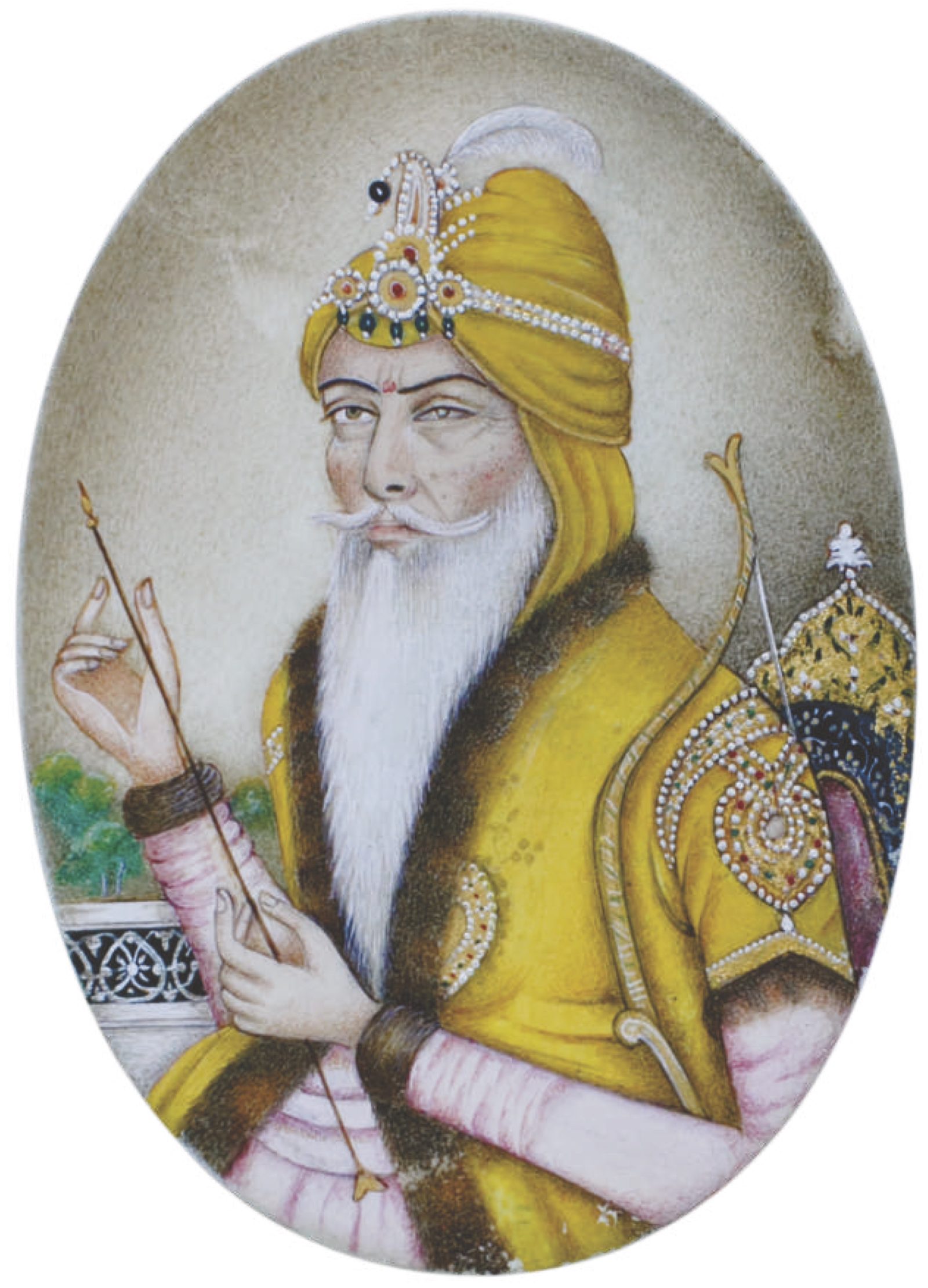
At a glance
- Born
- November 1780, at Gujranwala; some sources give Budrukhan. The day is given as the 2nd or the 13th.
- Took Lahore
- 7 July 1799, aged eighteen
- Proclaimed Maharaja
- Vaisakhi, 12 April 1801
- Title
- Sher-e-Punjab, the Lion of the Punjab
- State
- The Sarkar Khalsa, ruled from Lahore, from the Sutlej to the Khyber Pass, with Multan, Kashmir and Peshawar
- Died
- 27 June 1839, Lahore
- Successor
- Kharak Singh, his eldest son
- Resting place
- His samadhi, beside the Badshahi Mosque, Lahore
A boy named for a victory
The Punjab he was born into was a country without a state. For forty years Afghan armies had crossed it on their way to Delhi and back, and Mughal government in Lahore had simply stopped. In its place stood a dozen Sikh misls, confederacies of horsemen who held the land between invasions and fought each other in the gaps. That century has its own telling in The Afghan Century and the Rise of the Misls.
The Sukerchakia misl, around Gujranwala north of Lahore, was rising fast, and under Ranjit Singh's father, Maha Singh, it became one of the most feared in the Punjab. The boy's mother, Raj Kaur, came from the ruling family of Jind. He was born in November 1780; most sources say at Gujranwala, though some, Britannica among them, give Budrukhan. Even the day is uncertain. The earliest British histories give the 2nd, most modern ones the 13th.
Smallpox reached him while he was still very small. By the account Henry Prinsep
compiled in 1834 from British officers' reports, the child nearly died. He lived,
but lost his left eye, and was called Kana, the
one-eyed. Nobody, it seems, taught him to read. Prinsep
says flatly that he was never taught to read or write in any language
, and
years later, sealing a pact before the scriptures at Amritsar, the Maharaja marked
the paper with his open palm dipped in saffron.
Two women shaped what came next. The first was his mother, who ruled as regent with her husband's minister, Diwan Lakhpat Rai, after Maha Singh died in 1792, still in his twenties, leaving a son not yet twelve. The second was more formidable. Sada Kaur was the widow of Gurbakhsh Singh, heir of the Kanhaiya misl, who had died in battle at Batala fighting a coalition that included Maha Singh himself. Soon afterwards, with a coolness that tells you everything about her, she proposed that her little daughter Mehtab Kaur be betrothed to the son of the man whose side had killed her husband. The betrothal was made in 1785, and from 1793 Sada Kaur ran the Kanhaiya lands herself.
So Ranjit Singh came of age with two misls behind him, and a second marriage, to
Datar Kaur of the Nakai misl, the mother of his heir Kharak Singh, brought a
third. At seventeen he took the government into his own hands and dismissed his
mother's minister, who was soon killed on an expedition, not without suspicions
of contrivance
, as Prinsep's sources put it.
Hold on to Sada Kaur. She made him. Twenty-four years later, he would lock her up.
The guns in the river, and the gates of Lahore
The opening came from the west. Between 1795 and 1798 the Afghan king Shah Zaman, grandson of Ahmad Shah Durrani, marched into the Punjab three times, and in the winter of 1798 sat in Lahore for a few months before trouble at home called him back.
He left something behind. The Jhelum was in flood when his army reached it, and a dozen of his heavy guns went into the river. In the story Prinsep recorded, the Shah asked the young Sukerchakia chief to recover them, hinting that his wishes about Lahore might then be met. Ranjit Singh raised eight of the twelve and sent them on, and received the Shah's grant of the city. The last four came out of the riverbed only in 1823, into his own arsenal.
Lahore in 1799 was held jointly by three sardars, Chet Singh and Sahib Singh of the Bhangi misl and Mohar Singh of the Kanhaiya misl, and by every account they held it badly. Ranjit Singh did not storm it. He sent a qazi from Rasulnagar to talk quietly with the city's leading Muslim families, and three of them, Mir Mohkam, Muhammad Ashiq and Mir Shadi, agreed to open a gate when he came. He came on 7 July 1799, with Sada Kaur and her troops beside him. The gate opened. There was almost no fighting. The Bhangi chiefs were given estates to live on, and left. He was eighteen.
Notice who let him in. The capital of the Sikh Empire was handed to its founder by Lahore's Muslim notables, who evidently preferred him to the men already in it, and that tells us what kind of ruler he would have to be to keep it. His rivals gathered their troops at Bhasin to take the city back, argued and skirmished for months, and then simply went home. Lahore stayed his for the rest of his life.
The Sarkar Khalsa
On Vaisakhi, 12 April 1801, at Lahore, Baba Sahib Singh Bedi, a descendant of Guru Nanak, performed the investiture that made Ranjit Singh Maharaja of the Punjab. The day was chosen with care. Vaisakhi is the spring harvest, and it is also the day in 1699 on which Guru Gobind Singh founded the Khalsa. A king proclaimed on that morning was making a claim about where his authority came from.
He made the same claim on his money. His rupees carried a Persian couplet, the Nanakshahi legend, invoking the grace of God, the victory of Guru Gobind Singh and the bounty of Guru Nanak. His own name does not appear. His government was the Sarkar Khalsa, the government of the Khalsa. On paper, the king was the servant of the community. How far that held in practice is a fair question, and we will come back to it.
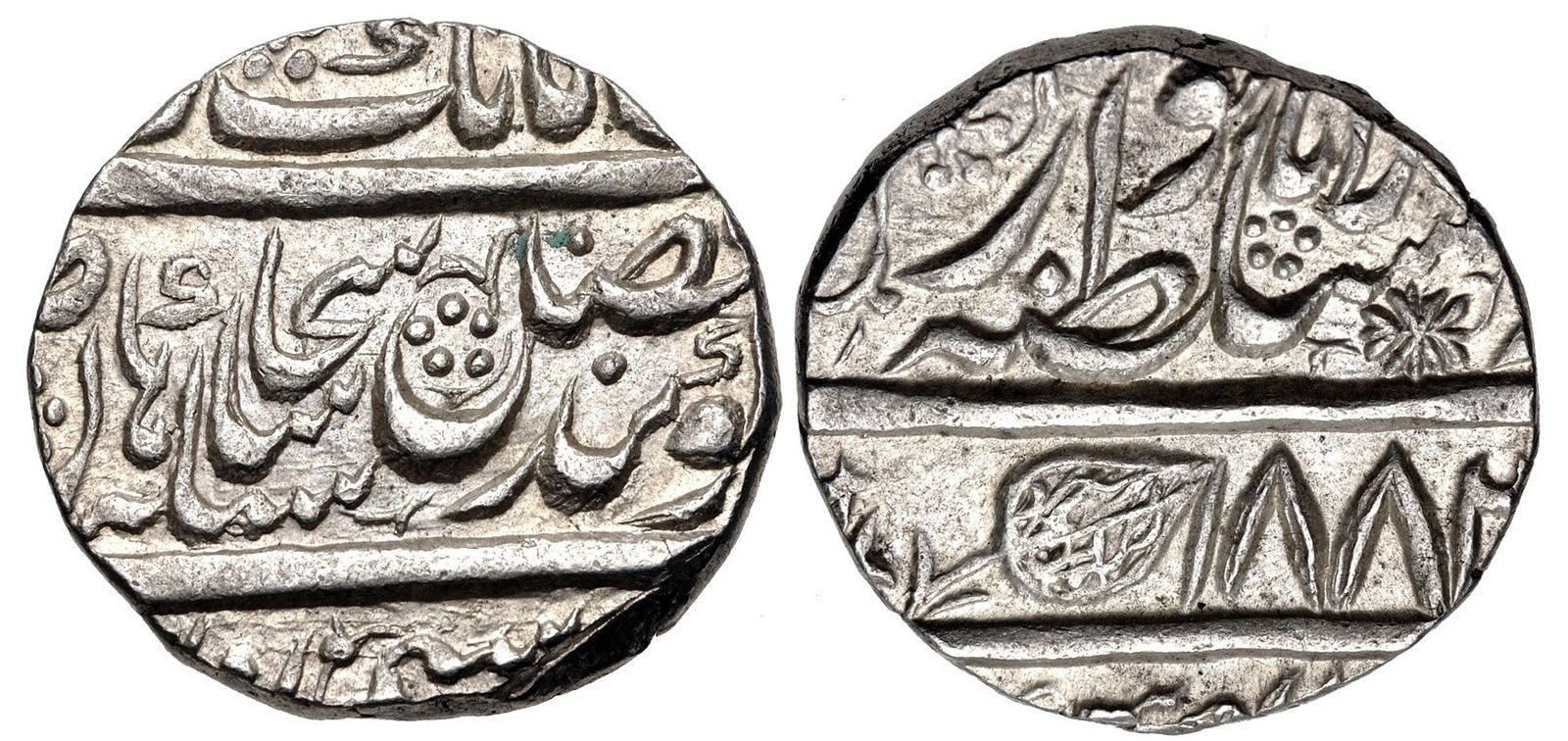
Amritsar, the city of the Harmandir Sahib, came next. It was held by Rani Sukhan, widow of the last strong Bhangi chief, for her young son. In December 1802 Ranjit Singh, Sada Kaur and the Ahluwalia chief Fateh Singh demanded she give up the fort of Lohgarh and the great Bhangi gun. She could not resist, and fled with her child. The gun is the one we now call Zamzama. It still stands outside the Lahore Museum, where Kipling sat the boy Kim astride it in the first line of his novel.
He rebuilt Lahore's defences, partly restored Shah Jahan's gardens at Shalimar, and endowed gurdwaras, temples and mosques. He also treated the Mughal city as a quarry and a barracks. The courtyard of the Badshahi Mosque became a stable for army horses, and the cells around it soldiers' quarters and stores. The marble pavilion he built in the Hazuri Bagh in 1818, facing the mosque, may well have been faced with stone stripped from older monuments. The mosque was handed back for worship only in 1856, by the British.
A line on the Sutlej
In 1806, 1807 and 1808 Ranjit Singh led expeditions south across the Sutlej into the country of the Malwa Sikh chiefs. The chiefs looked for a protector, and found one in Delhi, which the East India Company had taken in 1803.
In 1808 the Company sent a young envoy, Charles Metcalfe, to talk. The talks went slowly, and then something happened in camp that changed the Maharaja's mind about more than the border. In late February 1809 the Muharram began, and the Muslims in Metcalfe's party prepared to carry their tazias in procession. A band of Akalis, led by the fierce Phula Singh, took offence at Muslim rites in the Sikh camp at Amritsar and attacked. The escort was two companies of sepoys and sixteen troopers. They formed up, charged, and drove the Akalis off. Ranjit Singh arrived as it ended, apologised to the envoy, and said openly how much he admired the discipline he had just seen.
On 25 April 1809 he signed the Treaty of Amritsar. The Company would stay out of his lands north of the Sutlej; south of it he would keep only what he already held. The Malwa chiefs passed under British protection, and for thirty years both sides kept the bargain. It cost him the Malwa country, and bought him a safe southern border and a free hand to the north and west, where the Afghans were weak and quarrelling.
He took two things away from that spring. One was the treaty. The other was the picture of a few hundred drilled men breaking a charge, and it would become the army that gave the British, in the words of the 1911 Encyclopaedia Britannica, their hardest battles in India.
The Mountain of Light
In 1813 a king arrived in Lahore with nothing left but his jewels. Shah Shuja Durrani had lost the throne of Kabul and been held prisoner in Kashmir, and came down to the Punjab with the Maharaja's general, Diwan Mohkam Chand. He came as a guest. He was treated as a vault.
Ranjit Singh wanted the Koh-i-Noor, the diamond that had passed from the Mughals to Nader Shah and from Nader Shah to the Durranis. Prinsep is blunt about how he got it. The Shah said the stone was pawned, and his wife, Wafa Begum, backed him up. Guards were set round their house. When that failed, their food was stopped, and for two days the exiled family went without. Letters appeared in the Shah's name begging the Afghans to rescue him; they were generally believed to be forgeries. There were threats to move him to the fortress of Gobindgarh.
On 1 June 1813 the Maharaja went in person to collect. The two men sat facing each other, and for nearly an hour nobody said anything at all. At last Ranjit Singh whispered to an attendant to remind the Shah why they had come. The Shah still said nothing. He moved his eyes towards a servant, who went out and returned with a small roll of cloth, and set it down on the carpet exactly halfway between them. Ranjit Singh's man, Bhawani Das, unrolled it. The diamond was there. The Maharaja picked it up and left.
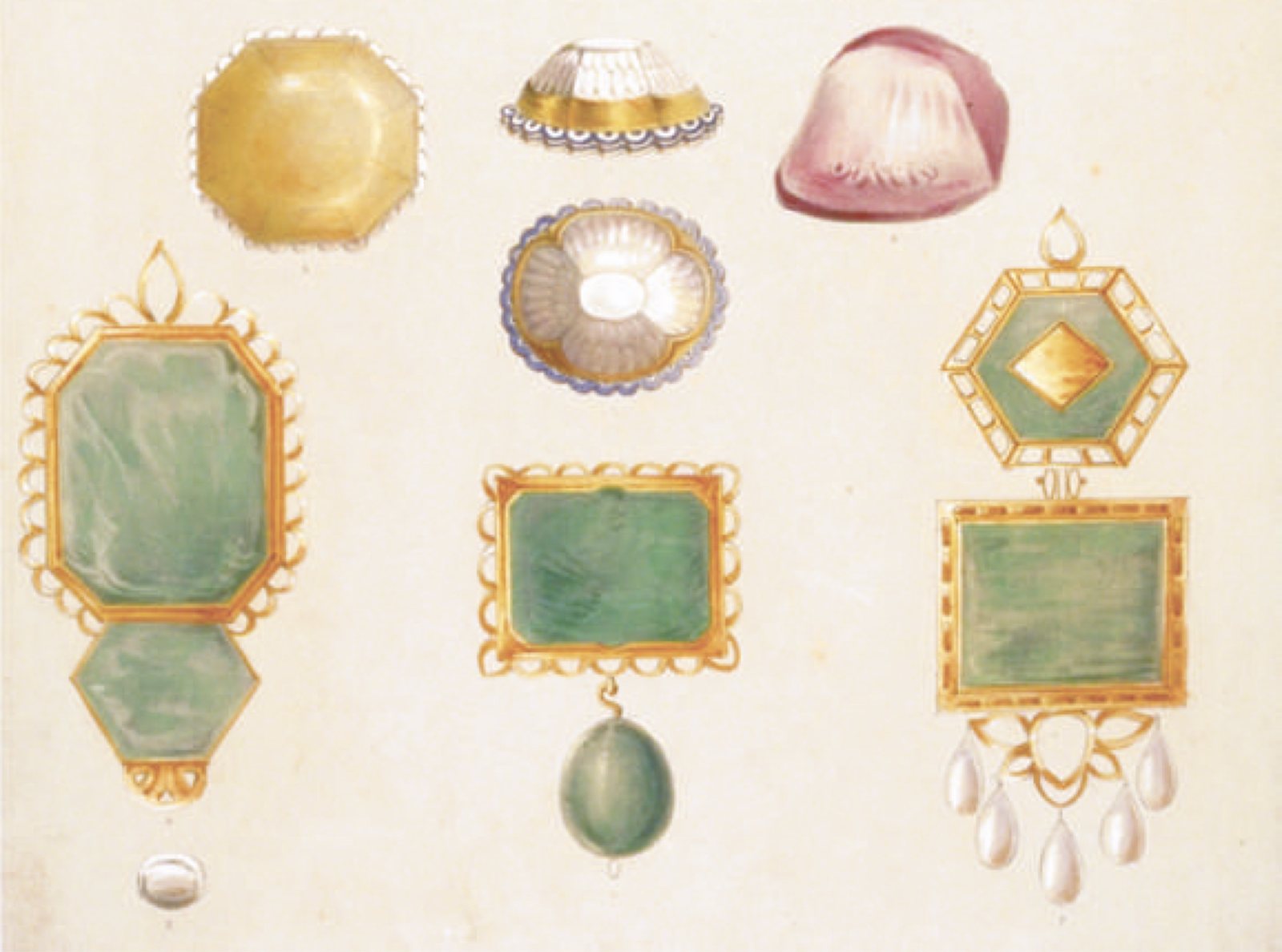
He wore it on his arm. When the Scottish officer Alexander Burnes was shown it at
Lahore in 1831, it was set as an armlet with a smaller diamond on either side, and
Burnes wrote that nothing could be imagined more superb. He also wrote, in the same
sentence as its name, that it had been extorted
. Both are true, and the
diamond will turn up twice more in this story, at the two worst moments in it.
That same summer his men were let into Attock, the fort that guards the crossing of the Indus, by its Afghan governor. Kabul's chief minister, Fateh Khan, came to take it back, and on 13 July, in fierce heat, Mohkam Chand met him with the Sikh cavalry and a single battalion of the new infantry formed in square. The square held, two guns fired grape into Dost Mohammad Khan's horsemen, and by noon the Afghans had had enough. They withdrew across the Indus. The crossing by which invaders had entered the Punjab for eight hundred years was now held from Lahore.
Multan, Kashmir, Peshawar
The next twenty years are a list of hard places, and most took more than one try.
Multan, 1818. From February a Sikh army under Misr Diwan Chand besieged the old city of the south-west, while the Maharaja, directing it from Lahore, forbade a storm and kept offering the Nawab, Muzaffar Khan, an estate if he would surrender. The Nawab refused. On 2 June an Akali named Sadhu Singh, with a handful of companions and no orders, went over the outworks sword in hand while the defenders slept, the trenches followed him, and the citadel fell in the rush. Muzaffar Khan made his last stand at the door of his house with his sons, and was killed there with two of them.
Kashmir, 1819. A first attempt, in 1814, had failed. The second went over the Pir Panjal passes, and on 5 July 1819 Misr Diwan Chand's battalions broke the Afghan troops at Shopian. Lahore and Amritsar were lit up for three nights.
Kashmiris had suffered under the last Afghan governors and at first welcomed the change. What followed was not what they hoped for. The valley was treated above all as revenue, and taxed very hard. Under the Sikh governors the killing of a cow became a capital crime, the Jama Masjid of Srinagar was closed, and the public call to prayer was banned. Then, from 1831, came a terrible famine. An early snow ruined the rice, and hoarding and heavy exactions made it far worse; it is remembered as the famine of Sher Singh, the Maharaja's son, who was governor at the time.
Nowshera, 1823. Beyond the Indus lay Peshawar and its Pashtun valleys. In March 1823 four or five thousand tribesmen who had turned out for a holy war met the Maharaja's whole army near Nowshera, some twenty-four thousand men by Prinsep's count. They held two hills until sunset, threw back two charges, and slipped away in the night, having cost the Sikhs at least a thousand killed and wounded. Phula Singh, the Akali who had attacked Metcalfe's escort in 1809, died leading the first charge. Among the dead was a Gurkha officer called Balbhadra, who in 1814 had held the hill fort of Nalapani so stubbornly against a British army that his enemies raised a memorial to him. He had come to the Punjab to serve the Maharaja, and died for him.
Peshawar, 1834. For eleven years Peshawar paid tribute through its Barakzai governors. In May 1834 the army under Hari Singh Nalwa took it under direct rule, and Nalwa pushed a line of forts towards the mountains, the last at Jamrud, at the mouth of the Khyber Pass. There, on 30 April 1837, he was mortally wounded in the fighting to relieve the fort. The fort held.
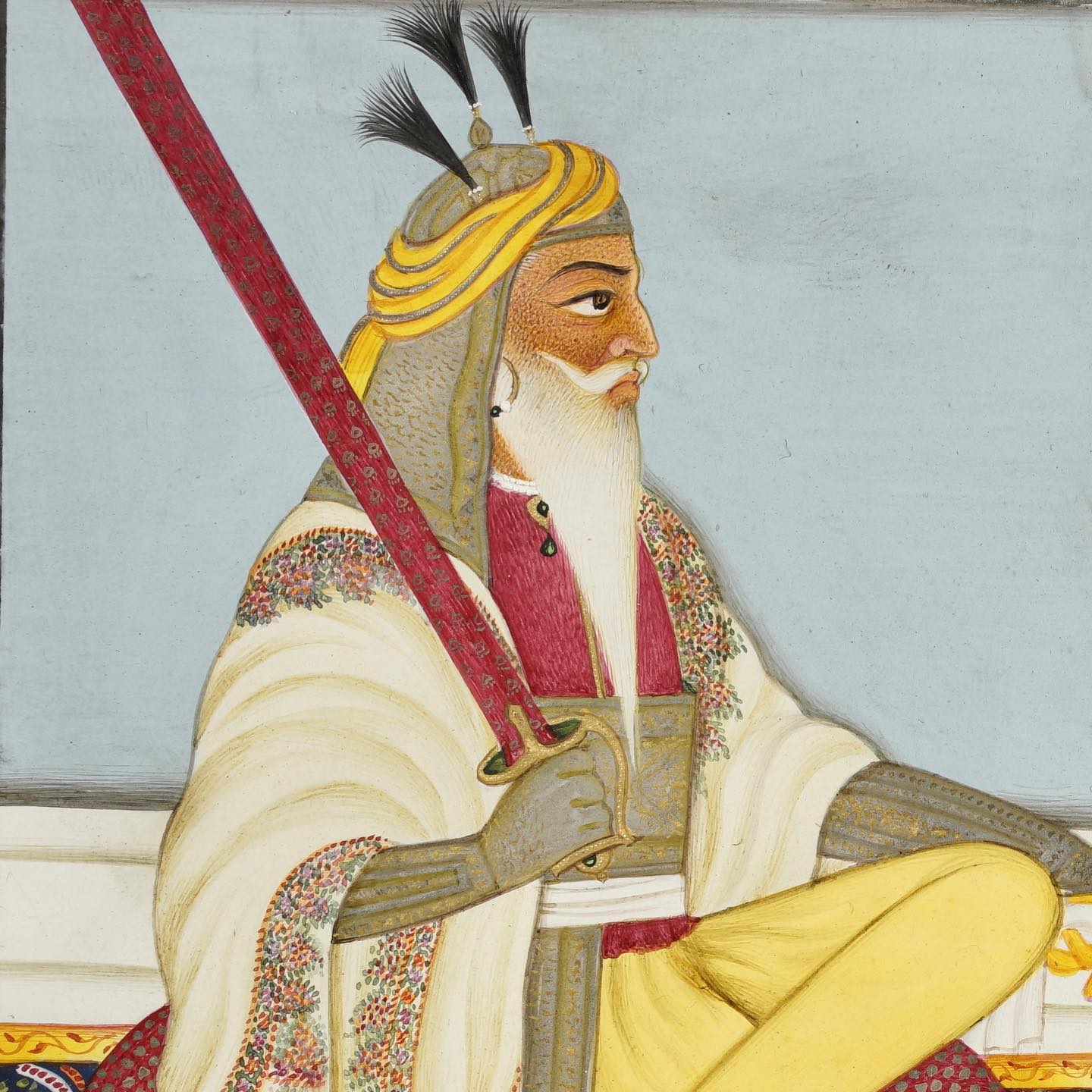
Far to the north-east, the Dogra general Zorawar Singh, serving Raja Gulab Singh of Jammu, carried the frontier into Ladakh from 1834. For the first time in centuries the Punjab was ruled from inside the Punjab, and the armies that had always come down through the passes were being stopped in them.
The army Europe drilled
None of that happens without the army, and the army is where the lesson of 1809 went. The old misl way of war was cavalry: fast, brave, and very hard to hold together for a long siege. From about 1809 the Maharaja began raising battalions of infantry on the Company's pattern.
In March 1822 two strangers arrived in Lahore looking for work. Jean-François Allard, from Saint-Tropez, and Jean-Baptiste Ventura, an Italian, had both served Napoleon. Together they built the Fauj-i-Khas, an elite brigade, Ventura training the infantry and Allard the cavalry. Claude-Auguste Court worked on the artillery, and Paolo Avitabile became a notoriously hard governor of Peshawar. They served on the Maharaja's terms: loyalty to the Sikh state, no beef, no smoking in public, and a local marriage. Allard married Bannu Pan Dei of Chamba, and died at Peshawar in 1839, still in the Maharaja's service.
By Osborne's reckoning in 1838 there were more than twenty thousand regular infantry,
armed and disciplined like Europeans
, and they did more to keep the great
sardars in order than ten times their number of irregular horse. The guns were
cast at Lahore. I have 100 pieces of field artillery, exclusive of battering guns
and mortars
, he told Burnes in 1831, and my French officers tell me I have
too many.
He kept them anyway.
It was a superb instrument, and it answered to one man. Osborne once asked him,
rather boldly, how he had subdued every other Sikh chief so easily if the Sikhs
were as brave as he claimed. Ah! that was my destiny; it was written on my
forehead
, the Maharaja said, and then added, more to the point, that his
disciplined troops had given him an immense advantage. Keep that army in mind.
After 1839, with no one left to answer to, it would begin answering to itself.
The court at Lahore
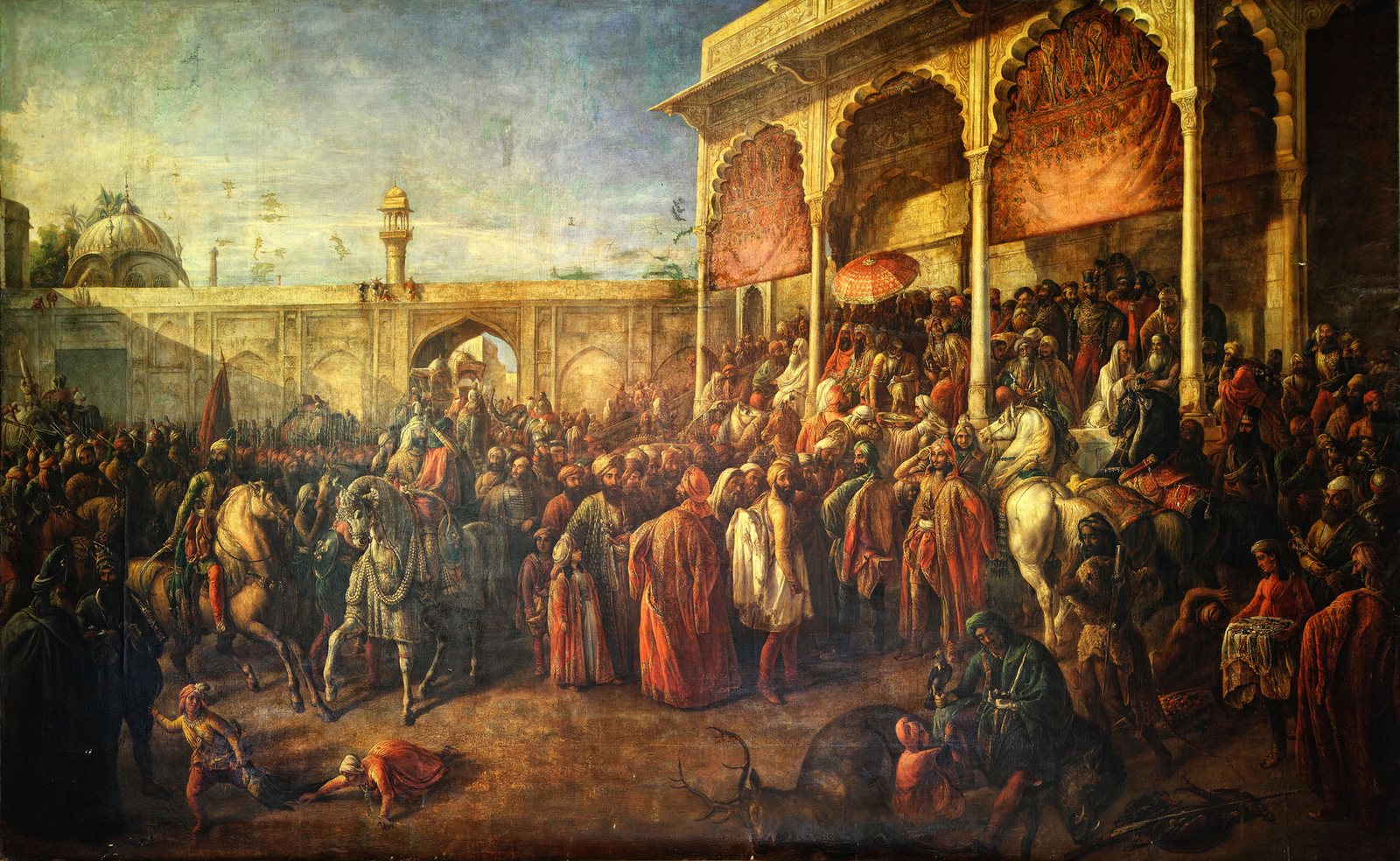
Walk into the darbar in the 1830s and the first thing you would notice is who was standing in it. The foreign minister and most trusted envoy was Fakir Azizuddin, a Muslim physician from Lahore, whose two brothers also held high office. The prime minister was Raja Dhian Singh, a Hindu Dogra from Jammu, whose brothers Gulab Singh and Suchet Singh were rajas in their own right. The keeper of the toshakhana, where the Koh-i-Noor was kept, was a Brahmin, Misr Beli Ram. Diwan Dina Nath, a Kashmiri Pandit, ran the finances in the later years, and Diwan Sawan Mal governed Multan for nearly twenty years. The best general, Hari Singh Nalwa, was a Sikh from Gujranwala.
He chose these men himself, and he chose well. Even Lepel Griffin, a British official
who wrote about him in 1892 with little sympathy, granted him the faculty of
choosing his subordinates well and wisely
. Griffin also recorded what he did to
the old nobility: the Ramgarhia estates seized in 1816, though he had sworn
friendship to their chief before the scriptures; Hari Singh Nalwa's estates taken
back from his sons after Jamrud. And in 1821 he put Sada Kaur under arrest and took
her lands. The woman who had ridden beside him into Lahore died in 1832.
This is the key to the whole reign. He did not want great families with their own roots and their own armies. He wanted able men who owed everything to him. That made him very strong, and it made the state very fragile, because men who owe everything to one person owe nothing to the next.
He gave to every faith in his kingdom. He paid for the marble and gilded copper that give the Harmandir Sahib its English name, the Golden Temple, and for the building of Takht Sri Hazur Sahib at Nanded, where Guru Gobind Singh died. He is credited with the gold on the domes of the Kashi Vishwanath temple at Banaras, and mosques and shrines received grants. All of it sat beside the stables in the Badshahi Mosque and the laws in Kashmir, and both belong to the record.
The man behind the title
Europeans visited his court in numbers in the 1830s, and most of them wrote books, so we know what he was like to sit with. They agreed on very little except his looks.
The Austrian traveller Baron Charles von Hügel, who met him in the mid-1830s, was
brutal: the most ugly and unprepossessing man I saw throughout the Punjab
,
the left eye closed, the other always rolling about wide open
, the smallpox
scars so many dark pits in his greyish-brown skin
. Emily Eden, the
Governor-General's sister, meeting him at Ferozepur in November 1838, was kinder
and funnier. He was exactly like an old mouse, with grey whiskers and one
eye
, dressed in the commonest red silk dress
, and she watched him slip
off one stocking so that he could sit comfortably with a foot in his hand.
Then he got on a horse, and everything changed. Once he was mounted, Hügel admitted,
with his black shield on his back, his whole form seems animated by the spirit
within
. Osborne, who began by finding him repellent, ended by confessing that
the restless wandering of his single fiery eye
held you, and that there was
no common degree of intellect
in the face.
Horses were his passion. The most famous of them, Leili, belonged by
most accounts to the Barakzai governors of Peshawar, and he went to extraordinary
lengths to get him. Osborne, who saw Leili in 1838, reported that the affair had cost
more than thirty thousand pounds, and that a chief's twelve-year-old son had been
held prisoner until the horse was handed over. He called it a barefaced and
unjustifiable robbery
, which is fair.
He drank hard, a nightly dose of spirits, Burnes wrote, more ardent than the
strongest brandy
. He was also, by the same witness, unusually sparing of life. He has never been known to punish a criminal
with death since his accession to power
, Burnes wrote in 1831, though he did not
hesitate to mutilate, and usually banished offenders to the hills. That sits
uneasily beside the capital laws his governors enforced in Kashmir, and we give
both.
His marriages were many, and nobody agrees how many: twenty is the usual figure, the historian Priya Atwal lists thirty, and Duleep Singh, late in life, spoke of forty-six. The most argued over is Moran.
The last years
By the 1830s the one power he could not beat was the one on his southern border, and he knew it. He managed the British with gifts, perfect reliability on the treaty, and a steady refusal to let them further into his country than he had to. They were trying.
The Crown owed him a return present for a shawl tent he had sent the King, and
someone in London chose a team of English cart horses. Prinsep, a senior Company
official, is candid about the rest: they went by boat up the Indus, in the care of
Alexander Burnes, because the Company wanted to know whether the Indus could be
navigated. When the great beasts reached Lahore in July 1831 the Maharaja said they
were little elephants, and then, over an hour and a half, enquired particularly
about the depth of water in the Indus, and the possibility of navigating it
. It
is hard to believe he did not know what the horses were really for.
In October 1831 he met the Governor-General, Lord William Bentinck, at Ropar, and at fifty held his own at tent-pegging against the troopers of Skinner's Horse. Not long after, a paralytic stroke left his left side weak and his speech hesitant, and he never fully recovered.
In 1838 he joined the British plan to put Shah Shuja, the man he had taken the diamond from, back on the throne of Kabul, and that winter he met Lord Auckland at Ferozepur. Emily Eden noticed the prime minister, Dhian Singh, in yellow satin and chain armour, and his handsome young son Hira Singh, the Maharaja's favourite, loaded with emeralds and pearls.
He died at Lahore on 27 June 1839. Two hours before the end, by Osborne's account, he called for his jewels and began giving them away: the Koh-i-Noor to a Hindu temple, his great string of pearls to another, his horses and their jewelled trappings to a third. Later historians name the temple as the shrine of Jagannath at Puri. It never got the diamond. The treasurer, Misr Beli Ram, would not release it, and it stayed in the toshakhana, kept for the state. That is the diamond's second appearance: a dying man's wish, quietly refused by his own court.
He was cremated beside the fort, and women of his household died on the pyre with him. Osborne, writing a fortnight later on the word of European officers who were there, says four wives and five slave girls from Kashmir; the urns in his samadhi are traditionally counted as four queens and seven others. Everything was done to prevent it, Osborne adds, and the women insisted. Sikh teaching had condemned the practice since Guru Amar Das. It happened anyway, at the funeral of the founder of the Sarkar Khalsa, and we should not look away from that.
One detail from the pyre matters for what came next. The principal queen, Osborne was told, called up the heir, Kharak Singh, and the prime minister, Dhian Singh. She made Kharak Singh take his dead father's hand and swear to protect Dhian Singh, and made Dhian Singh swear to serve the son as he had served the father. Then she lit the fire herself. Both men swore. Within four months, one of them had pushed the other off the throne.
Ten years to the end
What follows reads like a list of killings, because it was one.
Kharak Singh was, Osborne thought, well intentioned, but wanted the courage
and energy of his father
. On 9 October 1839 conspirators around
Dhian Singh and the heir's own son, Nau Nihal Singh, broke into the palace and cut
down the new Maharaja's favourite, Chet Singh Bajwa, in front of him. From then on
Nau Nihal ruled. Kharak Singh died on 5 November 1840, and most people at the time
believed he had been poisoned.
That same day, walking back from his father's cremation, Nau Nihal Singh passed under a gateway by the Hazuri Bagh, and the masonry came down, killing a companion outright. The prince died within hours, though the court kept it secret for three days. Accident or murder has been argued ever since: the adventurer Alexander Gardner claimed the prince walked away lightly hurt, and the court physician, Martin Honigberger, remembered a crushed skull.
His mother, Chand Kaur, claimed the regency; Sher Singh, the late Maharaja's son by Mehtab Kaur, claimed the throne, besieged the Lahore Fort with guns hauled up the minarets of the Badshahi Mosque, and on 18 January 1841 was proclaimed Maharaja. In June 1842 Chand Kaur was beaten to death by her own maidservants. On 15 September 1843 Sher Singh was shot by his kinsman Ajit Singh Sandhawalia while inspecting a new gun. His young son was killed the same day, and so was Dhian Singh, the man who had sworn the oath at the pyre.
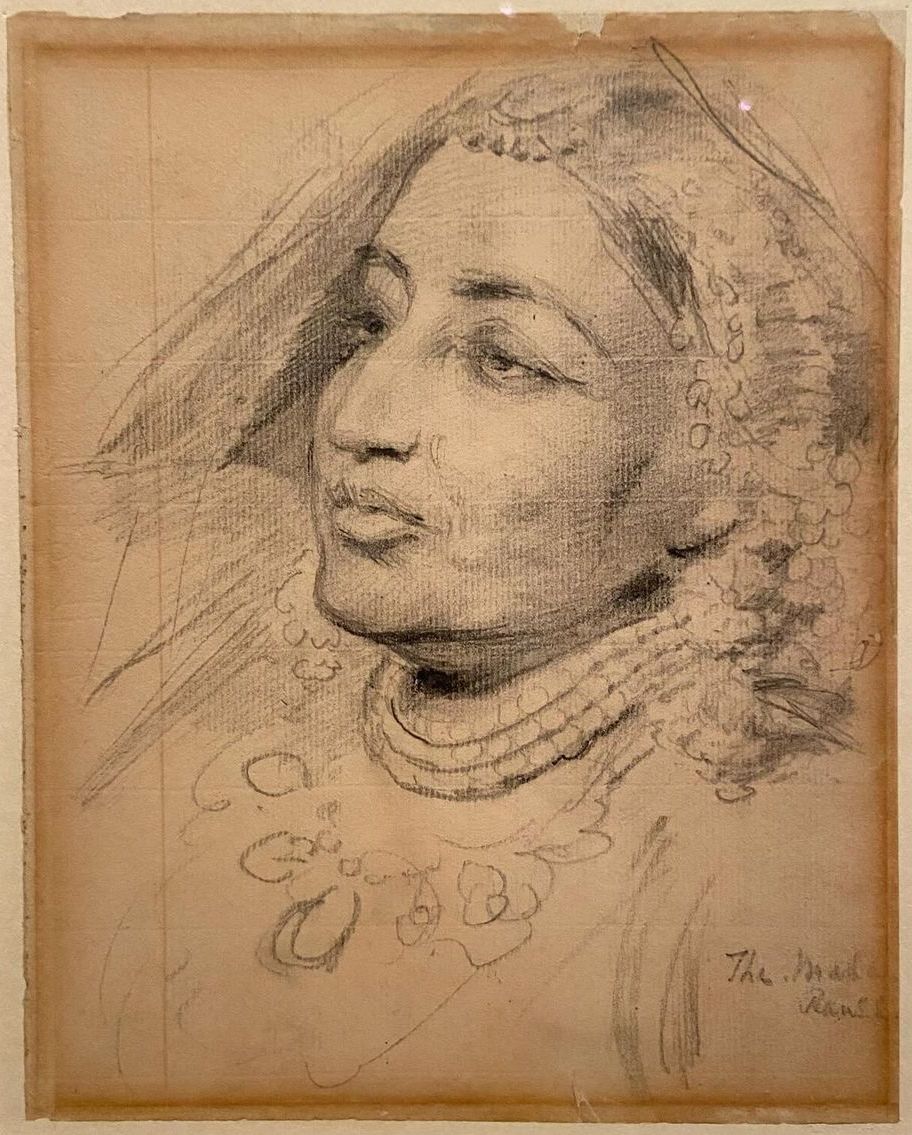
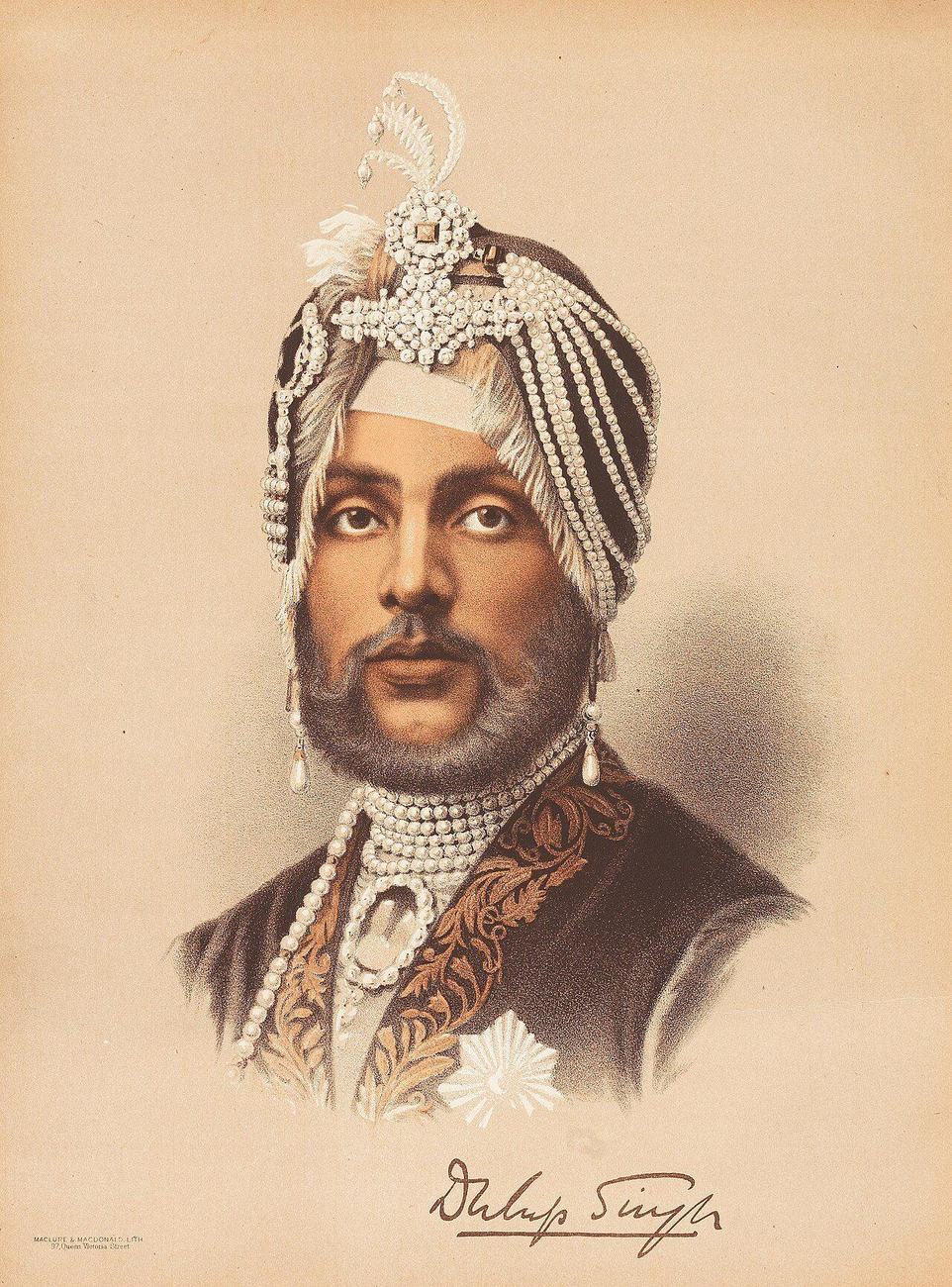
Dhian Singh's son Hira Singh, the boy with the emeralds at Ferozepur, took revenge on the killers and put the late Maharaja's youngest son on the throne. Duleep Singh was five. His mother, Jind Kaur, became the power behind him. Hira Singh was killed in December 1844; Jind Kaur's brother Jawahar Singh replaced him, and in September 1845 the army itself put him to death.
That last killing is the one to notice. By now the regiments the Maharaja had built were electing their own councils, the panchayats, and making and unmaking ministers. In December 1845 the army crossed the Sutlej, and the First Anglo-Sikh War began. It fought hard, and many historians believe it was betrayed by some of its own commanders. After a second war, the East India Company annexed the Punjab in 1849. Duleep Singh, now ten, signed it away at Lahore. And the Koh-i-Noor made its third and last appearance in our story, as a condition of the peace, on its way to Queen Victoria.
Why it fell so fast
Go back to the old man firing questions about the Company's army. He was right to worry. But the British did not bring the kingdom down on their own; it was coming apart from the inside before they arrived.
The reasons are the same things that made him great. He built a state around himself and nothing else. He broke the old misl families so that no one could rival him, and raised in their place able men who owed him everything and, once he was gone, owed each other nothing. He left no council, no settled rule of succession, no institution that could choose a ruler or restrain one. The Dogra brothers he had lifted up were strong enough to make and break kings, and not strong enough to be accepted as one. The army he built had only ever been held together by him. When he died, every one of those strengths turned on the others.
The 1911 Encyclopaedia Britannica, wrong on several of its dates, got this
right in a line: his power was military aristocracy resting on the personal
qualities of its founder
. Remove the founder, and it rests on nothing.
Where he stands now
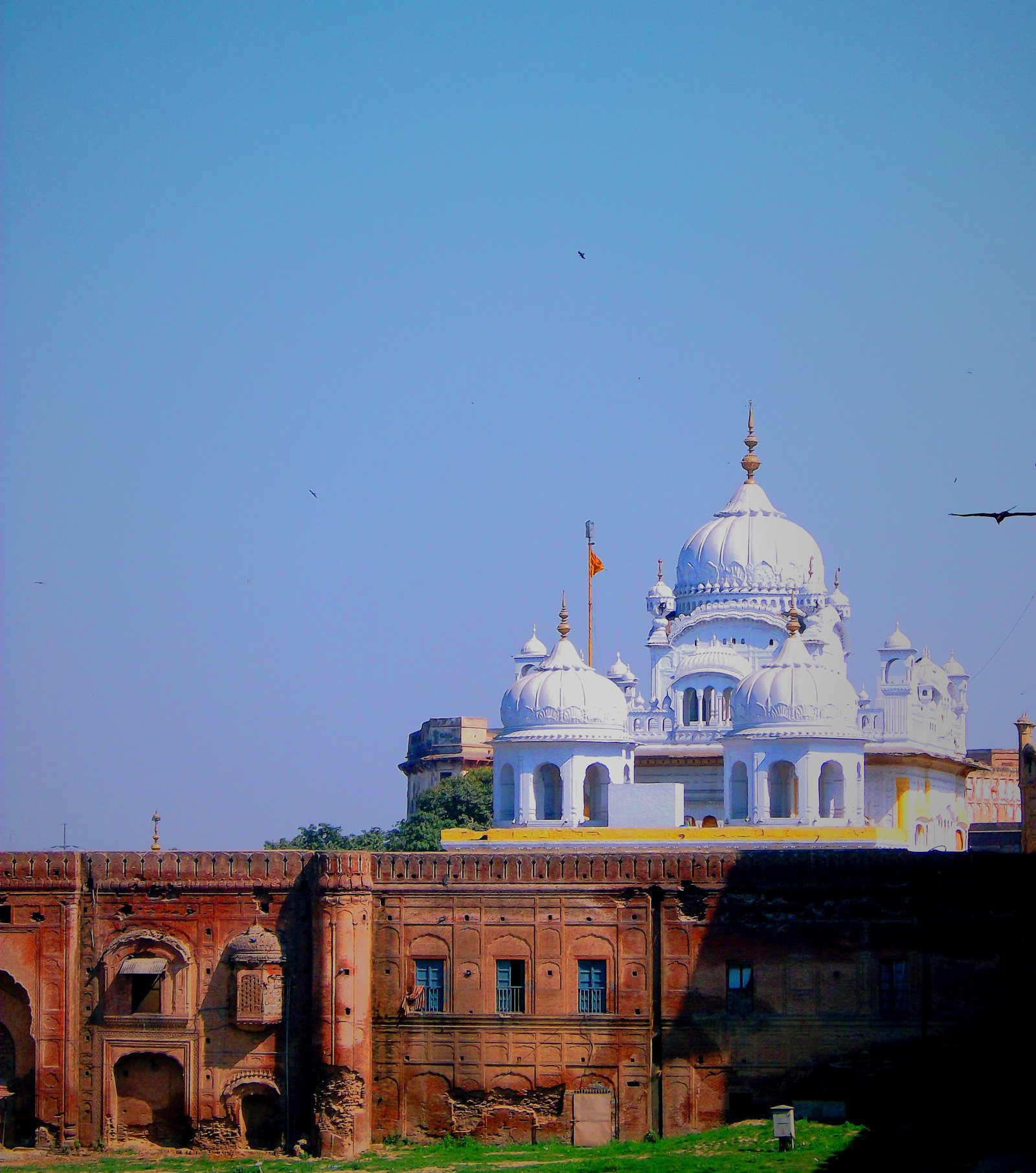
His ashes lie in a white samadhi beside the Badshahi Mosque in Lahore, next to
Gurdwara Dera Sahib, in the city he took at eighteen. Kharak Singh began it in 1839,
and it was finished in 1848, a year before the end. In 1892 Griffin noted that his
portrait was still preserved in castle and in cottage
. For many of us it
still is.
He belongs to both Punjabs. In June 2019, on the 180th anniversary of his death, a statue of him on horseback was unveiled inside the Lahore Fort. It was attacked three times in two years and repaired, and in 2023 it was moved to the gurdwara at Kartarpur. In 2020 some five thousand readers of BBC World Histories magazine voted him the greatest leader of all time, ahead of Amílcar Cabral and Winston Churchill. It was a readers' poll, not a verdict of historians, but it shows how far his name travels.
He is remembered as Sher-e-Punjab, the Lion of the Punjab. For those of us reaching back toward the Punjab from a long way off, he stands for a moment when the land governed itself, on its own terms, in many voices at once. It was a real moment. It was also shorter, harder and more human than the portrait on the wall, and we think it is more worth remembering for that.
Quick answers
Who was Maharaja Ranjit Singh?
The founder and first Maharaja of the Sikh Empire. He took Lahore in 1799, was proclaimed Maharaja of the Punjab in 1801, and ruled until his death in 1839, uniting the misls into one state from the Sutlej to the Khyber Pass.
How many wives did he have?
The sources disagree: twenty is the usual figure, Priya Atwal lists thirty, and Duleep Singh spoke of forty-six. The best known are Mehtab Kaur, Datar Kaur, mother of Kharak Singh, and Jind Kaur, mother of Duleep Singh.
How did he get the Koh-i-Noor?
He took it from the exiled Afghan king Shah Shuja at Lahore on 1 June 1813, after weeks of pressure that included cutting off the family's food. After the annexation of 1849 it went to Queen Victoria, and it is now among the British Crown Jewels.
What were his main battles and campaigns?
Attock in 1813, where his army beat the Afghans on the Indus and took the crossing invaders had used for eight hundred years; Multan, taken after a siege in 1818; Kashmir, won at Shopian in 1819; Nowshera in 1823, against Pashtun tribesmen beyond the Indus, at a cost of at least a thousand killed and wounded; and Peshawar, brought under direct rule in 1834. His commanders led many of them: Mohkam Chand at Attock, Misr Diwan Chand at Multan and Shopian, and Hari Singh Nalwa at Peshawar.
Was he ever defeated?
Never decisively, and never by the British. Some campaigns took two tries: his first expedition into Kashmir, in 1814, failed, and the valley fell only in 1819. With the East India Company he chose a treaty over a war. At Amritsar in 1809 he gave up the Malwa country south of the Sutlej, and both sides kept the bargain for thirty years. His kingdom was beaten only after his death: after two wars with the Company, the Punjab was annexed in 1849.
How did he die, and who came after him?
He died at Lahore on 27 June 1839, after years of failing health that began with a stroke in the mid-1830s. His eldest son Kharak Singh succeeded him, followed in quick and violent succession by Nau Nihal Singh, the regent Chand Kaur, Sher Singh and the child Duleep Singh, deposed at the annexation of 1849.
Timeline
1780
Born
To Maha Singh of the Sukerchakia misl. Smallpox takes his left eye.
7 July 1799
Enters Lahore
A gate is opened for him by the city's Muslim notables.
12 April 1801
Proclaimed Maharaja
On Vaisakhi. The state is the Sarkar Khalsa. Amritsar follows in 1802.
25 April 1809
Treaty of Amritsar
The Sutlej becomes the border with the East India Company.
1813
The Koh-i-Noor, and Attock
The diamond taken on 1 June; the Afghans beaten on the Indus on 13 July.
1818–1823
Multan, Kashmir, Nowshera
Multan falls in 1818, Kashmir in 1819; the European officers arrive in 1822.
1834–1837
Peshawar and the Khyber
Peshawar under direct rule; Hari Singh Nalwa dies holding Jamrud.
27 June 1839
Death at Lahore
He is cremated beside the fort.
1839–1845
Six years of killings
Two Maharajas, a regent, two heirs and three prime ministers die by violence or suspicion of it.
1849
Annexation
After two wars the Company annexes the Punjab, and takes the Koh-i-Noor.
Modern place-names
Lahore, Gujranwala, Gujrat, Multan and Attock are in Punjab, Pakistan; Nowshera, Peshawar and Jamrud in Khyber Pakhtunkhwa. Amritsar, Ropar (Rupnagar), Ferozepur, Pathankot and Adinanagar (Dinanagar) are in Punjab, India. Shopian and Srinagar are in the Kashmir valley, with Ladakh beyond it.