History
ਇਤਿਹਾਸاتہاسHistory
Punjab's past, told in order — hover an event to see it, click through to read it. Where evidence is strong we say so; where scholars disagree, we show you the debate.
Fifteen moments, in order
The timeline
-
c. 2600 BCE
Ancient Punjab
The Indus cities of Punjab
Harappa, on the old bed of the Ravi, becomes one of the two great cities of the Indus Valley Civilisation — planned streets, standardised bricks, and a script no one can yet read.
Read the article →
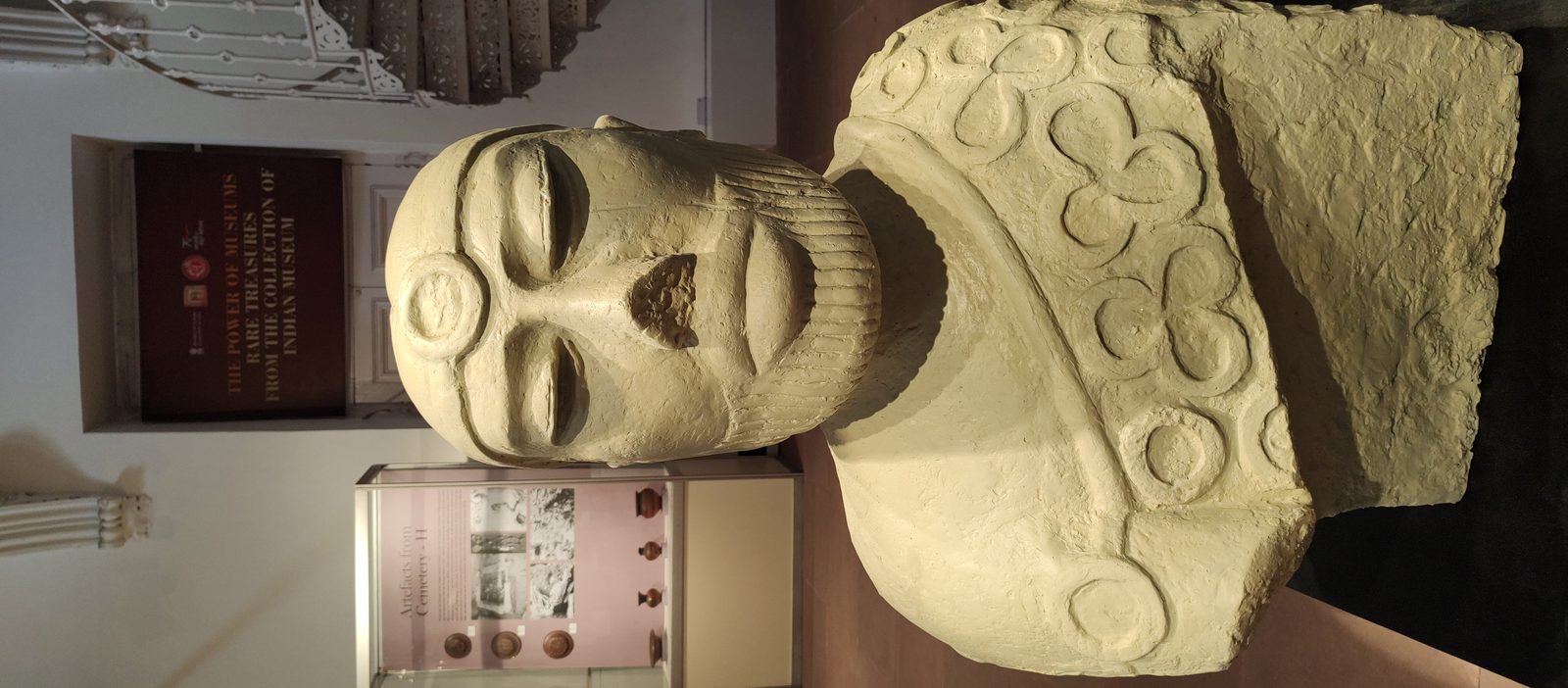
The “Priest-King” of Mohenjo-daro, steatite, c. 2000–1900 BCE — the most recognisable Indus artefact. -
326 BCE
Classical Punjab
The Battle of the Hydaspes
Alexander of Macedon defeats the local king Porus on the banks of the Jhelum — the easternmost great battle of his campaign, and Punjab's first well-documented meeting with the Greek world.
Read the article →
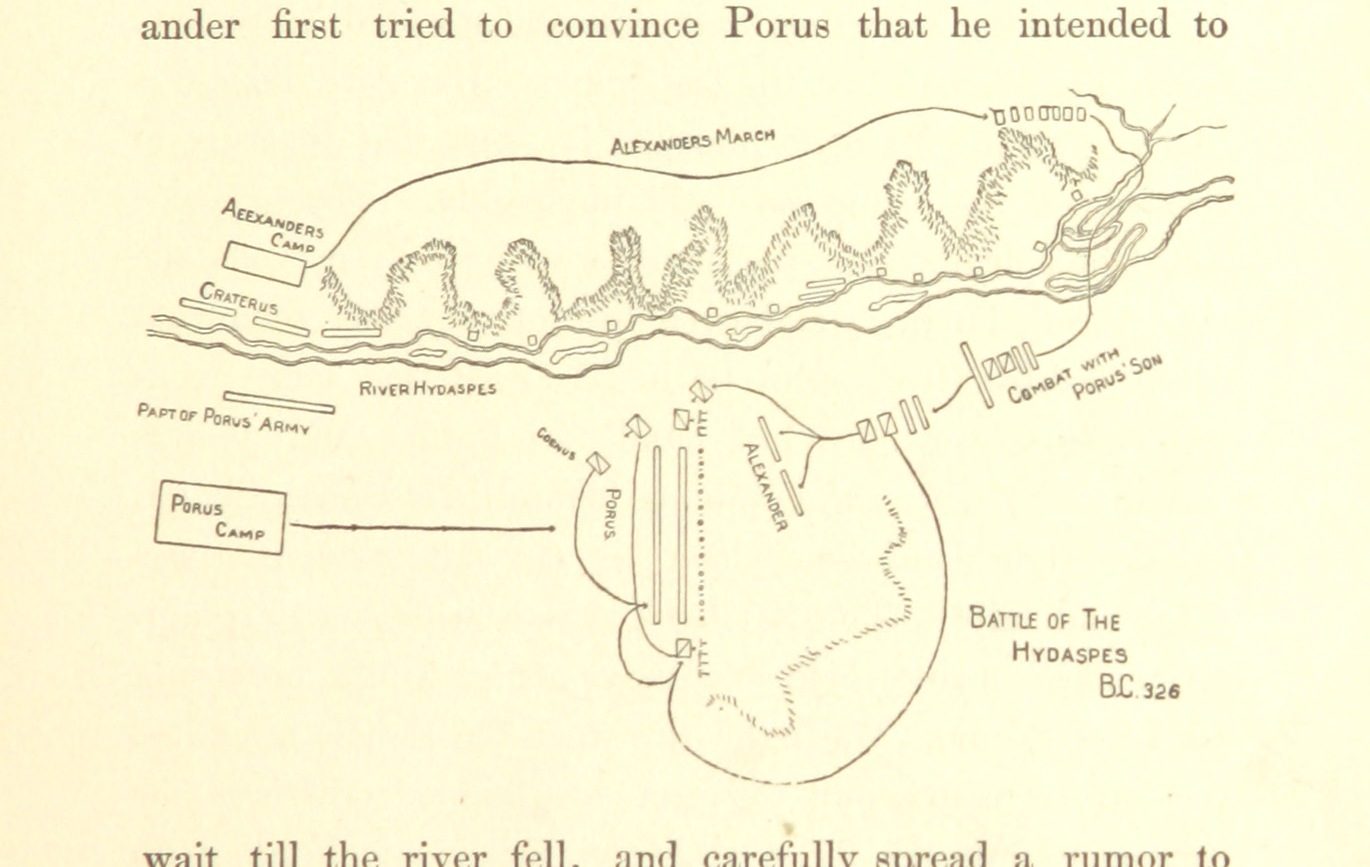
Porus before Alexander after the Hydaspes — 19th-century engraving. -
1469
Faith
The creation of Sikhi
Guru Nanak is born at Talwandi. Ten Gurus, one scripture, and — by 1699 — the Khalsa.
Read the article →
1469 — Guru Nanak's teaching begins with one word: One. -
c. 1500
Faith
Guru Nanak settles at Kartarpur
After years of travel, Guru Nanak gathers the first community of Sikhs on the Ravi — and langar, the shared free kitchen, and congregational worship take root.
Read the article →
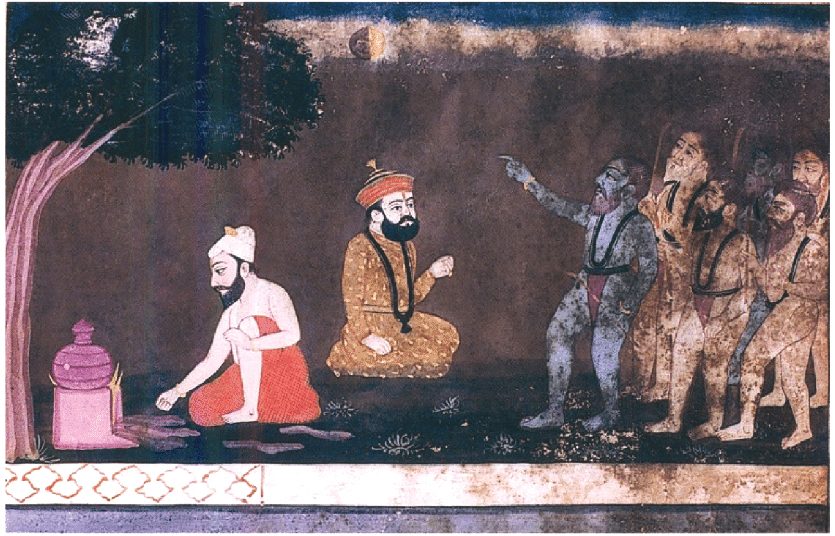
Guru Nanak in a Janamsakhi painting — devotional art, generations after his life. -
1526
Mughal Punjab
The Mughals take Punjab
After years of raids across the five rivers, Babur defeats Sultan Ibrahim Lodi at Panipat. Punjab passes into the new Mughal Empire — and Lahore will grow into one of its greatest cities.
Article coming soon
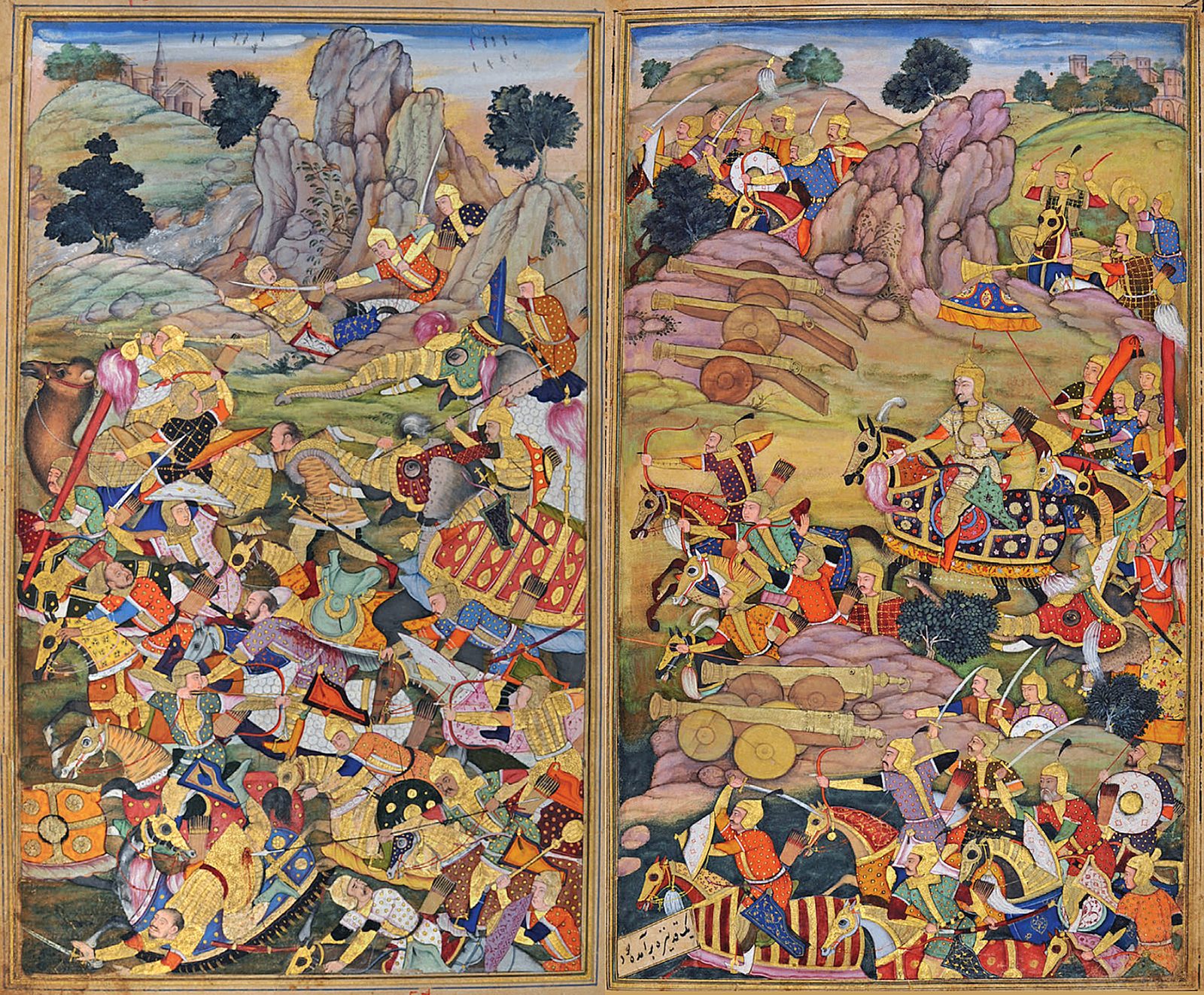
The First Battle of Panipat, from a 1598 manuscript of the Baburnama. -
1604
Faith
The Adi Granth at the Harmandir Sahib
Guru Arjan compiles the first Sikh scripture and installs it in the new shrine at Amritsar — fixing the city as the spiritual centre of Sikhism.
Read the article →
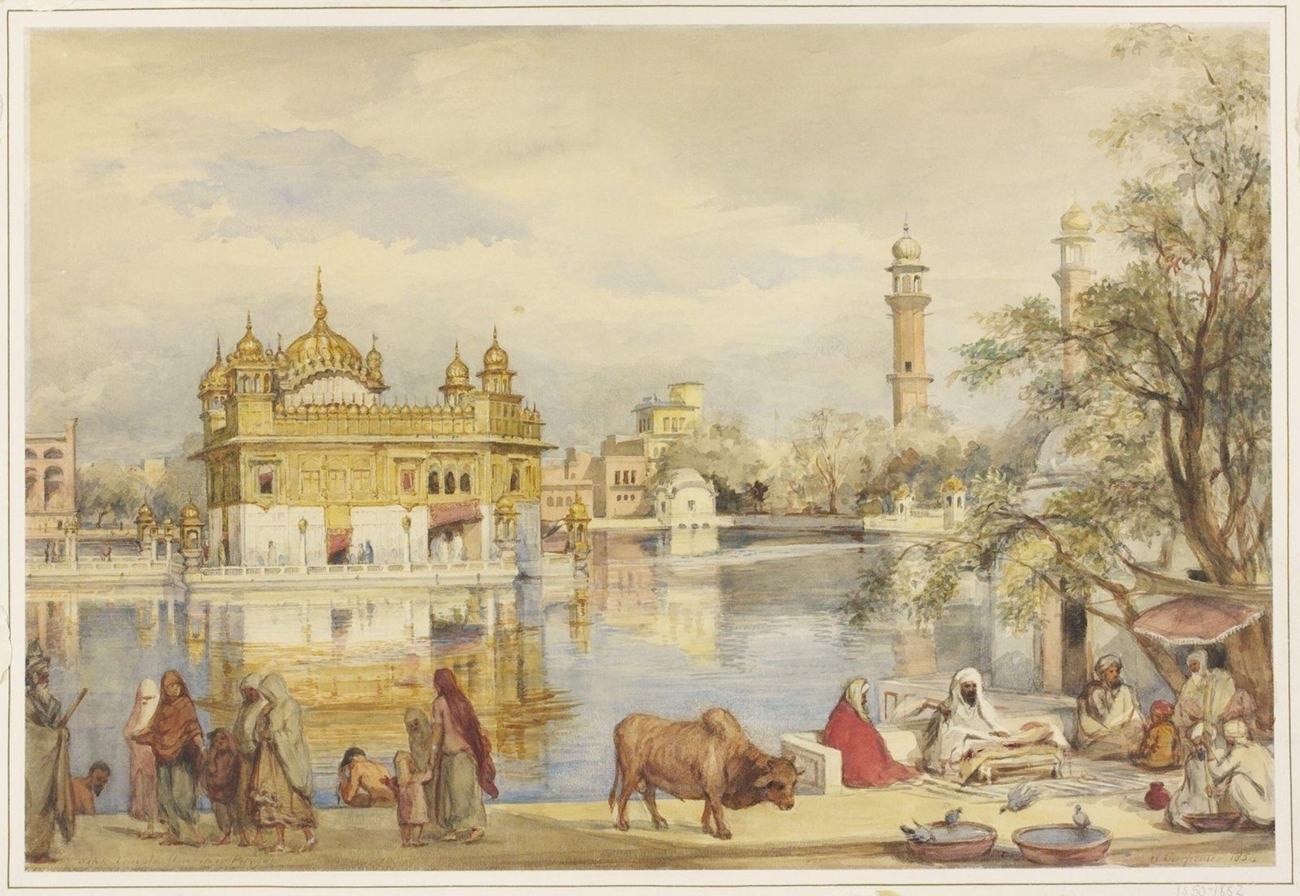
The Harmandir Sahib, watercolour by William Carpenter, 1854. -
1699
Faith
The founding of the Khalsa
At Anandpur on Vaisakhi, Guru Gobind Singh initiates the Panj Pyare — reshaping Sikh identity into a disciplined community of equals.
Read the article →
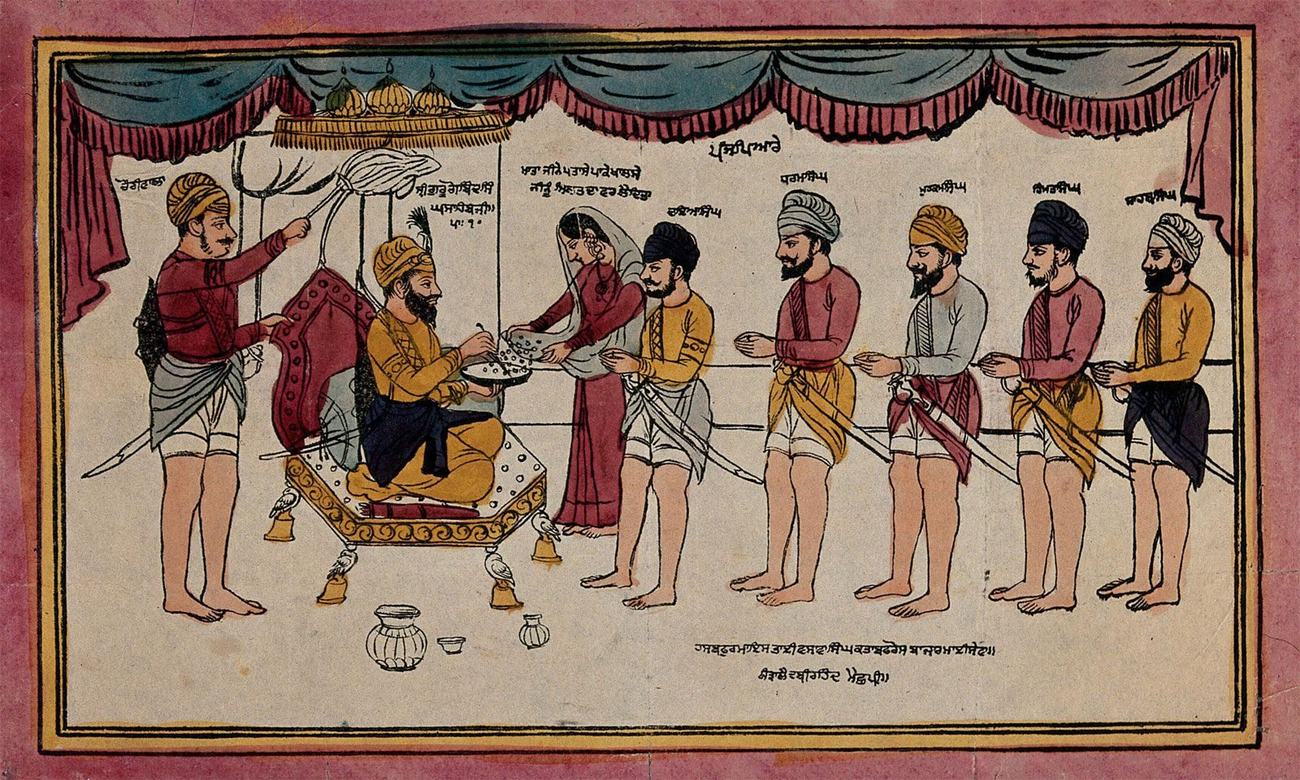
Guru Gobind Singh prepares amrit for the Panj Pyare — lithograph. -
c. 1748
Between empires
The rise of the misls
As Mughal authority collapses and Afghan armies invade again and again, Sikh warbands organise into the misls — twelve confederated fighting brotherhoods under the Dal Khalsa that, by the 1770s, control most of Punjab.
Article coming soon
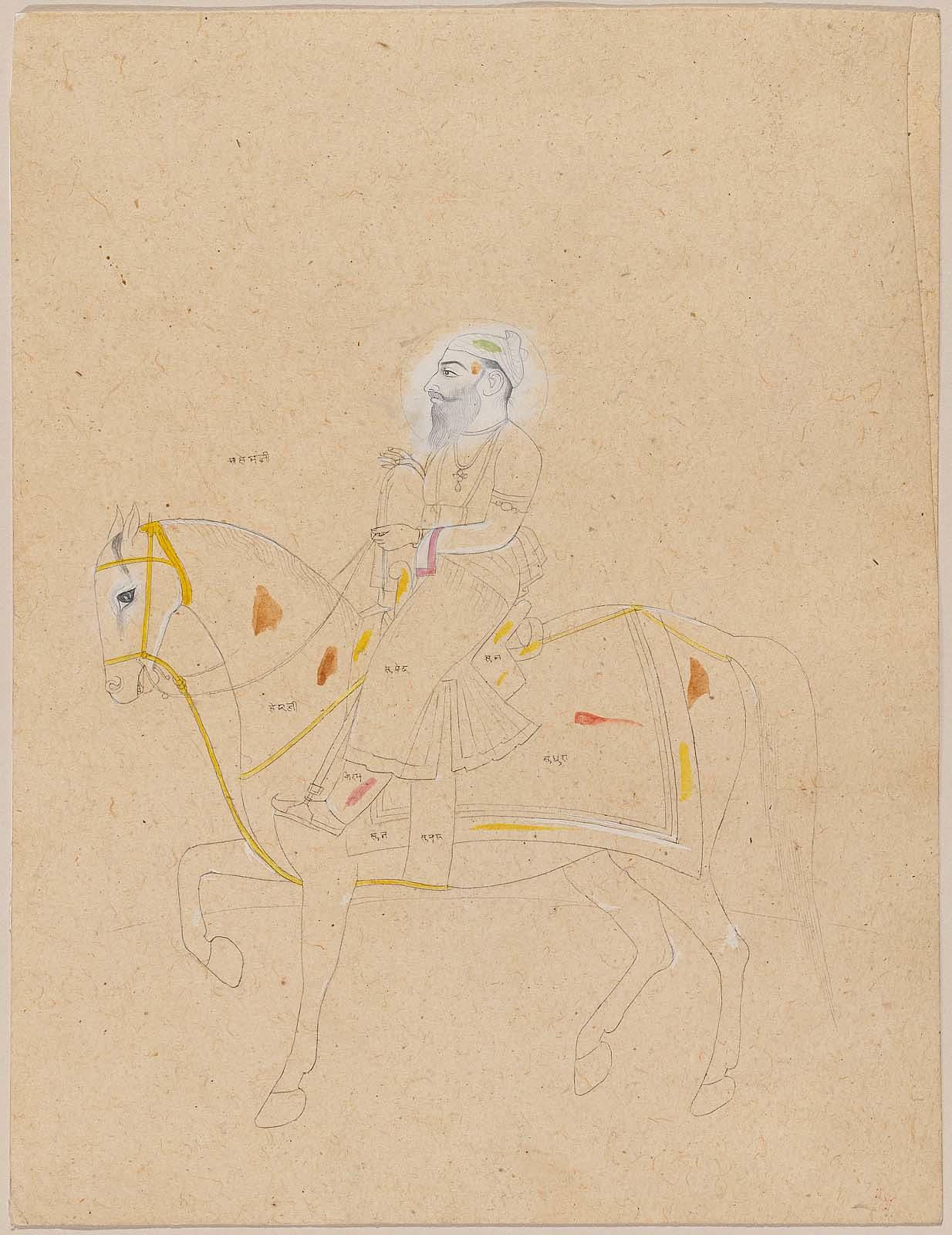
Jassa Singh Ahluwalia, supreme commander of the Dal Khalsa — equestrian painting, c. 1859. -
1801
The Sikh Empire
Maharaja Ranjit Singh's empire
A one-eyed teenager unites the misls and is crowned at Lahore — Punjab's first sovereign empire in centuries.
Read the article →
1801 — crowned Maharaja at Lahore; the empire will reach from the Sutlej to the Khyber. -
1837
The Sikh Empire
Hari Singh Nalwa at Jamrud
The empire's greatest general dies holding the fort at the mouth of the Khyber Pass — and the frontier holds.
Read the article →
1837 — the fort at Jamrud, where Nalwa made his last stand. -
1849
The contested century
The British annexation of the Punjab
After the Second Anglo-Sikh War, the East India Company dissolves the Sikh Empire. The child Maharaja Duleep Singh is deposed; Punjab is the last major region to fall under British rule.
Read the article →
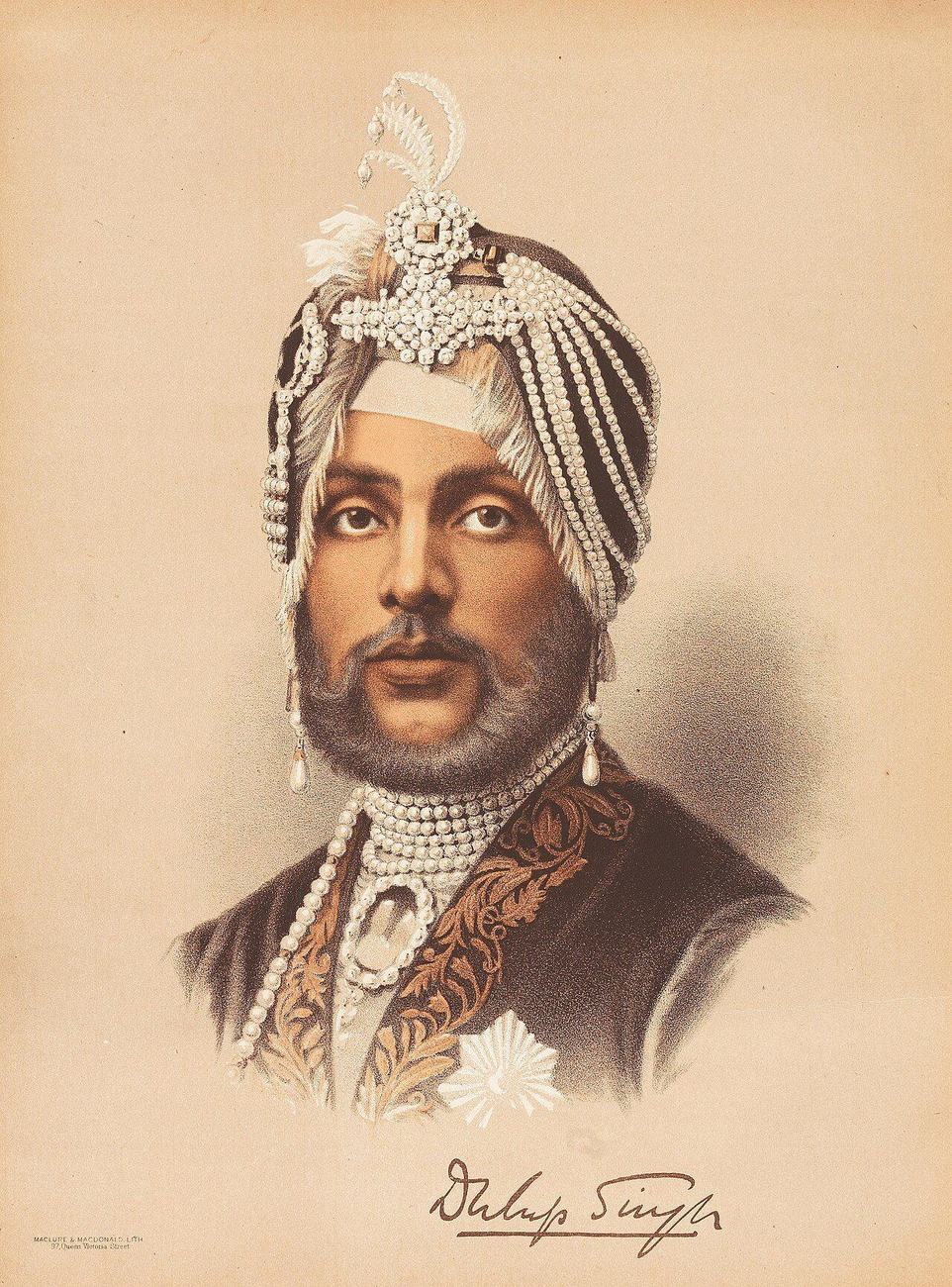
Maharaja Duleep Singh, chromolithograph, c. 1859 — the empire's last, exiled ruler. -
1897
The contested century
The Battle of Saragarhi
Twenty-one soldiers of the 36th Sikhs hold a signalling post on the Samana Range against thousands of Orakzai and Afridi tribesmen, fighting to the last man — commemorated every 12 September as Saragarhi Day.
Article coming soon
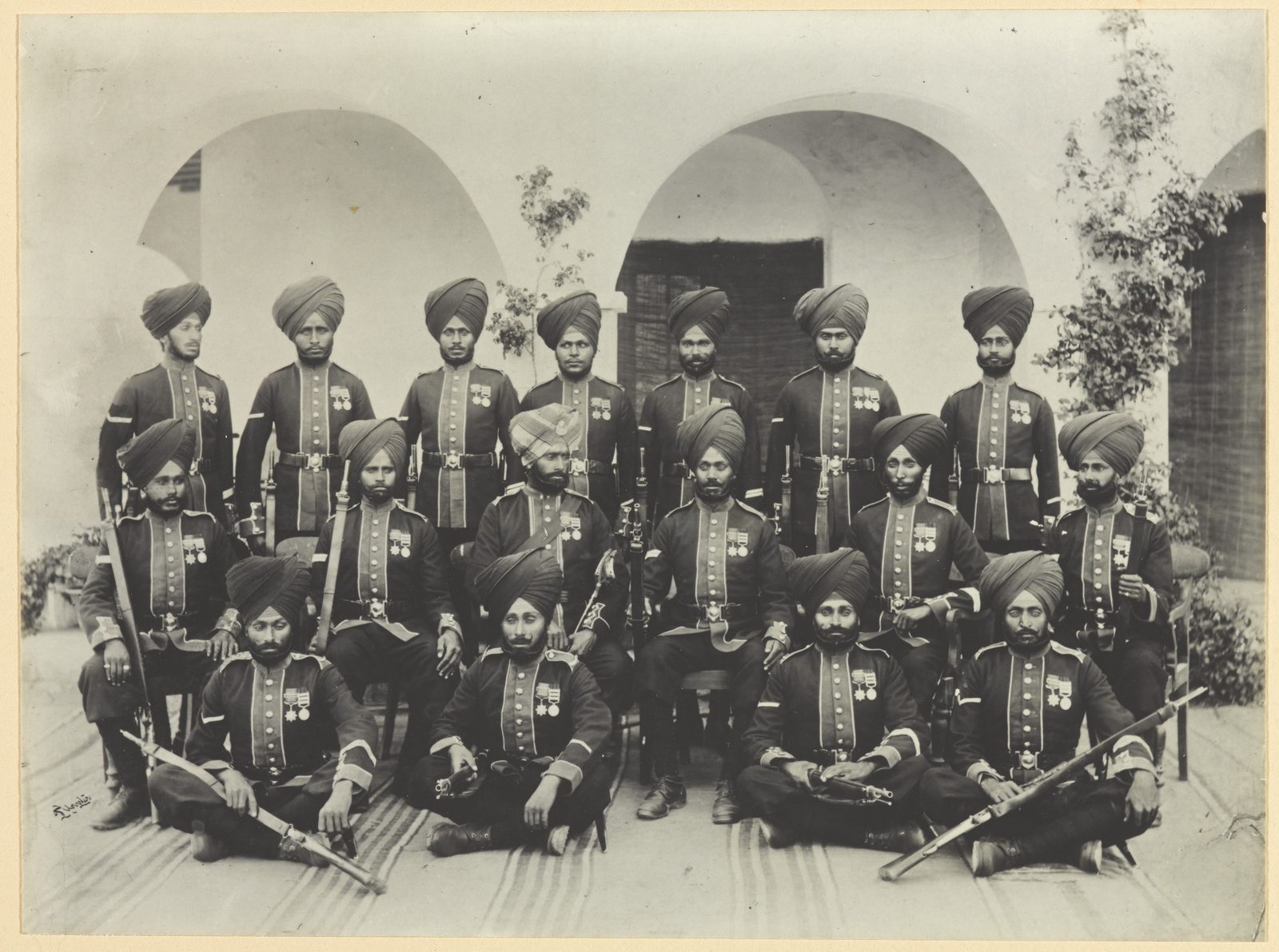
Men of the 36th Sikhs, photographed in 1897 — the year of Saragarhi. -
1919
The contested century
The Jallianwala Bagh massacre
On Vaisakhi, troops under Brigadier-General Dyer fire on an unarmed crowd in an enclosed garden in Amritsar, killing hundreds — a turning point in the independence movement.
Read the article →
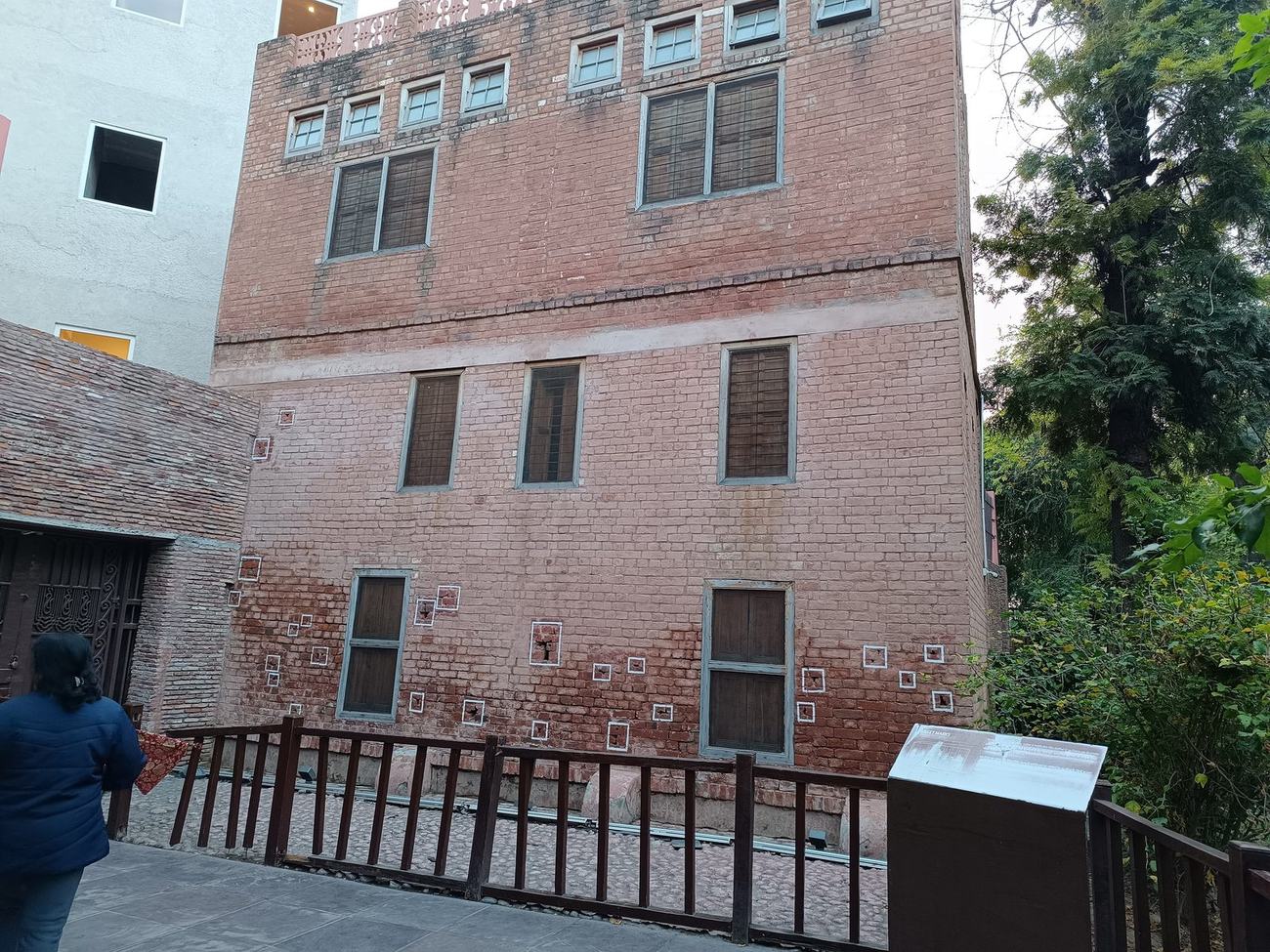
The bullet-marked wall preserved at the Jallianwala Bagh memorial, Amritsar. -
1947
The contested century
The Partition of Punjab
A line drawn in five weeks divides the province between two new nations; millions cross it in both directions.
Read the article →
1947 — one province, two nations. Fifty kilometres between Lahore and Amritsar, and a border between them. -
1951
Music
The rise of Kuldeep Manak
Born at Jalal, Bathinda. By the 1970s his kaliyan carry Punjab's oldest legends on the era's loudest voice.
Read the article →
1951 — a voice is born in Bathinda that will define the kali for fifty years.
More events are on their way — Banda Singh Bahadur, the Ghallugharas, and Waris Shah's Heer among them. The timeline grows with every update.
Keep exploring