In short
- What it was
- The first initiation into the Khalsa: an order of Sikhs bound by a common rite, a code of conduct and a shared outward form. The word Khalsa is also used of the Sikh community as a whole
- When
- Vaisakhi 1699, by the main line of Sikh tradition and by most historians: 1 Vaisakh, Samvat 1756, which was 30 March in the Julian calendar the histories use and 9 April in today's. Eighteenth-century narratives also give 1689, 1697 and 1698. Sikhs now keep the day on 13 or 14 April
- Where
- Anandpur, by the Sutlej at the foot of the Sivalik hills, on land bought from the hill state of Kahlur; today Anandpur Sahib, Rupnagar district, Punjab, India. Takht Sri Kesgarh Sahib marks the place
- Who
- Guru Gobind Singh (1666–1708), the tenth Sikh Guru, and the Panj Pyare, the five who were initiated first
- Why, in brief
- To end the power of the masands, the agents who stood between the Guru and his Sikhs; to give the Sikhs a disciplined, armed and visible identity; and to bring every caste to one bowl
- The oldest witness
- Sainapati, a poet at the Guru's court, who began his verse life of the Guru, the Sri Gur Sobha, in 1701
- How sure we can be
- That the Guru founded the Khalsa at Anandpur at the end of the 1690s: Well-established. That he did it at Vaisakhi 1699: Probable. The call for heads, the tent and the Guru's own initiation, first written down in 1751: Contested
Where the kind of evidence matters, we label it, using the categories explained in our editorial standards, and say how sure we can be. Hover over or tap a Punjabi word to see it in both scripts. Two eighteenth-century poets are quoted in their own Gurmukhi, from the printed editions, with our transliteration and translation; that text, and every other Punjabi word on the page, awaits a second reader's review. No scripture is quoted here: where the argument turns on a hymn, we describe it and say where it is. Dates before 1752 are in the Julian calendar. Guru Nanak and the Gurus who followed him are the subject of our article on the Creation of Sikhi; this one begins with the tenth.
"Who will give me his head?"
The story is usually told like this.
It is the morning of Vaisakhi, the festival that opens the Punjabi solar year, and Anandpur is full. Sikhs have been arriving for days, from the villages of the plains and from congregations far beyond the Punjab, many of them summoned by the Guru's letters. Below the town the wheat stands ready for the sickle. On a rise at the town's edge, beside a fort called Kesgarh, an awning has been raised, and beneath it the crowd waits for the Guru.
He comes out with a drawn sword. He is thirty-two, a poet and a horseman who has already led men in battle, and he has not come to sing a hymn. He asks the gathering for a head.
Nobody moves. He asks again. At the third call a man stands up, Daya Ram, a Khatri from Lahore, and the Guru leads him into a tent pitched nearby. The crowd hears a blow it cannot see. The Guru comes out alone, and the blade in his hand is wet.
He asks for another head.
Some in the crowd, the later tellings say, begin to slip away, and some hurry to the Guru's mother to tell her that her son has lost his mind. But a second man rises: Dharam Das, a Jat from Hastinapur, near the Ganges. He too goes into the tent, and the sword comes back red. Then a third, Mohkam Chand, a calico-printer from Dwarka on the coast of Gujarat. A fourth, Himmat, a water-carrier from Jagannath Puri on the Bay of Bengal. A fifth, Sahib Chand, a barber from Bidar in the Deccan.
Five men have walked into the tent. Five times the Guru has walked out alone.
And then the flap of the tent is drawn back.
Every Sikh child knows what comes next, and we will come to it. But the scene you have just read, told in gurdwaras every spring for close to three centuries, painted, sung and acted out, raises two questions that are not the same. The first belongs to faith: what did it mean? The second belongs to history, and it is less comfortable: how do we know it happened like this?
What the oldest witnesses wrote
Start with what is not in doubt.
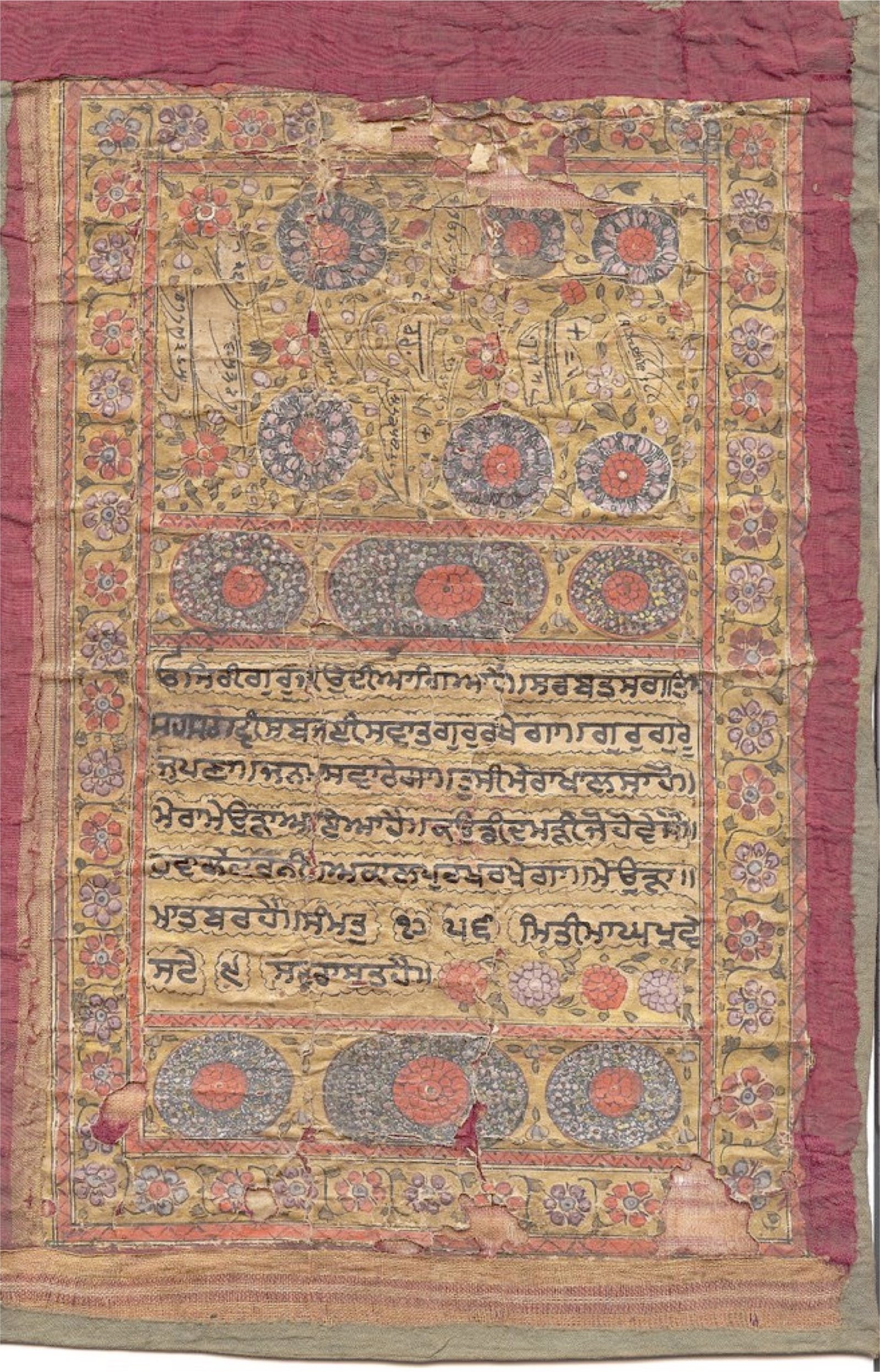
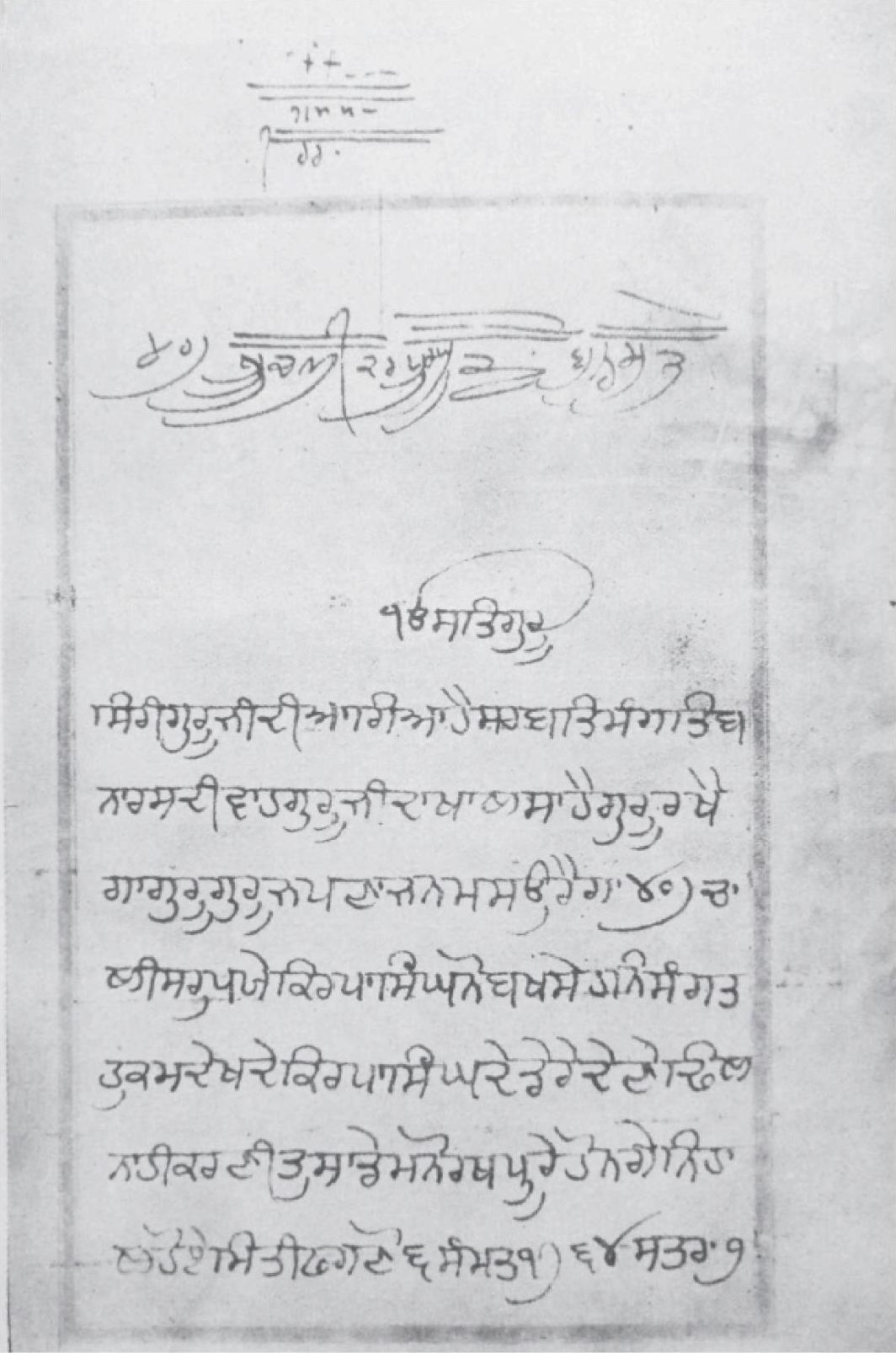
In the years after 1699 the Guru's own letters, the hukamnamas sent to congregations across northern India, call their readers "my Khalsa" and "the Guru's Khalsa", tell them to have nothing to do with the masands, the regional agents who had carried the community's offerings to the Guru, and summon them to Anandpur, in time to come armed. The earliest dated one we can show, at the head of this page, was written nine months after the festival.
A poet at the Guru's court named Sainapati began a verse life of his patron, the Sri Gur Sobha, "the radiance of the Guru", in the Bikrami year 1758, which is 1701, as his own opening verses say, and finished it soon after the Guru's death in 1708. He is the only narrator of the founding who belonged to the Guru's circle, and he places it at Vaisakhi:
ਚੇਤ ਮਾਸ ਬੀਤਯੋ ਸਕਲ, ਮੇਲਾ ਭਯੋ ਅਪਾਰ ।
ਬੈਸਾਖੀ ਕੇ ਦਰਸ ਪੈ, ਸਤਿਗੁਰੁ ਕਿਯੋ ਬਿਚਾਰ ॥
ਕਿਯੋ ਪ੍ਰਗਟ ਤਬ ਖਾਲਸਾ, ਚੂਕਯੋ ਸਰਬ ਜੰਜਾਲ ॥
ਸਬ ਸਮੂਹ ਸੰਗਤਿ ਮਿਲੀ ਸੁਭ ਸਤਿਲੁਜ ਕੇ ਤੀਰ ।
ਕੇਤਕ ਸੁਨ ਭਏ ਖਾਲਸਾ, ਕੇਤਕ ਭਏ ਅਧੀਰ ॥
chet mās bītyo sakal, melā bhayo apār.
baisākhī ke daras pai, satiguru kiyo bichār.
kiyo pragaṭ tab khālsā, chūkyo sarab jañjāl.
sab samūh saṅgati milī subh satiluj ke tīr.
ketak sun bhae khālsā, ketak bhae adhīr.
"When the whole month of Chet had passed, a boundless gathering came together; at
the Baisakhi audience the True Guru took counsel. … Then he made the Khalsa manifest, and
every entanglement fell away. The whole congregation met on the blessed bank of the Sutlej:
some heard, and became Khalsa; some grew uneasy."
Sainapati, Sri Gur Sobha, chapter 5, verses 2, 4 and 5, in Shamsher Singh Ashok's
edition (1967), checked against the page and against the reading of Kulwant Singh's (2014).
What Sainapati describes is an assembly on the Sutlej at which the Guru tells the congregation to give up the masands and meditate on the one Lord; a few verses on he sums it up, "putting all the masands away, he made them Khalsa". He says the Guru gave the pahul of the khanda, the initiation of the sword. He gives no year: the heading "Vaisakhi, Samvat 1752" in one modern edition is its editor's.
And in May 1710, not two years after the Guru's death, a news-writer at the court of the emperor Bahadur Shah reported on "the Sikhs of the Khalsa". Guru Gobind Singh, he wrote, had dismissed the masands "by one stroke of pen" and ruled that the Sikhs of the Khalsa would not cut the hair of their heads, their beards or their moustaches. The new rules had split the Khatris, the trading caste to which the Gurus belonged: the two parties had stopped marrying one another, and at Chak Guru, the old name of Amritsar, it had come to blows.
A court poet, the Guru's own letters and an imperial intelligence report: three witnesses with little in common but the facts. Something decisive happened at Anandpur at the end of the 1690s. It removed the masands, it concerned the hair, and it made a body of Sikhs who called themselves the Khalsa. On all of this the evidence is as good as anything in the period.
Now look for the tent.
Sainapati does not mention it. Nor does he mention a call for heads, five volunteers, a bloodied sword, or the Guru asking the five to initiate him. As J. S. Grewal and S. S. Bal pointed out in 1967, none of these appears in any source written in the Guru's lifetime. The first Sikh writer known to tell the call for heads is Koer Singh, who had come into the Khalsa under the influence of the scholar Bhai Mani Singh, in his gurbilas, a verse life of the tenth Guru finished, by its own closing verses, in 1751. Some scholars once placed it in the nineteenth century; that argument has since been answered, and 1751 is now the accepted date. And in this, the earliest written telling of the call, the goats are already there.
ਪਾਂਚ ਅਜਾ ਸੁਤ ਗੁਪਤ ਮੰਗਾਈ । ਤਾ ਮੈ ਦੀਨ ਨਿਸਾ ਬੰਧਵਾਈ ॥
ਸਨਮੁਖ ਪੂਰਾ ਸਿਖ ਹੈ ਕੋਈ । ਸੀਸ ਭੇਟ ਗੁਰ ਦੇਵੇ ਜੋਈ ।
pāñch ajā sut gupat maṅgāī, tā mai dīn nisā bandhvāī.
sanmukh pūrā sikh hai koī, sīs bheṭ gur deve joī.
"Five goats he had brought in secret, and by night had them tied inside. …
'Is there a Sikh here, whole in his faith, who will give the Guru his head as an
offering?'"
Koer Singh, Gurbilas Patshahi 10, chapter 9, verses 7 and 9, in Shamsher Singh
Ashok's edition (Patiala, 1968), checked against the printed page.
In Koer Singh's scene the goats are tied inside the tents the night before. Each volunteer is led into a tent, where the Guru kills a goat with a single stroke, and the crowd, seeing the blood, decides that the goddess has turned the Guru's wits. The Guru Kian Sakhian, a chronicle placed in 1790, has five tents and five goats made ready the day before; in Sukha Singh's gurbilas of 1797 each volunteer kills a goat himself. It is often said that the goats are a late, rationalising gloss on a story about real deaths. The texts run the other way: the goats are in the story from the moment it enters the written record, and it is many modern tellings that leave them out.
The narratives also disagree about when, and about who. Koer Singh dates the founding to Samvat 1746, which is 1689. The narrative attached to the rahitnama of Chaupa Singh, a Brahmin of the Chhibber family in the Guru's household, puts the first initiation on the seventh of Savan, Samvat 1754, which W. H. McLeod converts to 15 July 1697: not at Vaisakhi at all. There is no call for heads. The Guru gives the new rite with his own hands to Chaupa Singh and four others, Dhanna Singh, Hari Singh, Mewa Singh and Jodh Singh, and the text calls it the initiation of the hair. Kesar Singh Chhibber, of the same family, also dates it to 1697; the Guru Kian Sakhian says the Vaisakhi of 1698.
Grewal and Bal's conclusion still stands. The great gathering, the rite, the uncut hair and the arms, the name Singh and the ban on smoking are all in the earliest evidence. The call for heads and the Guru's own initiation at the hands of the five are not, and until older evidence turns up, they wrote, the historian may suspend judgement on them.
None of this proves the story false. Oral tradition can carry memories faithfully for generations, and a poet writing in praise of his patron is not keeping minutes: his silence proves little. But the most famous scene in Sikh history reaches us through writers who were not there, who wrote half a century and more later, and who disagree in ways that turn out to be revealing. We will tell both stories, the one Sikhs remember and the one the documents record, and try to show where they meet. We will come back to the tent. First, the man holding the sword.
The boy from Patna
He was born far from the Punjab, in Patna, the old river city on the Ganges, on the seventh day of the bright half of Poh in the Bikrami year 1723: Saturday 22 December 1666. His father, Tegh Bahadur, the ninth Sikh Guru, was travelling in Bengal and Assam and would not see him for years. His mother, Gujri, his grandmother, Nanaki, and his mother's brother, Kirpal Chand, raised him through his first five years in a house whose site is now Takht Sri Harimandir Ji, Patna Sahib, one of the five takhts, the seats of authority of the Sikh world.
In two of his father's letters the child is Gobind Das; most writers of his own time call him Gobind Rai. The name by which the world knows him, Gobind Singh, was still thirty-two years away.
In 1665 Tegh Bahadur had bought land from the ruling family of Kahlur, on the mound of a ruined village called Makhowal, and founded a settlement he named Chakk Nanaki after his mother. In February 1672 the congregation of Patna saw his family off, and they travelled up the Gangetic plain, by way of Lakhnaur near Ambala, to Makhowal. The later name, Anandpur, "the city of bliss", is usually credited to the son.
The place mattered. Anandpur stood by the Sutlej where the river leaves the Sivalik hills, on the seam between the Rajput principalities of the hills and the Mughal lowlands, and the ground under it belonged not to the Sikhs but to the raja of Kahlur, a state later known by its capital, Bilaspur. That fact would shape the Guru's life. There the boy learned Gurmukhi, the script of the Sikh scriptures, and Braj and Persian, in all of which he would later write, and to ride and to shoot. He was being raised like a prince.
1675: a head brought home
In the early summer of 1675, according to Sikh tradition, a party of Brahmins came from Kashmir to Makhowal, led by one Kirpa Ram of Mattan, to complain that the Mughal authorities were pressing Hindus there to convert. The tradition has the nine-year-old Gobind tell his troubled father that no one could be worthier than he to answer them.
That year Tegh Bahadur set out towards Delhi. He was arrested on the way, held for months, and on 11 November 1675, the fifth day of the bright half of Maghar, beheaded in public in the Chandni Chowk. Companions remembered as Mati Das, Sati Das and Dayal Das were put to death before him. Gurdwara Sis Ganj, "the treasury of the head", stands on the spot.
Under cover of a storm, the tradition says, a Sikh named Jaita, of the Rangreta community, whom the caste order placed at its lowest, carried the severed head through the night to Kiratpur, near Anandpur, where the boy received it; he would later join the Khalsa as Jivan Singh. A trader named Lakhi Shah Vanjara cremated the body by setting fire to his own house at Raisina, where Gurdwara Rakab Ganj now stands. Malcolm heard a version of the story from Sikhs in 1805: that men of the sweepers' caste had brought the Guru's body out of Delhi, and that Sikhs of their community were known as Ranghreta Singhs.
At the Vaisakhi gathering of 1676 the Sikhs formally proclaimed the nine-year-old their Guru. He had inherited a community, a town on another ruler's land, and a question that would take him twenty-three years to answer: what must a community become, if its Guru can be led into a public square and killed?
A court in the foothills, 1675–1698
For the next quarter of a century Anandpur was the young Guru's school, court and fortress, and it would be a mistake to picture only the fortress. Visitors came to a darbar, a royal court, where the Guru received offerings and gave robes of honour, and kept horses, hunting hawks and a great war drum. Around him gathered poets, fifty-two in the later tradition's count, writing in Braj and Persian, among them Nand Lal, a Persian poet of real distinction, and Sainapati. Louis Fenech has shown how closely this court echoed those of Mughal and Rajput kings, and how pointedly it competed with them.
The Guru was the most prolific poet at his own court. The collection later called the Dasam Granth, "the book of the tenth", gathers compositions attributed to him, though the authorship of parts of it has been argued over since it was compiled. Among the works most widely accepted as his are the Jaap, a litany of names for a God who is timeless, formless and beyond every religious label, and the Bachittar Natak, "the wondrous drama", a verse autobiography that Grewal and Bal date to about 1697. In it the Guru says that God sent him into the world to spread righteousness and to destroy the wicked. Read today, it is startling, a religious teacher narrating his battles with the relish of an epic poet. It is also indispensable, because it stops short of the Khalsa: it is the Guru's own account of the years that led to it.
Paonta, Bhangani and Nadaun
In about 1685 the Guru moved to Paonta on the Yamuna, at the invitation of the raja of Sirmaur, Medni Parkash; the move is usually explained by friction with Kahlur, whose raja resented a guest who behaved like a king. In 1688 the war came to him anyway. At Bhangani, six miles from Paonta, a force led by Fateh Shah of Garhwal attacked. The Bachittar Natak tells the battle in the first person: champions named on both sides, his uncle Kirpal Chand laying about him with a club, the poet's own arrows finding their mark. Some Pathan soldiers in the Guru's pay went over to the other side; a Muslim holy man, Pir Budhu Shah of Sadhaura, brought men to fight for him and, by tradition, lost two sons that day. The hill chiefs withdrew, and the Guru went home to Anandpur.
Nothing about the politics of the hills was simple. In 1691 the raja of Kahlur, Bhim Chand, refusing tribute to the Mughals, asked for the Guru's help, and the Guru fought beside him at Nadaun, on the Beas, against a Mughal commander. In 1696 the emperor's son, Prince Muazzam, was sent north to bring the hill states to heel, and the autobiography closes around his arrival. Aurangzeb himself had left for the Deccan in 1681 and would never come back; the Punjab was run by his governors at Lahore and Sirhind. The pressure on the Guru was real, but mostly local: a raja who owned the ground beneath his town, neighbours who resented his style, and imperial officers who could be persuaded to act on their complaints.
By 1698 the Guru had a fortified town, a court, a literature and an armed following. He also had a problem none of these could solve, and it concerned the men who stood between him and his Sikhs.
Why was the Khalsa created?
Ask why the Khalsa was created and you will often be given an answer that fits in a sentence: to fight tyranny. It is not wrong, but it is not enough. The evidence points to several pressures meeting at Anandpur in the late 1690s, and historians weigh them differently.
The men in the middle
Since Guru Arjan's time the Gurus had governed a scattered following through the masands, a word from the Persian masnad, the raised seat of a person of rank. A masand led the sangat of a region, the congregation. He taught, settled disputes and, above all, collected the offerings of the faithful, including the dasvandh, the tenth of their income that Sikhs were asked to give, and carried them to the Guru.
The system had built the Sikh world. By the end of the seventeenth century it was consuming it. Masands kept offerings for themselves, lorded it over their congregations and, most dangerously, could carry a region's loyalty over to a rival claimant to the Guruship. One of the Thirty-Three Savaiye, preserved in the Dasam Granth, rebukes them in scalding terms for their greed. The Guru's letters after 1699 tell congregation after congregation to send their offerings only by an authorised messenger, or to bring them to Anandpur themselves.
This is where the word Khalsa comes in. In Mughal administration, khalisa land paid its revenue straight to the emperor's treasury instead of through an assigned noble; the word comes from the Arabic for "pure" or "unmixed". The Gurus had borrowed the idea long before 1699. The Dabistan-i-Mazahib, a Persian survey of the religions of India written in the 1640s, suggests that Sikhs linked to the Guru through a masand had one name and Sikhs linked to him directly another: khalsa. A letter of the sixth Guru, Hargobind, tells a congregation in the east that they are his khalsa, and one of Tegh Bahadur's gives the title to the congregation of "Pattan of Farid", the town now called Pakpattan, where the shrine of Baba Farid stands. To be khalsa was to belong to the Guru directly, with nobody in between. The word appears once in the Guru Granth Sahib, in a hymn of Kabir in Rag Sorath (page 655), in its plain sense of "pure".
At Vaisakhi a word for particular congregations became the name of the whole community, and the Sikhs knew exactly what it meant. Sainapati tells how the Khatri elders of Delhi complained to the city's Mughal official about Sikhs who called themselves Khalsa, a word that belonged to the king. The Sikhs explained that their Guru had removed his deputies, the masands, and taken charge of them himself: every Sikh now belonged to him directly.
Rival Gurus
The trouble with the masands was tangled up with another. Almost every succession since 1581 had left a disappointed claimant, and several had founded lineages of their own. The Minas followed Guru Arjan's elder brother, Prithi Chand. The Dhir Malias followed Guru Hargobind's grandson Dhir Mal, whose family held Guru Arjan's original manuscript of the scripture at Kartarpur, near Jalandhar (not Guru Nanak's Kartarpur on the Ravi). The Ram Raiyas followed Ram Rai, who had lived at the Mughal court and settled at Dehra Dun. Each had congregations, offerings and masands of its own. The manuals of Khalsa conduct would name five groups the Khalsa must shun, the panj mel: usually the masands and their followers, the Minas, the Dhir Malias and the Ram Raiyas, with a fifth that varies from text to text. A community with several Gurus is a community whose members can drift. The Khalsa drew a line around the Sikhs of Guru Gobind Singh.
Neighbours and emperors
The Guru's landlords and neighbours were the Rajput rulers of the hill states, whose authority rested on lineage, caste rank and tribute to the Mughals. A Guru who held court like a king and took armed men of low caste into his service affronted that order; in Koer Singh's poem the Rajputs, told of the new rite, want nothing to do with it. Over all of this hung the memory of two deaths: the fifth Guru, Arjan, had died in Mughal custody at Lahore in 1606, and the ninth had been beheaded in Delhi. Under Aurangzeb the empire had hardened its religious policy, reimposing the jizya, the poll tax on non-Muslims, in 1679, though how systematically it acted against particular temples is still debated. For the Sikhs of the 1690s it was less an army at the gates than a standing possibility: officials who might act on a rival's complaint, as in 1675.
One eighteenth-century tradition ties the Khalsa directly to Delhi. The Chaupa Singh narrative says that when the ninth Guru was executed, all but two of his Sikhs hid what they were, and that his son resolved to give his followers a form no Sikh could conceal; Kesar Singh Chhibber tells the same story. Whatever its origin, the idea fits the emphasis every early source places on the uncut hair.
One bowl
The Gurus had taught for two centuries that caste counted for nothing before God, and the langar, the community kitchen, had put the teaching on the table. But teaching and custom lived side by side: the Gurus themselves were Khatris who married within Khatri families, and leading Sikhs carried their castes with them. The Khalsa rite went further than anything before it by having its initiates drink from the same iron bowl, a direct breach of the purity rules by which the higher castes avoided sharing food and water with the lower.
Outsiders saw the point at once. Malcolm wrote in 1812 that in the Guru's order "the Brahmen who entered his sect had no higher claims to eminence than the lowest Sudra who swept his house". He also reported a saying of the Guru's: that the four castes, like the four things folded into a betel leaf, the leaf, the lime, the nut and the catechu, would all become one colour when well chewed.
A theology of steel
Finally, there was the Guru's idea of God. His compositions address the divine as Akal Purakh, the Timeless Being, and, in the opening of the Akal Ustat, as Sarbloh, "All-Steel"; Koer Singh's Guru tells the five to take refuge in the Wielder of the Sword. In the Guru's poetry the sword is at once a weapon, an image of divine power and an object of reverence. Years later, in the Zafarnama, his Persian letter to Aurangzeb, he would argue that it is lawful to take up the sword only when every other means has failed; Grewal and Bal read the stress as falling on the last resort. The Khalsa gave this theology a body: a community that prayed and bore arms, and saw no contradiction between the two.
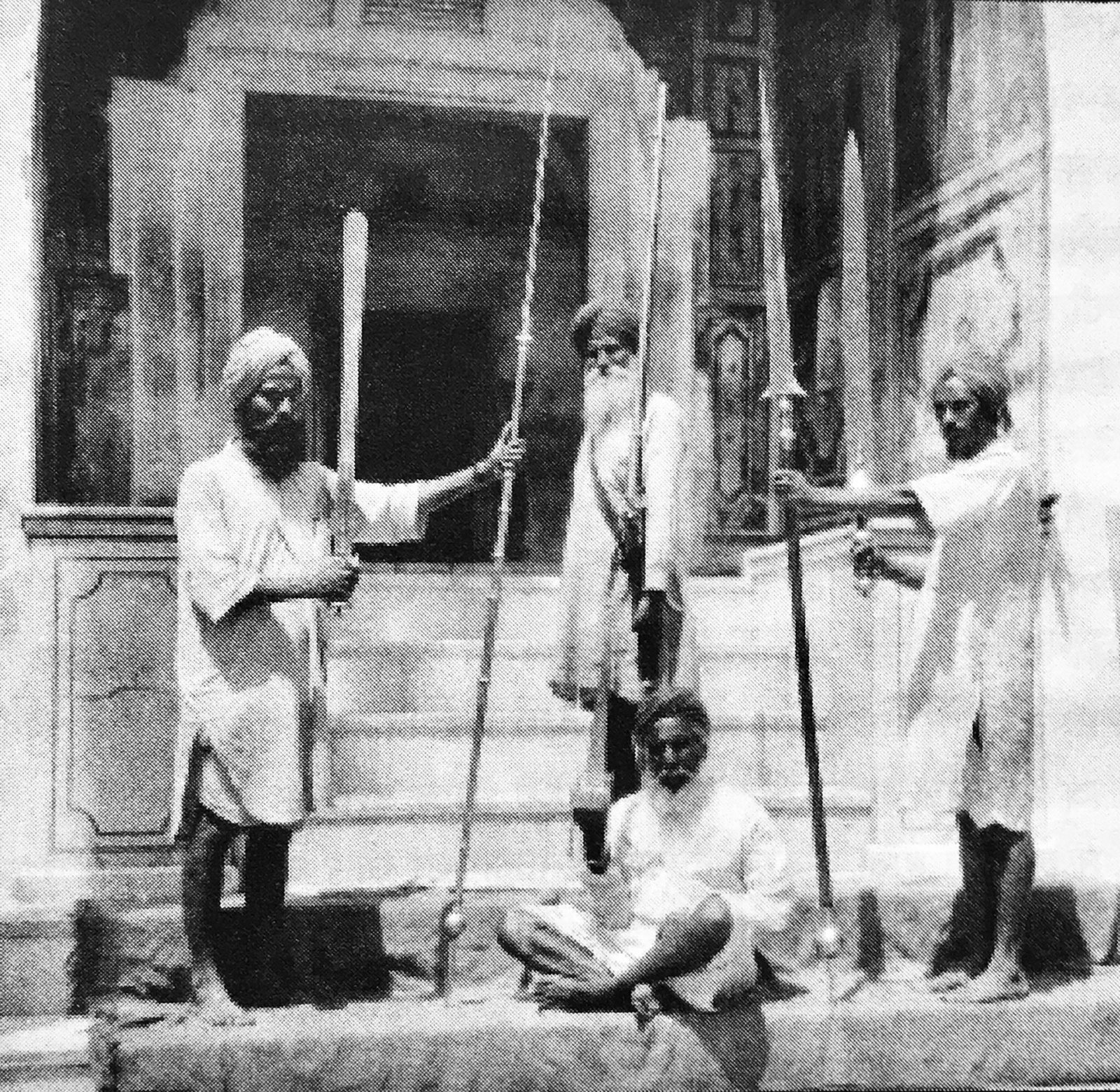
Every one of these pressures pointed to the same need: a Sikh who answered to the Guru and to no one in between, who could not be mistaken for anyone else, and whom no one could tell what his birth had made him. At Vaisakhi 1699 the Guru set out to make one.
Vaisakhi 1699
The festival and the date
Vaisakhi, also written Baisakhi, is the first day of the solar month of Vaisakh and the beginning of the harvest in the Punjab. It was a Sikh occasion long before 1699: by a tradition recorded in the Mahima Prakash of 1776, the third Guru, Amar Das, began a yearly gathering at Goindval at Vaisakhi, and congregations came to the Guru's seat at Vaisakhi and Divali ever after.
In 1699 the first of Vaisakh fell on 30 March by the Julian calendar and 9 April by the Gregorian. The Indian solar year is slightly longer than the Gregorian, so Vaisakhi slides later by about a day every seventy years. That, with the change of calendars, is why the Khalsa's birthday, now kept on 13 or 14 April, fell on neither date in 1699.
The gathering
This year, Grewal and Bal found, the Sikhs had been specially asked to come. How many came, nobody counted. Sainapati speaks of a boundless gathering; later Persian writers put the number who took the rite at twenty thousand, and some modern works at eighty thousand, figures Grewal and Bal called "no more than mere guesses", though the crowd surely ran into thousands. Koer Singh seats the Guru that morning at Kesgarh, where Takht Sri Kesgarh Sahib now stands. Its name joins kes, "hair", to garh, "fort": the place is named for what was decided there, and Malcolm heard Anandpur itself called "Cesgher, or the house of hair".
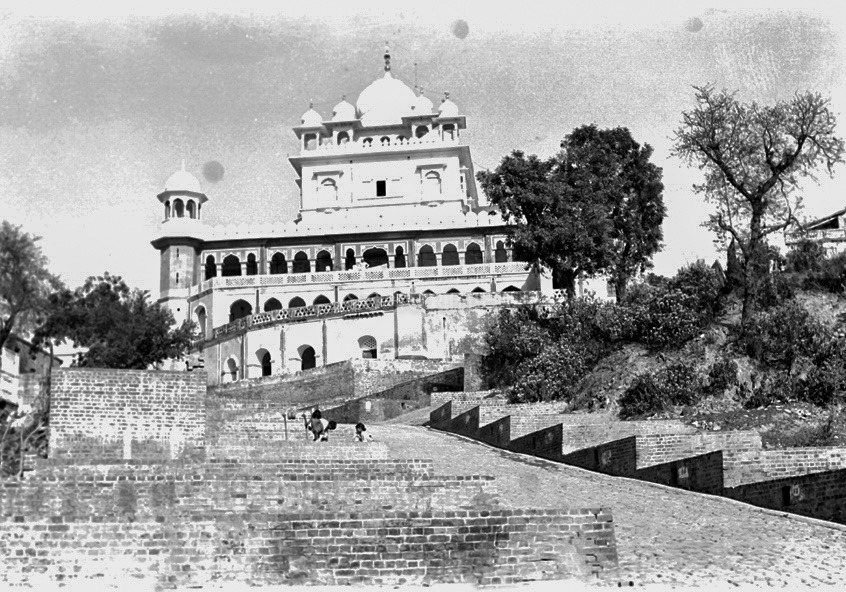
In the Guru's own household that spring there was a newborn. His youngest son, Fateh Singh, had been born, by the traditional date, a few weeks before the festival.
The five
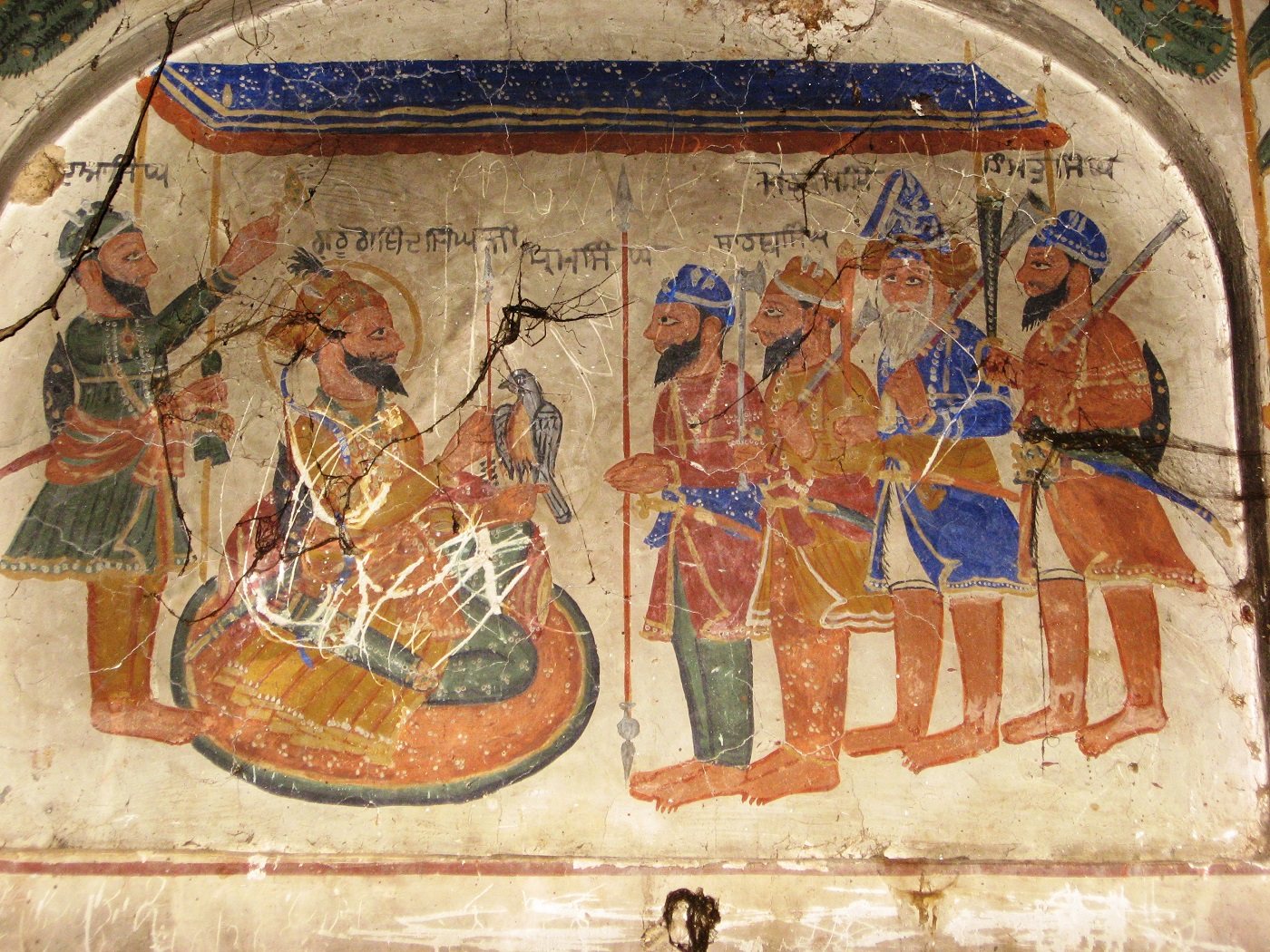
Here the documents fall silent and the tradition takes over. It is worth pausing over who the five were said to be, because the tradition chose them with care, or remembered them with care, which for a historian is not the same thing.
| Name at birth | Name as Khalsa | Community | Home | Home today |
|---|---|---|---|---|
| Daya Ram | Daya Singh | Khatri (traders) | Lahore | Punjab, Pakistan |
| Dharam Das | Dharam Singh | Jat (landholding farmers) | Hastinapur | Meerut district, Uttar Pradesh, India |
| Mohkam Chand | Mohkam Singh | Chhimba (calico-printers) | Dwarka | Gujarat, India |
| Himmat | Himmat Singh | Jhiwar (water-carriers) | Jagannath Puri | Odisha, India |
| Sahib Chand | Sahib Singh | Nai (barbers) | Bidar | Karnataka, India |
The sources vary in the details: Koer Singh calls Mohkam "Nihchal Singh", the Guru Kian Sakhian makes Daya a Khatri of Sialkot, and the order differs from text to text. Read as a map, the list reaches from its Punjabi centre to the edges of the subcontinent. Read as a social register, it runs from the Guru's own trading caste through the landholding Jats to three castes of craft and service that the purity rules placed low. Whether the Guru chose this symmetry, or the tradition arranged it afterwards, cannot now be known.
Eighteenth-century Sikhs found the five men's origins meaningful in ways a modern reader might not expect. Koer Singh gives four of them earlier lives in devotional story: Mohkam the calico-printer had been Namdev, the calico-printer poet whose hymns stand in the Guru Granth Sahib; Sahib the barber had been the barber-saint Sain; Dharam the Jat had been Dhanna, the Jat devotee; Himmat had been the hunter of the old stories. Caste here is not so much erased as sanctified, a tradition Louis Fenech has traced in The Cherished Five in Sikh History.
Inside the tent
What happened behind the canvas? Three answers have been given. The first is devotional: the Guru truly struck off five heads and restored five men to life. Many Sikhs have understood the story this way, and it belongs to faith, where a historian has no instruments. The second is the goats, the oldest answer on paper. Many Sikhs dislike it, feeling that it turns a test of absolute surrender into stagecraft; the tellers who introduced the goats did not think so, since for them the test was real because the five did not know.
The third answer is the historian's: we do not know, and the earliest witness does not say. What every version insists on is that the five believed they were giving their lives. Sikh devotional language has a word for such people, marjivre, those who have died while still alive, and the Guru Kian Sakhian says it was as marjivre that the five were named the Guru's beloved: the Panj Pyare. Koer Singh makes the same connection in the Guru's own mouth: "you are supremely beloved to me", he tells them, "since I asked you for your heads".
The amrit
The rite is described more consistently than the call. Water was poured into an iron bowl, the sarbloh bata, and stirred with a khanda, a straight, double-edged sword, while compositions of the Gurus were recited over it. The result was amrit, "deathless", the nectar of immortality of Indian mythology, and the rite took its names from these things: khande di pahul, "the initiation of the double-edged sword", and amrit sanchar, "the imparting of amrit". In Koer Singh's telling the five stood before the Guru with their palms joined to receive it. Which compositions were recited, the sources say more precisely the later they are: the early manuals mention the Japji, the Anand and quatrains of Guru Gobind Singh in varying combinations, and the set now used, the Japji, the Jaap, the Savaiye, the Chaupai and the Anand, was widely recognised by the end of the eighteenth century.
Into the water went sugar: patase, the small puffed drops of sugar still sold at every Punjabi fair: the steel of the sword and the sweetness of the sugar, together. Who added them is a small and telling puzzle, taken up in the section on women and the Khalsa.
The Guru asks to be initiated
Then came the moment on which the meaning of the whole day turns. Having initiated the five, the Guru asked them to initiate him. He placed himself before them, received the amrit from their hands and took, as they had, a new name. Gobind Rai became Gobind Singh. Koer Singh, again the first to tell it, has the Guru come down from his seat and join his hands:
ਜਾ ਵਿਧਿ ਅੰਮ੍ਰਿਤ ਤੁਮ ਗੁਰ ਪਾਯੋ । ਤੈਸੇ ਮੋਹਿ ਮਿਲਾਯੋ ਭਾਯੋ ।
ਓਤ ਪੋਤ ਗੁਰ ਸਿਖ ਜਗ ਜਾਨੋ ।
jā vidhi amrit tum gur pāyo, taise mohi milāyo bhāyo.
ot pot gur sikh jag jāno.
"As you received the amrit from the Guru, brothers, so give it to me. … Let the
world know the Guru and the Sikh as warp and weft."
Koer Singh, Gurbilas Patshahi 10, chapter 9, verse 57, in Shamsher Singh Ashok's
edition (1968), checked against the printed page.
The Mahima Prakash of 1776 says simply that the Guru took on the same appearance as his Khalsa, and in Macauliffe's version of 1909 he tells the five that "the Khalsa is the Guru and the Guru is the Khalsa". A ballad attributed to a poet known as Bhai Gurdas II, whose date is disputed, turns the paradox into a phrase Sikhs still repeat: the Guru was himself both master and disciple. Sikh tradition already remembered Guru Nanak bowing before the disciple he chose as his successor. This went further: disciples who were not his successors, but simply his Sikhs, conferred on the Guru. Within the Khalsa, authority was no longer something the Guru only held. It was something he shared with the body of the initiated and, in the end, would leave to them.
A new name and a new rule
The initiated men took the name Singh, "lion", borne until then above all by Rajput warrior lineages and now given to barbers and water-carriers. It took hold gradually: some of the Guru's letters after 1699 greet his Khalsa by names that do not yet carry it. Women, in the modern understanding, took the name Kaur; that part of the story has a more complicated history, told below.
The initiates were given a discipline, the rahit, "way of living". Sainapati's own summary is the oldest, and the shortest:
ਹੁਕਾ ਨਾ ਪੀਵੈ, ਸੀਸ ਦਾੜ੍ਹੀ ਨਾ ਮੁੰਡਾਵੈ,
ਸੋ ਤੋ ਵਾਹਗੁਰੂ ਵਾਹਗੁਰੂ ਵਾਹਗੁਰੂ ਜੀ ਕਾ ਖਾਲਸਾ ॥
hukā nā pīvai, sīs dāṛhī nā muṇḍāvai,
so to vāhgurū vāhgurū vāhgurū jī kā khālsā.
"He who does not smoke the hookah, nor shave his head or his beard: he is the Khalsa
of Vahiguru, Vahiguru, Vahiguru."
Sainapati, Sri Gur Sobha, chapter 5, verse 31, in Shamsher Singh Ashok's edition
(1967), checked against the page.
The eighteenth-century manuals differ in detail but agree to a striking degree on the essentials. Keep the hair uncut. Bear arms. Do not use tobacco. Do not perform bhaddan, the ritual shaving of the head and beard after a death in the family. Do not eat the meat of animals killed in the Muslim ritual manner, called kuttha. Shun the five reprobate groups, and those who kill their infant daughters. Greet one another with the words Sainapati already uses: Vahiguru ji ka Khalsa, Vahiguru ji ki Fateh, "the Khalsa belongs to God, the victory belongs to God"; Vahiguru, often written Waheguru, is the Sikh name for God. The same manuals lay down rites of birth, marriage and death in which Brahmin priests have no part, the long road to the Anand Karaj, and Karamjit Malhotra, reading them all, found far more continuity than change across the century. The modern code gathers the gravest breaches into four kurahit: dishonouring the hair; eating kuttha meat; sexual relations outside marriage; and tobacco.
The manuals also carry the marks of the century that wrote them, decades of war with Mughal governors and then Afghan invaders. Several forbid the Khalsa the company of "Turks", as they call Muslims, and Koer Singh's list of the Guru's instructions includes their destruction; others forbid relations with a Muslim woman, a rule Macauliffe still recorded in 1909. Readers in the Singh Sabha tradition, as McLeod noted, have taken the harshest of these for later additions, out of keeping with a Guru whose ally at Bhangani was a Muslim pir. The modern code keeps the rule against kuttha and has turned the other into one of fidelity to one's spouse.
Who said no
Not everyone welcomed the new order. The hill rajas rejected it. So, for a time, did many Sikhs, above all Khatris and Brahmins, for whom the ban on bhaddan meant breaking with their families' mourning customs and the common bowl meant sharing water with people they had been raised to avoid. In Sainapati's Delhi some took the new rite and others said they would believe it when the Guru put it in writing; a Khatri who shaved his head in mourning was turned out of the congregation, and the Khatri elders boycotted the Khalsa in trade and marriage until a compromise was reached. That, the 1710 report's blows at Chak Guru, and the rahitnamas' anxious lists of people to be shunned all describe a community reshaped under strain, not a crowd converted in an afternoon.
Sikhs who did not take the new initiation did not cease to be Sikhs. The eighteenth-century texts call them sahajdhari, and the Chaupa Singh rahitnama gives them a place of their own, as Khalsa but not Singhs, with the older rite, charan pahul, initiation with water touched by the feet. Muhammad Qasim, a government accountant from Lahore who wrote in 1723, saw the division from outside: those who followed the Guru's way were called Khalsa, and the others, in common speech, chakar, servants. The line between Khalsa and other Sikhs would remain a subject of argument for three hundred years.
The Five Ks
Every modern account of 1699 includes the Five Ks, the panj kakar: five articles of faith whose names begin with the letter ਕ, kakka, which the Sikh code of conduct requires every initiated Sikh to keep at all times. What follows describes each as Sikhs understand it today, then turns to a question historians have argued over for half a century: were they given, as a set of five, on the day itself?
Kes: uncut hair
- In Punjabi
- ਕੇਸ · کیس · kes
- Say it
- "kays", one syllable, with a long, pure e
- Literally
- hair of the head, from Sanskrit keśa
- What it is
- hair left uncut, on the head and the body
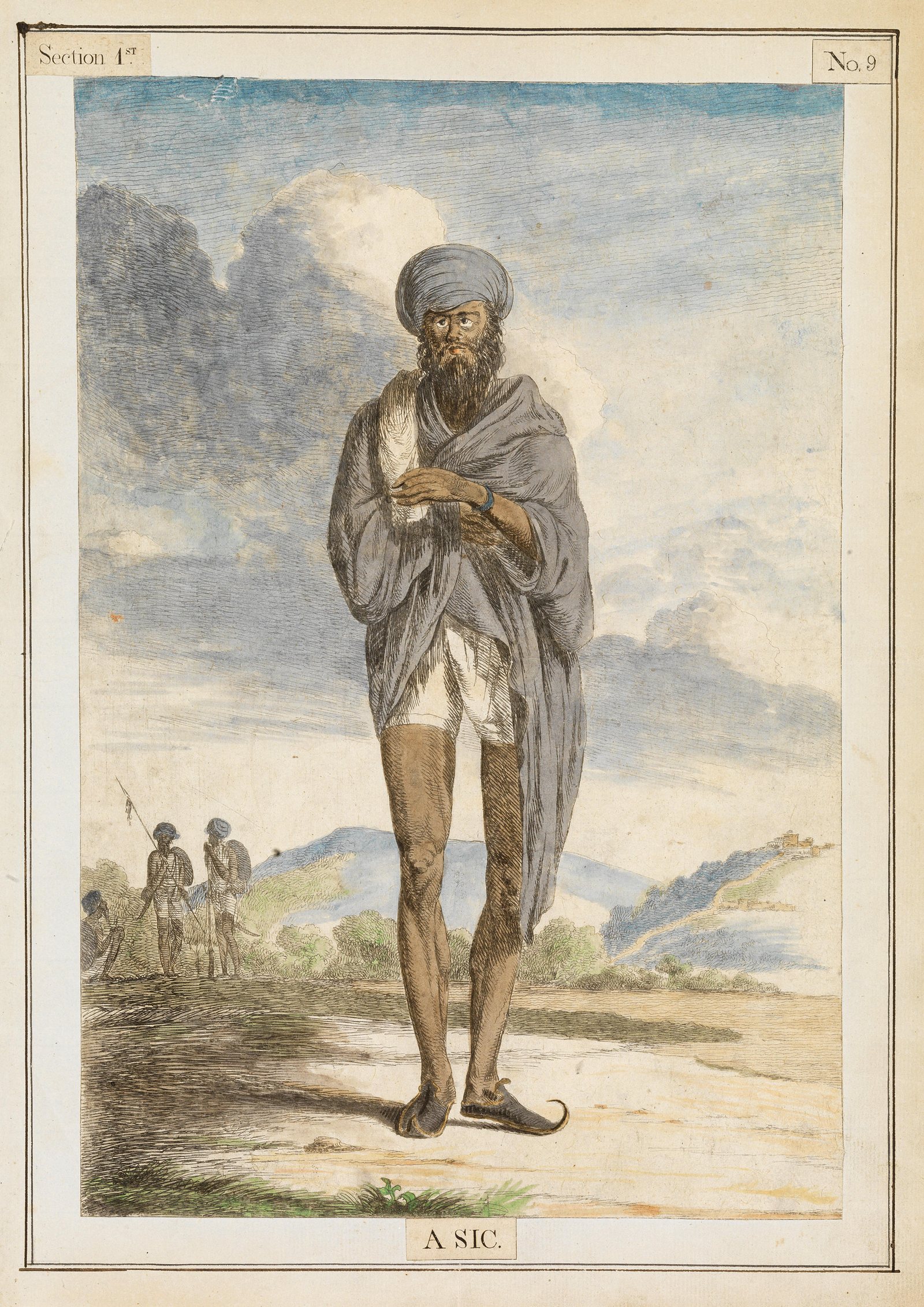
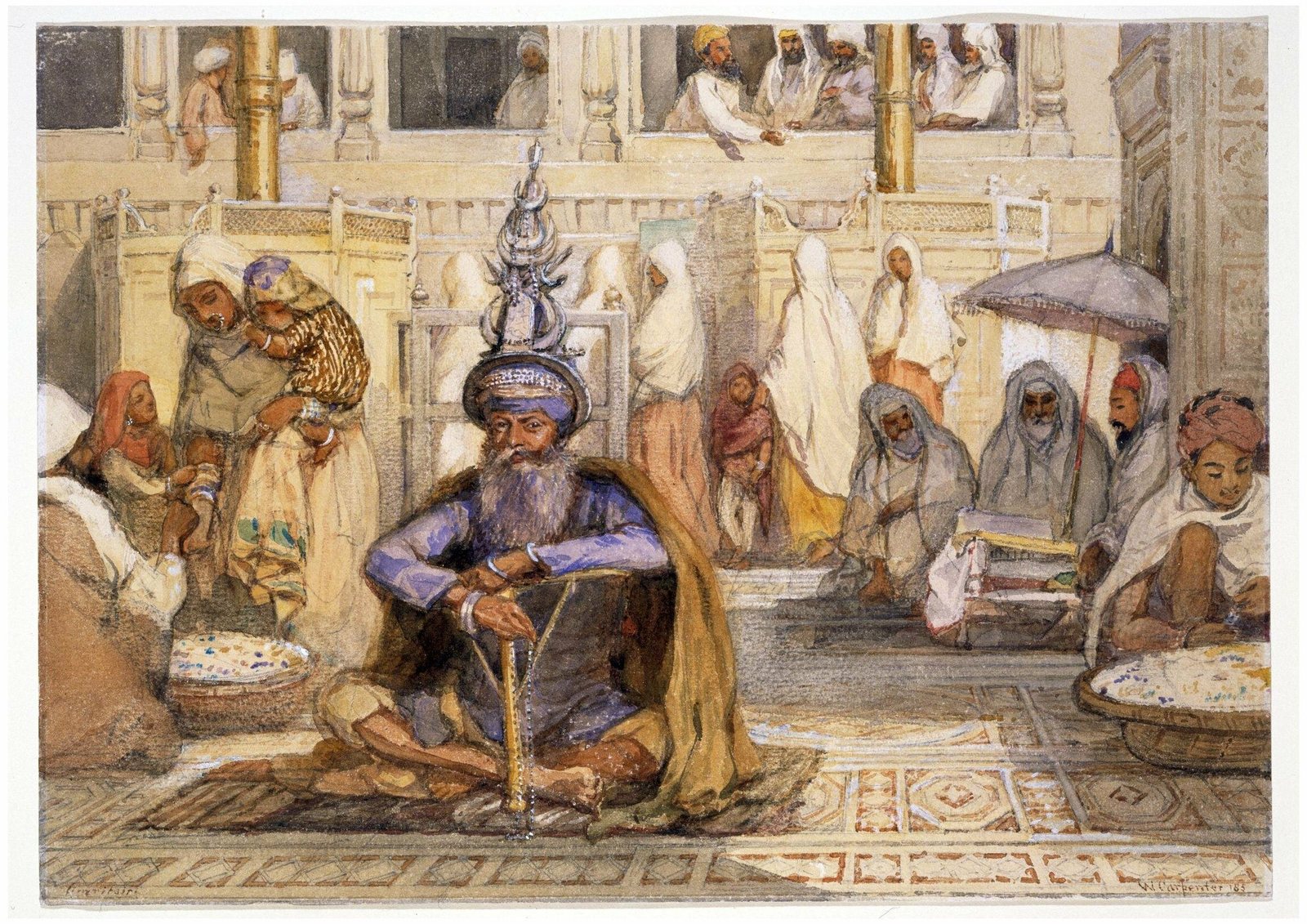
For Sikhs, uncut hair is the form in which God made human beings, and keeping it whole is an act of acceptance and of commitment. It is washed, combed, tied in a knot on the crown and, for men and many women, covered by a turban, the dastar, or by a smaller under-turban, the keski. Of all the Ks, kes is the oldest in the record and the one the sources return to most insistently. The 1710 report singles it out; Sainapati makes it the mark of the Khalsa; in the Parchian of Sewa Das, stories of the Gurus gathered by an Udasi around 1708, the Guru declares that his Sikhs will not go without hair or weapons; and the Chaupa Singh rahitnama makes the uncut hair the Sikh's answer to the sacred thread and the forehead mark. The turban carried its own message: in Mughal India it marked a man of standing, and peasants and artisans who wore it claimed a dignity the social order had denied them.
Outsiders guessed at the reasons: Malcolm heard that "several Muhammedan authors" traced the hair to a disguise in which the Guru had once escaped, and Muhammad Qasim thought he had stopped cutting it in mourning for his sons. What impressed Malcolm was how much it mattered. In his tent in 1805 he teased a Khalsa Singh by passing a hand across his chin, as if shaving, and the man's sword was half drawn before Sikh chiefs could calm him: "their jealous regard of it", Malcolm wrote, "is not to be described."
ਅੰਮ੍ਰਿਤਧਾਰੀ ਸਿੱਖ ਕੇਸ ਨਹੀਂ ਕਟਾਉਂਦੇ।
amritdhārī sikkh kes nahīṅ kaṭāuṅde.
Initiated Sikhs do not have their hair cut.
Kangha: the comb
- In Punjabi
- ਕੰਘਾ · کنگھا · kaṅghā
- Say it
- "KUNG-gaa": the written gh is not breathy; in Punjabi it is heard as a change in the pitch of the word
- Literally
- comb
- What it is
- a small wooden comb, worn in the hair
The kangha keeps the kes clean and ordered. Sikhs read it as a sign that uncut hair is a discipline and not neglect, the opposite of the matted locks of some renunciant ascetics. Koer Singh already has the five told to comb their hair twice a day, and the rahitnama attributed to Desa Singh, of the late eighteenth century, requires a comb on the initiate's person. In everyday Punjabi, on both sides of the border, a comb is usually a kanghi, the small, feminine form; the article of faith is the kangha, the larger, masculine one.
ਉਹ ਸਵੇਰੇ ਕੇਸਾਂ ਨੂੰ ਕੰਘਾ ਕਰਦਾ ਹੈ।
uh savere kesāṅ nūṅ kaṅghā kardā hai.
In the morning he combs his hair.
Kara: the bangle
- In Punjabi
- ਕੜਾ · کڑا · kaṛā
- Say it
- "KUH-raa", with the r flapped against the roof of the mouth, tongue curled back
- Literally
- a ring, a band, from Sanskrit kaṭaka, "bracelet"
- What it is
- a plain bangle of iron or steel, worn on the wrist
The kara is usually worn on the right wrist, or on whichever hand one uses most. Sikhs describe it as a sign of the bond with the Guru, a circle with no beginning and no end, and a reminder, whenever the hand moves, of what it should and should not do. It has the thinnest early record of the five; Muhammad Qasim's remark in 1723 that the Guru gave up the sacred thread "for the chain of iron" may be an echo of it. The European observers of the 1780s are clear. George Forster, who crossed the Punjab in 1783, wrote that the Sikhs "generally wear an Iron Bracelet on the left hand", and Antoine Polier, a Swiss officer in Mughal service, counted the iron bracelet among the marks of the faith. The kara has also travelled furthest beyond the Khalsa: many Sikhs who have not taken amrit wear one, and so do many Punjabi Hindus.
ਉਸ ਦੇ ਸੱਜੇ ਗੁੱਟ ਵਿੱਚ ਲੋਹੇ ਦਾ ਕੜਾ ਹੈ।
us de sajje guṭṭ vich lohe dā kaṛā hai.
He wears an iron kara on his right wrist. (Literally: "On his right wrist is a kara of iron.")
Kachhera: the undershorts
- In Punjabi
- ਕਛਹਿਰਾ · کچھہرا · kachhahirā, also written kachhehra, kachera
- Say it
- "kuh-CHHEH-raa": the written h is heard as a change of pitch, not as a breath
- Literally
- drawers. The older word, kachh, also names the tucked-in end of a dhoti
- What it is
- loose cotton undershorts, tied with a drawstring, cut short in the leg
Where the dhoti, the long wrapped cloth of north Indian dress, hampered a rider or a fighter, the kachhera left the legs free; Sikhs also read it as a sign of sexual restraint and of readiness. Its older name, kachh, belongs with the hair and the sword in the earliest group of three: the Chaupa Singh rahitnama lists kes, kachh and kirpan among its five most important injunctions, the Sarbloh Granth, whose attribution to the Guru is disputed, pairs them more than once, and the Prem Sumarag has the initiate put on a kachh before receiving the rite.
ਉਸ ਨੇ ਨਵਾਂ ਕਛਹਿਰਾ ਪਾਇਆ।
us ne navāṅ kachhahirā pāiā.
He put on a new kachhera.
Kirpan: the blade
- In Punjabi
- ਕਿਰਪਾਨ · کرپان · kirpān
- Say it
- "KIR-paan"
- Literally
- sword, from Sanskrit kṛpāṇa, "sword, knife"
- What it is
- a blade, traditionally curved and single-edged, worn in a shoulder strap
The kirpan is worn in a gatra, a shoulder strap. The modern code of conduct sets no length, and kirpans range from full swords carried on ceremonial occasions to blades a few centimetres long. For Sikhs it is a sacred object whose purpose is the defence of the defenceless, never to be drawn in anger. A popular devotional reading divides the word into kirpa, "grace", and an, "honour"; its real ancestor is plainer, the Sanskrit for a sword. Historically, the kirpan is what remains of a broader obligation. The early Khalsa went armed: the Guru's letters summoned his Sikhs to Anandpur with their weapons, Koer Singh's five carry a kard, a knife, and the Sikh who described the rite to Malcolm said a new initiate was "presented with the five weapons: a sword, a firelock, a bow and arrow, and a pike". Today the kirpan is also a matter of law: in 2006 the Supreme Court of Canada upheld a Sikh schoolboy's right to wear one to school under conditions of safety.
ਉਸ ਨੇ ਗਾਤਰੇ ਵਿੱਚ ਕਿਰਪਾਨ ਪਾਈ ਹੋਈ ਹੈ।
us ne gātre vich kirpān pāī hoī hai.
He is wearing a kirpan in a gatra.
Listen to the words of this story and you hear both of the Punjab's inheritances at once. Khalsa, masand, hukamnama, takht, dastar and fateh came into Punjabi from Arabic and Persian; amrit, kes, kara, kachh, kirpan, Singh and Kaur descend from Sanskrit. The order the Guru founded speaks, in its most basic vocabulary, a language that neither inheritance could have made alone.
Women and the Khalsa
Women are present at every turn of the story of 1699, and almost never at its centre in the sources. Their place in the Khalsa's history turns on three questions.
Who sweetened the amrit? The answer has changed with every century. In the Chaupa Singh narrative there is no woman at all: a courtier, Diwan Sahib Chand, suggests sweets, and the treasurer, Dharam Chand, brings them. In Koer Singh (1751) the family priest runs to tell "the Mata" what the Guru is doing, and she comes and drops the patase into the bowl, so that the Khalsa, as Koer Singh puts it, now has both a father and a mother; the word could mean the Guru's mother or, in the courtly usage of the Sikh texts, his wife. Sukha Singh (1797) also says "Mata ji". Macauliffe (1909) names the Guru's wife Jito, and has the Guru explain that he had begun to beget the Khalsa as his sons, "and without a woman no son could be produced". Kahn Singh Nabha's Mahan Kosh (1930) records a different memory, heard from old Singhs: that no patase were added at Kesgarh in 1699 at all, that the story of the Mata is imagination, and that the custom began later, when Mata Sundari in Delhi told Bhai Mani Singh to add them. Many modern retellings name Mata Sahib Kaur, whose marriage to the Guru took place on 15 April 1700, a year after the event. The growth of the story is itself a piece of history: a community remembering, and deciding, whom to honour.
It is Mata Sahib Kaur whom the modern rite honours. Born Sahib Devan, the daughter of a Sikh of Rohtas, in Jhelum district, now in Pakistan, she was known in her own time as Sahib Devi. The Mahan Kosh says the Guru placed the Khalsa in her lap, and the Sikh code of conduct has every new initiate told that Guru Gobind Singh is now their spiritual father and Mata Sahib Kaur their spiritual mother.
Were women initiated in 1699? The sources do not settle it. The Prem Sumarag, early by some datings and late by others, allows a married woman or a widow to take the pahul and applies its rules to women and men alike; the later, penal section of the Chaupa Singh rahitnama forbids the pahul of the sword to women. The Mahan Kosh in 1930 gave the same rite for both and called any other practice a Sikh's own invention. The Sikh Rehat Maryada requires it, and allows women among the five who administer amrit.
And Kaur? Tradition holds that the Guru gave the name to women as he gave Singh to men. It comes from kunwar, "prince", and was used in Rajput and Punjabi families of rank. But the Guru's own wives appear in the letters of the period as Sundari and Sahib Devi, the Prem Sumarag tells parents to name their daughters Devi, and historians such as Doris Jakobsh date the general use of Kaur by Khalsa women to the reform movements of the late nineteenth and twentieth centuries.
None of this makes the women of 1699 a footnote. Mata Gujri would die in Mughal custody at Sirhind with her two youngest grandsons. After 1708 Mata Sundari and Mata Sahib Devi led the community by letter from Delhi for decades. Mai Bhago, who by tradition led a band of deserters back to fight at Khidrana in 1705, belongs to the same generation. The scholar Nikky-Guninder Kaur Singh has argued that the imagery of 1699, a birth, a new family, a mother's sweetness stirred into the water, is profoundly maternal, and that the Khalsa should be remembered with its women at the centre.
After Anandpur, 1700–1708
The Khalsa's first decade was a fight for its survival. The story is told here only in outline; each of these episodes deserves an article of its own.
From 1700 the hill chiefs, led by Ajmer Chand of Kahlur, Bhim Chand's son, demanded that the Guru leave Anandpur or pay for the ground it stood on. Sainapati describes the first battle, in the late summer of 1700, with the Guru's eldest son, Ajit Singh, as its hero. The attacks came again and again, in time with Mughal forces at the chiefs' side. Tradition dates to 1701 the first Hola Mohalla, the martial festival the Khalsa still keeps at Anandpur on the day after Holi. At last, after a long siege and on promises of safe conduct that the Sikh sources insist were broken, the Guru abandoned Anandpur by night: on 21 December 1704, by Grewal and Bal's date, or in December 1705 by the Encyclopaedia of Sikhism's. His household was scattered at the crossing of the Sarsa, a stream swollen with winter rain.
At Chamkaur, a day or two later, the Guru's elder sons, Ajit Singh and Jujhar Singh, were killed defending a mud-walled compound, and with them, by tradition, three of the Panj Pyare: Mohkam, Himmat and Sahib. Then comes the scene in which Sikh memory sees the meaning of 1699 vindicated: the five Sikhs still standing, speaking together as the Khalsa, ordered the Guru to escape, and he obeyed. Whatever its details, the story shows how quickly the idea of the Guru's authority shared with the Khalsa had taken hold.
The two youngest sons, Zorawar Singh and Fateh Singh, the younger of them the infant of Vaisakhi 1699, were captured with their grandmother, Mata Gujri, and put to death at Sirhind on the orders of its governor, Wazir Khan; she died in captivity the same day. Fatehgarh Sahib now marks the place. Their deaths became the defining cruelty of the age, and not only for Sikhs: Muhammad Qasim, writing in 1723, says the killing turned thousands against Wazir Khan.
From the Malwa country south of the Sutlej, the Guru wrote to the emperor. The Zafarnama, "the letter of victory", in Persian verse, reproaches Aurangzeb for the broken oaths of his officers; Louis Fenech has written its history as a text and as a weapon. The Guru fought again at Khidrana in 1705, where forty Sikhs who had deserted him at Anandpur came back to die. They are remembered as the Chali Mukte, "the forty liberated", and the town that grew there is called Sri Muktsar Sahib after them. He rested for a time at Talwandi Sabo, now Damdama Sahib, where tradition places the preparation of the final recension of the Sikh scripture.
Aurangzeb died in the Deccan early in 1707. The Guru met his successor, Bahadur Shah, the same Prince Muazzam who had come to the hills in 1696; the court's newsletter records that he came armed, offered a hundred gold coins, and received a robe of honour. His letters show that he hoped to be home in Kahlur before long. Instead he travelled south with the imperial camp. At Nanded, on the Godavari, he met an ascetic named Madho Das, who became his follower and, as Banda Singh Bahadur, would lead the Khalsa into open war in the Punjab. At Nanded, too, the Guru was stabbed by an Afghan, whom the newsletter names as Jamshed Khan and Sikh tradition as Gul Khan. The wound reopened, and he died on the fifth day of the bright half of Kattak, Samvat 1765, the date Sainapati himself gives: 7 October 1708. He was forty-one. Takht Sri Hazur Sahib stands there now.
He named no human successor. Sainapati, writing within a few years, says that the day before he died the Singhs asked him in what form he would now be found, and has him answer:
ਖਾਲਸ ਮੇਰੋ ਰੂਪ ਹੈ, ਹੌ ਖਾਲਸ ਕੇ ਪਾਸ ।
ਭਰਮ ਭੇਖ ਤੇ ਰਹੈ ਨਿਆਰਾ । ਸੋ ਖਾਲਸ ਸਤਿਗੁਰੂ ਹਮਾਰਾ ।
khālas mero rūp hai, hau khālas ke pās.
bharam bhekh te rahai niārā, so khālas satigurū hamārā.
"The Khalsa is my form; I am with the Khalsa. … Who stays apart from doubt and from
sectarian garb: that Khalsa is our True Guru."
Sainapati, Sri Gur Sobha, chapter 18, verses 42 and 43, in Shamsher Singh Ashok's
edition (1967), checked against the page.
Many of us know the first half-line in another form, from the Sarbloh Granth; the words above are Sainapati's. Later sources make explicit what became Sikh doctrine: the Guru's authority passed jointly to the scripture and to the community, the Guru Granth and the Guru Panth. Sainapati already has both, and McLeod and Grewal both came to accept his evidence on the point. Nine years after he had placed himself before the five as an initiate, the Guru left to the Khalsa the authority he had shared with it that morning.
What the Khalsa became
In the century after 1708 the Khalsa became the organising force of Sikh history. Banda Singh Bahadur took Sirhind in May 1710, the month the court asked for its report on the Sikhs of the Khalsa, and set up the first Sikh administration, with a seal invoking deg, tegh and fateh: the cauldron that feeds, the sword that protects, and the victory that follows. His execution at Delhi in 1716 opened decades of persecution, and out of them came the institutions of a people in arms: the misls, confederated bands under their own chiefs, and the Sarbat Khalsa, "the whole Khalsa", which met at the Akal Takht in Amritsar. Its claim to rule is compressed into a couplet from the Tankhahnama, a manual of discipline, that Sikhs still recite after the congregational prayer, raj karega khalsa, "the Khalsa shall rule", already written in a copy made in 1718–19. By 1765 the Sikhs held Lahore and were striking coins there in the name of the Gurus.
Maharaja Ranjit Singh, who united most of the Punjab after 1799, called his state the Sarkar-i-Khalsa, "the government of the Khalsa", and struck his coins in the name of the Gurus rather than his own. After the British annexed the Punjab in 1849, the colonial army recruited Sikhs in great numbers and expected them to keep the Khalsa form, which, some historians argue, did as much as any preacher to fix it; by 1909 Macauliffe could report that new initiates also promised, at the rite, to be loyal to the British Government. The Singh Sabha movement, founded at Amritsar in 1873, set out to purify and standardise Sikh practice, and its heirs produced the Sikh Rehat Maryada, drafted from 1927 and approved by the Shiromani Gurdwara Parbandhak Committee on 3 February 1945. Vaisakhi gathered new layers of memory: it was on Vaisakhi in 1919 that a crowd assembled in the Jallianwala Bagh. In 1999 vast crowds came to Anandpur for the Khalsa's three-hundredth anniversary. Every spring, from Anandpur to Southall and to Surrey in British Columbia, Vaisakhi processions move behind five Sikhs dressed as the Panj Pyare.
Back to the tent
We began with the tent, and it is right to end there. No historian will settle what happened behind the canvas, and faith does not need a historian's permission to believe what it believes. But there is a question the documents can answer, and it is the one that matters more: what came out? Five men from the edges of a subcontinent, one of them from the Guru's own caste and three from castes the purity rules held low, drinking from one bowl. A Guru who asked his own disciples to initiate him. A community that within a decade would have no living Guru, and would never think of itself as leaderless.
Every new initiate is still told, by five Sikhs standing in for the first five, that their birthplace is Kesgarh and their home is Anandpur. A Sikh born in Southall, Surrey or Singapore becomes, in the language of the rite, a native of a small town by the Sutlej, born on a rise above it on a spring morning in 1699. That is not a claim about the past in the historian's sense. It is a measure of how completely one morning remade the people who remember it.
How the story grew: the sources side by side
A dash means the source does not describe the point, or that we have not been able to verify what it says.
| Source | Date | Vantage | Call for heads? | The first five | Who added the sugar | Marks of the Khalsa |
|---|---|---|---|---|---|---|
| Hukamnamas of Guru Gobind Singh | 1690s–1708 | The Guru's letters | – | – | – | "My Khalsa", later "Vahiguru ji ka Khalsa"; shun the masands; come armed |
| Sainapati, Sri Gur Sobha | begun 1701; finished soon after 1708 | Poet at the Guru's court | No | Not named | – | Pahul of the khanda; no hookah; no shaving of head or beard; no bhaddan; the greeting |
| Sewa Das, Parchian | about 1708 | An Udasi's stories of the Gurus | No | – | – | Hair and weapons |
| Bhimsen, Nuskha-i-Dilkusha | 1708 | Officer in Mughal service | – | – | – | A Guru "proud of his soldierly profession" |
| Report from Bahadur Shah's court | May 1710 | Imperial news-writer | No | – | – | Masands dismissed; uncut hair, beard and moustache |
| Muhammad Qasim, Ibratnama | 1723 | Lahore accountant in Mughal service | – | – | – | Uncut hair; "the chain of iron" for the thread |
| Chaupa Singh rahitnama, narrative | mid-18th century | A Chhibber Brahmin family in the Guru's service | No | Chaupa Singh and four others; 15 July 1697 | Suggested by a courtier, brought by the treasurer | Kes, kachh and kirpan among its chief injunctions |
| Koer Singh, Gurbilas Patshahi 10 | 1751 | Sikh poet | Yes, the first known; goats in the tents | The familiar five (Mohkam as "Nihchal Singh"); dated 1689 | "The Mata" | Arms, kachh, kes, a knife; comb twice a day |
| Kesar Singh Chhibber, Bansavalinama | 1769 | Chhibber family, treasurers to the Gurus | Not in detail | Not named; dated 1697 | – | Hair, arms, blue dress |
| Sarup Das Bhalla, Mahima Prakash | 1776 | Descendant of Guru Amar Das | – | Five initiated first, the rest by them | – | Uncut hair, blue dress; the Guru takes the Khalsa's form |
| Guru Kian Sakhian | placed in 1790; known from a transcript of 1869 | Family bards' records | Yes: five tents, five goats | The familiar five (Daya of Sialkot); Vaisakhi 1698 | – | "Five kakars", with the keski for kes |
| Sukha Singh, Gurbilas Patshahi 10 | 1797 | Sikh poet | Yes: each volunteer kills a goat | – | "Mata ji" | The sword in place of the thread |
| John Malcolm, Sketch of the Sikhs | 1812 | British officer, from a Sikh writer's account | – | Five initiated first | Sugar and water; no one named | Uncut hair, blue dress, the five weapons |
| Bute Shah, Tarikh-i-Punjab | 1848 | Persian writer at Ludhiana | – | – | – | A long speech for the Guru, "purely an imaginative feat" (Grewal and Bal) |
| Macauliffe, The Sikh Religion | 1909 | British scholar with Sikh collaborators | Yes, with goats | The familiar five | Mata Jito | Kes, kangha, kirpan, kachh, kara |
| Kahn Singh Nabha, Mahan Kosh | 1930 | Lexicographer | – | The familiar five | Oral tradition: no patase in 1699 | – |
| Sikh Rehat Maryada | 1945 | The SGPC's code of conduct | – | – | Mata Sahib Kaur honoured as mother of the Khalsa | The Five Ks as now defined |
Timeline
| When | What | Kind of knowledge |
|---|---|---|
| 1665 | Guru Tegh Bahadur founds Chakk Nanaki, later Anandpur, on land bought from Kahlur | Established consensus |
| 22 December 1666 | Gobind born at Patna (Poh sudi 7, Samvat 1723) | Established consensus |
| 1672 | The family comes from Patna to Makhowal | Established consensus |
| 11 November 1675 | Guru Tegh Bahadur executed in Delhi; his nine-year-old son becomes Guru | Established consensus; motives debated |
| about 1685 | The Guru moves to Paonta on the Yamuna | Established consensus |
| 1688 | Battle of Bhangani | Established consensus |
| 1689 | Koer Singh's date for the founding of the Khalsa | Minority tradition |
| 1691 | Battle of Nadaun, beside Kahlur against a Mughal commander | Established consensus |
| 1696 | Prince Muazzam sent to the hills; the Bachittar Natak's narrative closes about here | Established consensus |
| 1697 / 1698 | Dates given for the first initiation by the Chaupa Singh narrative, Kesar Singh Chhibber and the Guru Kian Sakhian | Minority traditions |
| Vaisakhi 1699 | The Khalsa founded at Anandpur: 30 March (Julian), 9 April (Gregorian) | Event established; details are tradition |
| January 1700 | A hukamnama calls a congregation the Guru's Khalsa | Established consensus |
| 15 April 1700 | Sahib Devan, Mata Sahib Kaur, married to the Guru | Established consensus |
| 1700 | The hill chiefs' attacks on Anandpur begin | Established consensus |
| 1701 | Sainapati begins the Sri Gur Sobha; the first Hola Mohalla at Anandpur, by tradition | Established consensus; tradition |
| December 1704 or 1705 | Anandpur abandoned; Chamkaur; the younger sons and Mata Gujri die at Sirhind | Established consensus; year disputed |
| 1705 | Khidrana (Sri Muktsar Sahib); the Zafarnama sent to Aurangzeb about this time | Established consensus |
| 1706 | The Guru at Talwandi Sabo (Damdama Sahib) | Established consensus |
| 1707 | Aurangzeb dies; the Guru meets Bahadur Shah at Agra | Established consensus |
| 7 October 1708 | The Guru dies at Nanded (Kattak sudi 5, Samvat 1765) | Established consensus |
| May 1710 | A court report describes the Khalsa's rules; Banda Singh Bahadur takes Sirhind | Established consensus |
| 1751 | Koer Singh's Gurbilas: the first known account of the call for heads | Established consensus |
| 1790 | Guru Kian Sakhian: the first known use of "five kakars" | Date as placed by scholars |
| 1873 | Singh Sabha founded at Amritsar | Established consensus |
| 3 February 1945 | Sikh Rehat Maryada approved by the SGPC | Established consensus |
| 1999 | Three hundred years of the Khalsa marked at Anandpur | Established consensus |
Places then and now
| Then | Now | In this story |
|---|---|---|
| Makhowal, Chakk Nanaki | Anandpur Sahib, Rupnagar district, Punjab, India | The Guru's town; the founding of the Khalsa |
| Kesgarh | Takht Sri Kesgarh Sahib, Anandpur Sahib | The site of the gathering |
| Patna | Takht Sri Harimandir Ji, Patna Sahib, Bihar, India | The Guru's birthplace |
| Kahlur | Bilaspur district, Himachal Pradesh, India | The hill state that owned Anandpur's ground |
| Paonta | Paonta Sahib, Sirmaur district, Himachal Pradesh, India | The Guru's home, about 1685 to 1688 |
| Pattan | Pakpattan, Punjab, Pakistan | A congregation called "the Guru's khalsa" in Tegh Bahadur's time |
| Chamkaur | Chamkaur Sahib, Rupnagar district, Punjab, India | The elder sons fall |
| Sirhind | Fatehgarh Sahib, Punjab, India | The younger sons and Mata Gujri die |
| Khidrana | Sri Muktsar Sahib, Punjab, India | The Chali Mukte |
| Talwandi Sabo | Takht Sri Damdama Sahib, Bathinda district, Punjab, India | The Guru's rest after Muktsar |
| Nanded | Takht Sachkhand Sri Hazur Sahib, Maharashtra, India | The Guru's death |
| Rohtas | Rohtas, Jhelum district, Punjab, Pakistan | The home of Mata Sahib Kaur's family |
| Kot Fateh Khan | Attock district, Punjab, Pakistan | A samadhi with a mural of the Panj Pyare |
Quick answers
What is the Khalsa?
The Khalsa is the order of initiated Sikhs founded by Guru Gobind Singh at Anandpur, by the main tradition at Vaisakhi 1699. Its members have taken khande di pahul, the initiation of the double-edged sword; they keep the Five Ks, follow the Khalsa code of conduct, the rahit, and take the names Singh or Kaur. The word, from the Arabic for "pure", is also used of the Sikh community as a whole.
When was the Khalsa created?
At Vaisakhi in 1699 (Bikrami 1756), by the main line of Sikh tradition and most historians: 30 March by the Julian calendar used in most histories, or 9 April in the Gregorian. Sikhs celebrate it every year at Vaisakhi, now on 13 or 14 April. Eighteenth-century narratives also give 1689, 1697 and 1698, and the oldest witness, Sainapati, names Vaisakhi but no year; the Guru's letters show the Khalsa in being by January 1700.
Why did Guru Gobind Singh create the Khalsa?
The sources point to several reasons at once: to end the power of the masands, regional agents who stood between the Guru and his Sikhs; to separate his followers from rival claimants to the Guruship; to give the community a disciplined, armed and recognisable identity amid hostile hill rajas and an unfriendly Mughal state, after the execution of his father in 1675; and to abolish distinctions of caste within the fold. Sikh tradition sees it above all as a divinely guided act of spiritual and political renewal.
Who were the Panj Pyare?
By tradition, the first five Sikhs initiated into the Khalsa: Daya Ram of Lahore, Dharam Das of Hastinapur, Mohkam Chand of Dwarka, Himmat of Jagannath Puri and Sahib Chand of Bidar, who became Daya Singh, Dharam Singh, Mohkam Singh, Himmat Singh and Sahib Singh. They then initiated the Guru. Any five initiated Sikhs who administer amrit today act as Panj Pyare.
What are the Five Ks?
Kes (uncut hair), kangha (a wooden comb), kara (an iron or steel bangle), kachhera (cotton undershorts) and kirpan (a sword or blade). Initiated Sikhs keep all five. Hair, arms and the kachh are in the earliest sources; all five items appear in eighteenth-century literature; the phrase "five kakars" is first recorded in a chronicle placed in 1790, and the list was fixed in the Sikh Rehat Maryada of 1945.
Did Guru Gobind Singh really ask for heads?
That is the Sikh tradition, first written down by Koer Singh in 1751. The oldest account of the day, Sainapati's Sri Gur Sobha, begun in 1701, does not mention a call for heads or a tent. Koer Singh's own telling already has goats killed in the tents; many Sikhs understand the event as a real test of absolute surrender. Historians cannot verify what happened inside.
What does "Khalsa" mean?
It comes from the Arabic khalis, "pure, unmixed", through the Mughal term khalisa, land held directly by the emperor rather than through an intermediary. Before 1699 the Gurus called some congregations their khalsa, meaning they belonged to the Guru directly. After 1699 it became the name of the initiated community.
Why are Sikh men called Singh and women Kaur?
Singh, "lion", was taken by the men initiated in 1699 and has been the name of Khalsa men ever since. Kaur, from a word meaning "prince", is the name of Sikh women today. Sikh tradition holds that the Guru gave both names in 1699; historians note that Kaur became universal among Sikh women only in the late nineteenth and twentieth centuries.
Who added the sugar to the first amrit?
The sources disagree. The Chaupa Singh narrative has a courtier suggest it and the Guru's treasurer bring it; Koer Singh (1751) and Sukha Singh (1797) name "the Mata"; Macauliffe (1909) names the Guru's wife Jito; the Mahan Kosh (1930) records an oral tradition that no sugar was added in 1699 at all. Many modern retellings name Mata Sahib Kaur, whom the Sikh code of conduct honours as the mother of the Khalsa.
Is every Sikh a member of the Khalsa?
No. Strictly, only Sikhs who have taken khande di pahul, amritdhari Sikhs, are members of the Khalsa. Sikhs who have not are often called sahajdhari, and many keep uncut hair without being initiated. The word Khalsa is also used loosely of the Sikh community as a whole.
Why is Vaisakhi important to Sikhs?
Vaisakhi was already a Sikh gathering day in the time of the third Guru, Amar Das. By the main tradition Guru Gobind Singh chose it for the founding of the Khalsa, so it is celebrated as the Khalsa's birthday, with processions led by five Sikhs representing the Panj Pyare.
Punjabi words in this article
| Word | Say it | Meaning |
|---|---|---|
| khālsāਖ਼ਾਲਸਾ · خالصہ | "KHAAL-saa" | "pure, unmixed": the order of initiated Sikhs, and the Sikh community |
| pañj piāreਪੰਜ ਪਿਆਰੇ · پنج پیارے | "punj pee-AA-ray" | "the five beloved": the first five initiates, and any five who give amrit |
| amritਅੰਮ੍ਰਿਤ · امرت | "um-rit" | "deathless": the sweetened water of the initiation, and the rite itself |
| khaṇḍāਖੰਡਾ · کھنڈا | "KHUN-daa" | a straight, double-edged sword |
| pāhulਪਾਹੁਲ · پاہل | "PAA-hul" | initiation; khande di pahul, the initiation of the sword |
| kesਕੇਸ · کیس | "kays" | uncut hair |
| kaṅghāਕੰਘਾ · کنگھا | "KUNG-gaa" | the comb worn in the hair |
| kaṛāਕੜਾ · کڑا | "KUH-raa" | a plain bangle of iron or steel |
| kachhahirāਕਛਹਿਰਾ · کچھہرا | "kuh-CHHEH-raa" | cotton undershorts |
| kirpānਕਿਰਪਾਨ · کرپان | "KIR-paan" | a sword or blade, worn in a strap |
| siṅghਸਿੰਘ · سنگھ | "sing", with a change of pitch | "lion": the name of Khalsa men |
| kaurਕੌਰ · کور | "kawr" | the name of Sikh women |
| masandਮਸੰਦ · مسند | "muh-SUND" | one of the Gurus' regional agents |
| hukamnāmāਹੁਕਮਨਾਮਾ · حکم نامہ | "HOOK-um-naa-maa" | a letter of command |
| rahitਰਹਿਤ · رہت | "REH-it" | the Khalsa code of conduct |
| kurahitਕੁਰਹਿਤ · کُرہت | "koo-REH-it" | a cardinal breach of the code |
| dasvandhਦਸਵੰਧ · دسوندھ | "DUSS-vundh" | the tenth of earnings given for common purposes |
| patāseਪਤਾਸੇ · پتاسے | "puh-TAA-say" | small puffed sugar drops |
| bhaddaṇਭੱਦਣ · بھدّن | "PUD-dun", with a falling tone | ritual shaving after a death in the family |
| sahajdhārīਸਹਿਜਧਾਰੀ · سہج دھاری | "seh-uj-DAA-ree" | a Sikh who has not taken khande di pahul |
| gurbilāsਗੁਰਬਿਲਾਸ · گربلاس | "gur-bi-LAAS" | an eighteenth-century verse life of a Guru |
| dastārਦਸਤਾਰ · دستار | "dus-TAAR" | the turban |
| visākhīਵਿਸਾਖੀ · ویساکھی | "vih-saa-khee" | the spring harvest festival; the Khalsa's birthday |
| saṅgatਸੰਗਤ · سنگت | "sung-ut" | a congregation |
| takhtਤਖ਼ਤ · تخت | "tukht" | "throne": one of the five seats of Sikh authority |
| laṅgarਲੰਗਰ · لنگر | "lung-ar" | the free community kitchen |
Punjabi is written in two scripts, Gurmukhi and Shahmukhi. Each word in the table links to its full entry in the Punjabi word archive, with its origin, cultural background and an example sentence. The quotations from Sainapati and Koer Singh are given in Gurmukhi only, the script in which they were written; all the Gurmukhi and Shahmukhi on this page awaits review by a native reader.
Keep going: the making of the Adi Granth, the scripture to which the Guruship passed in 1708; and the Afghan century and the rise of the misls, where the Khalsa of 1699 becomes a power in the Punjab.