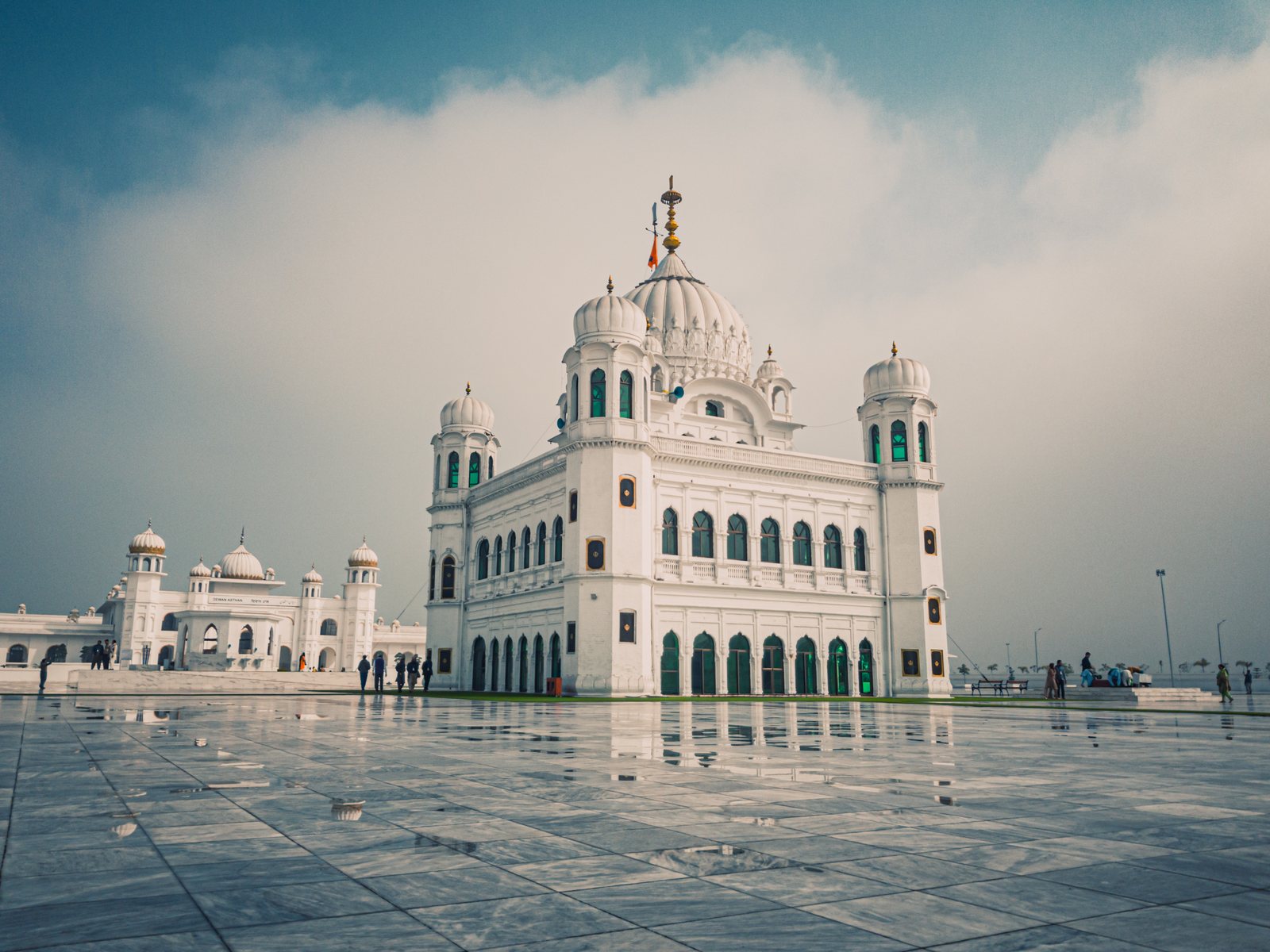
In short
- Where
- Kartarpur, on the west bank of the Ravi in Shakargarh tehsil, Narowal district, Punjab, Pakistan, under five kilometres from the border. Across the river, in India, is Dera Baba Nanak. It is not the Kartarpur in Jalandhar district
- When
- The settled years run from about 1520 to Guru Nanak's death in September 1539. The founding itself is dated anywhere from 1504 to the early 1520s
- What happened there
- A village of disciples with a daily rule: hymns before dawn and after dark, work in the fields between, and one kitchen for everyone
- The succession
- Here Guru Nanak passed over his own sons and made a disciple, Lehna, his successor, renaming him Angad
- What the river did
- The Ravi washed away the first memorial. The Guru's family moved across the river, and Dera Baba Nanak grew up around his reburied ashes
- Today
- Gurdwara Darbar Sahib, begun in 1929. The visa-free corridor from India, opened in November 2019, has been suspended by India since 7 May 2025, and was still closed in September 2026
Where the kind of evidence matters, we label it, using the categories explained in our editorial standards, and say how sure we can be. Scripture appears in Gurmukhi as printed in the standard text, then in our transliteration and our translation, with its source; the dots and semicolons inside a Gurmukhi line are vishrām, a reader's guide to pausing, not punctuation. The Gurmukhi was taken from the Shabad OS text line by line, never retyped, and, like every Punjabi word on this page, it awaits a second reader's review. Hover over or tap a Punjabi word to see it in both scripts. Guru Nanak's life before Kartarpur, from Talwandi to the Kali Bein and the long journeys, is told in our article on the Creation of Sikhi.
Sour milk at the Shivratri fair
Every year, on the night sacred to Shiva, the village of Achal, a few miles from Batala, filled with ascetics. They came for the Shivratri fair, held beside an old temple to Shiva's son Kartik, and the most imposing of them were the Nath yogis: followers of the master Gorakhnath, with split ears hung with heavy rings, ash on their skin, and a name for powers that ordinary people feared.
One year, around 1530, a householder came to the fair. He came from a village of his own founding, Kartarpur, some twenty miles away across the Ravi, and he brought his disciples with him. The crowd, Bhai Gurdas tells us, turned to look at him instead.
ਮੇਲਾ ਸੁਣਿ ਸਿਵਰਾਤਿ ਦਾ; ਬਾਬਾ ਅਚਲ ਵਟਾਲੇ ਆਈ ।
melā suṇi sivrāti dā bābā achal vaṭāle āī
ਦਰਸਨੁ ਵੇਖਣਿ ਕਾਰਨੇ; ਸਗਲੀ ਉਲਟਿ ਪਈ ਲੋਕਾਈ ।
darsanu vekhaṇi kārane sagalī ulaṭi paī lokāī
Hearing of the Shivratri fair, Baba came to Achal Batala. The whole crowd turned and surged towards him, to catch sight of him.
Bhai Gurdas, the poet and scribe who wrote those lines around 1600, within living memory of the first Sikhs, says the yogis did not take it well. First they played a trick: they hid the brass pot of the singers who had gathered round the newcomer, and waited for the music to falter. When the pot was found and handed back, they came in a body to argue, and their leader, Bhangar Nath, opened with an insult.
ਖਾਧੀ ਖੁਣਸਿ ਜੋਗੀਸਰਾਂ; ਗੋਸਟਿ ਕਰਨਿ, ਸਭੇ ਉਠਿ ਆਈ ।
khādhī khuṇsi jogīsarāṅ gosṭi karani sabhe uṭhi āī
ਪੁਛੇ ਜੋਗੀ ਭੰਗਰਨਾਥੁ; ਤੁਹਿ ਦੁਧ ਵਿਚਿ ਕਿਉ ਕਾਂਜੀ ਪਾਈ ।
puchhe jogī bhaṅgarnāthu tuhi dudh vichi kiu kāñjī pāī
ਫਿਟਿਆ ਚਾਟਾ ਦੁਧ ਦਾ; ਰਿੜਕਿਆ ਮਖਣੁ ਹਥਿ ਨ ਆਈ ।
phiṭiā chāṭā dudh dā riṛkiā makhaṇu hathi na āī
ਭੇਖ ਉਤਾਰਿ ਉਦਾਸਿ ਦਾ; ਵਤਿ ਕਿਉ ਸੰਸਾਰੀ ਰੀਤਿ ਚਲਾਈਂ ।
bhekh utāri udāsi dā vati kiu sansārī rīti chalāīṅ
ਨਾਨਕ ਆਖੇ, ਭੰਗਰਿਨਾਥ; ਤੇਰੀ ਮਾਉ ਕੁਚਜੀ ਆਹੀ ।
nānak ākhe bhaṅgarināth terī māu kuchjī āhī
ਭਾਂਡਾ ਧੋਇ ਨ ਜਾਤਿਓਨਿ; ਭਾਇ ਕੁਚਜੇ ਫੁਲੁ ਸੜਾਈ ।
bhāṇḍā dhoi na jātioni bhāi kuchje phulu saṛāī
ਹੋਇ ਅਤੀਤੁ ਗ੍ਰਿਹਸਤਿ ਤਜਿ; ਫਿਰਿ ਉਨਹੁ ਕੇ ਘਰਿ ਮੰਗਣਿ ਜਾਈ ।
hoi atītu grihasti taji phiri unhu ke ghari maṅgaṇi jāī
ਬਿਨੁ ਦਿਤੇ, ਕਛੁ ਹਥਿ ਨ ਆਈ ।੪੦।
binu dite kachhu hathi na āī
Burning with spite, the great yogis rose together to argue. The yogi Bhangar Nath asked: ‘Why have you put sour whey into the milk? The milk in the pot has turned, and churn it as you will, no butter comes to hand. Why did you take off the renunciant’s robe and take up the ways of the world again?’ Nanak said: ‘Bhangar Nath, your mother was a poor housekeeper. She never learned to scour the pot, and her carelessness spoilt the cream. You became a renunciant by giving up the householder’s life, and then you go to householders’ doors to beg. Unless they give, nothing comes to your hand.’
Kāñjī is a sour fermented liquid, often rendered ‘vinegar’. Phul, the ‘flower’, is the cream that rises in the churn. Some commentators read Bhangar Nath’s ‘mother’ as his teacher.
The insult needs unpacking. To the yogis, Nanak had once been one of them. For the better part of twenty years he had lived as an udasi, a wanderer who had left home, walking from shrine to shrine with his companion Mardana and Mardana's rabab. Now he had gone home. He had a wife and grown sons, fields, a house, a village. To a renunciant that was not a change of address. It was milk gone sour.
Nanak's reply turned the question round. The fault, he said, was in the yogi's own pot: a careless upbringing had spoilt the cream. Then came the sting, and it holds the whole argument of this article in a line. The man who renounces the household still has to go to householders' doors for his bread. Unless they give, nothing comes to his hand.
So here is the question this article sets out to answer. Why did the most travelled religious teacher of his generation stop travelling? Why would a man who had argued with pandits, qazis and yogis across half a continent spend his last two decades in a farming village beside a river in central Punjab? And what did he build there that has outlived both him and the village itself?
The answer, we think, was hiding in one of his own hymns, a short poem about a farmer and his field. To see why, we need to go back a little, and then forward to the river.
Before the river
Guru Nanak was born in 1469 at Rai Bhoi di Talwandi, west of Lahore, the town now called Nankana Sahib, into a Khatri family of the Bedi clan. His people were not strangers to the land. The oldest collection of stories about him, the Puratan janamsakhi, has his father, Kalu, begging him to look after the crops standing in the family's fields, and the historian Gurinder Singh Mann points out that both his father and his father-in-law were revenue men, part of the machinery that measured land and collected its tax. Nanak grew up in a household that knew exactly what a field was worth.
His marriage tied him to the Ravi. His wife, Sulakhni, was the daughter of Mula, a Chona Khatri of Batala whose family had lived at Pakhoke Randhawa, a village on the river's eastern bank, and they had two sons, Sri Chand and Lakhmi Das. For some years Nanak worked at Sultanpur, keeping the storehouse of the governor, Daulat Khan, until an experience in the Kali Bein, around 1499, turned his life. Then he took to the road.
For about twenty years he travelled, with a Muslim musician from Talwandi, Mardana, and his rabab. How far they went is argued over; that they went is not. The story of those years, of the river at Sultanpur and of what he taught on the road, is told in our article on the Creation of Sikhi. Here we need only one fact about them: while he was away, his wife and sons lived with her parents at Pakhoke, on the bank of the Ravi.
The road ended in blood. In 1520 the army of Babur, the prince from Kabul who would found the Mughal empire, sacked the town of Saidpur, now Eminabad. The janamsakhis put Nanak there, and McLeod thought it likely that he saw it. Nanak's hymns about the invasions, the Babarvani, are, as Mann notes, the only account of them by any religious figure of the time. McLeod dated the end of the long journeys to 1520 or a little before, and Harbans Singh, whose life of Nanak follows the janamsakhis closely, has him leave Saidpur for Kartarpur, "to make it his home".
How Kartarpur began
There are two stories of how Kartarpur began, and they are more alike than they first look.
The first is the Puratan's. After his first great journey, it says, Nanak settled at a place near the river, and crowds began to gather: Hindus and Muslims, yogis and householders, landlords and officials. Near by lived a revenue officer, a karori, who did not like what he heard. Hindus had already fallen under this man's spell, he complained, and now he was drawing in Muslims too. He rode out to bring the holy man back in chains. His horse shied; the next day he was struck blind; the day after, he fell from the saddle. His own men told him that Nanak was a true pir, and that he should go on foot. He did, and fell at Nanak's feet, and stayed three days. Then he asked leave to found a town there in the Guru's name, to be called Kartarpur, with a dharamsal, a house for worship and for travellers.
Two things give the story away as a later telling. The miracles, of course. And the man's title: a karori was a revenue collector of the Mughal empire, an office that, as McLeod noticed, came into use under Akbar, a generation after Nanak's death. Strip those away, McLeod concluded, and what is left is ordinary and believable: a man of substance who came to revere Nanak and gave land for a village and a place of worship.
The second story is told at Dera Baba Nanak, across the river, and the Encyclopaedia of Sikhism records it. Coming back from his travels to Pakhoke, where his family was living, Nanak sat down by a well that belonged to Ajitta, the headman of the village, a Randhawa Jat. Ajitta became his disciple on the spot and asked him to settle near by, and the land across the river followed; Harbans Singh adds that Ajitta and some other farmers pledged it to him. Bhai Gurdas names Ajitta among the Sikhs of Guru Nanak's time, as we will see.
Mann supplies the link between the two stories. Nanak's father-in-law, Mula, worked for Ajitta Randhawa. So in one telling the land came from an official won over, and in the other from a local landholder already tied to the family. Either way, Nanak did not come to Kartarpur as a stranger. He had known this stretch of the river for decades.
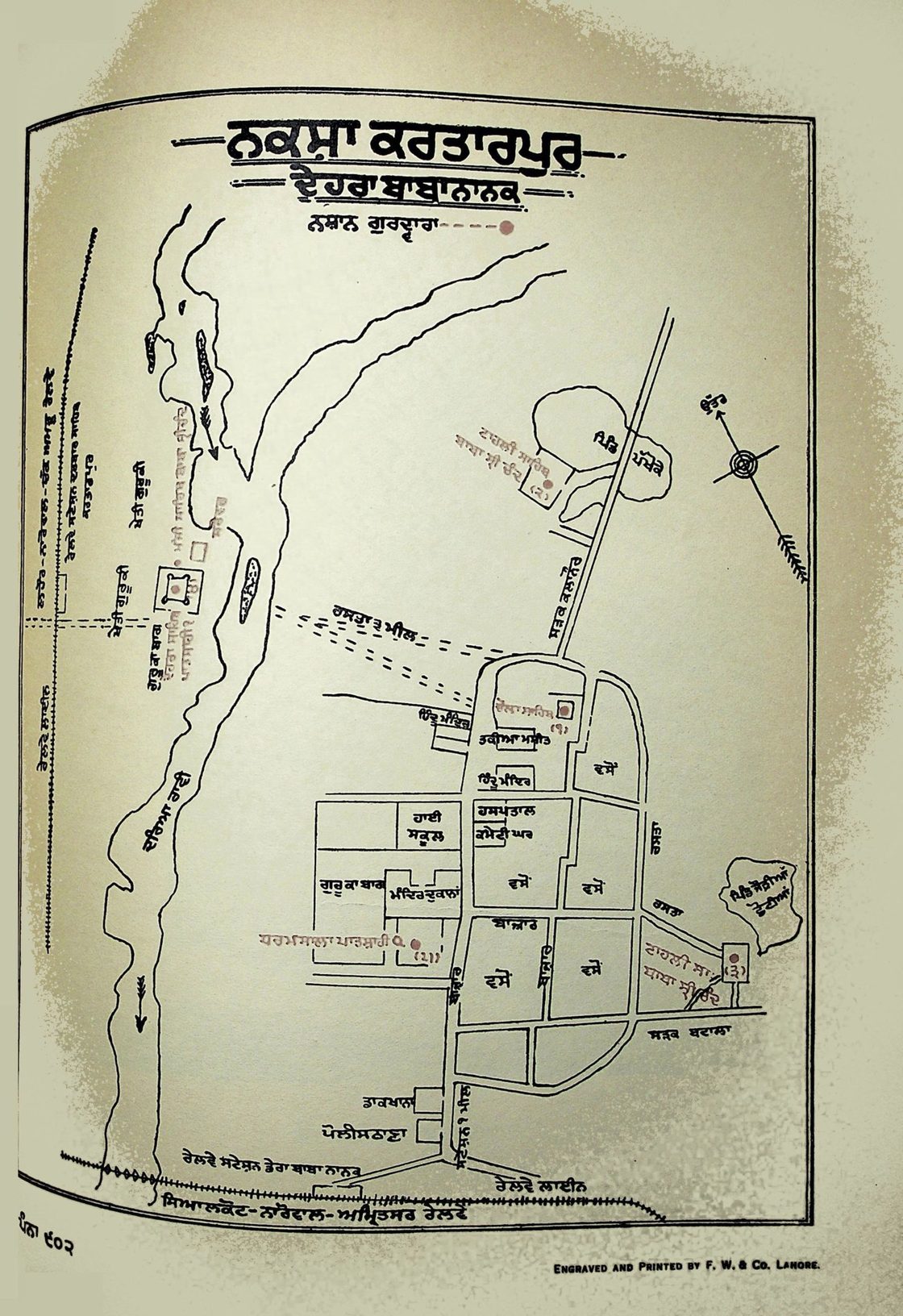
Why here, and not at Talwandi, where he was born? The Puratan says he had first gathered followers at Talwandi, and Mann argues that he wanted room to build something new, away from daily rivalry with the village's mosque and temple. The country helped. This stretch of the Ravi, where the river leaves the hills for the plain, had good rain and water close under the ground, with the Shivalik foothills on the horizon. The Persian wheel, a chain of pots turned by oxen to lift water from a well, was turning land like this into rich farmland. The villages round Kartarpur belonged to Jat clans, Bajwas, Chahals, Gills, Kahlons, Khairas, Manns and Randhawas, and to the carpenters, blacksmiths, barbers and distillers who worked with them.
Here the historians part company. The older view, McLeod's among them, was that the first Sikhs were mostly Khatris, traders and clerks like Nanak's own family, and that Jat farmers came in numbers only later in the century. Mann argues the opposite: that the Jats and their village neighbours were the core of the community from the start, and may even have been part of Kartarpur's attraction. He counts the names. Of the Sikhs of Nanak's time that Bhai Gurdas lists, nine are Khatris, and the rest include three Jats, a blacksmith, a barber and a Muslim singer; the five companions of the Puratan's journeys are two Jats, a calico printer, a blacksmith and Mardana. The two places that rose after Kartarpur, Khadur and Dera Baba Nanak, both stood on Jat land. The numbers are small, and Mann says himself that they settle nothing.
One outsider saw these villages at exactly this time. At the end of December 1525, marching on Delhi, Babur camped at Sialkot, some twenty miles north of Kartarpur. His memoir complains that whenever one went into Hindustan the Jats and Gujars of the country poured down from hill and plain to carry off cattle. The conqueror saw a nuisance. Mann sees a people in the middle of a long change from herding to settled farming, looking for a community to belong to.
And the name. Kartar means "maker" or "creator", and it is one of Nanak's commonest names for God; pur is the ordinary word for a town, as in Anandpur or Hoshiarpur. Kartarpur: the Creator's town.
When was Kartarpur founded?
Ask when Kartarpur was founded and you will get five different answers, sometimes on the same page. They are worth setting side by side, because the disagreement is not careless: each answer comes from a different way of telling Nanak's life.
| Date | Where it comes from | How it holds up |
|---|---|---|
| 1504 | Repeated in modern books, websites and news reports | We have found no early source for it |
| Early 1516 | Nineteenth-century chronicles, beginning with Giani Gian Singh's Twarikh Guru Khalsa, and followed by the scholar Sahib Singh | Early 1516 falls in the Bikrami year 1572, which is why news reports say the foundation stone was laid "in 1572" |
| After the first journey | The Puratan janamsakhi | In the Puratan's own order this comes after Babur's sack of Saidpur in 1520, and four more great journeys set out from Kartarpur afterwards |
| After the journey to the north | The Gyan-ratanavali, attributed to Bhai Mani Singh | A later arrangement of the same stories |
| After the last journey | The Miharban janamsakhi | Preferred by McLeod, who puts the settled life in Nanak's last two decades |
Two things come out of the table. The first is a calendar trap. The Bikrami calendar, still used in Punjab for religious dates, runs 56 or 57 years ahead of the Common Era, depending on the month. Drop its name, and a village founded in 1516 turns up in a newspaper as founded in 1572.
The second is more interesting. The question is not only when, but in what order. Most historians have pictured Nanak finishing his travels and then settling down. The Puratan pictures Kartarpur as a base: founded after the first journey, with the later ones, south to Sindh, north into the hills, west to Mecca and north-west to the country round Peshawar, setting out from it. Mann takes the Puratan's order seriously. Bhai Gurdas, too, has Nanak leave Kartarpur after he had settled there, for the fair at Achal and then for Multan, and come back again. And his line about the settling itself begins with a word, phiri, that can mean "then" or "again".
Our reading, and we label it as ours: Kartarpur grew in stages. Nanak may have had land and a dharamsal across the river from Pakhoke before 1520, on one of his visits to his family. The household the sources describe, with Nanak, Sulakhni and their sons at its centre, took shape in the early 1520s, after Saidpur Probable. And from it he went on making shorter journeys, to Achal, to Multan and perhaps to Pakpattan, for years afterwards. That would explain why every date in the table has its defenders.
Kahn Singh Nabha's Mahan Kosh, the great Punjabi encyclopaedia of 1930, dates the deaths of both Nanak's parents at Kartarpur to 1522, and one tradition has his mother, Tripta, die a few days after his father. If that is right, the household was established by then.
A day in the Creator's town
For once we have more than stories. Bhai Gurdas describes the change at Kartarpur in a single stanza that reads like a before-and-after photograph, and ends with the clock of the place.
ਫਿਰਿ ਬਾਬਾ ਆਇਆ ਕਰਤਾਰਪੁਰਿ; ਭੇਖੁ ਉਦਾਸੀ ਸਗਲ ਉਤਾਰਾ ।
phiri bābā āiā kartārpuri bhekhu udāsī sagal utārā
ਪਹਿਰਿ ਸੰਸਾਰੀ ਕਪੜੇ; ਮੰਜੀ ਬੈਠਿ ਕੀਆ ਅਵਤਾਰਾ ।
pahiri sansārī kapaṛe mañjī baiṭhi kīā avtārā
ਉਲਟੀ ਗੰਗ ਵਹਾਈਓਨਿ; ਗੁਰ ਅੰਗਦੁ ਸਿਰਿ ਉਪਰਿ ਧਾਰਾ ।
ulṭī gaṅg vahāīoni gur aṅgadu siri upari dhārā
ਪੁਤਰੀ ਕਉਲੁ ਨ ਪਾਲਿਆ; ਮਨਿ ਖੋਟੇ ਆਕੀ ਨਸਿਆਰਾ ।
putrī kaulu na pāliā mani khoṭe ākī nasiārā
ਬਾਣੀ ਮੁਖਹੁ ਉਚਾਰੀਐ; ਹੁਇ ਰੁਸਨਾਈ, ਮਿਟੈ ਅੰਧਾਰਾ ।
bāṇī mukhahu uchārīai hui rusnāī miṭai andhārā
ਗਿਆਨੁ ਗੋਸਟਿ ਚਰਚਾ ਸਦਾ; ਅਨਹਦਿ ਸਬਦਿ ਉਠੇ ਧੁਨਕਾਰਾ ।
giānu gosṭi charchā sadā anhadi sabadi uṭhe dhunkārā
ਸੋਦਰੁ ਆਰਤੀ ਗਾਵੀਐ; ਅੰਮ੍ਰਿਤ ਵੇਲੇ ਜਾਪੁ ਉਚਾਰਾ ।
sodaru āratī gāvīai amrit vele jāpu uchārā
ਗੁਰਮੁਖਿ, ਭਾਰਿ ਅਥਰਬਣਿ ਤਾਰਾ ।੩੮।
gurmukhi bhāri atharbaṇi tārā
Then the Baba came to Kartarpur and put off the renunciant’s garb entirely. He dressed in a householder’s clothes, took his seat on a cot, and there made himself manifest. He made the Ganges run backwards: he set Guru Angad above his own head. His sons did not keep their word; false at heart, they turned away in defiance. He spoke the Word from his own lips, and there was light, and the darkness went. There was always talk of knowledge and discussion, and the unstruck music of the Word resounded. Sodar and Arti were sung, and in the ambrosial hours the Jap was recited. The one who faced the Guru lifted from the world the weight of the Atharva’s spells.
Phiri, the first word, can mean ‘then’ or ‘again’. A mañjī is a cot; here, the teacher’s seat. Sodar and Arti are evening hymns, sung today in Rahiras and Sohila; the Jap is the Japji, which opens the Guru Granth Sahib. The last line is obscure, and is usually read as freeing people from the spells and charms associated with the Atharvaveda.
This is the earliest description of a Sikh daily round, and millions of Sikhs would recognise it now. The Jap, the Japji, is the long composition that opens the Guru Granth Sahib and is still recited in the early morning. The Sodar is the heart of the evening prayer, Rahiras; the Arti closes the day, in Sohila. The hours before dawn, amrit vela, "the ambrosial hours", were for meditation and song. Harbans Singh, piecing the day together from the janamsakhis, has the morning hymns go on until a watch and a quarter after daybreak, the evening end in the kitchen, and a short prayer, Sohila, said before sleep.
McLeod saw three strands in the life of the community: regular devotion, alone and together; regular teaching by the Guru; and regular work. He called the whole pattern "a disciplined worldliness". The ascetic's path was rejected. A believer lived on what he had laboured for, and kept his family.
And there were the fields. Tradition remembers Nanak working his own land. Max Arthur Macauliffe, retelling it in 1909, has him sow fields whose grain supplied the kitchen, from which Muslims and Hindus alike were fed. McLeod was more careful: the community surely worked, he wrote, but whether its leader laboured with them is "impossible to say". Mann, reading the Puratan, notes that its author seems to have known Nanak as a real man, who bathed, ate, rested at night and worked in the fields.
What is certain is that farming was in his language. Years before, when his father pleaded with him to see to the crops, the Puratan says he answered that he was already farming, and sang this:
ਮਨੁ ਹਾਲੀ. ਕਿਰਸਾਣੀ ਕਰਣੀ; ਸਰਮੁ ਪਾਣੀ ਤਨੁ ਖੇਤੁ ॥
manu hālī kirsāṇī karṇī saramu pāṇī tanu khetu
ਨਾਮੁ ਬੀਜੁ. ਸੰਤੋਖੁ ਸੁਹਾਗਾ; ਰਖੁ ਗਰੀਬੀ ਵੇਸੁ ॥
nāmu bīju santokhu suhāgā rakhu garībī vesu
ਭਾਉ ਕਰਮ ਕਰਿ ਜੰਮਸੀ; ਸੇ ਘਰ ਭਾਗਠ ਦੇਖੁ ॥੧॥
bhāu karam kari jammsī se ghar bhāgaṭh dekhu
Make your mind the ploughman, good deeds the farming, effort the water and your body the field. Let the Name be the seed and contentment the harrow, and wear humility as your clothes. Through deeds of love the seed will sprout, and you will see such homes prosper.
Saramu is read as ‘effort’ by some commentators and as ‘modesty’ by others. The suhāgā is the heavy plank drawn over ploughed land to level it.
He used the same language of God:
ਆਪਿ ਸੁਜਾਣੁ. ਨ ਭੁਲਈ; ਸਚਾ ਵਡ ਕਿਰਸਾਣੁ ॥
āpi sujāṇu na bhulaī sachā vaḍ kirsāṇu
ਪਹਿਲਾ ਧਰਤੀ ਸਾਧਿ ਕੈ; ਸਚੁ ਨਾਮੁ ਦੇ ਦਾਣੁ ॥
pahilā dhartī sādhi kai sachu nāmu de dāṇu
He himself is wise and never errs: the True One is the great farmer. First he prepares the ground, then he sows the seed of the True Name.
Mann suggests that images like these would have spoken straight to the farming families in the villages round Kartarpur. Remember the ploughman. He comes back at the end.
And there was the kitchen. Langar is a Persian word for a public kitchen or almshouse, and the institution was not new. The Sufi lodges of Punjab had kept open kitchens for centuries, among them the lodge of Baba Farid at Pakpattan, which McLeod thought Nanak very probably visited. What set Nanak's kitchen apart, as far as we can tell, was who ate together. Where rules about who might cook for whom, and eat beside whom, marked the lines of caste, the Guru's kitchen fed whoever came, from the same pots. Harbans Singh lists the work it needed: drawing water from the well, grinding corn, gathering firewood, cooking and serving, fanning the diners in the heat, scouring the dishes. The humblest tasks were the most prized.
The earliest witness is striking. When Satta and Balwand, two musicians of the Gurus' court, described the passing of the Guruship from Nanak to Lehna, in a ballad now in the Guru Granth Sahib, the kitchen was already part of the picture:
ਲੰਗਰੁ ਚਲੈ. ਗੁਰ ਸਬਦਿ ਹਰਿ; ਤੋਟਿ. ਨ ਆਵੀ, ਖਟੀਐ ॥
laṅgaru chalai gur sabadi hari toṭi na āvī khaṭīai
ਖਰਚੇ ਦਿਤਿ ਖਸੰਮ ਦੀ; ਆਪ ਖਹਦੀ, ਖੈਰਿ ਦਬਟੀਐ ॥
kharche diti khasamm dī āp khahdī khairi dabṭīai
The langar runs on the Guru’s Word, and its store never runs short. What the Master gives is spent: he eats of it himself, and the rest is poured out as alms.
The stanza is about the Guruship passing from Nanak to Lehna. The kitchen is already part of the picture.
Their next stanza praises Mata Khivi, Lehna's wife, for the langar she kept at Khadur, with its rice pudding rich in ghee. It was the third Guru, Amar Das, who made eating in the rows of the pangat the rule for anyone who wished to see the Guru. The seed was planted on the Ravi.
Who lived at Kartarpur? Nanak and Sulakhni and their sons, whom McLeod, following the janamsakhis, accepts as living there; his parents, for a while; and Mardana, and after him Mardana's son Shahzada, who played for the Guru for the rest of the Guru's life. Beyond them we have mostly names. Bhai Gurdas's eleventh ballad is a roll of the Sikhs of Guru Nanak's time, and two of its lines are worth hearing:
ਦਉਲਤ ਖਾਂ ਲੋਦੀ ਭਲਾ; ਹੋਆ ਜਿੰਦ ਪੀਰੁ ਅਬਿਨਾਸੀ ।
daulat khāṅ lodī bhalā hoā jind pīru abināsī
Daulat Khan Lodi was a good man; he became a living pir, undying.
Bhai Gurdas, Vār 11, pauṛī 13. The governor of Sultanpur, whose storehouse Nanak had kept.
ਜਿਤਾ ਰੰਧਾਵਾ ਭਲਾ ਹੈ; ਬੂੜਾ ਬੁਢਾ ਇਕ ਮਨਿ ਧਿਆਵੈ ।
jitā randhāvā bhalā hai būṛā buḍhā ik mani dhiāvai
Jita Randhawa is a good man; and Bura, called Buddha, meditates with a single mind.
Bhai Gurdas, Vār 11, pauṛī 14. Jita is Ajitta Randhawa of Pakhoke; Bura is Baba Buddha.
Daulat Khan was the governor whose storehouse Nanak had kept at Sultanpur, who went on to become the most powerful man in Lahore; that Bhai Gurdas counts him among Nanak's Sikhs is one of the surprises of the list. Ajitta we have met. Bura was a Randhawa Jat like Ajitta, from the country round Amritsar, and Harbans Singh retells how he met Nanak as a boy herding cattle, brought him a bowl of milk, and asked to be freed from death: soldiers camped by his village, he said, had cut the green crops with the ripe, so who could stop death from taking the young? You speak like an old man, Nanak told him, a buddha. As Baba Buddha he lived, by one reckoning, to 1631, and was the first keeper of the scripture at the Harmandir Sahib in 1604.
The same kind of story attached itself to more than one child. The Puratan tells of an unnamed boy of seven who slipped away from the singing every night, and explained that he had watched his mother light the fire: the small sticks catch first. A later collection tells it of Taru Popat, the name at the head of Bhai Gurdas's roll. The stories drift from name to name; the list of names stays put.
We know frustratingly little about the women of Kartarpur. The sources take them for granted and almost never describe them. Sulakhni appears in the stories mostly to protest, as we will see. A generation later a woman, Mata Khivi, ran the community's most visible institution at Khadur, and Nanak's own verse asks why anyone should call woman lesser, when kings are born of her. Beyond that, the women who cooked, farmed and sang at Kartarpur are silent in the record, and we will not invent what it does not say.
An argument about how to live
Back to Achal, and Bhangar Nath's sour milk. The yogi's jibe was more than an insult. It was one of the oldest arguments in South Asian religion: that the spiritual life means leaving the world, with its family, property and work, and that a householder, however devout, is at best a second-class seeker. Kartarpur was Nanak's answer, and he gave it in words as well.
We have his side in his own voice. The Guru Granth Sahib keeps a long dialogue between Nanak and the Siddhs, the adepts of the Nath tradition: the Sidh Gosht, "the discourse with the Siddhs", seventy-three stanzas long. Tradition sets it at Achal, or on a mountain in the hills; the text itself names no place. Its questions are Bhangar Nath's:
ਕਿਸੁ ਕਾਰਣਿ; ਗ੍ਰਿਹੁ ਤਜਿਓ ਉਦਾਸੀ ॥
kisu kāraṇi grihu tajio udāsī
ਕਿਸੁ ਕਾਰਣਿ; ਇਹੁ ਭੇਖੁ ਨਿਵਾਸੀ ॥
kisu kāraṇi ihu bhekhu nivāsī
ਕਿਸੁ ਵਖਰ ਕੇ; ਤੁਮ ਵਣਜਾਰੇ ॥
kisu vakhar ke tum vaṇjāre
ਕਿਉ ਕਰਿ; ਸਾਥੁ ਲੰਘਾਵਹੁ ਪਾਰੇ ॥੧੭॥
kiu kari sāthu laṅghāvahu pāre
ਗੁਰਮੁਖਿ ਖੋਜਤ ਭਏ ਉਦਾਸੀ ॥
gurmukhi khojat bhae udāsī
ਦਰਸਨ ਕੈ ਤਾਈ; ਭੇਖ ਨਿਵਾਸੀ ॥
darsan kai tāī bhekh nivāsī
ਸਾਚ ਵਖਰ ਕੇ; ਹਮ ਵਣਜਾਰੇ ॥
sāch vakhar ke ham vaṇjāre
ਨਾਨਕ; ਗੁਰਮੁਖਿ ਉਤਰਸਿ ਪਾਰੇ ॥੧੮॥
nānak gurmukhi utarsi pāre
‘Why did you leave your home and become an udasi? Why did you take on this garb? What goods do you trade in? How will you carry your companions across?’ ‘I became an udasi to search for those who turn to the Guru. I took on this garb for a sight of the Lord. I am a trader in the goods of truth. Nanak: the one who turns to the Guru crosses over.’
In a short verse in Sarang ki Var he is blunter. He mocks the idler who has his ears split to pass for a yogi, and the self-styled guru or pir who goes out begging: never touch such a man's feet, he says. He spares no community's professionals. The same verse laughs at the hungry mullah who turns his house into a mosque. And then: the one who eats what he has worked for, and gives some of it away with his own hand, knows the way. (The whole verse is in our article on the Creation of Sikhi.) Seen from Kartarpur, the yogi's renunciation is not a higher path but a dependent one. The ascetic still eats the householder's grain.
McLeod thought the Naths took up much of Nanak's attention, and counted their later decline in Punjab among his most striking victories.
The Achal story has a second act, and it is the most surprising part. After the argument, Bhai Gurdas says, the yogis tried to overawe Nanak with their powers. They took the forms of lions and tigers. Some grew wings and flew like birds; some hissed like cobras; some rained down fire; Bhangar Nath plucked stars from the sky. Then they challenged him to show them a miracle of his own. His answer:
ਬਾਬਾ ਬੋਲੇ, ਨਾਥ ਜੀ; ਸਬਦੁ ਸੁਨਹੁ ਸਚੁ ਮੁਖਹੁ ਅਲਾਈ ।
bābā bole nāth jī sabadu sunhu sachu mukhahu alāī
ਬਾਝੋ ਸਚੇ ਨਾਮ ਦੇ; ਹੋਰੁ ਕਰਾਮਾਤਿ ਅਸਾਂ ਤੇ ਨਾਹੀ ।
bājho sache nām de horu karāmāti asāṅ te nāhī
ਬਸਤਰਿ ਪਹਿਰੌ ਅਗਨਿ ਕੈ; ਬਰਫ ਹਿਮਾਲੇ ਮੰਦਰੁ ਛਾਈ ।
bastari pahirau agani kai baraph himāle mandaru chhāī
ਕਰੌ ਰਸੋਈ ਸਾਰਿ ਦੀ; ਸਗਲੀ ਧਰਤੀ ਨਥਿ ਚਲਾਈ ।
karau rasoī sāri dī sagalī dhartī nathi chalāī
ਏਵਡੁ ਕਰੀ ਵਿਥਾਰਿ ਕਉ; ਸਗਲੀ ਧਰਤੀ ਹਕੀ ਜਾਈ ।
evaḍu karī vithāri kau sagalī dhartī hakī jāī
ਤੋਲੀ ਧਰਤਿ ਅਕਾਸਿ ਦੁਇ; ਪਿਛੇ ਛਾਬੇ ਟੰਕੁ ਚੜਾਈ ।
tolī dharati akāsi dui pichhe chhābe ṭaṅku chaṛāī
ਇਹਿ ਬਲੁ ਰਖਾ ਆਪਿ ਵਿਚਿ; ਜਿਸੁ ਆਖਾ, ਤਿਸੁ ਪਾਸਿ ਕਰਾਈ ।
ihi balu rakhā āpi vichi jisu ākhā tisu pāsi karāī
ਸਤਿ ਨਾਮੁ ਬਿਨੁ; ਬਾਦਰਿ ਛਾਈ ।੪੩।
sati nāmu binu bādari chhāī
Baba said: ‘Nath ji, hear the word I speak; it is the truth. Apart from the True Name I have no miracle. Were I to wear a robe of fire and build my house in the snows of the Himalaya; were I to make iron my food and lead the whole earth by a nose-rope; were I to grow so vast that I could drive the whole earth before me; were I to weigh the earth and the sky in a scale, with a tiny weight in the other pan; were I to hold such power that whoever I named, I could brush aside: without the True Name, all of it is the shade of a passing cloud.’
The list follows a verse of Guru Nanak’s own, in Mājh kī Vār (Guru Granth Sahib, ang 147).
So the man around whom later tradition wove hundreds of miracle stories appears, in the earliest connected account of his life, refusing to perform one. That is Bhai Gurdas's telling, and it is Contested as a record of what was said that day. Nanak's own hymns are scornful of wonder-working throughout, and on that the historians agree.
From Achal, Bhai Gurdas takes Nanak south-west to Multan, the old city of Sufi shrines.
ਮੇਲਿਓ ਬਾਬਾ ਉਠਿਆ; ਮੁਲਤਾਨੇ ਦੀ ਜਾਰਤਿ ਜਾਈ ।
melio bābā uṭhiā multāne dī jārati jāī
ਅਗੋਂ ਪੀਰ ਮੁਲਤਾਨ ਦੇ; ਦੁਧਿ ਕਟੋਰਾ ਭਰਿ ਲੈ ਆਈ ।
agoṅ pīr multān de dudhi kaṭorā bhari lai āī
Rising from the fair, Baba went on pilgrimage to Multan. The pirs of Multan came out to meet him, carrying a bowl filled to the brim with milk.
The meaning of the full bowl was plain: Multan already had all the holy men it could hold. Nanak took a jasmine flower from his bag, floated it on the milk, and sent the bowl back. A fragrance takes up no room. Bhai Gurdas likens the meeting to the Ganges merging into the sea, and then brings Nanak home to Kartarpur again.
The second body: Lehna becomes Angad
In about 1532 a man from Khadur, a village near the Beas some sixty miles away, stopped at Kartarpur on his way to the hills. His name was Lehna. He had been born in 1504 at Matte di Sarai, now Sarai Naga near Muktsar, into a Khatri family of the Trehan clan. He was a devotee of the goddess Durga, and each year he led a party of pilgrims to her shrine at Jwalamukhi, in the Kangra hills. At Khadur he had heard a Sikh, Jodha, reciting one of Nanak's hymns, and he wanted to see the man who had made it. The oldest telling says that at his first sight of Nanak he broke off the bells he wore on his hands and feet to dance before the goddess. He was twenty-eight. He never finished the pilgrimage.
The name mattered. Lehna in Punjabi is what is owed to you, a debt due to be collected, and the Miharban janamsakhi has Nanak play on it when they meet: "Thy debt was here."
That oldest account, Satta and Balwand's ballad, describes the succession as a coronation. Its first stanza, quoted in our article on the Creation of Sikhi, has the Guru bow to his disciple while he himself still lived. Its fourth adds the testing:
ਲਹਣੇ ਧਰਿਓਨੁ ਛਤ੍ਰੁ ਸਿਰਿ; ਅਸਮਾਨਿ ਕਿਆੜਾ ਛਿਕਿਓਨੁ ॥
lahṇe dharionu chhatru siri asmāni kiāṛā chhikionu
ਜੋਤਿ ਸਮਾਣੀ. ਜੋਤਿ ਮਾਹਿ; ਆਪੁ ਆਪੈ ਸੇਤੀ. ਮਿਕਿਓਨੁ ॥
joti samāṇī joti māhi āpu āpai setī mikionu
ਸਿਖਾਂ ਪੁਤ੍ਰਾਂ ਘੋਖਿ ਕੈ; ਸਭ ਉਮਤਿ ਵੇਖਹੁ, ਜਿ ਕਿਓਨੁ ॥
sikhāṅ putrāṅ ghokhi kai sabh umati vekhahu ji kionu
ਜਾਂ ਸੁਧੋਸੁ; ਤਾਂ ਲਹਣਾ ਟਿਕਿਓਨੁ ॥੪॥
jāṅ sudhosu tāṅ lahṇā ṭikionu
He set the royal canopy over Lehna’s head and raised his glory to the sky. The light merged into the Light; he blended himself into himself. He tested his Sikhs and his sons, and all the community saw what he did. When he had found him pure, then he installed Lehna.
The Puratan sets the moment on the bank of the Ravi. Nanak placed five copper coins before Lehna and bowed at his feet; later tellings add a coconut. Bhai Gurdas calls it making the Ganges run backwards: the master bowing to the disciple. Nanak renamed him Angad, which is usually explained from ang, "limb": a part of Nanak's own body.
Why not a son? The early sources are blunt. Bhai Gurdas says the sons did not keep their word; Satta and Balwand, that they turned their backs on the Guru. The Puratan gives the sons one moment of their own, at the very end, when they ask what is to become of them, and their father answers that not even the Guru's dogs go hungry. The sons' own traditions remember it differently, and their side belongs here too. Sri Chand, the elder, was a celibate ascetic, a renunciant of exactly the kind his father had argued against at Achal, and he became the revered founder of the Udasi order, whose members looked after many Sikh shrines until the reforms of the 1920s. Lakhmi Das, the younger, was a householder; his descendants, the Bedis, are a respected lineage to this day, and it was his son who founded Dera Baba Nanak. Both memories are part of the story.
Whatever the family felt, the decision set the most important precedent in early Sikh history: the Guru was chosen for fitness, not by birth Well-established. It did not stay that way for ever. From the fourth Guru onwards the Guruship passed within one family, the Sodhis. But the principle that the community's leader must be worthy, not merely well born, was laid down at Kartarpur. And the new Guru did not stay there. Harbans Singh has Nanak send him home to Khadur to teach, and Bhai Gurdas puts it in a line:
ਸੋ ਟਿਕਾ ਸੋ ਛਤ੍ਰੁ ਸਿਰਿ; ਸੋਈ ਸਚਾ ਤਖਤੁ ਟਿਕਾਈ ।
so ṭikā so chhatru siri soī sachā takhtu ṭikāī
ਗੁਰ ਨਾਨਕ ਹੰਦੀ ਮੁਹਰਿ ਹਥਿ; ਗੁਰ ਅੰਗਦਿ ਦੀ ਦੋਹੀ ਫਿਰਾਈ ।
gur nānak handī muhari hathi gur aṅgadi dī dohī phirāī
ਦਿਤਾ ਛੋੜਿ ਕਰਤਾਰਪੁਰੁ; ਬੈਠਿ ਖਡੂਰੇ ਜੋਤਿ ਜਗਾਈ ।
ditā chhoṛi kartārpuru baiṭhi khaḍūre joti jagāī
The same mark on the forehead, the same canopy over the head, the same true throne. Guru Nanak’s seal was in his hand, and Guru Angad’s rule was proclaimed. He left Kartarpur, and at Khadur he sat and lit the lamp.
Kartarpur stayed with Nanak's family. The centre of the community moved with its Guru.
September 1539
Guru Nanak died at Kartarpur in September 1539, at about seventy Well-established. All the accounts agree on the place, as McLeod noted. They do not agree on the day, or even on the year.
The Puratan tells the end as a leave-taking, and it begins with a letter. The pir of Multan, it says, wept on the day of Eid, foreseeing that a Hindu would enter paradise, and sent Nanak a single line of verse: we have packed our load; tell us when you go. Nanak wrote his answer above it: go on ahead, and we will follow in forty days. When the pir read it, he died. It is an affectionate story about two holy men of different faiths, and a chronological impossibility. The Puratan calls the pir Makhdum Bahauddin, and the famous Bahauddin of Multan had died in the 1260s. McLeod suggests that the names in such stories are those of real saints whose spiritual heirs lived on.
Then, the Puratan says, Nanak went to the bank of the Ravi and installed Angad. He sat down under a tree that had been dry for years, and it came into leaf and flower. His family wept. Hymns were sung, among them his own laments, the alahanian. These were the songs Punjabi women sang at a death, and Nanak kept their form and turned their meaning, from grief for the dead to a meditation on the one thing death does not touch:
ਸਾਹਿਬੁ ਸਿਮਰਹੁ ਮੇਰੇ ਭਾਈਹੋ; ਸਭਨਾ ਏਹੁ ਪਇਆਣਾ ॥
sāhibu simrahu mere bhāīho sabhnā ehu paiāṇā
ਏਥੈ ਧੰਧਾ ਕੂੜਾ ਚਾਰਿ ਦਿਹਾ; ਆਗੈ ਸਰਪਰ ਜਾਣਾ ॥
ethai dhandhā kūṛā chāri dihā āgai sarpar jāṇā
Remember the Master, my brothers: this is the road we all must take. The false business of this world lasts four days; after it, we must surely go on.
The Puratan janamsakhi says the Alāhaṇīāṅ were sung as Guru Nanak lay dying.
Towards dawn he sang the Barah Mah, the song of the twelve months, in Rag Tukhari. His sons asked what would become of them. Then, as the Puratan tells it, the Hindus and the Muslims among his followers began to argue. The Muslims said they would bury him; the Hindus, that they would cremate him. Nanak told them to lay flowers on either side of him, the Hindus' on his right and the Muslims' on his left: whoever's flowers were still fresh in the morning should have their way. He asked them to sing. The Sohila was sung, and the Arti, and the verse that closes the Japji. He drew a sheet over himself. When they lifted it there was nothing there, and both sets of flowers were fresh. The Hindus took theirs, and the Muslims took theirs.
Now the date. The sources give the day as the tenth of the lunar month of Assu, but they disagree about which half of the month, and about the year.
| The date as written | In the Common Era | Where it comes from |
|---|---|---|
| Assu sudī 10, Samvat 1595 | September or October 1538 | The Puratan janamsakhi |
| Assu sudī 10, Samvat 1596 | 22 September 1539 | The Gyan-ratanavali, attributed to Bhai Mani Singh, followed by many later writers |
| Assu vadī 10, Samvat 1596 | 7 September 1539 | Some Bala janamsakhis, and a list of the Gurus' death dates in the Kartarpur Bir |
Sudī and vadī are the bright and dark halves of the lunar month, so the same "tenth of Assu" falls fifteen days apart depending on which half is meant. McLeod weighed the three and preferred the last, because of that list. In the manuscript of the scripture kept by the Sodhis of the other Kartarpur, in Jalandhar, the death dates of the first Gurus are written in one hand and pen, which suggests they were entered before 1606; and the list gives Assu vadī 10, Samvat 1596: 7 September 1539 Probable. Harbans Singh and the Encyclopaedia of Sikhism give the same date, and Harbans Singh notes that the anniversary at Dera Baba Nanak is kept on it. So, in its way, does a stone at Kartarpur itself: the foundation stone of the present shrine, laid in 1929, names the day as the Gurpurab of Assu vadī 10. Many calendars now give 22 September. Both dates are in the Julian calendar, the one in use in Europe in 1539. And so the best evidence for the day Nanak died on the Ravi is a list kept in the other Kartarpur.
Sikhs call a Guru's death joti jot, "light into light", the image Satta and Balwand had used for the Guruship passing from one body to the next.
The story of the flowers has a physical echo at Kartarpur today. The shrine keeps a samadh, a memorial of the kind raised over cremated remains, and in its courtyard a mazar, a grave in the Muslim manner. Where Nanak's remains actually lie is the river's story.
What the river took
Kartarpur did not long outlive its founder, at least not as a village. The community's centre had gone to Khadur with Guru Angad, and Nanak's family stayed on the Ravi. Then the river moved.
The account kept at Dera Baba Nanak, as the Encyclopaedia of Sikhism records it, runs like this. Nanak's ashes were buried near Kartarpur and a monument was raised over them, and soon afterwards a flood carried it away. His elder son, Sri Chand, then living at Pakhoke, had the urn recovered and buried again beside Ajitta's well, where his father had first sat down on his return, and put up a mud hut over it. The hut was called the dehra, the shrine. Later Dharam Das, the son of Nanak's younger son Lakhmi Das, founded a settlement round it and named it Dera Baba Nanak. Harbans Singh adds the tradition that the river took the monuments as Nanak had wished, and Mann that the land for the new town, too, was Ajitta Randhawa's gift.
So the town on the Indian side of today's border began as a rescue from the town on the Pakistani side. Dera Baba Nanak grew into a pilgrimage town and the seat of Nanak's descendants, the Bedis. At its heart, Gurdwara Darbar Sahib keeps Ajitta's well and the platform, the Thara Sahib, where Nanak is said to have sat and where Sri Chand buried his ashes. Guru Arjan came here to comfort the family when Dharam Das died. Maharaja Ranjit Singh had the shrine's sanctum covered in gold in 1827. News reports sometimes credit him with gilding the dome at Kartarpur; the gilding the Encyclopaedia of Sikhism records is here, across the river.
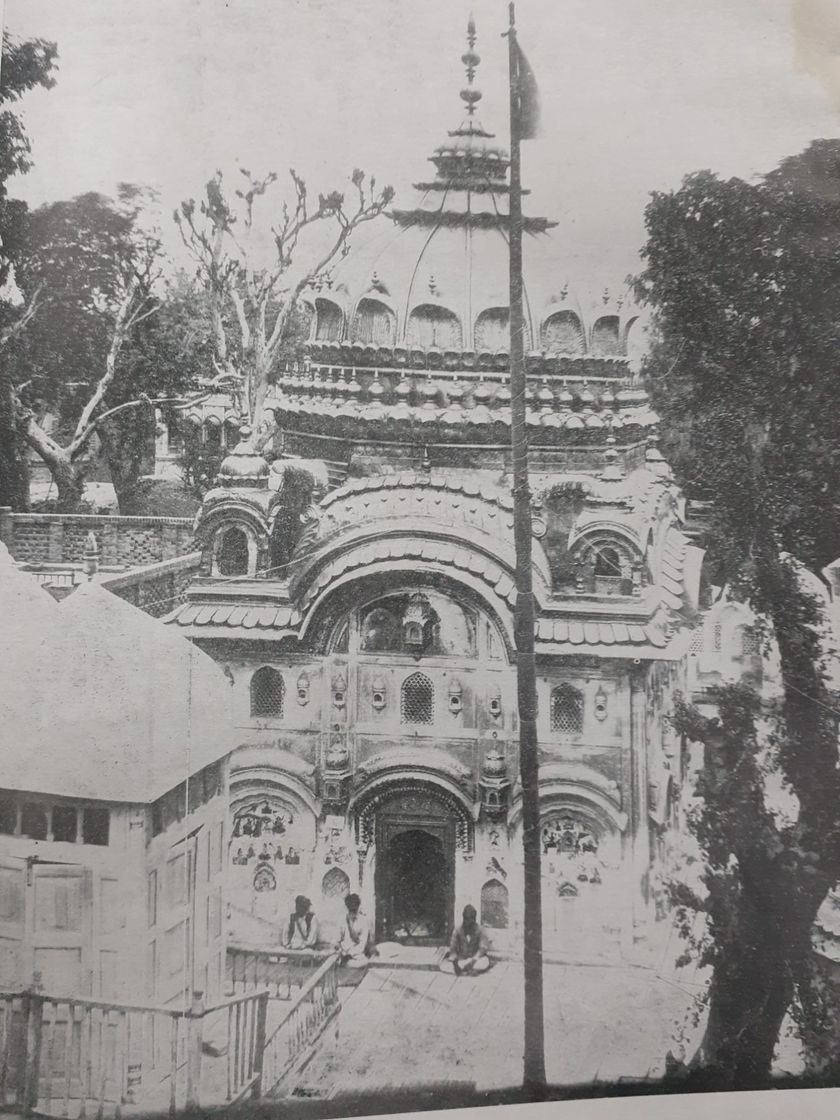
In the east of the town is the Chola Sahib, a cloak embroidered with verses of the Qur'an and Arabic numerals arranged as charms, believed to have been given to Nanak by a Muslim devotee at Baghdad. By tradition a descendant of Nanak, Baba Kabali Mal, obtained it, and it was brought to Dera Baba Nanak on 20 Phaggan, Samvat 1884: 1 March 1828. It is shown at a fair held every year in early March, and is kept by Bedi families in a house near the gurdwara. Its origin is Contested; its long place in the town's life is not.
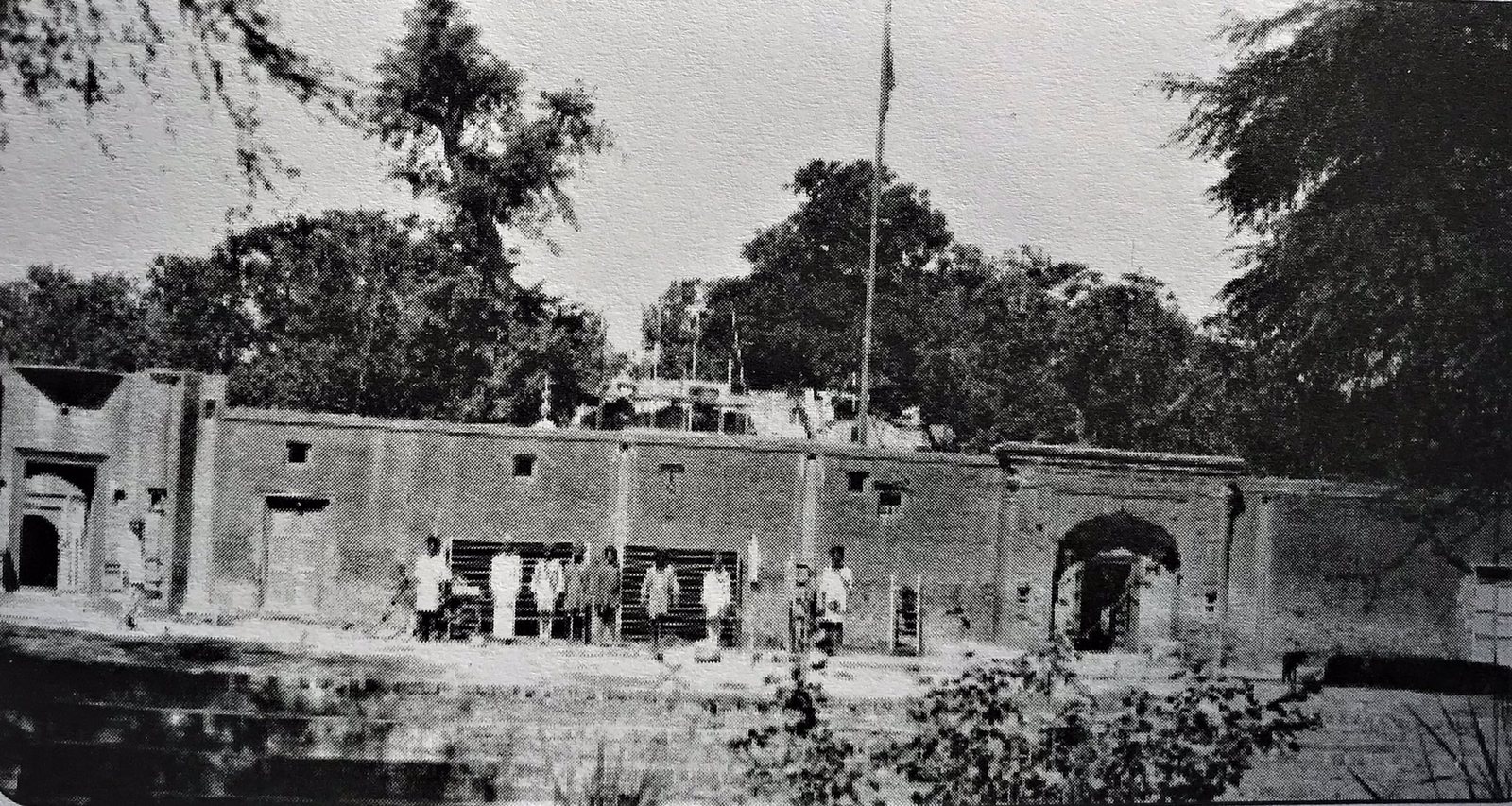
On the west bank a shrine went on marking the place of Nanak's village and his death, and it was rebuilt more than once. The building that stands there now was begun in 1929. Its foundation stone, set into a wall inside, records that it was laid on 23 September 1929 by Sant Budha Singh of the Nirmal Ashram at Rishikesh. The money came largely from Maharaja Bhupinder Singh of Patiala. The sum usually given is Rs 1,35,600, and his grant is usually dated to 1925, the year the building itself is often said to date from. A photograph taken in May 1933 shows it still going up.
A shrine across a border
In August 1947 the award that partitioned Punjab divided the old district of Gurdaspur (The Partition of Punjab, 1947). Its Shakargarh tehsil, on the Ravi's west bank, went to Pakistan; Dera Baba Nanak, on the east, stayed in India. Kartarpur now lay a few kilometres inside Pakistan, and for seven decades Sikhs on the Indian side could reach it only with a visa. The Encyclopaedia of Sikhism describes the tall white building as visible from the high embankment that marks the border north of Dera Baba Nanak. In 2008 a viewing platform, the Darshan Sthal, "the place of seeing", was put up there, with binoculars donated by India's Border Security Force. It came down in 2019, to make way for the corridor.
On the Pakistani side, the government repaired the shrine in 1995, and it was restored again in the early 2000s. In 2018 and 2019 the complex was expanded from about four acres to forty-two, with a vast marble courtyard, a museum, a library and lodgings for pilgrims. An old well of small red bricks, which tradition dates to Nanak's lifetime, is kept as Khuh Sahib, and the fields round the complex are signposted as the land he farmed. Since 2023 the complex has also held the statue of Maharaja Ranjit Singh that was first put up in the Lahore Fort.
India's prime minister laid a foundation stone for a corridor on 26 November 2018, and Pakistan's two days later. On 24 October 2019 the two governments signed an agreement, for five years at first, and on 9 November 2019, in the days before the 550th anniversary of Nanak's birth, the Kartarpur Corridor opened: a road of under five kilometres from Dera Baba Nanak to the gurdwara, which let pilgrims from India visit for the day without a visa. It closed in March 2020 because of the Covid-19 pandemic and reopened on 17 November 2021, and the agreement was renewed in October 2024. By its closing, around 1.3 lakh (130,000) people had used it.
After the attack at Pahalgam in April 2025 and the conflict between India and Pakistan that followed, India suspended corridor services from 7 May 2025. As of September 2026, India's government says the security situation does not allow it to reopen, Pakistan says its side is open, and Sikh organisations continue to press for the road to be opened again Well-established.
Then, in late August 2025, the river came back. An exceptional monsoon swelled the Ravi until it spread across the plain, and on 26 and 27 August the gurdwara complex went under several feet of water. The samadh, the mazar and the old well were submerged. The Guru Granth Sahib was carried to the upper floor, and around 150 people stranded at the complex were rescued. Pakistan's army chief said afterwards that the damaged Sikh sites would be fully restored. It was not the first time. The river that watered Nanak's fields had taken his village once before.
Why Kartarpur matters
So why did the wanderer stop?
Some of the reasons are ordinary and human, and there is no need to be too grand to name them. By 1520 Nanak was past fifty. Punjab was being invaded. His wife and sons had spent twenty years with her family on the Ravi, and there was land to be had there, among people he knew.
But the best answer is the one he gave himself, long before he settled, when his father begged him to see to the crops: make the mind the ploughman, good deeds the farming, effort the water and the body the field; sow the Name, level it with contentment, and wear humility. Read in the light of Kartarpur, that hymn stops being only a metaphor. At Achal the yogis thought he had traded the spiritual life for a farm. From where he stood, he had done the opposite. He had stopped looking for truth along the roads and begun to farm it where people lived. Kartarpur was that hymn turned into a village. That is our reading, and we offer it as one.
What grew there outlived the village:
- a congregation that met at fixed hours to sing;
- a daily round of prayer from before dawn until night;
- a kitchen that fed everyone who came, from the same pots;
- the conviction that a holy life is lived by working for your bread and sharing it;
- a successor chosen for his devotion, not his descent.
Every one of these was built on by the Gurus who followed: the langar rule and the preaching seats of Guru Amar Das, the town and pool of Amritsar under Guru Ram Das, the scripture that Guru Arjan compiled in 1604 (The Making of the Adi Granth), and the Khalsa that Guru Gobind Singh founded in 1699 (The Creation of the Khalsa). Mann goes further. In Kartarpur, with its Guru, its seat, its kitchen and its daily assembly, he sees a kind of small kingdom, a better version of Lahore, which is exactly how Satta and Balwand described it: a rule founded on a fort of truth.
Some threads ran unbroken for four centuries. The rababis, Muslim musicians of the line that traced its art to Mardana, went on singing the Gurus' hymns at the Harmandir Sahib in Amritsar until 1947, when Partition sent the last of them to Pakistan.
Today the Ravi is a border river. Kartarpur's fields lie in one country, and the town that rescued Nanak's ashes lies in another. The corridor between them has been opened, closed, reopened and closed again, and the river has flooded both banks. What Nanak built there was never really the village. It was a way of spending a day: up before dawn to sing, out to the fields to work, home in the evening to eat with whoever came. That has proved much harder to wash away.
Timeline
| Date | Event | What kind of claim |
|---|---|---|
| 1469 | Guru Nanak is born at Rai Bhoi di Talwandi, now Nankana Sahib | Established consensus |
| c. 1499 | The Kali Bein at Sultanpur; the long journeys with Mardana begin | Religious tradition |
| 1504 | Lehna, the future Guru Angad, is born at Matte di Sarai. Also the year often given, without an early source, for Kartarpur's founding | Religious tradition |
| Early 1516 | The founding of Kartarpur, in nineteenth-century chronicles | Competing interpretation |
| 1520 | Babur sacks Saidpur. The long journeys end about now | Established consensus on the sack; probable on the journeys |
| Early 1520s | Nanak settles at Kartarpur with his family | Probable |
| 1522 | His parents die at Kartarpur (Mahan Kosh) | Religious tradition |
| December 1525 | Babur camps at Sialkot, twenty miles away, on his way to Panipat | Established consensus |
| c. 1530 | The Shivratri fair at Achal; the visit to Multan | Religious tradition; the Achal visit probable |
| c. 1532 | Lehna comes to Kartarpur | Religious tradition |
| c. 1534 | Mardana dies | Religious tradition; the place contested |
| 1539 | Lehna is installed as Guru Angad; Guru Nanak dies at Kartarpur in September, probably on the 7th | Established consensus; the day probable |
| After 1539 | A flood takes the memorial; the urn is reburied at Pakhoke; Dera Baba Nanak grows up round it | Religious tradition |
| 1594 | Guru Arjan founds the other Kartarpur, near Jalandhar | Established consensus |
| 1827–28 | Ranjit Singh gilds the shrine at Dera Baba Nanak; the Chola Sahib arrives there | Established consensus; the cloak's origin contested |
| 1929–33 | The present building at Kartarpur is begun, and is still rising in 1933 | Established consensus |
| 1947 | Partition puts Kartarpur in Pakistan and Dera Baba Nanak in India | Established consensus |
| 2008–2019 | The Darshan Sthal, a viewing platform on the Indian side | Established consensus |
| 9 November 2019 | The Kartarpur Corridor opens | Established consensus |
| March 2020 – November 2021 | The corridor is closed during the Covid-19 pandemic | Established consensus |
| 7 May 2025 | India suspends corridor services | Established consensus |
| 26–27 August 2025 | The Ravi floods the complex | Established consensus |
| September 2026 | The corridor is still closed | Established consensus |
Places then and now
| In the sources | Now | In the story |
|---|---|---|
| Rai Bhoi di Talwandi | Nankana Sahib, Nankana Sahib district, Punjab, Pakistanਨਨਕਾਣਾ ਸਾਹਿਬ · ننکانہ صاحب | Birth, 1469 |
| Pakhoke Randhawa | Beside Dera Baba Nanak, Gurdaspur district, Punjab, Indiaਪਖੋਕੇ ਰੰਧਾਵਾ · پکھوکے رندھاوا | His wife's family; Ajitta's well |
| Kartarpur | Kartarpur, Shakargarh tehsil, Narowal district, Punjab, Pakistanਕਰਤਾਰਪੁਰ · کرتارپور | The settled community; his death, 1539 |
| (founded after 1539) | Dera Baba Nanak, Gurdaspur district, Punjab, Indiaਡੇਰਾ ਬਾਬਾ ਨਾਨਕ · ڈیرہ بابا نانک | The reburied ashes; the Chola Sahib |
| Achal | Achal Sahib, near Batala, Gurdaspur district, Punjab, Indiaਅਚਲ ਸਾਹਿਬ · اچل صاحب | The debate with the Nath yogis |
| Multan | Multan, Punjab, Pakistanਮੁਲਤਾਨ · ملتان | The bowl of milk |
| Saidpur | Eminabad, Gujranwala district, Punjab, Pakistanਐਮਨਾਬਾਦ · ایمن آباد | Babur's sack, 1520 |
| Sialkot | Sialkot, Punjab, Pakistanਸਿਆਲਕੋਟ · سیالکوٹ | Babur's camp, December 1525 |
| Khadur | Khadur Sahib, Tarn Taran district, Punjab, Indiaਖਡੂਰ ਸਾਹਿਬ · کھڈور صاحب | Lehna's home; Guru Angad's centre |
| Matte di Sarai | Sarai Naga, Sri Muktsar Sahib district, Punjab, Indiaਸਰਾਏ ਨਾਗਾ · سرائے ناگا | Lehna's birthplace, 1504 |
| Kartarpur (the other) | Kartarpur, Jalandhar district, Punjab, Indiaਕਰਤਾਰਪੁਰ · کرتارپور | Founded by Guru Arjan, 1594; the Kartarpur Bir |
Quick answers
Where is Kartarpur Sahib?
Gurdwara Darbar Sahib, Kartarpur, stands in Shakargarh tehsil, Narowal district, Punjab, Pakistan, on the west bank of the Ravi, under five kilometres from the Indian border. It faces Dera Baba Nanak in Gurdaspur district, Punjab, India. It should not be confused with Kartarpur in Jalandhar district, India, which Guru Arjan founded in 1594.
When did Guru Nanak settle at Kartarpur?
Most historians put his settled life there in the last two decades of his life, from about 1520 until his death in 1539. The founding itself is dated anywhere from 1504 to the early 1520s, and the oldest janamsakhi treats Kartarpur as a base from which he went on travelling.
Why did Guru Nanak settle at Kartarpur?
His wife's family lived across the river at Pakhoke, the local headman, Ajitta Randhawa, became a follower, and the land was good. Just as important, Nanak taught that honest work and family life were a spiritual path, not a distraction from one. Some historians also link the end of his long journeys to Babur's invasions of 1520.
What did Guru Nanak do at Kartarpur?
He led a community that sang his hymns before dawn and in the evening, worked in the fields, and ate together from one kitchen, the langar; tradition remembers him farming his own land. Before he died he chose a disciple, Lehna, as his successor, over his own sons, and renamed him Guru Angad.
When did Guru Nanak die?
At Kartarpur in September 1539, at about seventy. The date most historians prefer is 7 September 1539, from a list in the Kartarpur Bir; many calendars give 22 September. The oldest janamsakhi puts his death in 1538.
Is Guru Nanak buried or cremated at Kartarpur?
The shrine holds both a samadh, a memorial of the kind raised over cremated remains, and a mazar, a grave in the Muslim manner. Together they echo the story that Hindus and Muslims both claimed him at his death. The tradition kept at Dera Baba Nanak says his ashes were rescued from a flood and reburied across the river, where that town grew up.
Is the Kartarpur Corridor open?
No. As of September 2026 it remains suspended: India suspended corridor services from 7 May 2025, and its government says the security situation does not allow the corridor to reopen. The corridor opened on 9 November 2019, and was also closed from March 2020 to November 2021 during the Covid-19 pandemic.
Punjabi words in this article
| Word | Say it | Meaning |
|---|---|---|
| udāsīਉਦਾਸੀ · اداسی | “oo-DAA-see” | a renunciant, one who has left home; Guru Nanak's long journeys |
| janamsākhīਜਨਮਸਾਖੀ · جنم ساکھی | “JUN-um-saa-khee” | a janamsakhi: a devotional life of Guru Nanak, told in episodes |
| karoṛīਕਰੋੜੀ · کروڑی | “ku-ROH-ree” | a karori: a revenue collector of the Mughal empire; a very rich man |
| dharamsālਧਰਮਸਾਲ · دھرم سال | “DHUR-um-saal” | a dharamsal: the early Sikh house of worship and hospitality; a rest-house |
| kartārਕਰਤਾਰ · کرتار | “kur-TAAR” | the Creator, God |
| amrit velāਅੰਮ੍ਰਿਤ ਵੇਲਾ · امرت ویلا | “UM-rit VAY-laa” | the ambrosial hours: the time before dawn, kept for prayer |
| langarਲੰਗਰ · لنگر | “lung-ar” | the free community kitchen |
| paṅgatਪੰਗਤ · پنگت | “PUNG-gut” | a row of diners seated together on the floor; the langar's rows |
| alāhaṇīਅਲਾਹਣੀ · الاہنی | “u-LAA-hu-nee” | a lament sung at a death; Guru Nanak's hymns of mourning |
| jotī jotਜੋਤੀ ਜੋਤ · جوتی جوت | “JOH-tee joht” | 'light into light': the Sikh expression for a Guru's death |
| samādhਸਮਾਧ · سمادھ | “su-MAADH” | a memorial raised over the ashes of a holy person |
| mazārਮਜ਼ਾਰ · مزار | “mu-ZAAR” | the tomb-shrine of a holy person, in the Muslim manner |
| rabābīਰਬਾਬੀ · ربابی | “ru-BAA-bee” | a rabab player; the Muslim musicians who sang the Gurus' hymns |
Punjabi is written in two scripts, Gurmukhi and Shahmukhi. Each word in the table links to its full entry in the Punjabi word archive, with its origin, cultural background and an example sentence. Gurbani on this page is shown in Gurmukhi only, as it is printed; all Gurmukhi and Shahmukhi on this page is awaiting review by a native reader.
For how the story began, from Talwandi to the Kali Bein, read the Creation of Sikhi; for what the Gurus after Nanak made of his hymns, the making of the Adi Granth.