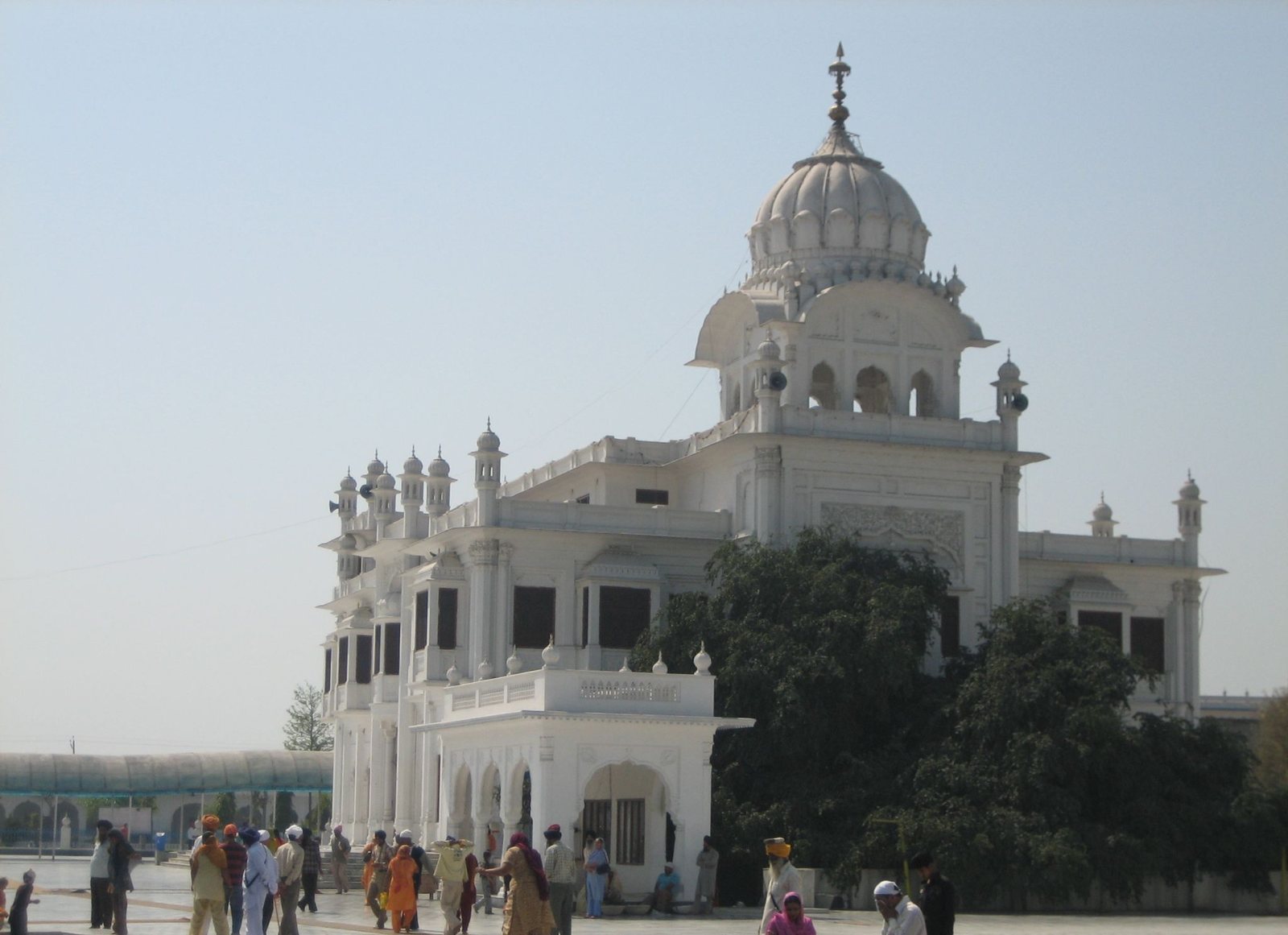
In short
- Who
- Guru Nanak (1469–1539), the first of the ten Sikh Gurus, born at Talwandi, now Nankana Sahib in Pakistani Punjab
- The turning point
- Around 1499, at Sultanpur, an experience in the Kali Bein that Sikh tradition remembers as a summons into God's presence. He came back saying "there is no Hindu, there is no Musalman"
- The road
- About twenty years of travel, with a Muslim musician, Mardana, and his rabab
- The community
- From the 1520s at the latest, a village of disciples at Kartarpur on the Ravi: prayer at dawn and dusk, work in the fields, meals eaten together
- The teaching
- Some 974 hymns by the usual count, centred on the divine Name, truthful living, and the emptiness of ritual and of caste pride
- The three pillars
- Nām japo, kirat karo, vaṇḍ chhako: remember the Name, work honestly, share. A later summary, not a line of scripture; the ideas in it are Guru Nanak's. What the scripture says
- What followed
- In 1539 he chose a disciple, Lehna, as his successor, Guru Angad, and a teacher's circle became a tradition. Nine Gurus and 169 years later, the Guruship passed to the scripture
Where the kind of evidence matters, we label it, using the categories explained in our editorial standards, and say how sure we can be. Scripture appears in Gurmukhi as printed in the standard text, then in our transliteration and our translation, with its source; the dots and semicolons inside a Gurmukhi line are vishrām, a reader's guide to pausing, not punctuation. The Gurmukhi was taken from the Shabad OS text line by line, never retyped, and has been checked. The other Punjabi words on this page are still awaiting a second reader's review. Hover over or tap a Punjabi word to see it in both scripts.
Three days in the river
The river is not much to look at. The Kali Bein, the "black" Bein, named for the dark cast of its water, is a slow, modest stream that rises in Hoshiarpur district and winds across the Doaba to meet the Beas near Harike. Some five hundred years ago it ran along the edge of Sultanpur, a busy town where a young man named Nanak kept the storehouse of the local governor.
Every morning before first light, the story goes, he walked down to the water to bathe. One morning, around the year 1499, when he was about thirty, he handed his clothes to the servant who went with him, went into the river, and did not come out.
The servant waited, then ran to the governor, Daulat Khan Lodi, who rode down to the bank, sent divers into the water and had nets stretched across the stream. Nothing was found. The Khan rode home saying that Nanak had been a good minister. The town concluded that the storekeeper had drowned.
On the third day he came back.
The accounts that describe what happened in between are not history in the modern sense. They are janamsākhīs, devotional life-stories written down a century or more later, and the oldest of them, the tradition known as the Puratan, says that Nanak was carried into the presence of God. There he was handed a cup of amrit, nectar, and told that it was the cup of the divine Name. He was to go into the world, repeat the Name and teach others to repeat it, to stay untouched by the world's dirt, and to hold to five things: the Name, giving, bathing, service and remembrance. Remember that list. It will matter later.
Asked how he would praise the Name, the Puratan says, he answered in song, with verses Sikhs still sing: one in Sirī Rāg that asks what the Name is worth, if a life of millions of years could not measure it (ang 14), and the Ārtī that we will meet again at the temple of Jagannath. Then he was carried back to the same landing place on the river.
He went home, gave away everything he owned, and sat down among the wandering holy men, the faqīrs, with nothing on but a loincloth. For a day he said nothing at all. When he did speak, it was a single sentence, and people have argued over it ever since.
ਨਾ ਕੋ ਹਿੰਦੂ, ਨਾ ਮੁਸਲਮਾਨ
نہ کو ہندو، نہ مسلمان
nā ko hindū, nā musalmān
"There is no Hindu; there is no Musalman."
The wording differs slightly from one manuscript to the next, but the sense does not. It was a strange thing to say in Sultanpur. The governor was an Afghan Muslim. The man speaking had been born into a Hindu family of the Khatri caste. The town's qazi and its Brahmins kept their separate calendars of prayer and ritual. Some who heard him took the sentence as an insult to both communities; the qazi took it as a challenge. Five centuries later, it is still the sentence most people reach for when they want to say where Sikhi began.
That is the story as Sikh tradition tells it, and it is a good one. It is also the point where this article has to slow down. Ask a historian when Sikhi began and you will not get a date. You will get a question back: began as what? As a vision? As a community with its own daily rhythm? As a line of teachers? As a faith whose followers had stopped thinking of themselves as Hindus or Muslims? Each of those has its own beginning, and they are spread across more than a century.
We will come back to the river. First, a harder question.
How do we know any of this?
Guru Nanak left behind something many founders of faiths did not: a large body of his own words, preserved under his name. By the count most often given, 974 of his hymns survive in the Guru Granth Sahib, the Sikh scripture (the counts differ with how a stanza is reckoned, and some give 947). They were gathered there in 1604 from manuscript collections that reach back to about 1570. When this article quotes Guru Nanak, it is quoting those hymns, cited by ang, the standard page of the scripture. (Ang means "limb": the scripture is treated as a living body, and its pages as its limbs.)
But poetry is not autobiography. The hymns give no dates and name almost no places. The conqueror Babur is the only famous contemporary they name. A handful of lines address someone as Lalo, and Nanak's companion Mardana's name heads two short verses, saloks, at ang 553. There is no birth in them, no river, no itinerary of journeys.
The next layer comes from people close enough to have known the first Sikhs. Satta and Balwand, two musicians of the Gurus' court, composed a ballad about the succession of the Gurus that stands in the scripture itself. Its date is debated: some scholars place its first stanzas within a decade or so of Nanak's death, and it was complete by the time of the fifth Guru, Arjan (Guru from 1581 to 1606). Bhai Gurdas, a scholar close to the Gurus' family who wrote out the scripture of 1604 and died in the 1630s, composed long ballads called vārāṅ. The first of them tells Nanak's life across two dozen stanzas. It is devotion, not chronicle, but it is the earliest connected account of his life, and it was written within living memory of the first Sikhs: Baba Buddha, who worked beside Bhai Gurdas for decades, is said to have met Nanak as a boy.
Then come the janamsākhīs, "birth-testimonies", from janam, birth or life, and sākhī, testimony. They are prose collections of episodes from Nanak's life, and they survive in several traditions, known as the Puratan ("the old one"), the Miharban, the Bala, the Ādi Sākhīāṅ and the Gyān-ratanāvalī. The Puratan and Miharban traditions took shape in the seventeenth century; the oldest dated manuscript of any janamsākhī is a Bala copy of 1658. The tellings disagree about dates, places, the order of the journeys and even the season of his birth, and they grow as they go. In the oldest version of the river story, God speaks. In a later one, the three days go unexplained, the town whispers that the storekeeper has squandered the governor's money on holy men, and an audit finds instead that the treasury owes him 760 rupees.
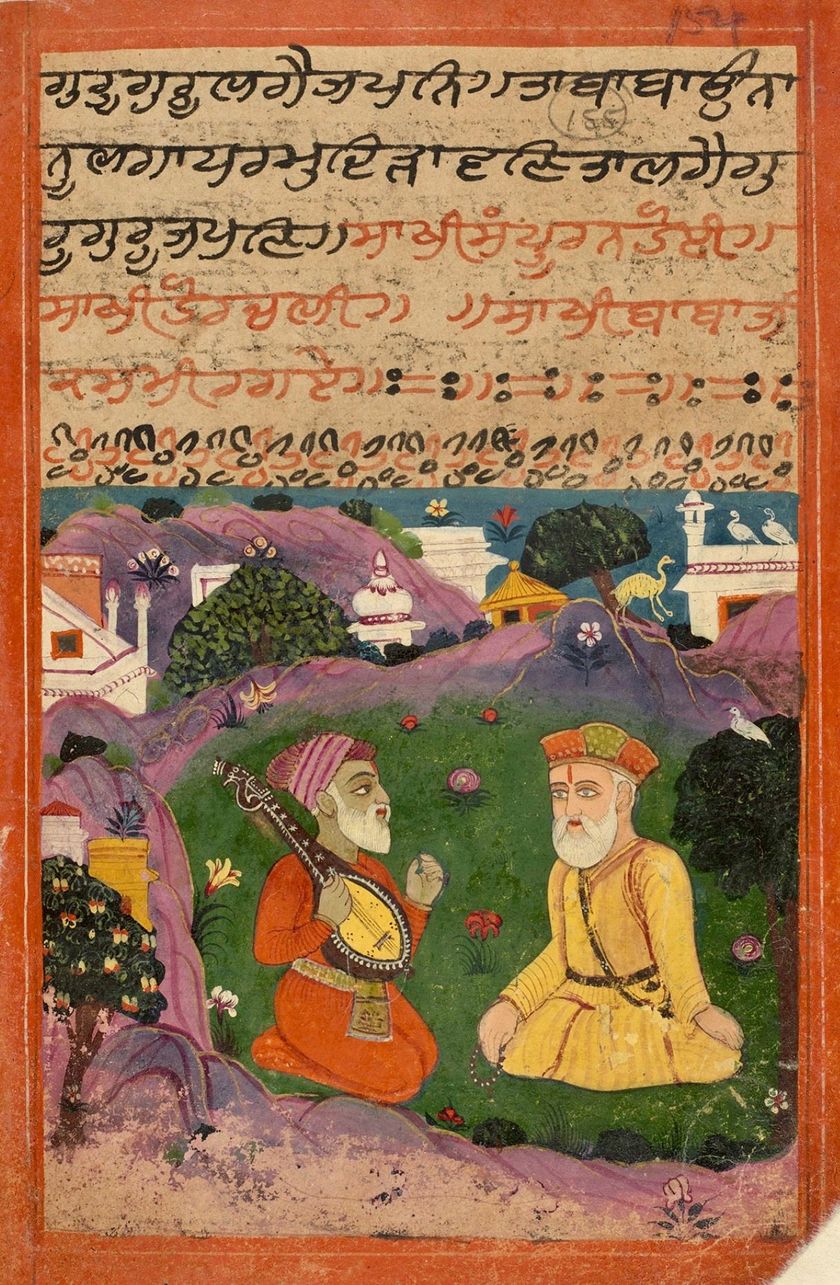
Historians read the janamsākhīs as evidence of how early Sikhs remembered their Guru; believers read them as testimony. Both readings can be honest, and this page makes room for both. One of the finest manuscripts, known by its British Library shelfmark as the B40 janamsākhī, was finished on 31 August 1733 and illustrated by Alam Chand Raj, a mason, with 57 paintings. Pictures like his are not likenesses: no portrait of Guru Nanak from life exists. They show how Sikhs two centuries later imagined him.
Outside voices are rare, and worth hearing. A Persian survey of India's religions, the Dabistān-i Mazāhib, written in the 1640s or 1650s by an author whose identity is still argued over, describes Nanak's followers as a people who "have neither idols nor temples of idols", and says that Nanak "professed the unity of God" and believed that souls pass from body to body. It also passes on reports that his followers told of him, some of which no Sikh source repeats. And there is one eloquent silence. Babur, the Central Asian prince who founded the Mughal empire, left one of the most candid memoirs any ruler ever wrote. Its diary breaks off early in 1520 and does not resume until late in 1525, the very years in which his army swept through the Punjab towns where Nanak is said to have been.
| When | Source | What it is | What kind of evidence |
|---|---|---|---|
| 1469–1539 | Guru Nanak's lifetime | The band everything else is measured against | The yardstick |
| c. 1550–1600 | Satta and Balwand's ballad | In the scripture; describes the succession. Its first stanzas may be the oldest account of Nanak outside his own hymns | Established consensus on the text; competing interpretation on its date |
| c. 1570–72 | The Goindval pothis | The earliest surviving manuscripts containing his hymns | Established consensus |
| 1604 | The Adi Granth | His hymns placed in the Sikh scripture | Established consensus |
| c. 1600–1630s | Bhai Gurdas, Vār 1 | The earliest connected account of his life, in devotional verse | Religious tradition, from within living memory |
| 1600s | The Puratan and Miharban janamsākhīs | The oldest prose traditions of his life-stories | Religious tradition |
| 1640s–50s | Dabistān-i Mazāhib | A Persian survey of religions, by an outsider | Established consensus on the text |
| 1658 | The earliest dated Bala manuscript | The most copied tradition; its claim to date from 1525 is rejected by historians | Religious tradition |
| 1733 | The B40 janamsākhī | A dated manuscript with 57 paintings, now in the British Library | Religious tradition |
| 1877–1909 | Trumpp; Macauliffe | The first English translations, from the oldest janamsākhī manuscripts found in London and in Punjab | Scholarship |
| 1968 onwards | Modern scholarship | McLeod, Harbans Singh, Grewal, Mann and many since | Competing interpretation |
Punjab in 1469: a crowded sky
To understand why "there is no Hindu, there is no Musalman" could land like a stone in a still pond, you have to picture the Punjab it was spoken in.
In 1469 the land of the five rivers belonged, on paper, to the Lodi sultans of Delhi. The dynasty's founder, Bahlul Lodi, had himself risen from governing this province, and in practice Punjab was run by Afghan nobles who held its districts, collected its revenue and fought one another over both. Persian was the language of government. The men who kept its accounts, measuring harvests, recording land and reckoning the tax, were very often Hindu Khatris. Nanak's father was one of them.
Islam had been part of Punjab's life for centuries: in Multan since the Arab conquest of the early eighth century, and in Lahore since the Ghaznavid sultans made it a seat of their power in the eleventh. It was present not only in the qazi's court, where Islamic law was administered, but at the shrines of the Sufis, the mystics of Islam: the Chishti lodge of Baba Farid at Pakpattan, the Suhrawardi centres of Multan, and countless smaller shrines where Muslims and Hindus alike brought their vows. Punjabi verses that tradition gives to Farid, who died in the 1260s, would one day stand in the Sikh scripture beside Nanak's (some scholars think a later Farid of his line composed them; our page on Baba Farid sets out the question).
The Hindu world was just as varied. Brahmin priests conducted the rites of birth, marriage and death; pilgrims walked to Hardwar and Kurukshetra; the goddess drew devotees to hill shrines such as Jwalamukhi; devotion to Vishnu and his incarnations was spreading. Moving through all of it were the Nath yogis, followers of the medieval teacher Gorakhnath, recognisable by the heavy rings in their split ears, who taught that liberation came through disciplining the body and renouncing family life. Further east, the Sant poets (Kabir, a weaver of Benares, and Ravidas, a leatherworker of the same city) were singing of a devotion that needed neither temple nor mosque. Their verses, too, would later be gathered into the Guru Granth Sahib. One religion that had once flourished here was by now only a memory: Buddhism, strong in Punjab and Gandhara for a thousand years, had long since faded.
Caste shaped almost everything: whom you married, whom you ate with, which trades you could follow. Ideas of purity and pollution, held in different forms across communities, bore down hardest on women and on those at the bottom of the social order.
Guru Nanak's verse is not a neutral description of this world. It can be scathing.
ਕਲਿ ਕਾਤੀ. ਰਾਜੇ ਕਾਸਾਈ; ਧਰਮੁ. ਪੰਖ ਕਰਿ ਉਡਰਿਆ ॥
kali kātī rāje kāsāī dharamu paṅkh kari uḍariā
ਕੂੜੁ ਅਮਾਵਸ. ਸਚੁ ਚੰਦ੍ਰਮਾ; ਦੀਸੈ ਨਾਹੀ. ਕਹ ਚੜਿਆ ॥
kūṛu amāvas sachu chandramā dīsai nāhī kah chaṛiā
The age is a knife; kings are butchers; righteousness has grown wings and flown. Falsehood is the moonless night: the moon of truth is nowhere to be seen rising.
Kali is the Kali Yuga, the last and darkest of the four ages in Indian cosmology.
Every age believes it is the worst, and here Nanak borrows an old Indian idea, the Kali Yuga, the last and darkest of the four ages, to say so. Elsewhere he is blunter still: kings are tigers, he writes, and their officials are dogs (ang 1288). What stands out is how evenly he hands out the blame.
ਕਾਦੀ ਕੂੜੁ ਬੋਲਿ; ਮਲੁ ਖਾਇ ॥
kādī kūṛu boli malu khāi
ਬ੍ਰਾਹਮਣੁ ਨਾਵੈ; ਜੀਆ ਘਾਇ ॥
brāhmaṇu nāvai jīā ghāi
ਜੋਗੀ ਜੁਗਤਿ. ਨ ਜਾਣੈ; ਅੰਧੁ ॥
jogī jugati na jāṇai andhu
ਤੀਨੇ. ਓਜਾੜੇ ਕਾ ਬੰਧੁ ॥੨॥
tīne ojāṛe kā bandhu
The qazi tells lies and eats filth. The Brahmin bathes, and still takes life. The yogi, blind, does not know the way. These three are the makings of ruin.
The qazi, the Brahmin and the yogi were the three religious professionals a Punjabi villager was most likely to meet. None of them escapes. This is not an attack by one community on another. It is a complaint about religion that has become a profession, and it runs through Nanak's work from end to end.
He could speak to all of them in their own idiom, because he moved easily between the languages of his world: the Punjabi of the villages, the Persian of the court, the Sanskrit vocabulary of the Brahmins, the Arabic of Islamic learning, and the mixed devotional language, sometimes called Sant Bhāshā, that wandering poets had carried across north India. One of his hymns is almost entirely in Persian.
ਯਕ ਅਰਜ ਗੁਫਤਮ. ਪੇਸਿ ਤੋ; ਦਰ ਗੋਸ ਕੁਨ, ਕਰਤਾਰ ॥
yak araj guphtam pesi to dar gos kun kartār
One plea I lay before You: lend me Your ear, Creator.
Nearly every word is Persian: yak 'one', arz 'petition', guftam 'I have said', pesh-i to 'before you', dar gosh kun 'put in your ear'. The last word, kartār, 'Creator', is Indian.
Notice the last word. Kartār, the Creator, is the word Nanak would one day give to the village where he settled: Kartarpur, "the Creator's town".
The boy from Talwandi
He was born in 1469 at Rai Bhoi di Talwandi, a village on the plains west of Lahore, named after the family of Muslim Bhatti Rajputs who held it. Today it is Nankana Sahib, in Pakistan's Punjab, a town that takes its name from him.
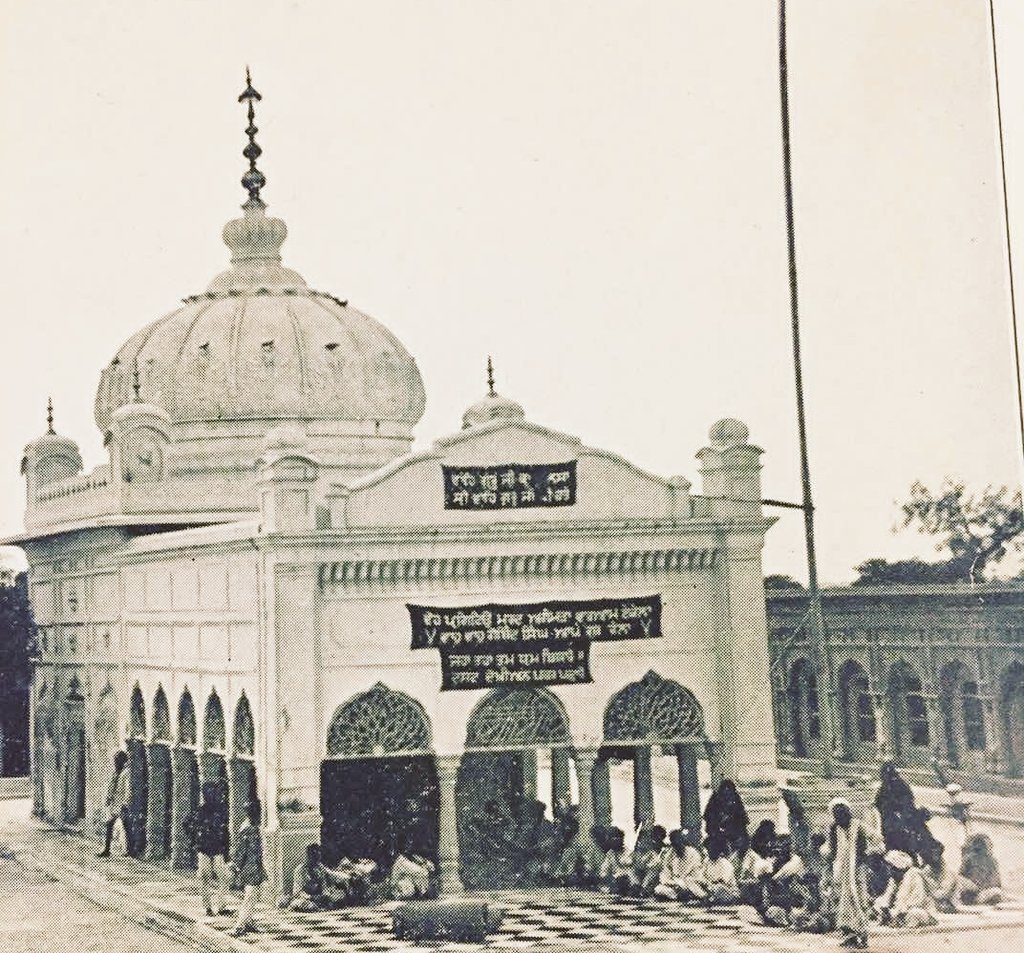
Even his birthday is a small lesson in the sources. The Puratan and Miharban traditions place it on the third day of the bright half of Vaisakh, the spring month, which works out as 15 April 1469, and most historians prefer it. The Bala tradition puts it on the full moon of Kattak, in the autumn, and that is when Sikhs around the world celebrate his gurpurab, his anniversary, with processions and continuous readings of the scripture. The celebration follows the tradition rather than the oldest manuscripts, and the disagreement is old and unresolved: a Sikh scholar, Karam Singh, wrote a whole book about it in 1913.
His father, Kalyan Chand, remembered as Mehta Kalu, was a Bedi Khatri who kept the land records of the village, a paṭvārī, for its Bhatti landholders. His mother was Tripta. An older sister, Nanaki, born around 1464, would matter more to his story than almost anyone. A popular explanation links both children's names to nānke, the Punjabi word for a mother's family home, where Nanaki is said to have been born. It is a pleasing story, and no more than that: Contested.
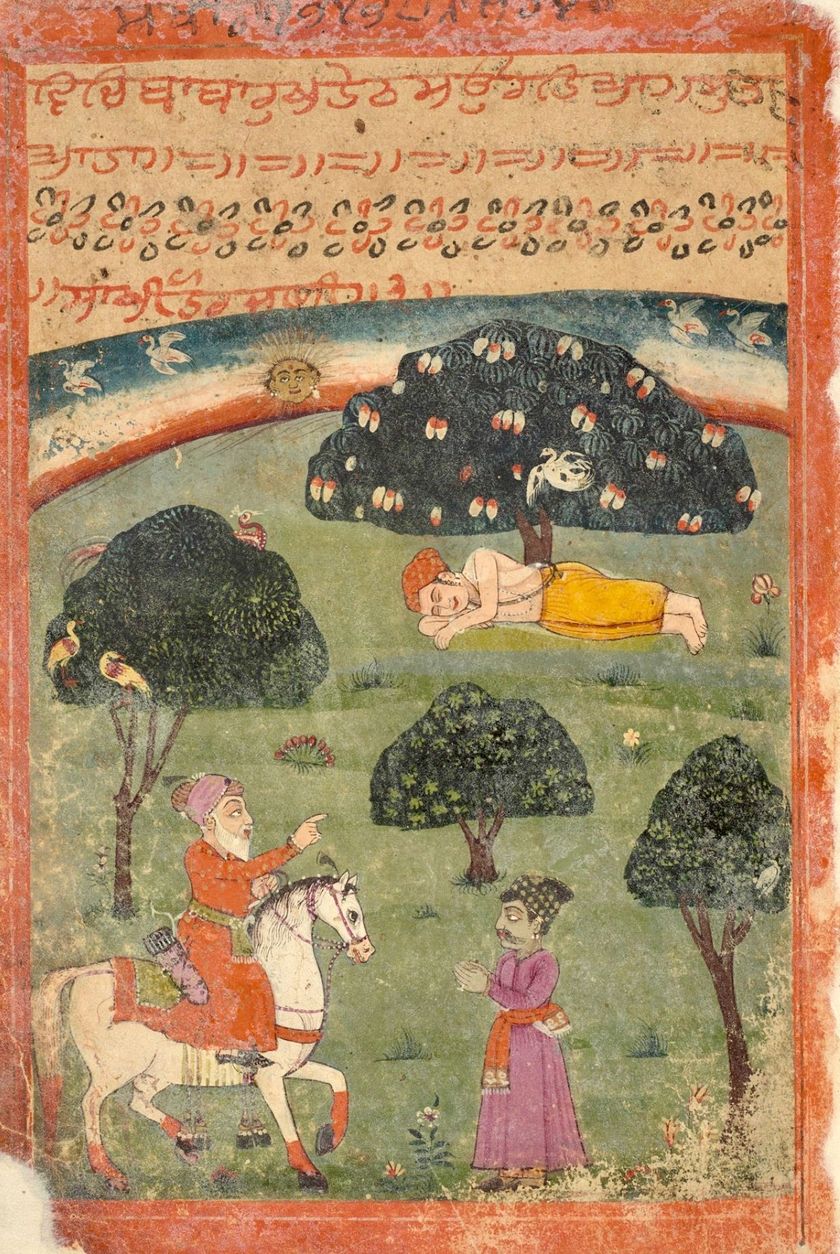
The landholder was Rai Bular, a Muslim, and the janamsākhīs remember him as one of the first to sense something unusual in the boy. In the Puratan telling, Rai Bular, out hunting, finds the young Nanak asleep under a tree whose shadow has stayed still while every other shadow has moved round with the sun. Later tellings give the same scene a cobra, spreading its hood over the sleeper. Stories like these gather around holy men all over India, and historians read them as signs, not events. But the detail they preserve is telling: in the tradition, Nanak's earliest admirer outside his own family is a Muslim.
Tradition sends him to a Hindu schoolmaster, and later to a Muslim teacher for Persian. Whatever the details, that fits what a Khatri boy from a family of accountants would have needed: letters, numbers, and the language of government. His works are not those of an unlettered man. One of his compositions is a paṭṭī, an acrostic that runs through the letters of the alphabet, and the janamsākhīs connect it with his first lessons, when the boy is supposed to have turned his writing-board into a sermon.
ਸਸੈ ਸੋਇ, ਸ੍ਰਿਸਟਿ ਜਿਨਿ ਸਾਜੀ; ਸਭਨਾ ਸਾਹਿਬੁ. ਏਕੁ ਭਇਆ ॥
sasai soi srisaṭi jini sājī sabhnā sāhibu eku bhaiā
Sassā: the One who fashioned the world is the single Master of all.
The first verse of an acrostic on the alphabet, which begins with the letter sassā.
The Paṭṭī's letters begin with ਸ (sassā) rather than the ੳ (ūṛā) that opens the Gurmukhi alphabet today. How the script reached its modern shape and order is a story of its own, told on our Gurmukhi page. Tradition credits Nanak's successor, Guru Angad, with giving it the form later called Gurmukhi; historians see it growing out of older scripts of the region.
Then there is the thread. When Nanak was a boy (the tellings differ on his age), the family arranged the ceremony at which a high-caste Hindu boy is invested with the janeū, the sacred thread worn across the chest. The family priest, the story goes, was ready to place the thread on him when the boy asked what good a cotton thread could do. It would get dirty; it would break; it would burn with the body. He wanted a different kind of thread.
ਦਇਆ ਕਪਾਹ. ਸੰਤੋਖੁ ਸੂਤੁ; ਜਤੁ ਗੰਢੀ. ਸਤੁ ਵਟੁ ॥
daiā kapāh santokhu sūtu jatu gaṇḍhī satu vaṭu
ਏਹੁ ਜਨੇਊ. ਜੀਅ ਕਾ; ਹਈ ਤ. ਪਾਡੇ ਘਤੁ ॥
ehu janeū jīa kā haī ta pāḍe ghatu
Make compassion the cotton, contentment the thread, self-restraint the knot, truth the twist. That is the sacred thread the soul needs. If you have one like it, Pandit, put it on me.
Whether or not the scene happened as told, the verse is his. It stands in the Āsā kī Vār, a long composition still sung at dawn in gurdwaras. Historians suspect that scenes like this one grew up around the verses, as settings for them, and that a Khatri family of the time would have followed the usual custom; the janamsākhīs themselves do not agree on it. Keep the verse in mind: later we will meet its companion piece, in which Nanak says the same thing to Muslims.
By his family's standards, the young Nanak was a worry. The Puratan tells of buffaloes left to graze a neighbour's wheat while he sat lost in thought, and of the village elders called in to settle the damage. In the best known of these stories, his father gives him a sum of money to strike a profitable bargain in a nearby market. On the way he meets a band of hungry holy men, spends the money feeding them, and comes home empty-handed, declaring that he has made the only true bargain there is: sachā saudā. It is found only in the later Bala tradition, which is why historians think it a late story. A gurdwara named for it stands at Chuharkana, now Farooqabad, in Pakistan's Sheikhupura district.
Whatever happened on that road, the story says something true about his verse. Nanak grew up among people who weighed, measured and traded, and the language of the marketplace runs all through his hymns: dozens of lines speak of trading and merchandise, of bargains good and bad. "Make your deals, you traders," one of them begins, "and take care of your merchandise" (ang 22). He would spend his life turning a storekeeper's vocabulary into a spiritual one.
His parents' other worry was his withdrawn, distracted manner. In one janamsākhī episode they call in a physician, who takes the young man's wrist to feel his pulse. A salok by Nanak describes exactly that scene, and tradition attaches it to those years.
ਵੈਦੁ ਬੁਲਾਇਆ ਵੈਦਗੀ; ਪਕੜਿ ਢੰਢੋਲੇ ਬਾਂਹ ॥
vaidu bulāiā vaidgī pakaṛi ḍhaṇḍhole bāṅh
ਭੋਲਾ ਵੈਦੁ. ਨ ਜਾਣਈ; ਕਰਕ ਕਲੇਜੇ ਮਾਹਿ ॥੧॥
bholā vaidu na jāṇaī karak kaleje māhi
They sent for the physician to treat me; he took my arm and felt for the pulse. The simple physician does not know the ache is deep inside, in the heart.
He married young, in 1487 by the usual reckoning. His wife was Sulakhni, the daughter of Mula, a Chona Khatri from Pakhoke who was living at Batala, where the wedding is remembered. Two sons followed: Sri Chand in 1494 and Lakhmi Das in 1497. Sri Chand grew up to be an ascetic and is revered as the founder of the Udāsī order of renunciants. Remember that too, because the question of who would carry Nanak's work forward was going to be settled in a way nobody expected.
Sultanpur: the storehouse and the river
Nanaki, meanwhile, had married Jai Ram, a steward in the service of Daulat Khan Lodi, the Afghan noble who held Sultanpur and later much of Punjab. The couple lived at Sultanpur, a garrison and market town in the Doaba, the "two waters" between the Beas and the Sutlej. At some point in his late teens or his twenties (the traditions differ) Nanak joined them. The Puratan has his wife weep as he leaves and ask who will look after the family; he promises to send for her once the work goes well. Jai Ram found him a post in the governor's modīkhānā, the storehouse where revenue collected in grain was kept and sold, and Nanak became its modī, its storekeeper. The town is Sultanpur Lodhi today, in the Kapurthala district of India's Punjab.
The Puratan remembers a man who did the job well and kept little of what it paid him. Whatever he did not need, he gave away. At night there was singing; before dawn he walked down to the river to bathe; then he sat in his office and did the governor's work.
The best-known story of these years is about counting. Weighing out grain, the storekeeper counts the measures aloud, ikk, do, tinn, until he reaches thirteen, terāṅ, which in Punjabi sounds almost exactly like terā, "yours". And there he stops, repeating terā, terā, terā (yours, yours, yours) as the grain keeps flowing, because everything, he has understood, belongs to the one he has begun to call Master. It is a late story, not in the oldest janamsākhīs, and nobody can prove it happened. It has survived because it compresses a whole theology into a single word.
It was in these years, too, that Mardana joined him. He came from Talwandi, a Muslim of the mīrāsī community: hereditary musicians and genealogists, named from the Arabic mīrāth, inheritance, because they kept other families' histories. He played the rabāb, a deep-bodied lute with a skin-covered belly that had come to Punjab from the Afghan and Persian world. Bhai Gurdas, listing the first Sikhs, gives him a line of his own.
ਭਲਾ ਰਬਾਬ ਵਜਾਇੰਦਾ; ਮਜਲਸ ਮਰਦਾਨਾ ਮੀਰਾਸੀ ।
bhalā rabāb vajāindā majlas mardānā mīrāsī
Mardana the Mirasi, a fine player of the rabab in company.
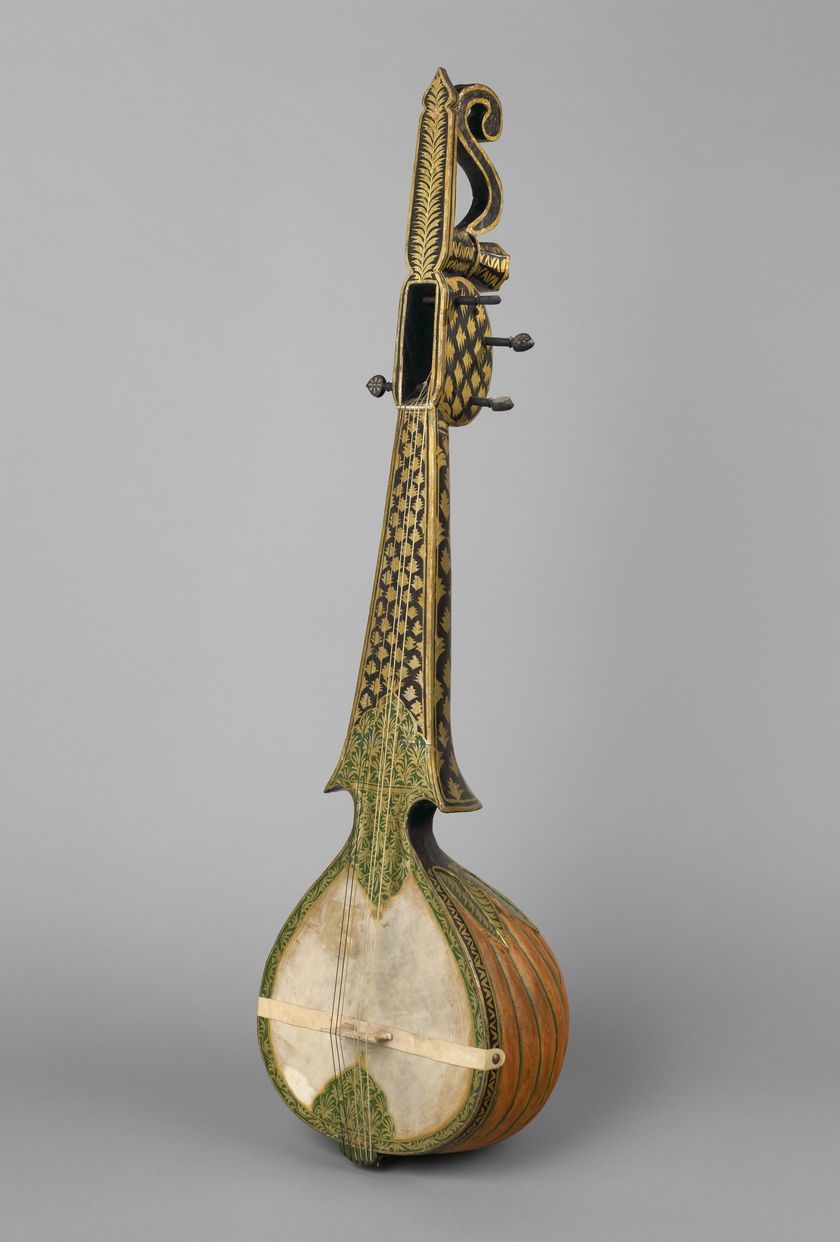
Before there was a Sikh scripture, a Sikh building or a Sikh name, there was this pair: a Hindu-born Khatri accountant and a Muslim hereditary musician, singing together, the tradition says, in the evenings after the day's work.
Then came the river. Tradition puts the Bein episode around 1499, when Nanak was about thirty; some reckonings place it a few years later. Bhai Gurdas, writing a century on, does not mention a river at all, or Sultanpur. He describes the change in two half-lines that contain the whole shape of Sikh ethics.
ਪਹਿਲਾ ਬਾਬੇ ਪਾਯਾ ਬਖਸੁ ਦਰਿ; ਪਿਛੋਦੇ ਫਿਰਿ ਘਾਲਿ ਕਮਾਈ ।
pahilā bābe pāyā bakhasu dari pichhode phiri ghāli kamāī
First the Baba received grace at the Door; only afterwards did he labour and earn it.
Grace first; then work. In the same stanza he says the Baba "was robed with honour in the realm of Truth, and received the nine treasures of the Name, and humility", lived on sand and wild swallow-wort and slept on stones, and then put on the garb of a wanderer and set out to set the world right (Vār 1, pauṛī 24).
And then the sentence: "there is no Hindu, there is no Musalman". What did he mean?
The janamsākhīs turn the town's reaction into a story. When people said the storekeeper had gone mad, the Puratan has him call to Mardana for the rabab and sing a hymn now in rāg Mārū: some call Nanak a ghost, some a demon; he has gone mad, he says, for his Lord (ang 991). The local qazi was not satisfied. If there is no Hindu and no Musalman, he asked, will this man pray with Muslims? Nanak went with the governor and the qazi to the mosque, and while they prayed, he laughed. Challenged, he said the qazi's prayer had not been accepted: all through it, the qazi's mind had been at home, where his mare had just foaled, fretting that the foal would fall into the well in his yard. Later tellings add the governor, whose mind, Nanak says, had been in Kandahar, buying horses. The prayer had been attended by their bodies, not by their minds.
Nanak's own verse makes the same point without the drama, in language any Muslim listener would recognise, and the Puratan puts it in his mouth in this very scene. This is the companion to the sacred-thread hymn.
ਮਿਹਰ ਮਸੀਤਿ. ਸਿਦਕੁ ਮੁਸਲਾ; ਹਕੁ ਹਲਾਲੁ ਕੁਰਾਣੁ ॥
mihar masīti sidaku muslā haku halālu kurāṇu
ਸਰਮ ਸੁੰਨਤਿ. ਸੀਲੁ ਰੋਜਾ; ਹੋਹੁ ਮੁਸਲਮਾਣੁ ॥
saram sunnati sīlu rojā hohu musalmāṇu
Make kindness your mosque, sincere faith your prayer-mat, and what is rightfully and lawfully earned your Qur'an. Make modesty your circumcision and good conduct your fast: so be a Muslim.
Haku halālu, 'what is rightful and lawful', is usually read as an honestly earned living.
Bhai Gurdas has one more surprise. In his roll of Nanak's disciples, a few lines after Mardana, he includes the governor himself: "Daulat Khan Lodi was a good man, and became a living pir, undying" (Vār 11, pauṛī 13). In his commentary Bhai Vir Singh records another reading, in which the "living pir" is the Khwaja, the undying saint whom Punjab knows as Khwaja Khizr, lord of the rivers: Daulat Khan, once the Khwaja's devotee, became undying as a Sikh of the Guru. Either way, the first circle of Sikhs, as Bhai Gurdas remembered it, included a Muslim musician and an Afghan governor.
Soon afterwards, Nanak left the storehouse, and Sultanpur, for the road.
The road
For roughly the next twenty years, Guru Nanak travelled. Sikh tradition counts four great journeys, the udāsīāṅ (from udāsī, detachment; the word later also named Sri Chand's order): east as far as Assam and the Bay of Bengal, south towards Sri Lanka, north into the Himalayas, and west to Mecca and Baghdad, with shorter circuits of Punjab in between. The janamsākhīs disagree about the order, the routes and the dates, and send him to places no historian would vouch for.
Mardana went with him, carrying the rabab. The picture recurs in every tradition: the Guru sings, the Mirasi plays, and whoever is on the road stops to listen.
Lalo's bread
At Saidpur, now Eminabad near Gujranwala in Pakistan, the story says Nanak lodged with Lalo, a carpenter of low caste, rather than accept the invitation of Malik Bhago, a wealthy official who was holding a great feast. Pressed to explain the insult, Nanak took Lalo's coarse bread in one hand and a morsel of Bhago's rich food in the other, and squeezed. From Lalo's bread came milk; from Bhago's, blood.
The evidence comes in layers here, and it is worth separating them. One of Nanak's most powerful hymns, which we will meet shortly, addresses someone as Lalo, and Sikh tradition and most translators read it as a name. W. H. McLeod noticed that the older janamsākhīs do not know Lalo, and suggested the refrain might first have been heard as a term of endearment, "O dear one". Malik Bhago appears in no scripture at all. The milk-and-blood story is found in the Bala janamsākhīs, where it is a relatively late addition, and its miracle belongs to devotion rather than to history. But as a parable of honest work set against wealth squeezed out of other people, it has never been bettered, and it is still the first story many Sikh children hear about Guru Nanak.
Water for the fields, lamps for the sky
At Hardwar, on the Ganges, the janamsākhīs find him among pilgrims throwing water towards the rising sun as an offering to their ancestors. Nanak turns and throws water the other way, towards the west. Asked what he is doing, he says he is watering his fields in Punjab. If their water can reach the dead in another world, surely his can reach his crops a few hundred miles away. McLeod pointed out that much the same story is told in older Buddhist legend: a parable that attaches itself to reformers, whoever they are.
At Puri, on the Bay of Bengal, later tellings bring him to the evening āratī at the temple of Jagannath, where lamps on a platter are waved before the deity. He does not join in. Instead, the story goes, he sings of the greater āratī that is always being performed. The Puratan, as we saw, sets the same hymn somewhere grander still: in the court of God, during his three days in the river.
ਗਗਨ ਮੈ ਥਾਲੁ. ਰਵਿ ਚੰਦੁ ਦੀਪਕ ਬਨੇ; ਤਾਰਿਕਾ ਮੰਡਲ ਜਨਕ ਮੋਤੀ ॥
gagan mai thālu ravi chandu dīpak bane tārikā maṇḍal janak motī
The sky is the platter; the sun and moon are its lamps; the stars in their clusters are scattered pearls.
Wherever it was first sung, the hymn is his, and Sikhs sing it every night as part of Sohilā, the prayer before sleep.
The yogis' question
The encounters the tradition returns to most often are with the Nath yogis, whom Sikh sources call Siddhs, "the perfected". These were serious men with a serious path: celibacy, breath control, withdrawal from the world, and the earrings that marked their initiation. Nanak's quarrel with them was not about God. It was about where a spiritual life should be lived.
Bhai Gurdas sets one meeting on Mount Sumeru, the mountain at the centre of the world in Indian cosmology. The Siddhs, Gorakhnath among them, are startled to see a young man there and ask him how things are going down below. His answer borrows his own image from the Mājh kī Vār: falsehood is the moonless night, and the moon of truth cannot be seen. Then comes the rebuke. The Siddhs have hidden themselves in the mountains; so who is going to carry the world across? (Vār 1, pauṛīs 28–29.)
His fullest reply is a composition in the scripture itself, the Sidh Goshṭ, "discourse with the Siddhs", a long sequence of questions and answers. At one point they ask him the most basic question anyone in India could put to a teacher.
ਤੇਰਾ ਕਵਣੁ ਗੁਰੂ; ਜਿਸ ਕਾ ਤੂ ਚੇਲਾ ॥
terā kavaṇu gurū jis kā tū chelā
Who is your guru? Whose disciple are you?
Rāmkalī, Sidh Goshṭ. Guru Granth Sahib, ang 942. The Siddhs' question.
ਸਬਦੁ ਗੁਰੂ; ਸੁਰਤਿ ਧੁਨਿ ਚੇਲਾ ॥
sabadu gurū surati dhuni chelā
The Word is the Guru; attention, tuned to its sound, is the disciple.
Rāmkalī, Sidh Goshṭ. Guru Granth Sahib, ang 943. Guru Nanak's answer.
The answer removes the human teacher from the centre. The Guru is the Word; the disciple is the listening mind. It is one of the ideas that would allow Sikhs, nearly two centuries later, to say that their scripture was their Guru.
When the Siddhs press him on how anyone can live a spiritual life in the middle of the world, he answers with two pictures.
ਜੈਸੇ ਜਲ ਮਹਿ. ਕਮਲੁ ਨਿਰਾਲਮੁ; ਮੁਰਗਾਈ ਨੈ ਸਾਣੇ ॥
jaise jal mahi kamalu nirālamu murgāī nai sāṇe
ਸੁਰਤਿ ਸਬਦਿ. ਭਵ ਸਾਗਰੁ ਤਰੀਐ; ਨਾਨਕ. ਨਾਮੁ ਵਖਾਣੇ ॥
surati sabadi bhav sāgaru tarīai nānak nāmu vakhāṇe
As the lotus stays untouched in the water, as the waterbird swims the stream and stays dry, so, with attention fixed on the Word, one crosses the ocean of the world. Nanak: speak the Name.
The lotus rooted in muddy water, the waterbird whose feathers stay dry: this is the householder's path in two images. Not an escape from the world, but a way of being in it without being soaked through.
Bhai Gurdas sums up the whole contest in one line. Read it slowly, because it is one of the earliest places where anyone says, in so many words, that Nanak had founded something new.
ਸਬਦਿ ਜਿਤੀ ਸਿਧਿ ਮੰਡਲੀ; ਕੀਤੋਸੁ ਆਪਣਾ ਪੰਥੁ ਨਿਰਾਲਾ ।
sabadi jitī sidhi maṇḍalī kītosu āpṇā panthu nirālā
With the Word he won over the assembly of Siddhs, and made his own path, unlike any other.
Mecca and Baghdad
Bhai Gurdas also sends him west. He goes to Mecca, the poet says, dressed in blue, carrying a staff, a book under his arm, a water-jug and a prayer-mat, like any pilgrim. He lies down to sleep in a mosque with his feet towards the mihrāb, the niche that faces the Kaaba. A man named Jiwan, outraged, kicks him and drags him round by the legs, at which point (this is devotion speaking) Mecca itself turns to follow his feet. The pilgrims gather and put a question to him.
ਪੁਛਨਿ ਖੋਲਿ ਕਿਤਾਬ ਨੋ; ਹਿੰਦੂ ਵਡਾ ਕਿ ਮੁਸਲਮਾਨੋਈ ।
puchhani kholi kitāb no hindū vaḍā ki musalmānoī
ਬਾਬਾ ਆਖੇ ਹਾਜੀਆ; ਸੁਭਿ ਅਮਲਾ ਬਾਝਹੁ, ਦੋਨੋ ਰੋਈ ।
bābā ākhe hājīā subhi amlā bājhahu dono roī
They asked him to open his book: who is greater, the Hindu or the Muslim? The Baba told the pilgrims: without good deeds, both will weep.
The Puratan tells the scene its own way. There the angry man is a qazi, Rukandeen, and Nanak answers him with the reply that has become famous: then drag my feet, he says, towards wherever God and the Kaaba are not. Wherever the qazi drags them, the Kaaba follows. The miracle is devotion's answer; the reply to the pilgrims is the part that has lasted, and it is the answer Nanak gives everywhere. Labels save nobody; conduct does.
Baghdad is a different kind of case, because here there is something to hold. Bhai Gurdas describes Nanak camping outside the city with Mardana, answering the questions of its pir, whom he calls Dastgir, and speaking of worlds beyond counting, an echo of the Japjī, where Nanak writes of "nether worlds beneath nether worlds, and hundreds of thousands of skies above skies" (ang 5). And in Baghdad itself, in a small building beside the grave of a holy man remembered as Bahlul Dana, "Bahlul the Wise", there was a stone with an inscription in Ottoman Turkish.
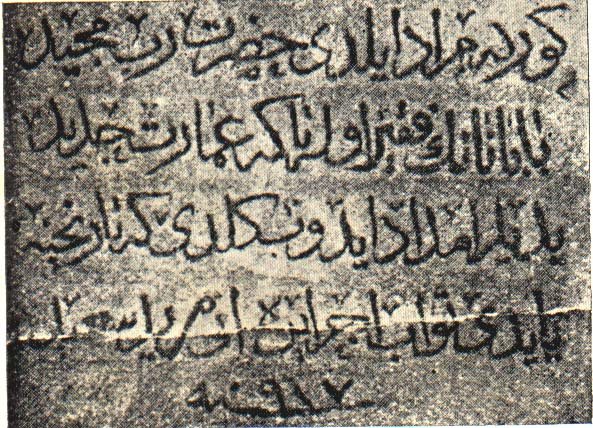
Sikh soldiers of the Indian Army found it in 1916 or 1917, during the First World War, and news of it was published in 1918. Its second line was read as naming "Baba Nanak, faqir", and the date in its cartouche as the Hijri year 917 or 927, which is 1511–12 or 1520–21 CE. For half a century it was taken as proof of the journey.
The jasmine
The best story of the road may be the smallest. When Nanak came to Multan, Bhai Gurdas says, the city's holy men sent out a bowl filled to the brim with milk. The message was plain: this city is full; there is no room here for another saint. Nanak took a jasmine flower from under his arm and laid it on the surface. It floated, and nothing spilled, "as the Ganges merges into the sea" (Vār 1, pauṛī 44). Bhai Gurdas places the visit late, after Nanak had settled at Kartarpur.
It is a perfect small parable of how he dealt with other traditions. He had not come to empty anyone's bowl.
The long journeys ended, as far as we can tell, in the early 1520s. They ended in a Punjab that was being invaded.
The Bābarvāṇī: a poet argues with God
In 1519 a prince from Kabul crossed the Indus. Zahir-ud-din Muhammad Babur, descended from Timur on his father's side and from Genghis Khan on his mother's, had lost his ancestral kingdom in Central Asia and was looking for another. Over the next few years he raided Punjab repeatedly. In 1520, on his third expedition, Sialkot surrendered and the next town, Sayyidpur (Saidpur in the Sikh sources, now Eminabad), resisted, and was taken by storm. Its defenders were put to the sword; later histories, as Babur's nineteenth-century translators summarised them, add that its women and children were carried into captivity. Afghan nobles at odds with the Delhi sultan, Daulat Khan Lodi among them, invited Babur further in. In 1526, at Panipat, he destroyed the army of Sultan Ibrahim Lodi and founded the Mughal empire.
Guru Nanak's response survives in four hymns known together as the Bābarvāṇī, "Babur's decree", a name taken from one of their own lines: "Babur's writ has run; even princes go without bread" (ang 417). As far as we know, he was the only religious poet of his time to write about the invasions at all, as the scholar Gurinder Singh Mann has observed. The first of the hymns does something remarkable. It argues with God.
ਖੁਰਾਸਾਨ ਖਸਮਾਨਾ ਕੀਆ; ਹਿੰਦੁਸਤਾਨੁ ਡਰਾਇਆ ॥
khurāsān khasmānā kīā hindustānu ḍarāiā
ਆਪੈ. ਦੋਸੁ ਨ ਦੇਈ ਕਰਤਾ; ਜਮੁ ਕਰਿ ਮੁਗਲੁ ਚੜਾਇਆ ॥
āpai dosu na deī kartā jamu kari mugalu chaṛāiā
ਏਤੀ ਮਾਰ ਪਈ ਕਰਲਾਣੇ; ਤੈਂ. ਕੀ ਦਰਦੁ ਨ ਆਇਆ ॥੧॥
etī mār paī karlāṇe taiṅ kī daradu na āiā
Khurasan was taken under his sway, and Hindustan was put in terror. The Creator takes no blame upon Himself: He sent the Mughal as Death's messenger. Such blows fell that the people cried out in pain. Did You feel nothing?
The first half-line is read two ways: Babur made Khurasan his own before turning on India, or God sheltered Khurasan while Hindustan suffered.
This is not the voice of a serene mystic above the fray. It is a man who has seen what an army does to a town, holding the Creator to account in the Creator's own court. The hymn goes on: when the strong strike the strong, nobody grieves, but when a tiger falls upon the herd, the herdsman must answer for it (ang 360).
In another hymn Nanak turns to the man the tradition says he stayed with at Saidpur.
ਜੈਸੀ ਮੈ ਆਵੈ, ਖਸਮ ਕੀ ਬਾਣੀ; ਤੈਸੜਾ ਕਰੀ ਗਿਆਨੁ. ਵੇ ਲਾਲੋ ॥
jaisī mai āvai khasam kī bāṇī taisaṛā karī giānu ve lālo
ਪਾਪ ਕੀ ਜੰਞ ਲੈ. ਕਾਬਲਹੁ ਧਾਇਆ; ਜੋਰੀ ਮੰਗੈ ਦਾਨੁ. ਵੇ ਲਾਲੋ ॥
pāp kī jañ lai kābalahu dhāiā jorī maṅgai dānu ve lālo
As the Master's word comes to me, so I tell it, Lalo. Leading a wedding party of sin, he has rushed down from Kabul, and demands by force the bride-gift, Lalo.
The image is savage and exact. An invasion is a wedding procession of sin, and the bride-price is taken by force. And when he describes who suffers, he refuses to let the catastrophe become a story of one religion against another.
ਮੁਸਲਮਾਨੀਆ ਪੜਹਿ ਕਤੇਬਾ; ਕਸਟ ਮਹਿ ਕਰਹਿ ਖੁਦਾਇ. ਵੇ ਲਾਲੋ ॥
musalmānīā paṛahi katebā kasaṭ mahi karahi khudāi ve lālo
ਜਾਤਿ ਸਨਾਤੀ ਹੋਰਿ ਹਿਦਵਾਣੀਆ; ਏਹਿ ਭੀ ਲੇਖੈ ਲਾਇ. ਵੇ ਲਾਲੋ ॥
jāti sanātī hori hidvāṇīā ehi bhī lekhai lāi ve lālo
Muslim women recite their scriptures and in their agony cry out to God, Lalo. Hindu women of high caste and low, and all the rest, are counted in the same reckoning, Lalo.
Muslim women crying out to Khuda; Hindu women of every caste. The same reckoning falls on all of them.
The same hymn to Lalo contains two lines that have fascinated readers ever since: "Coming in seventy-eight, they will depart in ninety-seven, and another disciple of a man will rise" (ang 723). Traditionally the numbers are read as years of the Bikrami era, 1578 and 1597, which is to say 1521 and 1540 CE. In 1540 Babur's son Humayun lost his throne to Sher Shah Suri. Devotional readers see prophecy. Historians are more cautious, noting that the reading depends on assumptions about which era, and which events, are meant: Contested.
Why do these hymns matter so much? Partly because they give a rare view of Babur's conquest from the ground rather than from the saddle. And partly because they settle a question about the new path before anyone had asked it. Whatever Sikhi was going to be, it was not going to be a retreat from the world.
What Guru Nanak taught
The hymns do not come with a manual. They are poetry, meant to be sung, and their ideas return again and again in new images rather than marching in order. But a handful of words carry most of the weight, and once you know them, the rest opens up.
The root verse
The Guru Granth Sahib begins with a single line known as the Mūl Mantar, the "root formula". It also opens the Japjī, the long meditative poem that Sikhs recite every morning.
ੴ ਸਤਿ ਨਾਮੁ ਕਰਤਾ ਪੁਰਖੁ ਨਿਰਭਉ ਨਿਰਵੈਰੁ; ਅਕਾਲ ਮੂਰਤਿ ਅਜੂਨੀ ਸੈਭੰ ਗੁਰ ਪ੍ਰਸਾਦਿ ॥
ik oaṅkār sati nāmu kartā purakhu nirbhau nirvairu akāl mūrati ajūnī saibhaṅ gur prasādi
One Oaṅkār; Truth by name; the Creator, the Being; without fear, without enmity; timeless in form; unborn; self-existent: known by the Guru's grace.
Every phrase has more than one respectable translation. The article discusses the main choices.
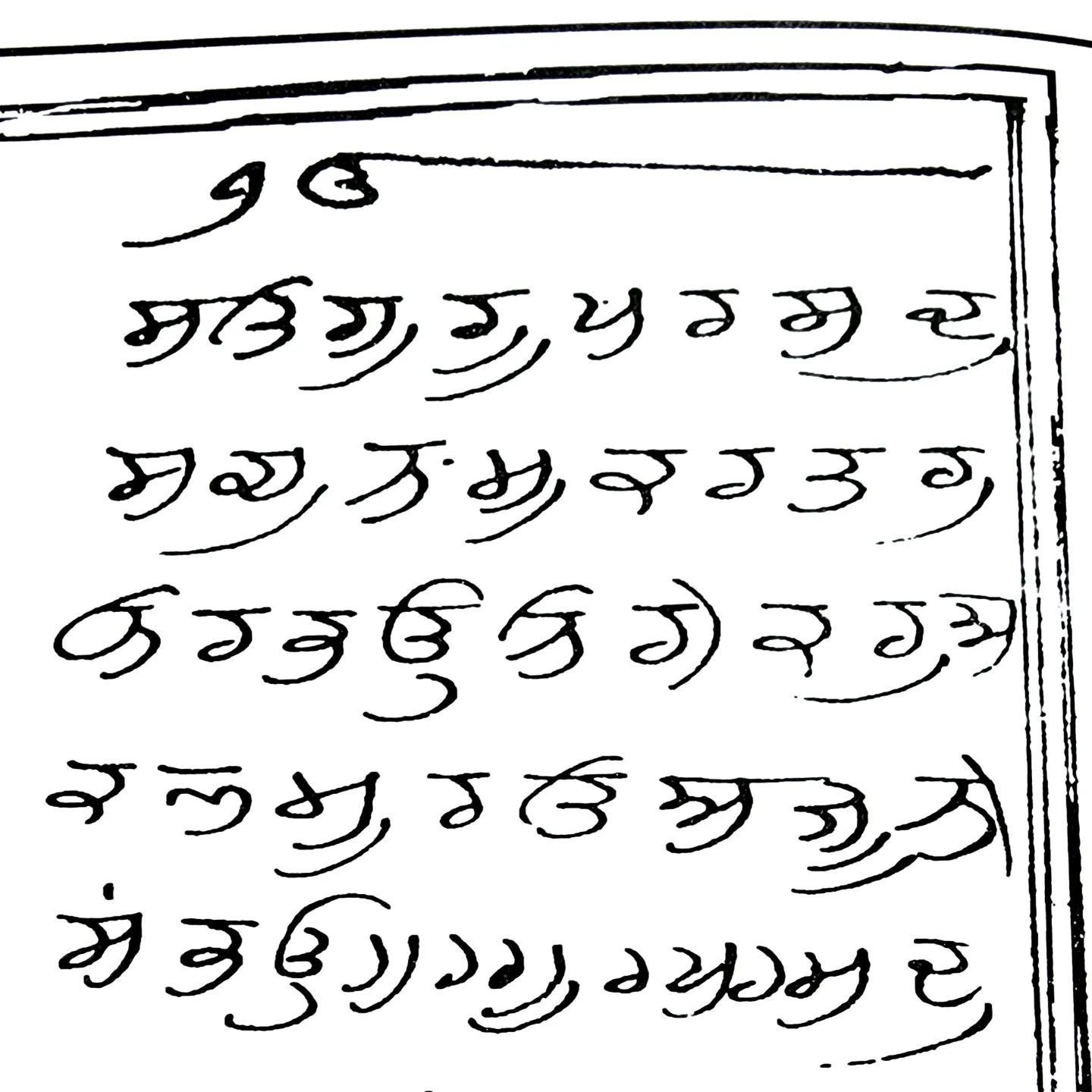
Almost every phrase in it has been translated in more than one way, and the choices matter.
Ik oaṅkār joins the numeral one to oaṅkār, the ancient Indian sacred syllable known in Sanskrit as oṃ, which Nanak also used as the title of one of his longer poems. Some readers stress the numeral: the One, and the declaration of oneness, is the whole point. Others stress the continuity with oṃ, the primal sound. The scholar Arvind-pal Singh Mandair has warned that translating it simply as "one God" quietly imports a European idea of monotheism into a text that thinks in its own way.
Sati nāmu can be "the True Name", "Truth is the Name" or "whose name is Truth". Kartā purakhu is the Creator, the Being; purakh literally means person. Nirbhau and nirvairu: without fear and without enmity, which is to say, with nothing to fear and no one to hate. Akāl mūrati: a form beyond time. Ajūnī: unborn. Saibhaṅ, from the Sanskrit svayambhū: existing of itself. Gur prasādi: by the Guru's grace, meaning that this One is known only through grace.
Even the end of the formula is debated. Most Sikhs end the Mūl Mantar at gur prasādi. Some traditions continue it through the short verse that follows, which calls the One true in the beginning, true through the ages, true now and true for ever.
The Name, the Order, and the self
Nām, the Name, is the most important word in Guru Nanak's vocabulary. Forms of the word appear in more than seven hundred of the lines attributed to him. It does not mean a label. The Name is divine reality itself as it can be known: present everywhere in creation, and heard above all in the shabad, the Word, the sacred utterance the Guru sings. To "receive the Name" is to wake up to that presence. To "forget the Name" is the human condition he spent his life trying to cure.
Hukam, from the Arabic ḥukm, "command", is the divine order, the will that shapes everything that exists. It is not quite fate and not quite law. It is the grain of the universe, and the spiritual task is to stop cutting across it. The Japjī's first stanza puts the question and the answer side by side.
ਕਿਵ. ਸਚਿਆਰਾ ਹੋਈਐ; ਕਿਵ. ਕੂੜੈ ਤੁਟੈ ਪਾਲਿ ॥
kiv sachiārā hoīai kiv kūṛai tuṭai pāli
ਹੁਕਮਿ ਰਜਾਈ ਚਲਣਾ; ਨਾਨਕ. ਲਿਖਿਆ ਨਾਲਿ ॥੧॥
hukami rajāī chalṇā nānak likhiā nāli
How, then, does one become true? How is the wall of falsehood torn down? By walking in the way of the Order, of the One who commands. Nanak: it is written within us.
Haumai, literally "I-me", is the obstacle: the self-centredness that makes each of us the hero of our own story and deaf to the Order and the Name. "In ego they come," Nanak writes, "and in ego they go" (ang 466). A famous line on the same page, calling haumai a chronic disease that carries its own cure, is often quoted as his. It is Guru Angad's.
Grace and deeds
Where does effort fit, if everything depends on grace? Nanak holds the two together, and one line of the Japjī shows how closely: the same word can be heard as either.
ਕਰਮੀ ਆਵੈ ਕਪੜਾ; ਨਦਰੀ ਮੋਖੁ ਦੁਆਰੁ ॥
karmī āvai kapṛā nadrī mokhu duāru
By deeds comes the garment of the body; by grace, the gate of release.
The line can be heard two ways. Karmī may be Sanskrit karma, 'deeds', or Arabic karam, 'kindness, grace'; kapṛā, 'cloth', may be the body or a robe of honour. Sant Singh Khalsa's English reads deeds and the body, as here. Sahib Singh's Punjabi commentary reads grace and a robe of praise: by His grace comes the robe of praise. Nadar is Arabic naẓar, a glance, here the glance of grace.
Read one way, deeds shape the life you are given and grace opens the door out of the cycle of births. Read the other way, it is grace from start to finish. Commentators have argued about it for as long as there have been commentaries, and the argument is itself the lesson: in Nanak's verse effort and grace are never far apart. What grace does not do is excuse anyone from living well, and it does not come through ritual. The Japjī opens by saying that bodily cleansing cannot make the mind clean, "though one cleanse a hundred thousand times" (ang 1; some translators read the word as "thinking" rather than "cleansing"). The line that best sums up Nanak's ethics comes from a hymn in Sirī Rāg.
ਸਚਹੁ ਓਰੈ ਸਭੁ ਕੋ; ਉਪਰਿ ਸਚੁ ਆਚਾਰੁ ॥੫॥
sachahu orai sabhu ko upari sachu āchāru
Everything stands below Truth; higher still is truthful living.
Truth is the highest thing there is, and truthful living is higher still. It is a remarkable sentence for a religious teacher to write. It puts practice above doctrine, and it is the doorway to everything in the next section.
Caste, and women
On caste as a measure of spiritual worth, Nanak's verse is unambiguous.
ਜਾਣਹੁ ਜੋਤਿ. ਨ ਪੂਛਹੁ ਜਾਤੀ; ਆਗੈ. ਜਾਤਿ ਨ ਹੇ ॥੧॥ ਰਹਾਉ ॥
jāṇahu joti na pūchhahu jātī āgai jāti na he rahāu
Recognise the light in everyone, and do not ask about caste: in the world beyond there is no caste. (Refrain)
In another hymn he places himself with "the lowest of the low" (ang 15), and the communal kitchen of his community, as we will see, sat everyone in the same row. Historians add a necessary caveat. Caste did not vanish from Sikh society: all ten Gurus were Khatris and married within that caste, and caste distinctions have persisted among Sikhs, as among their neighbours, to the present day. The teaching was radical; the society that received it changed more slowly.
On women, the most quoted passage is this one.
ਭੰਡਿ ਜੰਮੀਐ. ਭੰਡਿ ਨਿੰਮੀਐ; ਭੰਡਿ ਮੰਗਣੁ ਵੀਆਹੁ ॥
bhaṇḍi jammīai bhaṇḍi nimmīai bhaṇḍi maṅgaṇu vīāhu
ਭੰਡਹੁ ਹੋਵੈ ਦੋਸਤੀ; ਭੰਡਹੁ ਚਲੈ ਰਾਹੁ ॥
bhaṇḍahu hovai dostī bhaṇḍahu chalai rāhu
ਭੰਡੁ ਮੁਆ. ਭੰਡੁ ਭਾਲੀਐ; ਭੰਡਿ ਹੋਵੈ ਬੰਧਾਨੁ ॥
bhaṇḍu muā bhaṇḍu bhālīai bhaṇḍi hovai bandhānu
ਸੋ ਕਿਉ ਮੰਦਾ ਆਖੀਐ; ਜਿਤੁ ਜੰਮਹਿ ਰਾਜਾਨ ॥
so kiu mandā ākhīai jitu jammahi rājān
From woman we are born; in woman we are conceived; to woman we are betrothed and married. Through woman come friendship and kin; through woman the world goes on. When a woman dies, another is sought; through woman the bonds of society are made. Why call her lesser, from whom kings are born?
What "Sikh" means
The word at the centre of all this is a humble one. Sikh means a learner, a disciple. It is generally traced to the Sanskrit śiṣya, "pupil", and sits beside the everyday Punjabi verb sikkhṇā, "to learn". Maya Singh's Punjabi dictionary of 1895 still defines it first as "a disciple", and then as "a follower of Guru Nanak and the other nine Gurus". In Nanak's own verse the word is flexible. In one stanza of the Japjī it means the teaching; in another, the one who is taught; and elsewhere the abstract noun sikhī appears, in an image later generations would find irresistible.
ਮਤਿ ਵਿਚਿ, ਰਤਨ ਜਵਾਹਰ ਮਾਣਿਕ; ਜੇ ਇਕ ਗੁਰ ਕੀ ਸਿਖ ਸੁਣੀ ॥
mati vichi ratan javāhar māṇik je ik gur kī sikh suṇī
Within the mind lie gems, jewels and rubies, if you listen to the Guru's teaching even once.
Japjī, pauṛī 6. Guru Granth Sahib, ang 2. Here sikh means 'teaching'.
ਮੰਨੈ; ਤਰੈ ਤਾਰੇ ਗੁਰੁ ਸਿਖ ॥
mannai tarai tāre guru sikh
Through faith one crosses over, and carries the Guru's disciples across too.
Japjī, pauṛī 15. Guru Granth Sahib, ang 3. Here sikh means 'disciple'.
ਗੁਰੂ ਸਮੁੰਦੁ. ਨਦੀ ਸਭਿ ਸਿਖੀ; ਨਾਤੈ ਜਿਤੁ ਵਡਿਆਈ ॥
gurū samundu nadī sabhi sikhī nātai jitu vaḍiāī
The Guru is the ocean, and all its teachings are rivers; bathing in them brings honour.
Mājh kī Vār, salok. Guru Granth Sahib, ang 150. Commentators divide on sikhī here: 'teachings', or 'Sikhs', the disciples as rivers.
By Bhai Gurdas's day, gur sikhī, the Guru's way of learning, had become one of his favourite phrases; it appears in more than forty lines of his ballads. English speakers later called the faith "Sikhism". Many Sikhs today prefer Sikhi, which keeps the older sense: not an -ism, but a path of learning that is never finished.
The three pillars: remember, work, share
Every Sikh child learns the formula early, usually in its imperative form: nām japo, kirat karo, vaṇḍ chhako. Remember the Name; earn an honest living; share what you have. In English it is often written Naam Japna, Kirat Karni and Vand Chhakna, and called the three pillars of Sikhism. It is the best-known summary of Guru Nanak's teaching in the world.
So it may come as a surprise that the Guru Granth Sahib never states it in these words. The formula is a later summary, and its exact origin has not been traced. What the scripture does contain is older, and in some ways more interesting: a different triad that Nanak names again and again.
ਗੁਰਮੁਖਿ; ਨਾਮੁ ਦਾਨੁ ਇਸਨਾਨੁ ॥
gurmukhi nāmu dānu isnānu
The Guru-facing one keeps to the Name, to giving and to cleansing.
Rāmkalī, Sidh Goshṭ. Guru Granth Sahib, ang 942.
ਦਸਮੀ; ਨਾਮੁ ਦਾਨੁ ਇਸਨਾਨੁ ॥
dasmī nāmu dānu isnānu
The tenth day of the moon: the Name, giving, cleansing.
Bilāval, Thitī. Guru Granth Sahib, ang 840.
Nām, dān, isnān: the Name, giving, and bathing. Here the river comes back. When the Puratan janamsākhī describes the charge Nanak received in the Bein, it is this triad, with service and remembrance added: the Name, giving, bathing, service, remembrance. The first is the same as in the modern formula. Dān, giving, is the ancestor of sharing. Isnān, bathing, looks like the odd one out until you remember what Nanak did with bathing: he turned it inward, so that the cleansing that matters is the washing of the mind. At some point Sikh teaching recast the old triad in the plainest words of everyday Punjabi, and honest work took the place where ritual bathing had stood. It is a good summary. It is also, in its way, a translation.
For the ethic of work and sharing there is a precise scriptural anchor. It is a salok in which Nanak lines up everyone who has turned religion into a way of not working, and then says who has understood.
ਗਿਆਨ ਵਿਹੂਣਾ. ਗਾਵੈ ਗੀਤ ॥
giān vihūṇā gāvai gīt
ਭੁਖੇ ਮੁਲਾਂ; ਘਰੇ ਮਸੀਤਿ ॥
bhukhe mulāṅ ghare masīti
ਮਖਟੂ ਹੋਇ ਕੈ; ਕੰਨ ਪੜਾਏ ॥
makhṭū hoi kai kann paṛāe
ਫਕਰੁ ਕਰੇ; ਹੋਰੁ ਜਾਤਿ ਗਵਾਏ ॥
phakaru kare horu jāti gavāe
ਗੁਰੁ ਪੀਰੁ ਸਦਾਏ; ਮੰਗਣ ਜਾਇ ॥
guru pīru sadāe maṅgaṇ jāi
ਤਾ ਕੈ; ਮੂਲਿ. ਨ ਲਗੀਐ ਪਾਇ ॥
tā kai mūli na lagīai pāi
ਘਾਲਿ ਖਾਇ; ਕਿਛੁ ਹਥਹੁ ਦੇਇ ॥
ghāli khāi kichhu hathahu dei
ਨਾਨਕ; ਰਾਹੁ ਪਛਾਣਹਿ ਸੇਇ ॥੧॥
nānak rāhu pachhāṇahi sei
The one without understanding sings hymns. The hungry mullah turns his house into a mosque. A man too idle to work has his ears split to pass for a yogi; another takes up a beggar's life and throws away his standing. Whoever calls himself a guru or a pir and goes about begging: never bow at his feet. The one who eats what he has worked for and gives something from his own hand, Nanak, has recognised the Way.
Split ears are the mark of the Nath yogis. Ghāli means hard, sustained toil.
Read the list again: the singer of hymns with no understanding, the mullah whose house has become his business, the idler who splits his ears to pass for a holy man, the beggar in a holy man's clothes, the self-appointed guru. Then the last line. In a single breath, work and sharing stand side by side: eat from your own toil (ghāli, hard and sustained labour), and give something from your own hand. And the reward is not paradise. It is recognition: such a person has found the Way.
nām japṇā
say: naam JUP-naa
Literally, to repeat the Name. Meant: keep the divine present in the mind: in meditation, in recitation, in song.
kirat karnī
say: KIR-ut KUR-nee
Literally, to do the work. Meant: earn a living by your own effort and by honest means, taking nothing that is another's due.
vaṇḍ chhakṇā
say: vund CHHUK-naa
Literally, sharing, to eat. Meant: share what you have, above all food, and eat in the company of that sharing.
The ṇ and ḍ are retroflex: curl the tongue back. The "u" in the respellings is the vowel of "cup". The Gurmukhi and Shahmukhi of these three phrases are awaiting review by a native reader.
Kirat karnī: to work honestly
Kirat comes from the Sanskrit kṛti, a deed or a making, from the root kṛ, "to do". Its history holds a small surprise. In the Guru Granth Sahib the word often looks backwards: kirat paiā, "what one's deeds have laid down", is the weight of past actions that no one can erase (angs 60, 154 and 228). But within living memory of the first Sikhs it had already turned to face forwards. Bhai Gurdas, writing around 1600, uses it for an honest livelihood, and pairs it, as Nanak had paired ghāli, with giving.
ਗੁਰਮੁਖਿ ਹਥਿ ਸਕਥ ਹਨਿ; ਸਾਧਸੰਗਤਿ ਗੁਰ ਕਾਰ ਕਮਾਵੈ ।
gurmukhi hathi sakath hani sādhsaṅgati gur kār kamāvai
ਪਾਣੀ ਪਖਾ ਪੀਹਣਾ; ਪੈਰ ਧੋਇ ਚਰਣਾਮਤੁ ਪਾਵੈ ।
pāṇī pakhā pīhṇā pair dhoi charṇāmatu pāvai
ਗੁਰਬਾਣੀ ਲਿਖਿ ਪੋਥੀਆ; ਤਾਲ ਮ੍ਰਿਦੰਗ ਰਬਾਬ ਵਜਾਵੈ ।
gurbāṇī likhi pothīā tāl mridaṅg rabāb vajāvai
ਨਮਸਕਾਰ ਡੰਡਉਤ ਕਰਿ; ਗੁਰਭਾਈ ਗਲਿ ਮਿਲਿ ਗਲਿ ਲਾਵੈ ।
namaskār ḍaṇḍaut kari gurbhāī gali mili gali lāvai
ਕਿਰਤਿ ਵਿਰਤਿ ਕਰਿ ਧਰਮ ਦੀ; ਹਥਹੁ ਦੇ ਕੈ ਭਲਾ ਮਨਾਵੈ ।
kirati virati kari dharam dī hathahu de kai bhalā manāvai
Blessed are the hands of the Guru-facing Sikh that do the Guru's work in the holy congregation: that draw water, wave the fan and grind the flour, and wash feet and take the water that washed them; that write out the Guru's hymns in books and play the cymbals, the drum and the rabab; that bow in greeting and embrace a brother in the Guru; that earn a living by righteous work, give with their own hand, and count it a blessing.
Bhai Vir Singh glosses the grinding as flour for the langar. Charṇāmat is water that has washed someone's feet, taken as a sign of humility. The rest of the stanza lists what such hands will not touch: another's wife, another's wealth.
A Punjabi grandfather praising a hard-working son might still say he lives on dasāṅ nahuṅāṅ dī kirat, "the earnings of his ten fingernails", and Maya Singh's dictionary of 1895 lists kirat karnī as simply "to work". Karnī means "to do". Together, kirat karnī means earning a living by one's own honest effort. Say it KIR-ut KUR-nee, with the r's lightly tapped.
Nanak's verse gives the ethic its edge. Honest work is not only about effort. It is about not taking what belongs to someone else.
ਹਕੁ ਪਰਾਇਆ. ਨਾਨਕਾ; ਉਸੁ ਸੂਅਰ. ਉਸੁ ਗਾਇ ॥
haku parāiā nānakā usu sūar usu gāi
ਗੁਰੁ ਪੀਰੁ ਹਾਮਾ ਤਾ ਭਰੇ; ਜਾ. ਮੁਰਦਾਰੁ ਨ ਖਾਇ ॥
guru pīru hāmā tā bhare jā murdāru na khāi
Taking what is another's due, Nanak, is pork to the one and beef to the other. Guru and pir will stand surety for you only if you do not eat carrion.
The one is the Muslim, for whom pork is forbidden; the other the Hindu, for whom beef is. Carrion is anything taken unjustly.
Nanak reaches for the strongest taboo each community knows, pork for the Muslim and beef for the Hindu, and says that living off another person's due is every bit as unclean. It is the same thought as the verse to Muslims we met at Sultanpur, which makes what is rightfully and lawfully earned their Qur'an.
The life-stories keep returning to it: the storekeeper counting out grain, Lalo's hard-earned bread against Bhago's rich food, and the Guru of the Kartarpur years who, the tradition says, worked his own fields. The sharpest statement comes from the debate Bhai Gurdas records with the Nath yogis at Achal, near Batala, during the Shivratri fair. Their spokesman, Bhangar Nath, asks why Nanak has poured sour kāñjī into milk, spoiling his holiness by putting off the renunciant's garb and going back to family life. Nanak turns the charge around.
ਹੋਇ ਅਤੀਤੁ ਗ੍ਰਿਹਸਤਿ ਤਜਿ; ਫਿਰਿ ਉਨਹੁ ਕੇ ਘਰਿ ਮੰਗਣਿ ਜਾਈ ।
hoi atītu grihasti taji phiri unhu ke ghari maṅgaṇi jāī
ਬਿਨੁ ਦਿਤੇ, ਕਛੁ ਹਥਿ ਨ ਆਈ ।੪੦।
binu dite kachhu hathi na āī
You became renunciants and left the householder's life, yet you go back to those same houses to beg. Unless someone gives, nothing comes into your hands.
The renunciant's bowl is filled by the householder. If a spiritual life depends on somebody's work, why not do the work yourself? On Nanak's path, the begging bowl gives way to the householder's own two hands.
An outsider noticed within a century. The Dabistān, written in the 1640s or 1650s, reports that the Sikhs held that one "who has abandoned the world, is not to be esteemed higher than any other man", and that on that account they took to farming, to trade and to every kind of work.
Vaṇḍ chhakṇā: to share, then eat
Vaṇḍ means a share, a division, a distribution. Maya Singh's dictionary of 1895 gives it as "division, distribution, a portion of a field, division of produce", with a phrase for sharing out food "among relatives or the poor", and the Indo-Aryan dictionary of R. L. Turner traces it to a Sanskrit word for a share, vaṇṭa. Its cousin is the Hindi and Urdu bāṇṭnā, "to hand out". Chhakṇā is a respectful verb for eating and drinking, heard above all in Sikh settings: one chhakdā langar or amrit, rather than simply eating it. Maya Singh gives it as "to eat" and "to be filled, to be satisfied"; its deeper origin is uncertain. Together, vaṇḍ chhakṇā means to share what you have, and to eat in the company of that sharing. Say it vund CHHUK-naa. The ṇ and the ḍ are made with the tongue curled back.
The idea has deep roots in Punjab. Sufi lodges had long kept a langar, a Persian word for an open kitchen where travellers and the poor were fed, and Chishti lodges such as Baba Farid's at Pakpattan were known for feeding all comers. What the Sikh Gurus added was the insistence that everyone sit together, in the same row, whatever their caste or creed. Later tradition gives the rule a name, pahile pangat, pāchhe sangat, "first the row, then the congregation", and associates it with the third Guru, Amar Das.
A shared kitchen at Kartarpur is part of the tradition and entirely likely. The earliest mention of the langar in scripture comes a generation later, in the ballad of Satta and Balwand, describing the kitchen that Mata Khivi, the wife of Guru Angad, ran at Khadur. Notice the verb.
ਬਲਵੰਡ. ਖੀਵੀ ਨੇਕ ਜਨ; ਜਿਸੁ ਬਹੁਤੀ ਛਾਉ ਪਤ੍ਰਾਲੀ ॥
balvaṇḍ khīvī nek jan jisu bahutī chhāu patrālī
ਲੰਗਰਿ ਦਉਲਤਿ ਵੰਡੀਐ; ਰਸੁ ਅੰਮ੍ਰਿਤੁ ਖੀਰਿ ਘਿਆਲੀ ॥
laṅgari daulati vaṇḍīai rasu amritu khīri ghiālī
Balwand says: Khivi is a good soul, whose shade is deep and leafy. In the langar the wealth is shared out: rice pudding rich with ghee, sweet as nectar.
Vaṇḍīai, 'is shared out', is the verb of vaṇḍ.
Vaṇḍīai: it is shared out. The oldest scriptural description of the Sikh kitchen is built on the very word that names the third pillar, and what it shares out, it calls wealth.
Sharing, in this tradition, was never only about food. Nanak's reply to the yogis at Achal ends on it: unless someone gives, nothing comes into your hands. Bhai Gurdas pictures the early Sikhs ending their day with the evening hymns and then sharing out the sacred food, the prasād (Vār 6, pauṛī 3). Later generations gave the idea an institution in dasvandh, the giving of a tenth of one's earnings, which grew up under the later Gurus.
The word has a darker second life. In Punjabi, the Partition of 1947 is often called simply vaṇḍ, "the division". The syllable that names the virtue of sharing also names the moment Punjab was cut in two, and the great migrations that followed. It is one of the language's harder ironies.
Nām japṇā: to remember the Name
Nām is the same word as the Persian nām and the Sanskrit nāman, and a distant cousin of the English name and the Latin nomen. Japṇā, from the Sanskrit root jap, means to murmur or repeat, as one repeats a prayer. Literally, then, nām japṇā is "to repeat the Name". What it means is keeping the divine present in the mind: in meditation (simran, "remembering"), in recitation, and above all in song. Say it naam JUP-naa.
Nanak makes clear that the aim is not repetition for its own sake. The Name is not a password. It is closer to breath.
ਆਖਾ ਜੀਵਾ; ਵਿਸਰੈ ਮਰਿ ਜਾਉ ॥
ākhā jīvā visarai mari jāu
When I speak it, I live; when I forget it, I die.
It is the Name. The hymn is part of the evening prayer, Rahrās.
He can be funny about it, too. In the Japjī he builds his point like a laundry list: dirty hands are washed with water, clothes soiled with urine are washed with soap, and then this.
ਭਰੀਐ ਮਤਿ; ਪਾਪਾ ਕੈ ਸੰਗਿ ॥
bharīai mati pāpā kai saṅgi
ਓਹੁ ਧੋਪੈ; ਨਾਵੈ ਕੈ ਰੰਗਿ ॥
ohu dhopai nāvai kai raṅgi
When the mind is soaked in wrongdoing, it is washed clean only by the dye of the Name.
The stanza builds its point like a laundry list: hands washed with water, clothes with soap, the mind with the Name. Raṅg means both 'colour' and 'love'.
The practice had a daily shape from the start. Describing life at Kartarpur, Bhai Gurdas names the prayers Sikhs still say.
ਸੋਦਰੁ ਆਰਤੀ ਗਾਵੀਐ; ਅੰਮ੍ਰਿਤ ਵੇਲੇ ਜਾਪੁ ਉਚਾਰਾ ।
sodaru āratī gāvīai amrit vele jāpu uchārā
Sodar and the Ārtī were sung, and in the hours before dawn the Jap was recited.
The Jap in the hours before dawn, the Sodar in the evening, the Ārtī at night: the rhythm of the Kartarpur day is still the rhythm of a Sikh day, five centuries on.
Why three, and why in that order?
Popular usage usually puts the Name first. Some teachers prefer to begin with honest work, on the grounds that everything else stands on it. Bhai Gurdas, as we saw, put grace before labour: first the Baba received grace at the Door, then he worked to earn it. The three are perhaps better pictured as a loop than as a ladder. Honest work produces the surplus you share; sharing keeps work from curdling into greed; remembering keeps both from hardening into pride. Take any one away and the other two begin to go wrong, which may be the most practical thing the formula has to teach.
Kartarpur: a village of disciples
At some point Guru Nanak stopped travelling. When is harder to say than it sounds. The Puratan places the founding of Kartarpur after his first great journey, the Miharban after his last, and later chronicles give 1516; most historians agree that the settled life the sources describe belongs to the last part of his life, from the 1520s at the latest. He made his home at a village on the right bank of the Ravi, which he named Kartarpur, "the Creator's town". The janamsākhīs say the land came from a revenue official who rode out to arrest the new holy man and stayed to revere him; later chronicles name him Duni Chand. Bhai Gurdas describes the change of life in three lines.
ਫਿਰਿ ਬਾਬਾ ਆਇਆ ਕਰਤਾਰਪੁਰਿ; ਭੇਖੁ ਉਦਾਸੀ ਸਗਲ ਉਤਾਰਾ ।
phiri bābā āiā kartārpuri bhekhu udāsī sagal utārā
ਪਹਿਰਿ ਸੰਸਾਰੀ ਕਪੜੇ; ਮੰਜੀ ਬੈਠਿ ਕੀਆ ਅਵਤਾਰਾ ।
pahiri sansārī kapaṛe mañjī baiṭhi kīā avtārā
ਉਲਟੀ ਗੰਗ ਵਹਾਈਓਨਿ; ਗੁਰ ਅੰਗਦੁ ਸਿਰਿ ਉਪਰਿ ਧਾਰਾ ।
ulṭī gaṅg vahāīoni gur aṅgadu siri upari dhārā
Then the Baba came to Kartarpur and put off the renunciant's garb entirely. He dressed in a householder's clothes, took his seat on a cot, and there made himself manifest. He made the Ganges run backwards: he set Guru Angad above his own head.
A mañjī is a cot; here, the Guru's seat of authority. The backward-running Ganges is Bhai Gurdas's image for a master bowing to his disciple.
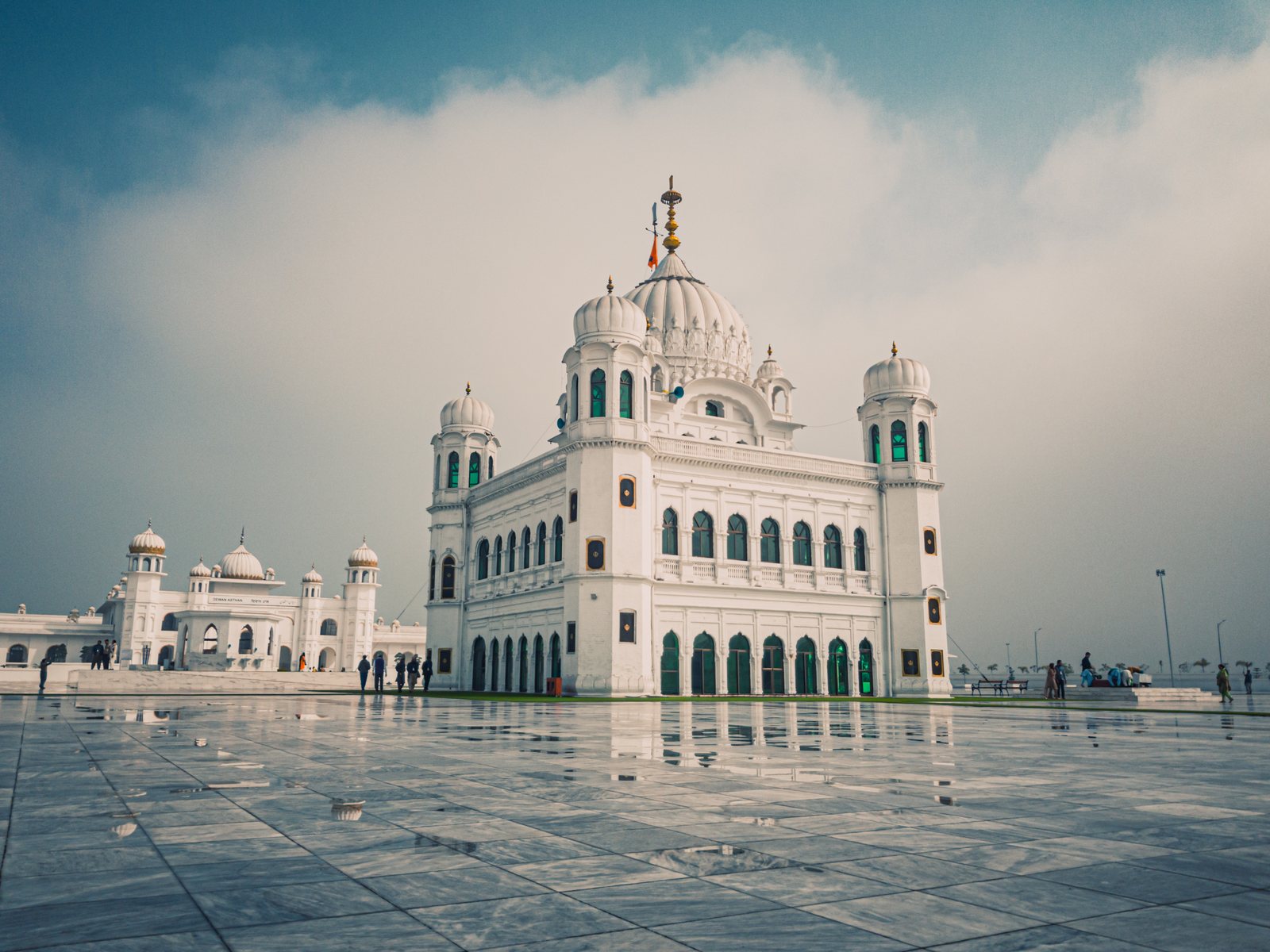
The renunciant's robe went; a householder's clothes came back. Around him grew a community with a daily discipline: hymns before dawn and after dusk, work in the fields in between, and meals taken together. Visitors came to learn and stayed. W. H. McLeod, the most sceptical of Nanak's modern biographers, found a threefold pattern in the community the hymns imply: regular devotion, the Guru's teaching, and daily labour, which he called "a disciplined worldliness". Whether Nanak himself worked in the fields no source can tell us; the tradition says he did. It was, in effect, the first Sikh village, and every later Sikh community has in some way copied it.
Earlier in the same ballad, Bhai Gurdas pictures what Nanak's coming meant for the world around him.
ਸਤਿਗੁਰੁ ਨਾਨਕੁ ਪ੍ਰਗਟਿਆ; ਮਿਟੀ ਧੁੰਧੁ, ਜਗਿ ਚਾਨਣੁ ਹੋਆ ।
satiguru nānaku pragaṭiā miṭī dhundhu jagi chānaṇu hoā
The True Guru Nanak appeared: the mist lifted, and the world filled with light.
Bhai Gurdas, Vār 1, pauṛī 27.
ਘਰਿ ਘਰਿ ਅੰਦਰਿ ਧਰਮਸਾਲ; ਹੋਵੈ ਕੀਰਤਨੁ ਸਦਾ ਵਿਸੋਆ ।
ghari ghari andari dharamsāl hovai kīrtanu sadā visoā
In house after house, a dharamsal, where kirtan is sung as though every day were a festival.
Bhai Gurdas, Vār 1, pauṛī 27. Visoā is Vaisakhi, the spring festival.
A dharamsāl, a "house of dharma", was the early Sikhs' name for their meeting place; gurdwārā, "the Guru's door", became the usual name later. The full story of the settlement, and of the shrine that stands there, is told in our article on Guru Nanak at Kartarpur. Kartarpur lies in Pakistan's Narowal district, facing the Indian town of Dera Baba Nanak across the border.
The disciple who became a Guru
Lehna was born in 1504 at Matte di Sarai, now Sarainaga in the Sri Muktsar Sahib district of India's Punjab. He grew up a devotee of the goddess Durga and led parties of pilgrims to her shrine at Jwalamukhi, in the hills. The story goes that at Khadur, where he lived, he heard a Sikh singing one of Nanak's hymns before dawn (later tradition names him Bhai Jodha), asked whose words they were, and on his next pilgrimage turned aside to Kartarpur to see the man who had composed them. He never finished the journey.
He stayed about six or seven years. The janamsākhīs fill those years with tests: Lehna sent to bring a bundle of wet grass on his head and muddying his fine new clothes; Lehna ready to do whatever was asked when others, Nanak's sons among them, hesitated. The details are devotional; the pattern is the point. Nanak was choosing by conduct, not by birth.
In 1539, shortly before his death, Guru Nanak installed Lehna as his successor and gave him a new name: Angad, from aṅg, "limb", as if to say "a part of my own body". Bhai Gurdas says he did it "while he was still alive", and "waved the canopy of the Guruship over his head" (Vār 1, pauṛī 45). Satta and Balwand described the moment in some of the most striking lines in the scripture.
ਗੁਰਿ ਚੇਲੇ ਰਹਰਾਸਿ ਕੀਈ; ਨਾਨਕਿ ਸਲਾਮਤਿ ਥੀਵਦੈ ॥
guri chele rahrāsi kīī nānaki salāmati thīvdai
ਸਹਿ ਟਿਕਾ ਦਿਤੋਸੁ; ਜੀਵਦੈ ॥੧॥
sahi ṭikā ditosu jīvdai
ਲਹਣੇ ਦੀ ਫੇਰਾਈਐ; ਨਾਨਕਾ. ਦੋਹੀ ਖਟੀਐ ॥
lahṇe dī pherāīai nānakā dohī khaṭīai
ਜੋਤਿ ਓਹਾ. ਜੁਗਤਿ ਸਾਇ; ਸਹਿ ਕਾਇਆ ਫੇਰਿ ਪਲਟੀਐ ॥
joti ohā jugati sāi sahi kāiā pheri palṭīai
The Guru bowed to his disciple while Nanak was still alive; the King marked him as successor while he himself yet lived. Nanak's hard-won proclamation went out in Lehna's name. The light was the same, the way the same: the King had only changed his body.
The third half-line can also be read: 'Nanak had Lehna's reign proclaimed; he had earned it.'
The Guru bowing to his disciple is what Bhai Gurdas meant when he said Nanak had made the Ganges run backwards. And the last line explains something that puzzles many first-time readers of the Guru Granth Sahib: why the later Gurus who composed hymns all signed them "Nanak". The light, the tradition holds, was the same. Only the body had changed.
He died at Kartarpur in September 1539. The Puratan tells one last story. His Hindu followers wished to cremate him and his Muslim followers to bury him. He told them to lay fresh flowers on either side of him, Hindus on one side and Muslims on the other: whoever's flowers were still fresh in the morning could do as they wished. The followers sang the evening hymns, and he drew a sheet over himself. In the morning, when the sheet was lifted, the body was gone and both sets of flowers were fresh. The Hindus took their flowers and went, and the Muslims took theirs. (Later tellings have the sheet itself divided between them.) The shrine at Kartarpur has long kept both a samādh, a memorial platform, and a grave.
From one Guru to ten, 1539–1708
The institution Nanak created at Kartarpur lasted. Nine more Gurus followed him over the next 169 years, and each of them, in the tradition's words, carried the same light. What the circle at Kartarpur had been, a community with a teacher, a daily rhythm and a kitchen, they turned into something with towns, a scripture, a structure and, in the end, an army. Each of them deserves a story of his own; here is the shape of it.
Guru Angad (Guru 1539–1552) moved the centre to Khadur, where Mata Khivi's langar fed all comers and, tradition says, the Gurmukhi script took its settled form. Guru Amar Das (1552–1574) made Goindval on the Beas a centre of pilgrimage, insisted that visitors eat in the langar before they saw him, and organised the scattered Sikhs into districts under appointed leaders. The Goindval pothis, the oldest surviving collection of Nanak's hymns, were compiled in his time. Guru Ram Das (1574–1581) had the pool dug from which a new town took its name, Amritsar, "the pool of nectar".
Guru Arjan (1581–1606) built the Harmandir Sahib in that pool and, in 1604, compiled the Adi Granth, placing Nanak's hymns beside those of his successors and of Hindu and Muslim saints, Kabir, Namdev, Ravidas and Farid among them. By then the community was large enough to worry an empire. In 1606 Guru Arjan was put to death at Lahore on the orders of the emperor Jahangir, whose own memoir records the decision. His son, Guru Hargobind (1606–1644), wore two swords, for spiritual and worldly authority, mīrī and pīrī, built the Akal Takht facing the Harmandir, and fought the first battles between Sikhs and Mughal forces.
A Persian writer who knew Guru Hargobind described the Sikhs of these years from the outside. The Dabistān calls them "the Nanak-panthis, who are known as composing the nation of the Sikhs", and describes the Guru's deputies, the masands, collecting offerings from Sikhs in every place: an organised community, a hundred years after Nanak.
Guru Har Rai (1644–1661) and Guru Har Krishan (1661–1664), who died of smallpox in Delhi as a child, kept the line through quieter years. Guru Tegh Bahadur (1664–1675), whose hymns were later added to the scripture, founded Anandpur in the Shivalik foothills and was executed in Delhi in 1675 under the emperor Aurangzeb. His son, Guru Gobind Singh (1675–1708), founded the Khalsa at Anandpur in 1699, an initiated order with a visible discipline, and before his death in 1708 at Nanded, in the Deccan, declared that there would be no more living Gurus: the Guruship passed to the scripture, henceforth the Guru Granth Sahib, and to the community of the Khalsa.
So the line that began when Nanak bowed to Lehna ended, 169 years later, with a book. The Sidh Goshṭ had said it long before: the Word is the Guru.
So when was Sikhi born?
We started with a question. Here are the answers, and the reason there is more than one.
At the river, around 1499. This is the tradition's answer, and the one most Sikhs would give. It places the beginning in revelation: the moment Nanak received the Name and the charge to share it. Bhai Gurdas says as much: "The True Guru Nanak appeared: the mist lifted, and the world filled with light."
At Kartarpur, in the 1520s. Some historians look for the beginning in the community: the place where disciples lived by a common discipline, sang a common body of hymns and ate from a common kitchen. Gurinder Singh Mann argues that Nanak founded there "a new community", with its own beliefs and its own institutions, and that his contemporaries saw it that way. On this reading, Sikhi begins when it becomes a way of life shared by people who are not Nanak.
At the succession, in 1539. For many historians the decisive moment is the choice of Angad, because that is when a teacher's following became a tradition with a future. Without it, Nanak might be remembered today as one of the great Sant poets of north India, and no more.
Later still. Some scholars argue that the clear boundary between Sikh and Hindu, which modern readers take for granted, was drawn much later. The historian Harjot Oberoi has argued that for centuries many people moved between Sikh, Hindu and Sufi practice without any sense of contradiction, and that the sharpest lines were drawn by reformers in the nineteenth century. On this view the milestones include the scripture of 1604, the Khalsa of 1699 and the reform movements of the colonial era.
Critics reply that the earliest witnesses already saw something distinct. The oldest of them is Satta and Balwand's ballad, which opens by saying that Nanak had founded nothing less than a kingdom.
ਨਾਨਕਿ. ਰਾਜੁ ਚਲਾਇਆ; ਸਚੁ ਕੋਟੁ ਸਤਾਣੀ ਨੀਵ ਦੈ ॥
nānaki rāju chalāiā sachu koṭu satāṇī nīv dai
Nanak founded a kingdom, and built its fort of truth on strong foundations.
Rāj, 'rule, kingdom', is the ballad's image for the community and its authority. The next line has Nanak set the royal canopy over Lehna's head.
Bhai Gurdas, writing around 1600, said the same thing in his own image, the one this article has been circling since the storehouse: the coin. And an outsider, writing in Persian in the 1640s, already called the Nanak-panthis a nation.
ਮਾਰਿਆ ਸਿਕਾ ਜਗਤਿ ਵਿਚਿ; ਨਾਨਕ ਨਿਰਮਲ ਪੰਥੁ ਚਲਾਇਆ ।
māriā sikā jagati vichi nānak nirmal panthu chalāiā
He struck his coin in the world: Nanak set a spotless path in motion.
Nirmal, 'spotless', is an adjective here. It does not refer to the later Nirmala order.
One idea almost every modern scholar rejects is that Nanak simply mixed Hinduism and Islam. He drew words and images from both, and he criticised both as they were practised, but his teaching has its own centre in the Name, the Word, the Order and truthful living, and his first followers did not experience it as a blend. Bhai Gurdas's phrase for it was a path "unlike any other".
The scholar Arvind-pal Singh Mandair has turned the question around altogether. "Religion", he points out, is itself a European category, and asking when Sikhi "became a religion" may reveal more about the questioner than about the Sikhs.
So: when was Sikhi born? The honest answer is that it depends which clock you read: revelation, community, institution, identity. What is striking is that every one of those clocks starts with the same man, and most of them with the same river.
The river, again
The Kali Bein still flows past Sultanpur Lodhi. By the late twentieth century it had become choked with weeds and sewage. In July 2000 the environmental campaigner Balbir Singh Seechewal began a volunteer campaign of kār sevā, service through labour, to bring it back, and thousands of volunteers cleared it by hand. Beside it stands Gurdwara Ber Sahib, named for a jujube tree, a ber, under which tradition says Nanak sat, marking the place where he went into the water.
The places of this story now lie in two countries. Nankana Sahib, Eminabad and Kartarpur are in Pakistan; Sultanpur Lodhi, Batala, Achal and Dera Baba Nanak are in India. For centuries after Mardana, Muslim musicians, the rabābīs, sang the Gurus' hymns in Sikh shrines; the Partition of 1947 all but ended the tradition. The first Sikh duet, the Khatri and the Mirasi, now has a border running between its two homes.
Guru Nanak, the storekeeper who weighed grain for a living, once described the making of a true human being in the language of a goldsmith's workshop.
ਜਤੁ ਪਾਹਾਰਾ; ਧੀਰਜੁ ਸੁਨਿਆਰੁ ॥
jatu pāhārā dhīraju suniāru
ਅਹਰਣਿ ਮਤਿ; ਵੇਦੁ ਹਥੀਆਰੁ ॥
ahraṇi mati vedu hathīāru
ਭਉ ਖਲਾ; ਅਗਨਿ ਤਪ ਤਾਉ ॥
bhau khalā agani tap tāu
ਭਾਂਡਾ ਭਾਉ; ਅੰਮ੍ਰਿਤੁ ਤਿਤੁ ਢਾਲਿ ॥
bhāṅḍā bhāu amritu titu ḍhāli
ਘੜੀਐ ਸਬਦੁ; ਸਚੀ ਟਕਸਾਲ ॥
ghaṛīai sabadu sachī ṭaksāl
Let self-restraint be the furnace and patience the goldsmith; understanding the anvil, knowledge the tools; awe the bellows, and discipline the fire. Make love the crucible and pour the nectar in. So, in a true mint, the Word is struck.
Bhai Gurdas said that Nanak struck his coin in the world. Five centuries later, it is still in circulation.
Timeline
| Date | Event | What kind of claim |
|---|---|---|
| 1469 | Guru Nanak is born at Rai Bhoi di Talwandi, now Nankana Sahib. The oldest janamsākhīs say Vaisakh; the Gurpurab follows the Bala tradition's Kattak full moon | Established consensus on the year; competing interpretation on the month |
| c. 1485–87 | Moves to Sultanpur and becomes storekeeper to Daulat Khan Lodi; marries Sulakhni | Religious tradition; the years differ |
| 1494, 1497 | His sons Sri Chand and Lakhmi Das are born | Religious tradition |
| c. 1499 | The Kali Bein episode: "there is no Hindu, there is no Musalman" | Religious tradition; some reckonings place it later |
| c. 1500 to early 1520s | The journeys, the udāsīāṅ | Established consensus on the travels; contested on routes and dates |
| 1504 | Lehna, the future Guru Angad, is born at Matte di Sarai | Religious tradition |
| 1519–1520 | Babur's first expeditions into Punjab; Sayyidpur (Saidpur) is sacked in 1520; the Bābarvāṇī hymns | Established consensus |
| 1520s at the latest | Settles at Kartarpur on the Ravi (founding dated from c. 1504 to the 1520s) | Established consensus; the founding date competing |
| 1526 | The battle of Panipat; the Mughal empire begins | Established consensus |
| 1539 | Lehna installed as Guru Angad; Guru Nanak dies at Kartarpur in September | Established consensus; the day probable |
| c. 1570–72 | The Goindval pothis, the earliest surviving manuscripts of his hymns | Established consensus |
| c. 1600–1630s | Bhai Gurdas's first Vār, the earliest connected account of his life | Established consensus on the text |
| 1604 | The Adi Granth is compiled | Established consensus |
| 1606 | Guru Arjan is put to death at Lahore | Established consensus |
| 1640s–50s | The Dabistān-i Mazāhib describes "the nation of the Sikhs" | Established consensus |
| 1675 | Guru Tegh Bahadur is executed in Delhi | Established consensus |
| 1699 | The Khalsa is founded at Anandpur | Established consensus |
| 1708 | Guru Gobind Singh dies at Nanded; the Guruship passes to the scripture and the Khalsa | Established consensus |
Places then and now
| In the sources | Now | In the story |
|---|---|---|
| Rai Bhoi di Talwandi | Nankana Sahib, Nankana Sahib district, Punjab, Pakistanਨਨਕਾਣਾ ਸਾਹਿਬ · ننکانہ صاحب | Birth and childhood |
| Chuharkana | Farooqabad, Sheikhupura district, Punjab, Pakistanਫ਼ਾਰੂਕਾਬਾਦ · فاروق آباد | The “true bargain”, sachā saudā (Bala tradition) |
| Batala | Batala, Gurdaspur district, Punjab, Indiaਬਟਾਲਾ · بٹالہ | His marriage |
| Sultanpur | Sultanpur Lodhi, Kapurthala district, Punjab, Indiaਸੁਲਤਾਨਪੁਰ ਲੋਧੀ · سلطانپور لودھی | The storehouse years |
| The Bein | Kali Bein, from Hoshiarpur district to the Beas at Harike, Punjab, Indiaਕਾਲੀ ਵੇਈਂ · کالی ویئیں | The river episode, c. 1499 |
| Saidpur, Sayyidpur | Eminabad, Gujranwala district, Punjab, Pakistanਐਮਨਾਬਾਦ · ایمن آباد | Lalo; Babur's sack, 1520 |
| Achal | Achal Sahib, near Batala, Gurdaspur district, Punjab, Indiaਅਚਲ ਸਾਹਿਬ · اچل صاحب | Debate with the Nath yogis |
| Multan | Multan, Punjab, Pakistanਮੁਲਤਾਨ · ملتان | The jasmine on the milk |
| Ajodhan | Pakpattan, Punjab, Pakistanਪਾਕਪਟਨ · پاکپتن | Shrine of Baba Farid (background) |
| Kartarpur | Kartarpur, Narowal district, Punjab, Pakistanਕਰਤਾਰਪੁਰ · کرتارپور | The settled community; his death, 1539 |
| (founded later) | Dera Baba Nanak, Gurdaspur district, Punjab, Indiaਡੇਰਾ ਬਾਬਾ ਨਾਨਕ · ڈیرہ بابا نانک | Faces Kartarpur across the border |
| Khadur | Khadur Sahib, Tarn Taran district, Punjab, Indiaਖਡੂਰ ਸਾਹਿਬ · کھڈور صاحب | Lehna's home; Guru Angad's centre |
| Matte di Sarai | Sarainaga, Sri Muktsar Sahib district, Punjab, Indiaਸਰਾਏ ਨਾਗਾ · سرائے ناگا | Lehna's birthplace, 1504 |
| Jagannath Puri | Puri, Odisha, Indiaਪੁਰੀ · پوری | The Ārtī (later tradition) |
| Baghdad | Baghdad, Iraqਬਗ਼ਦਾਦ · بغداد | Bhai Gurdas's Baghdad episode; the disputed inscription |
| Mecca | Mecca, Saudi Arabiaਮੱਕਾ · مکہ | Bhai Gurdas's Mecca episode |
Quick answers
When was Sikhism founded?
Sikhism, or Sikhi, began with Guru Nanak (1469–1539). Sikh tradition dates the start of his mission to around 1499, when he came out of the Kali Bein at Sultanpur Lodhi. Historians also point to the community he built at Kartarpur in the 1520s, and to his choice of a successor in 1539, which turned his teaching into a continuing tradition.
Who founded Sikhism?
Guru Nanak, the first of the ten Sikh Gurus. He was born in 1469 at Talwandi, now Nankana Sahib in Pakistan, and died in 1539 at Kartarpur. His hymns form a large part of the Guru Granth Sahib, and the later Gurus who composed hymns signed them with his name.
What happened to Guru Nanak at the Kali Bein?
According to the janamsākhīs, he went into the Kali Bein at Sultanpur around 1499, disappeared for three days, and came back saying "there is no Hindu, there is no Musalman". The oldest of them describes a summons into God's presence and a charge to hold to the Name, to giving and to bathing. It is religious tradition written down a century or more later, not a record made at the time.
What are the three pillars of Sikhism?
Naam japna (remembering the divine Name), kirat karni (earning an honest living) and vand chhakna (sharing with others). The formula is a later summary and does not appear in these words in the Guru Granth Sahib, where Guru Nanak's own triad is the Name, giving and bathing. But the ideas are his: one of his saloks (ang 1245) praises "the one who eats what he has worked for and gives something from his own hand".
Is Sikhism a mixture of Hinduism and Islam?
Most scholars reject that description. Guru Nanak used words and images from both traditions and criticised both as they were practised, but his teaching has its own centre in the Name, the Word, the divine Order and truthful living, and his early followers described it as a distinct path.
What does the word "Sikh" mean?
A learner or disciple. Punjabi sikh is generally traced to the Sanskrit śiṣya, "pupil", and sits beside the verb sikkhṇā, "to learn". In Guru Nanak's Japjī the word means both "teaching" and "disciple". Sikhi, the name many Sikhs prefer for their faith, is the path of that learning.
Can the janamsākhīs be trusted?
They are devotional life-stories that took shape in the seventeenth century, in several traditions that often disagree. Historians use them carefully, for what they reveal about how early Sikhs remembered Guru Nanak, and test their episodes against earlier sources such as his own hymns and the verse of Bhai Gurdas.
Did Guru Nanak go to Mecca and Baghdad?
Bhai Gurdas and the janamsākhīs say he did. Historians doubt he could have entered Mecca as the stories describe. For Baghdad, an Ottoman Turkish inscription once read as naming "Baba Nanak" turned out, on both expert readings, to be much later than his lifetime, so the visit remains possible but unproven.
Where are the places connected with Guru Nanak today?
On both sides of the India–Pakistan border. Nankana Sahib, his birthplace, Eminabad and Kartarpur, where he died, are in Pakistani Punjab. Sultanpur Lodhi and the Kali Bein, Batala, Achal and Dera Baba Nanak are in Indian Punjab.
Punjabi words in this article
| Word | Say it | Meaning |
|---|---|---|
| sikkhīਸਿੱਖੀ · سکھی | “SIK-khee” | Sikhi; the Sikh faith and way of life |
| nāmਨਾਮ · نام | “naam” | name; the Divine Name |
| nām japṇāਨਾਮ ਜਪਣਾ · نام جپنا | “naam JUP-naa” | to remember the Name; meditative remembrance of God (Naam Japna) |
| kiratਕਿਰਤ · کرت | “ki-rut” | honest labour, work |
| kirat karnīਕਿਰਤ ਕਰਨੀ · کرت کرنی | “KIR-ut KUR-nee” | to earn an honest living (Kirat Karni) |
| vaṇḍਵੰਡ · ونڈ | “vund” | division; distribution; a share; the Partition |
| vaṇḍ chhakṇāਵੰਡ ਛਕਣਾ · ونڈ چھکنا | “vund CHHUK-naa” | to share with others (Vand Chhakna) |
| langarਲੰਗਰ · لنگر | “lung-ar” | the free community kitchen |
| dānਦਾਨ · دان | “daan” | charity, giving, alms |
| simranਸਿਮਰਨ · سِمرن | “sim-run” | meditative remembrance of God |
| shabadਸ਼ਬਦ · شبد | “shuh-bud” | word; the sacred Word; a hymn |
| hukamਹੁਕਮ · حکم | “hu-kum” | command; the Divine Will |
| amritਅੰਮ੍ਰਿਤ · امرت | “um-rit” | nectar of immortality; ambrosia |
| angਅੰਗ | “ung” | limb; a page of the Guru Granth Sahib |
| vārਵਾਰ | “vaar” | ballad |
| duābāਦੋਆਬਾ · دوآبہ | “do-aa-baa” | doab, the land between two rivers |
Punjabi is written in two scripts, Gurmukhi and Shahmukhi. Each word in the table links to its full entry in the Punjabi word archive, with its origin, cultural background and an example sentence. Gurbani on this page is shown in Gurmukhi only, as it is printed, and has been checked; the other Gurmukhi and Shahmukhi on this page is awaiting review by a native reader.
Keep going: Guru Nanak at Kartarpur, the village where the community began; the making of the Adi Granth, where his hymns became scripture; and the founding of the Khalsa, where the story of the ten Gurus reaches 1699.