Arts
From a grandmother’s needle to the courts of emperors
Explore the arts
Six ways into the arts
What the land gave, our people turned into art: bread from its grain, phulkari from its cotton, dances from its harvests, and poetry from its saints, its Gurus and its lovers. Our creative traditions run from the intimate to the monumental, and we are gathering them in six parts. Literature is open to read now, and the other five are on their way.
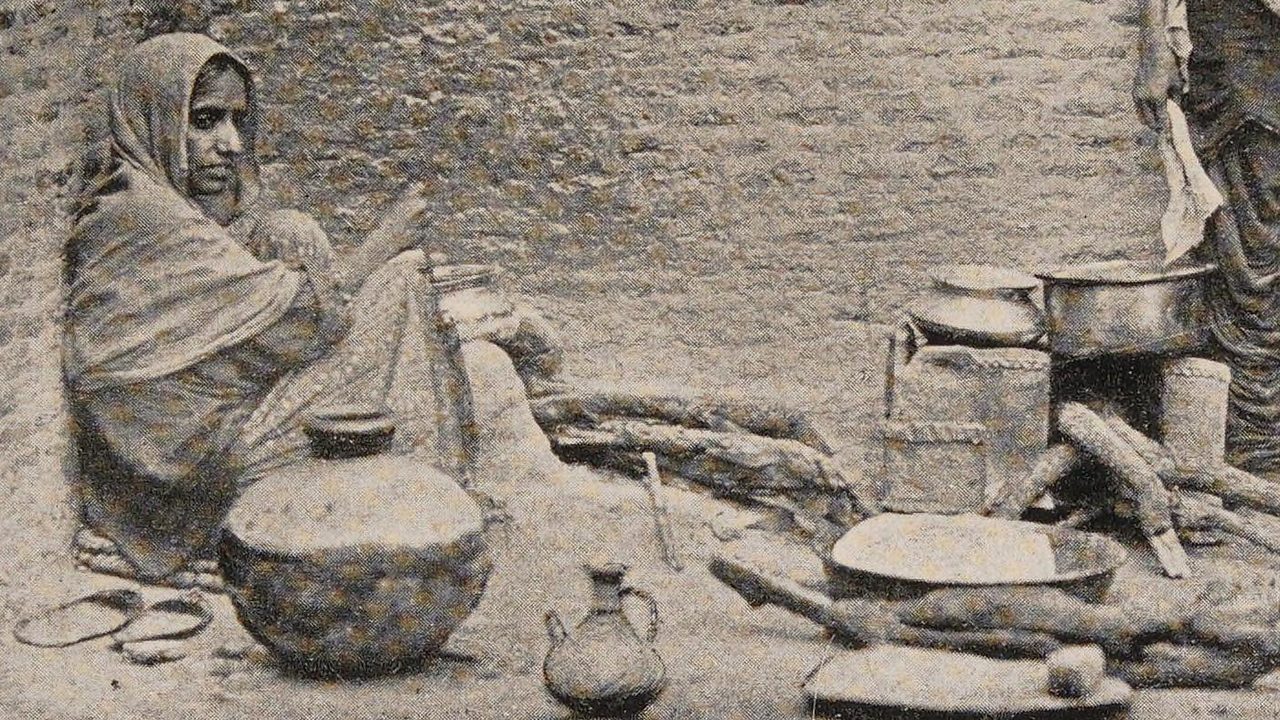
Cuisine
Makki di roti with sarson da saag, lassi from the morning churn, and the shared tandoor the whole street once brought its dough to: the food of our homes and villages.
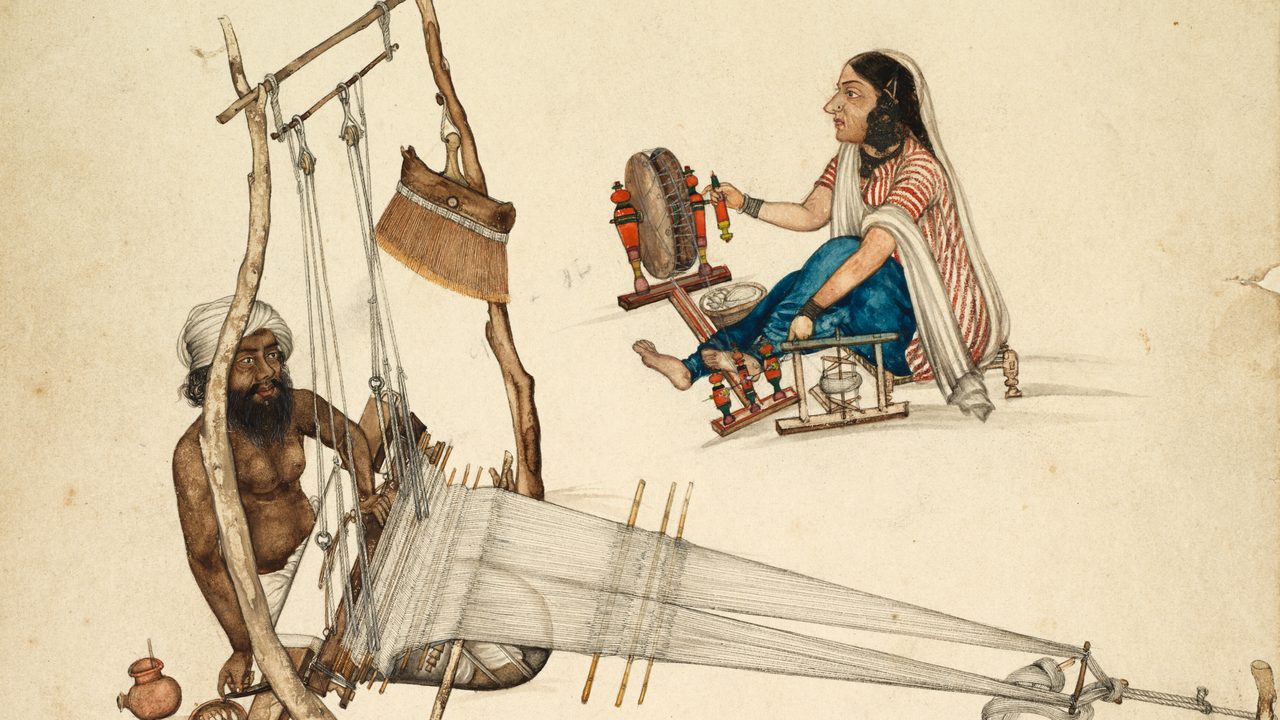
Phulkari & Textiles
Cotton spun at the charkha and woven on the loom, then embroidered over months into phulkari and bagh: the cloth our grandmothers made, and the lives they stitched into it.
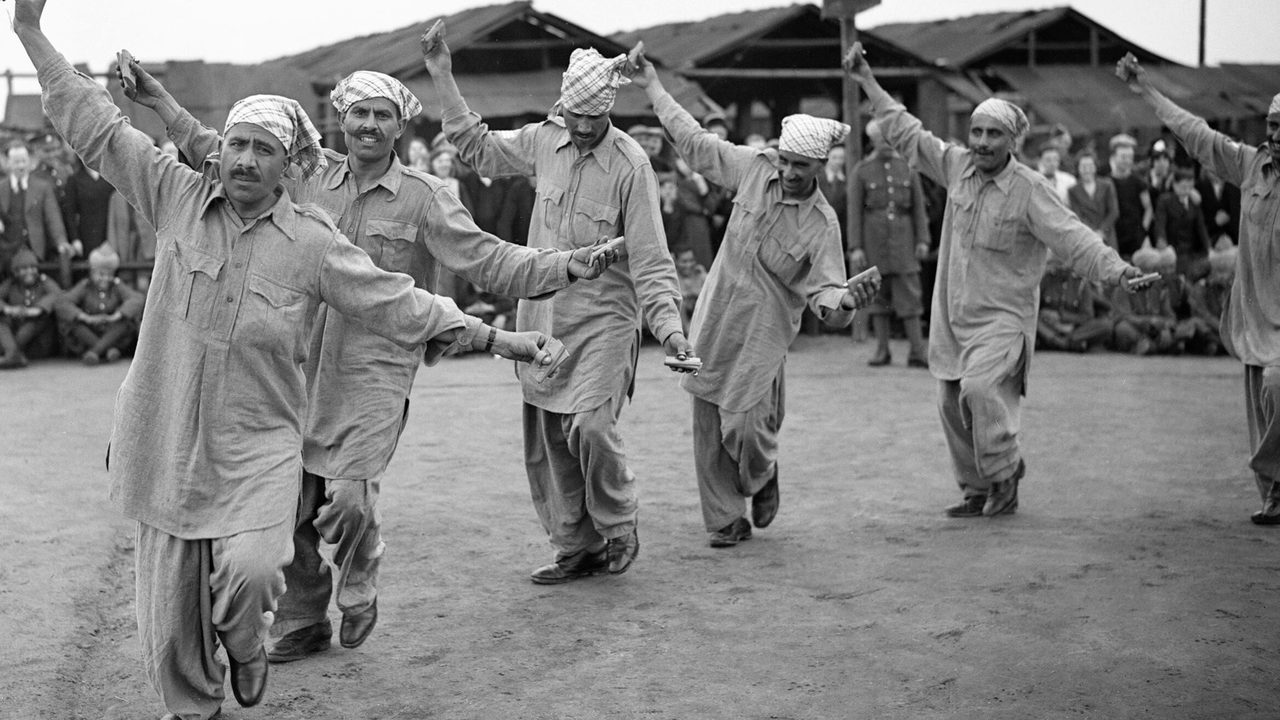
Traditional Dance
Bhangra to the dhol, giddha to clapping and boliyan, the slow circle of the jhumar: dances that grew out of the farming year, and travelled wherever we did.
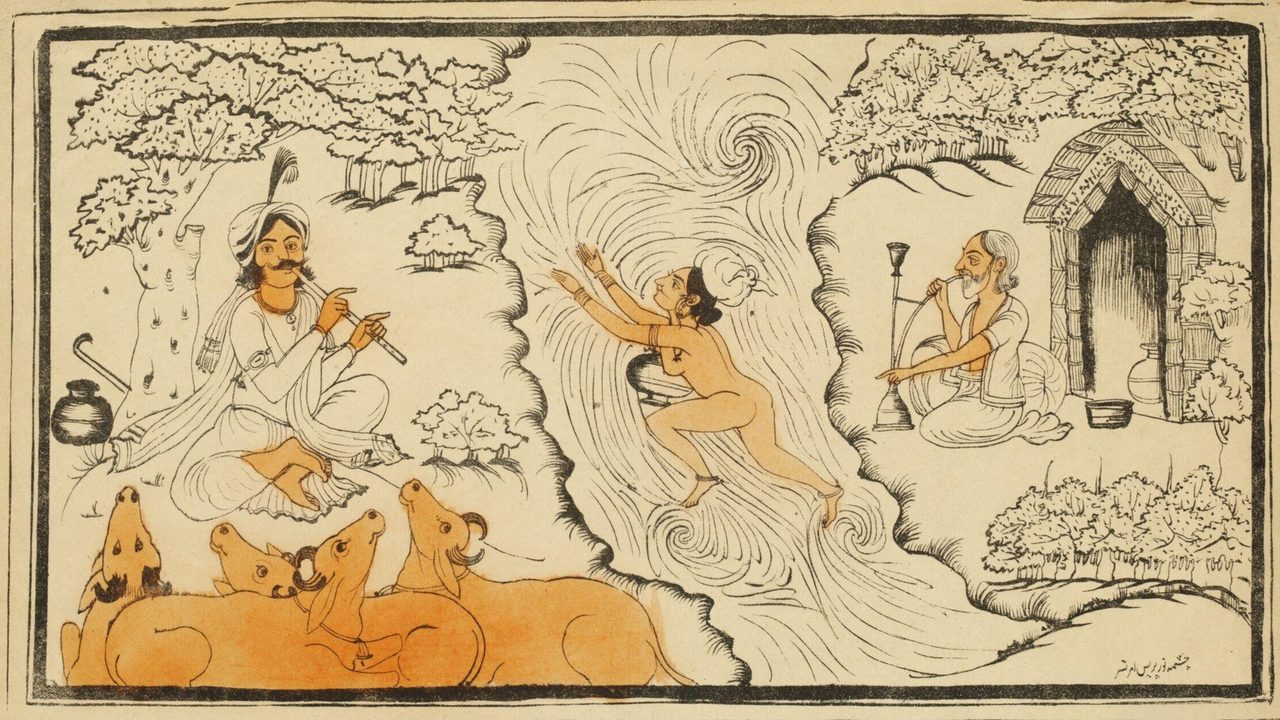
Literature
Eight centuries, three traditions, two scripts: from Baba Farid to Waris Shah’s Heer, a literature that has never sorted neatly by faith.
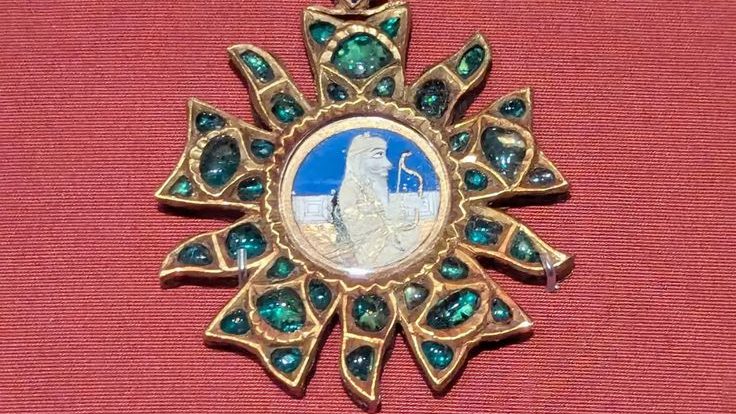
Symbols
A star from Ranjit Singh’s court, the charkha of the poets, the peacock dancing in the first rains: the signs we have lived by, and what each one carries.
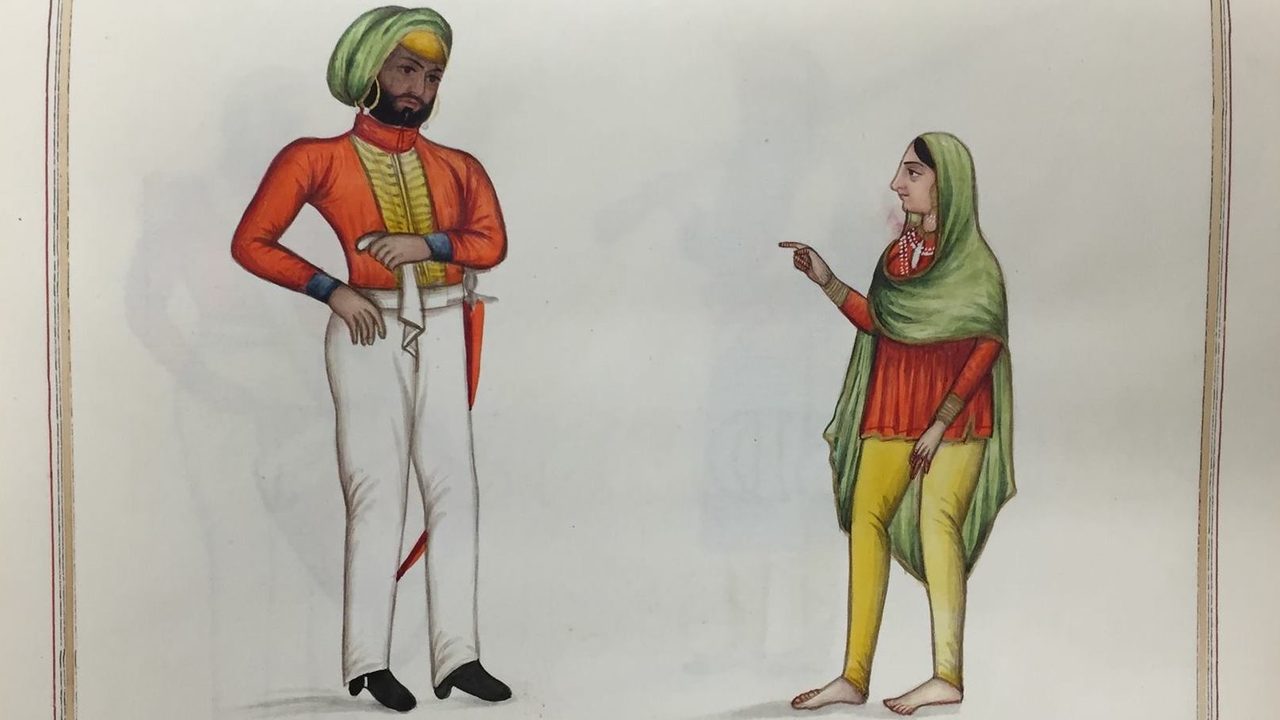
Fashion
The pagg, the chunni, the salwar-kameez and Patiala’s embroidered jutti: how we have dressed across both Punjabs, and what our clothes say about us.
Cuisine: a Panjabi kitchen, a photograph printed in Panjabi Sketches, by Two Friends, London, 1899, via the Internet Archive.
Phulkari & Textiles: Weaving and Spinning, a weaver and a spinner painted by Kehar Singh, probably at Amritsar or Lahore, about 1860. Cleveland Museum of Art, via Wikimedia Commons.
Traditional Dance: Punjabi dancers at a gymkhana held by Indian muleteers in France, 21 April 1940, photographed by Lt E. G. W. Malindine. Imperial War Museums (F 3923), via Wikimedia Commons.

Literature: Sohni crossing the river to Mahiwal, a woodcut from Lahore or Amritsar, about 1870. Victoria and Albert Museum, via Wikimedia Commons.

Symbols: an order of merit with a portrait of Ranjit Singh, enamelled gold and emeralds, Lahore, 1837–39. Victoria and Albert Museum. Photograph by SpeakingArch, CC BY-SA 4.0, via Wikimedia Commons.

Fashion: an officer of the Fauj-i-khas and a Punjabi woman, Lahore or Amritsar, opaque watercolour from an album of about 1855–60. Kapany Collection, via Wikimedia Commons.

Five of the six pictures are in the public domain. The Symbols photograph is shared under CC BY-SA 4.0.