In short
- What
- Buddhism was one of the Punjab's great religions for about a thousand years, from the third century BCE at the latest until it faded, slowly, between the eighth and tenth centuries CE
- Where
- From Taxila and Manikyala in Pakistani Punjab to Sanghol and Jalandhar in Indian Punjab, and from the Salt Range to the Yamuna
- Who paid
- A Mauryan emperor, a Greek king who most likely ruled from Sialkot, Scythian and Parthian governors, the Kushan emperor Kanishka, merchants, monks, a laywoman at Taxila, and even Hun kings
- Never alone
- It always shared the land with Brahmanical, Jain and other traditions. It was never the religion of the Punjab
- Why it faded
- Many causes over several centuries. Most of the decline came before the Ghaznavid conquest of the eleventh century. Why did Buddhism fade?
- What survives
- Ruin-mounds and museums, the ancestry of both scripts Punjabi is written in, a handful of words, and arguments historians are still having
Places are given with their modern district and country. The notes in this article carry the labels explained on our About page: established consensus, competing interpretation, folklore, mythology, religious tradition, oral history, and modern political narrative. Where it matters we also say how sure we are, on the same page's three-step scale. Hover over or tap a Punjabi word to see it in both scripts.
The general and the dome
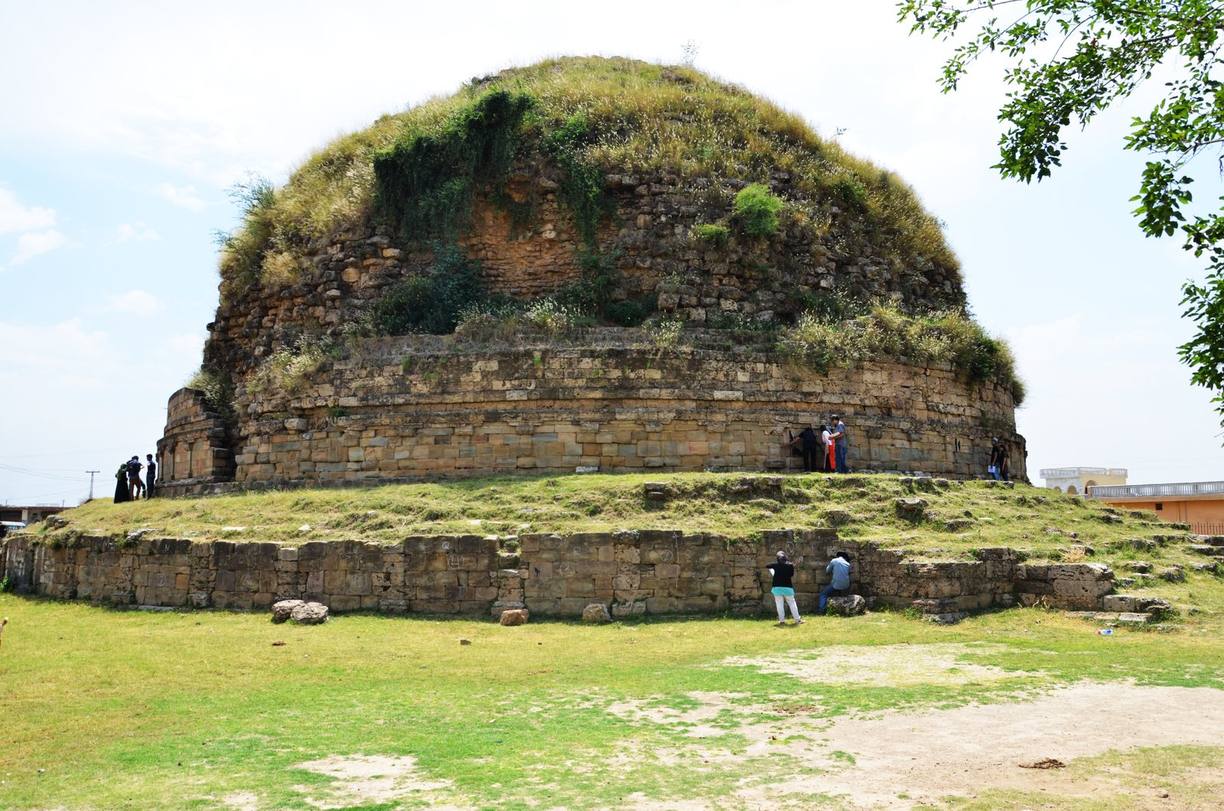
In the spring of 1830 a general in the army of Maharaja Ranjit Singh set his men to dig into a hill that was not a hill.
It stood on the Pothohar plateau, a short ride south-east of Rawalpindi: a great dome of dressed stone, weathered to the colour of the fields, beside a village still called Tope Mankiala. The general was Jean-Baptiste Ventura, an Italian veteran of Napoleon's wars who had found employment in Lahore drilling the Maharaja's troops. He was camped at Manikyala with the men under his command, and he put them to work.
He was not the first outsider to wonder about the dome. In 1809 a party from Mountstuart
Elphinstone's embassy to Kabul, riding home across the Punjab, had gone looking for Taxila,
the city of Alexander the Great's ally Taxiles, which a British scholar had placed somewhere
near. They found no city. They found this dome, some seventy feet high, and most of them
thought it decidedly Grecian
. The people who lived beside it had a simpler answer.
It had been built, they said, by the gods.
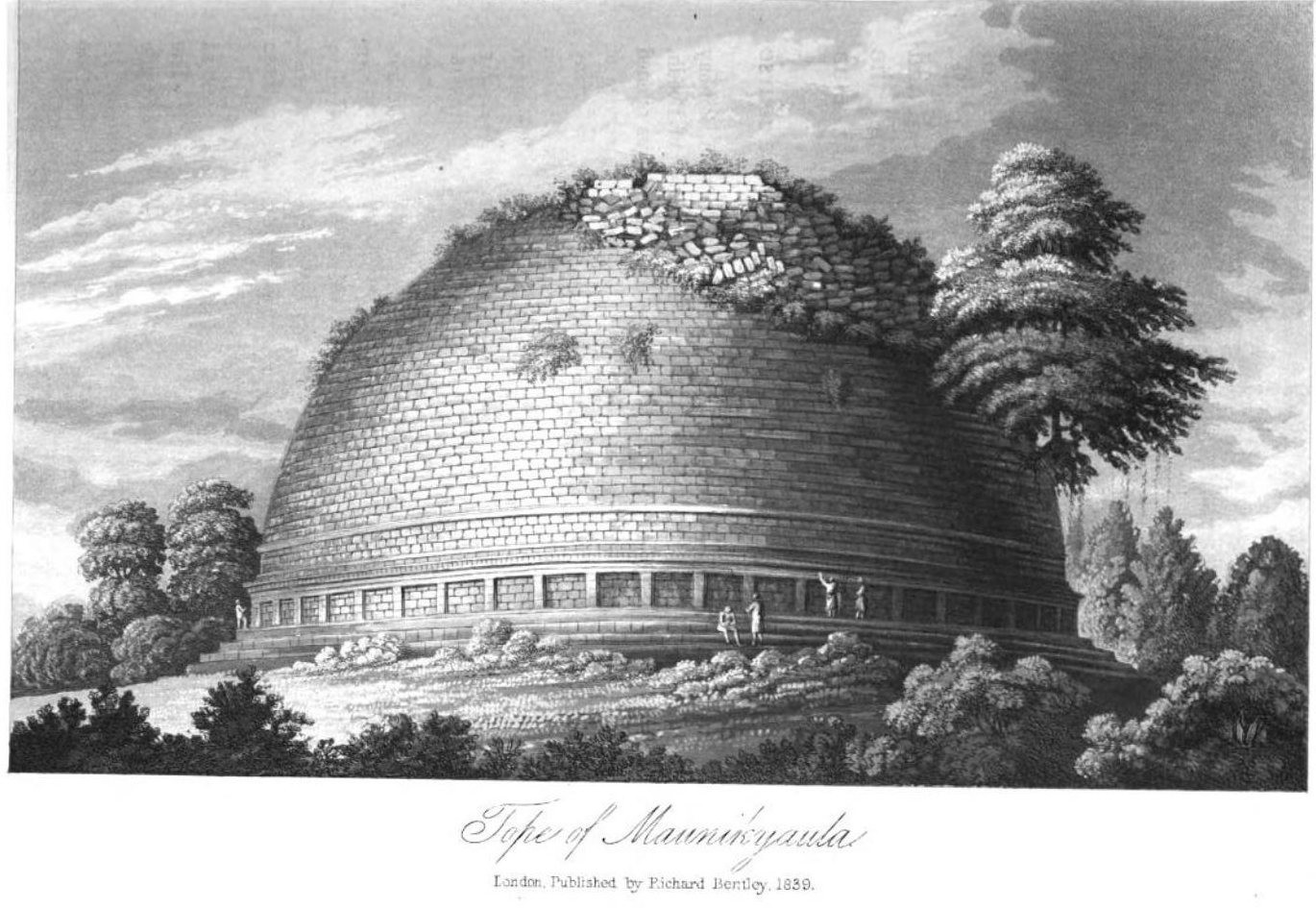
Ventura's first cutting, at the foot of the dome, kept collapsing into loose rubble, so on 28 April his labourers started again from the top. Three feet down they found six coins. About ten metres down a pickaxe broke open an iron box, and inside it lay a small gold box with a lotus on its lid, holding a gold ring, a chip of ruby and a handful of gold and silver coins. At about fourteen metres a squared stone with a hole cut through its centre held a copper box with a scrap of cloth, a small crystal shaped like a stupa and a tiny gold cylinder. Lower still lay a few silver coins of the Sasanian kings of Persia. Then, some twenty metres below the summit and still six metres above the ground, the diggers levered up a great slab and found a sealed chamber. In it stood a copper box full of a thick brown liquid; inside that, a brass casket; inside that, a gold cylinder; and with them coins of the Kushan emperors Kanishka and Huvishka, who ruled this country in the second century.
The box nearest the top held the strangest things. Its coins came from three directions at once. One had been struck at Merv, in today's Turkmenistan, in 685 for Abdullah ibn Khazim, an Arab governor of Khurasan. Another was a coin of Tigin, a king of Kabul, and another of Yashovarman, who ruled at Kannauj on the Ganga. Whoever sealed that box did so around the year 700 at the very earliest, and the British Museum's catalogue places it in the eighth century. Someone was still making offerings to this dome after the lands to its west had passed under Muslim rule.
Ventura had opened a stupa, a solid Buddhist monument raised over sacred relics. A scholar in Bombay, William Erskine, had guessed as much from its shape in 1821. But nobody at Ranjit Singh's court could say who had built it or when, and nobody alive could read the line of letters punched in tiny dots around the lid of the brass casket. In the long centuries since the last offering, the Punjab had mislaid a thousand years of its own past.
Three questions follow, and this article sets out to answer them. How did a religion born in the Ganga plain take root in the land of the five rivers? Who paid for it to flourish for so long? And when it faded, why was it forgotten so completely that its greatest monuments were credited to the gods? We will end where we began, inside the dome at Manikyala. By then it will be legible.
What we mean by "the Buddhist Millennium"
Buddhism takes its name from the Buddha, "the awakened one", a teacher from the middle Ganga plain; many historians now place his death around 400 BCE, later than the traditional dates. His followers speak of three "jewels": the Buddha, the dharma (his teaching) and the sangha (the community of monks and nuns). Two buildings recur in this story. A stupa is a solid dome raised over relics, which the devout walk around in reverence. A vihara is a monastery, usually a courtyard ringed with monks' cells.
The "millennium" is a convenience, not a date range with sharp edges. Firm evidence begins in the third century BCE with the inscriptions of the emperor Ashoka. The last offering we can date at Manikyala was sealed around 700 or later, and when a scholar at the Ghaznavid court wrote his great book on India in about 1030, he had never met a Buddhist who could teach him their doctrines.
The Punjab of this article is the historical one, the land of five rivers between the Indus and the Yamuna, now shared by Pakistan's Punjab, India's Punjab, Haryana and a corner of Himachal Pradesh. Its western neighbour, Gandhara (the Peshawar valley and its hills), shared so much with it that the story keeps crossing the modern boundary, and we say so when it does. Taxila, often called Gandhara's eastern capital, lies inside today's Pakistani Punjab; Peshawar lies outside it, in Khyber Pakhtunkhwa.
One claim this article will not make is that the Punjab was ever "a Buddhist country". Nobody counted believers in antiquity. The evidence shows a religion richly endowed and highly visible, above all in towns and along trade roads, living beside Brahmanical and Jain communities, local cults, and the gods of Greek, Iranian and Central Asian newcomers. In the 630s the Chinese pilgrim Xuanzang counted about ten monasteries in the central Punjab kingdom he called Takka, and some hundreds of temples to other gods.
The evidence comes in four kinds, each with its own habits of error. Inscriptions and coins are precise but terse. Excavation is real but mute. The Chinese pilgrims were vivid witnesses who also wrote down hearsay. Buddhist literature was composed to inspire, often centuries after the events. Throughout, we say which kind of knowledge a claim rests on, as our editorial standards require.
Places in this story, then and now
| In the sources | Today | How sure |
|---|---|---|
| Takshashila (Sanskrit), Takkasila (Pali), Taxila (Greek) | Taxila, Rawalpindi District, Pakistani Punjabਟੈਕਸਲਾ · ٹیکسلا | Well-established |
| Sagala, Sakala | Usually identified with Sialkot; Alexander Cunningham argued for Sangla Hill, west of the Raviਸਿਆਲਕੋਟ · سیالکوٹ | Contested |
| Purushapura | Peshawar, Khyber Pakhtunkhwa, Pakistanਪਿਸ਼ਾਵਰ · پشاور | Well-established |
| The place of the "body-offering" to the tigress, east of Taxila (Faxian, Xuanzang) | Manikyala, Rawalpindi District, Pakistani Punjabਮਾਨਕਿਆਲਾ · مانکیالہ | Probable |
| Talagan (the Hun copper scroll) | Perhaps Talagang, Pakistani Punjab; perhaps a district of Bactria, in northern Afghanistanਤਲਾਗੰਗ · تلہ گنگ | Contested |
| Sui Vihar | South-west of Bahawalpur, Pakistani Punjabਸੂਈ ਵਿਹਾਰ · سوئی وہار | Well-established |
| Chinapati, "the Chinese domain" (Xuanzang) | Probably Patti, Tarn Taran District, Indian Punjabਪੱਟੀ · پٹی | Probable |
| Tamasavana, "the dark forest" (Xuanzang) | Perhaps Sultanpur Lodhi, Kapurthala District, Indian Punjab (Cunningham)ਸੁਲਤਾਨਪੁਰ ਲੋਧੀ · سلطان پور لودھی | Contested |
| Jalandhara | Jalandhar, Indian Punjabਜਲੰਧਰ · جالندھر | Well-established |
| Sanghol | Sanghol, Fatehgarh Sahib District, Indian Punjabਸੰਘੋਲ · سنگھول | Well-established |
| Topra | Topra Kalan, Yamunanagar District, Haryana; the pillar now stands in Delhiਟੋਪਰਾ ਕਲਾਂ · ٹوپرا کلاں | Well-established |
A crossroads before the monks
Geography made Taxila. It stood where the roads from Bactria and Kabul came down through the passes to meet the road running east across the five rivers towards the Ganga.
Around 520 BCE the Persian king Darius I listed Gandhara among the provinces of his empire, and his successors added the Indus lands. Persian rule lasted until Alexander, and it left behind an alphabet: Aramaic, the script of the empire's clerks. Keep it in mind. It comes back twice.
The Buddha himself, as far as historians can tell, never came this way. His world lay more than a thousand kilometres to the east. Later Buddhists filled the north-west with his footprints and his former lives all the same, and, as we will see, they built on those stories.
The Greeks came first. In 326 BCE Alexander of Macedon was welcomed into Taxila by its ruler, Ambhi, before fighting Porus on the Jhelum. His officers wrote with fascination about the naked "wise men" outside the city; one of them, Kalanos, joined the army and later burned himself on a pyre in Persia. Most historians think these were Brahmanical ascetics rather than Buddhists.
What the Punjab still lacked was a patron who would write Buddhism on stone. He was coming, and if Buddhist legend is right, he had already been to Taxila as a young man.
Ashoka's Punjab
Ashoka Maurya ruled most of the subcontinent from about 268 to 232 BCE, and he is the first ruler of this land whose own words survive in quantity. After a bloody war in Kalinga he turned to the Buddha's teaching, and he spent much of his reign broadcasting a moral code he called dhamma, the Prakrit form of dharma, in inscriptions cut into rock and pillar. In them he calls himself Devanampiya Piyadasi: "Beloved of the Gods", "he who looks on others kindly".
Buddhist legend, preserved in the Ashokavadana, says that as a prince he was sent to put down a revolt at Taxila, and that the city opened its gates to him. That is tradition. A fragment of stone may bridge legend and record. In 1915 the archaeologist John Marshall found part of an eight-sided marble pillar reused in a wall at Sirkap, one of Taxila's ancient cities. It is written in Aramaic, and a damaged phrase in it is read by many scholars as "our lord Priyadarshi", Ashoka's title: Probable. If the reading holds, the name of India's great Buddhist emperor was carved at Taxila in the alphabet of Persia.
His rock edicts just north-west of our Punjab, at Shahbazgarhi and Mansehra, are in Kharosthi, a script adapted from Aramaic and written from right to left. Across most of his empire he used Brahmi, written from left to right. The most important Brahmi inscription of the historical Punjab stood on a polished pillar at Topra, in today's Yamunanagar District of Haryana.
In 1356 Sultan Firoz Shah Tughlaq resolved to move it to Delhi. His chronicler Shams-i Siraj
Afif, who was twelve when it arrived, described the work: the pillar was eased down onto a
bed of silk-cotton, wrapped in reeds and raw hides, hauled on a carriage of forty-two wheels
with two hundred men on each rope, and floated down the Yamuna on great grain boats. Afif
had read that it was once the walking stick of Bhima, the giant of the
Mahabharata.
Brahmins were invited to read the writing on it, and, Afif says, no one was able
. It
kept its secret for 481 years, until James Prinsep, assay master of the Calcutta mint,
deciphered Brahmi in 1837.
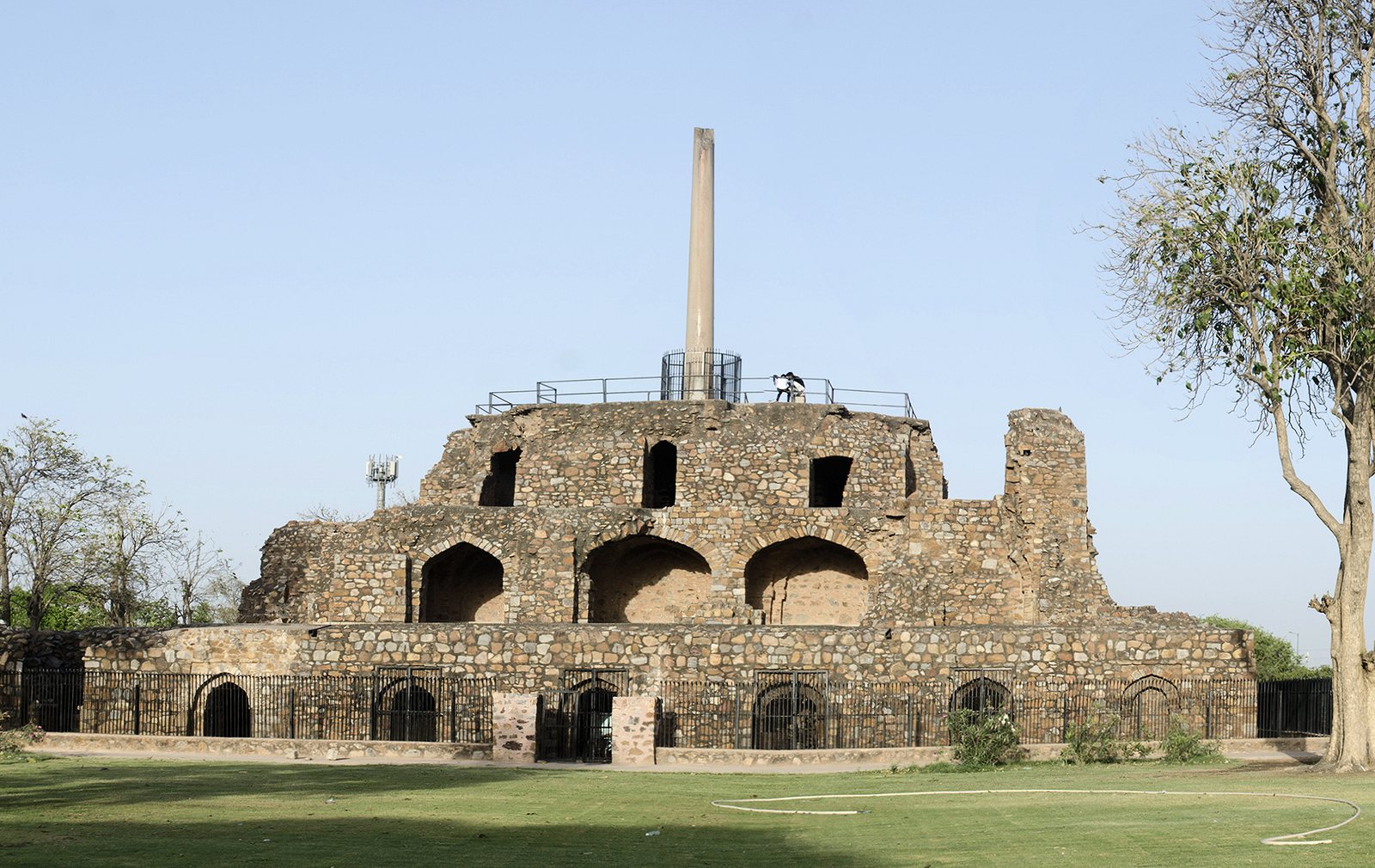
What it says deserves a hearing in the Punjab. Its seventh edict, found on no other pillar, tells Ashoka's officers to look after the Buddhist sangha and, in the same breath, the Brahmins, the Ajivikas and the Nirgranthas, whom we call Jains. Ashoka was a Buddhist, but his dhamma was a public ethic of restraint and respect, not a demand that his subjects convert.
At Taxila, the great stupa now called the Dharmarajika, "of the Dharma King", carries a name already in use in the first century: a donor's silver scroll of about 79 CE, which we will meet shortly, names "the Dharmarajika at Takshashila". The Dharma King of Buddhist memory is Ashoka, and many archaeologists think the stupa's core is his.

Legend also gave Taxila its saddest royal story. In Xuanzang's telling, Ashoka's son Kunala refused his stepmother's advances and was sent to govern Taxila. The king's seal was the print of his own teeth; she stamped a forged order with it while he slept, and the obedient prince let his eyes be put out. Nearly nine centuries later Xuanzang was shown the stupa where it was said to have happened, and was told that the blind who prayed there often went home seeing.
A century after Ashoka, the Punjab's most famous Buddhist conversation is said to have taken place between a monk and a Greek king, at Sialkot.
The Greek king who asked questions
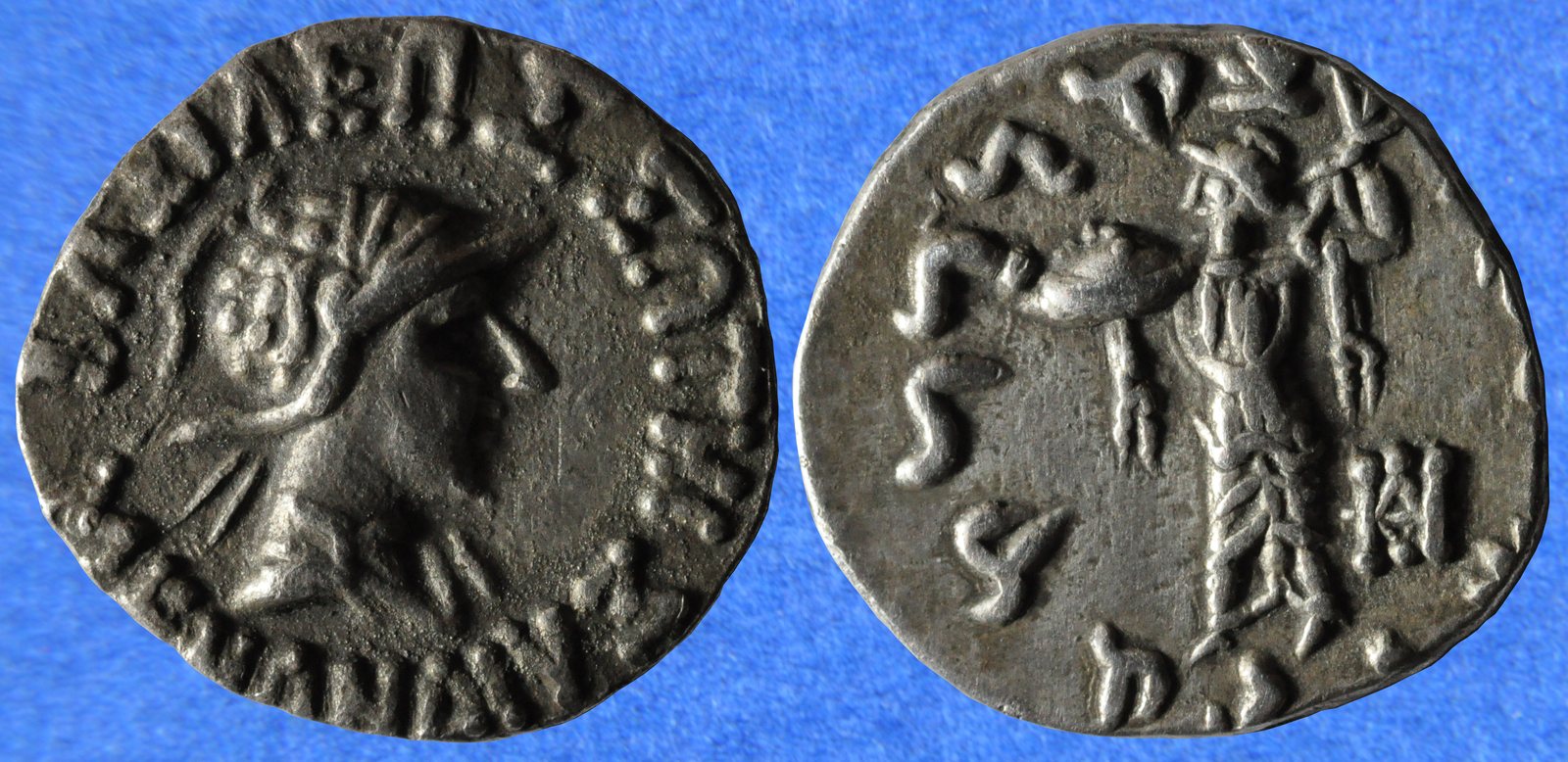
The Greeks did not leave with Alexander. From the kingdom his successors built in Bactria, in today's northern Afghanistan, came a line of Indo-Greek kings who ruled parts of the Punjab for over a century. The most celebrated, Menander, called Milinda in Indian texts, reigned in the mid-second century BCE from a city the sources call Sagala, usually identified with Sialkot. Alexander Cunningham, founder of the Archaeological Survey of India, argued instead for Sangla Hill, west of the Ravi. Menander's coins, with Greek on one face and the same words in Prakrit, in Kharosthi letters, on the other, are among the commonest Indo-Greek coins in the region.
Buddhists remember him for a book. The Milindapanha, "The Questions of Milinda", opens with a portrait of Sagala in the country of the Yonakas, the Greeks: a great centre of trade laid out by wise architects, its shops full of merchandise, its citadel white-walled. Then it stages a series of debates between the king and a monk named Nagasena. The best known is about a chariot.
The king sets a trap. If "Nagasena" is only a name, and no part of body or mind is Nagasena, who is sitting in front of him? The monk answers with a question. Did the king come on foot, or by chariot? By chariot. Then what is a chariot? The pole? The axle? The wheels, the yoke? None of these, the king agrees, nor anything apart from them. Then there is no chariot, says Nagasena, and the king has spoken an untruth. The five hundred Greeks of the king's retinue cheer the monk and dare their king to talk his way out. He does: "chariot" is the name we use for all those parts put together. Just so, says the monk, is "Nagasena". It is one of the clearest statements anywhere of the Buddhist teaching of not-self, and it is set in the Punjab.
The book is not a transcript. It survives in a Pali version that grew over centuries and a shorter Chinese translation; its core may date from around the turn of the era. Whether Menander ever sat with a Nagasena is beyond knowing.
Did he become a Buddhist? Some of his coins carry a wheel, perhaps the wheel of dharma,
perhaps a royal emblem. A reliquary from Bajaur, north of Peshawar, bears an inscription
usually read as dating a Buddhist dedication to the reign of "Maharaja Minadra". And
Plutarch, writing more than two centuries later, says that when Menander, a good king of
the Bactrians, died in camp
, his cities quarrelled over his remains, then divided the
ashes equally and raised a monument over each share. That is exactly what Buddhist tradition
says was done with the Buddha's own. Honour, coincidence or a garbled echo? Scholars
disagree.
The same age produced the Punjab's darkest Buddhist story. The Divyavadana, a Sanskrit collection of Buddhist legends, says that Pushyamitra, the Brahmin general who overthrew the last Mauryan emperor around 185 BCE, came to Sakala and offered a hundred dinars for every monk's head. Historians handle this with care. The dinar, named after the Roman denarius, belongs to a later age; the text was written centuries after the events; and Buddhist monuments at Bharhut and Sanchi grew under Pushyamitra's own dynasty. Some real hostility may lie behind the tale. Its details are legend.
Menander's two-alphabet coins would, two thousand years later, hand European scholars the key to one of those alphabets. First, though, the Punjab acquired new masters from the steppe.
Kings from the steppe, and the face of the Buddha
From about the first century BCE the Punjab passed to rulers whose ancestors had grazed horses on the Central Asian steppe: Scythians, whom Indians called Sakas; Parthians from Iran; and then the Kushans, a branch of the Yuezhi peoples from the borders of China. They are remembered as conquerors. At Taxila they are remembered as donors too, and so are the people who lived under them.
Their gifts were recorded on metal, and the records are more personal than any chronicle. A copper plate found at Taxila tells how Patika, the son of a Scythian satrap, enshrined a relic of the Buddha and founded a monastery; our Taxila article reads it line by line. Another, from the monastery at Kalawan and dated to about 77 CE, records that a laywoman named Chandrabhi, daughter of Dharma and wife of Bhadravala, enshrined relics in a chapel there for the teachers of the Sarvastivada school. Two years later a Bactrian named Urasaka, from a town called Noacha, placed relics "of the Holy One" in his own chapel at the Dharmarajika. His silver scroll dedicates the gift to the health of the Kushan emperor, "great king, king of kings, the Son of Heaven", and to the honour of his parents, his friends and his kin. A Bactrian, writing in an Indian language, praying for the health of a king from Central Asia: that is Kushan Taxila in one sentence.
The Kushans made this patronage imperial. Their greatest king, Kanishka, came to the throne around 127 CE, a date argued over for a century until the scholar Harry Falk, working from a passage in an old astrological text, made the case in 2001 that most historians now follow. His coins parade gods from every corner of his empire, Iranian, Greek and Indian. On a rare few stands a haloed figure labelled in Greek letters BODDO: one of the earliest datable images of the Buddha.
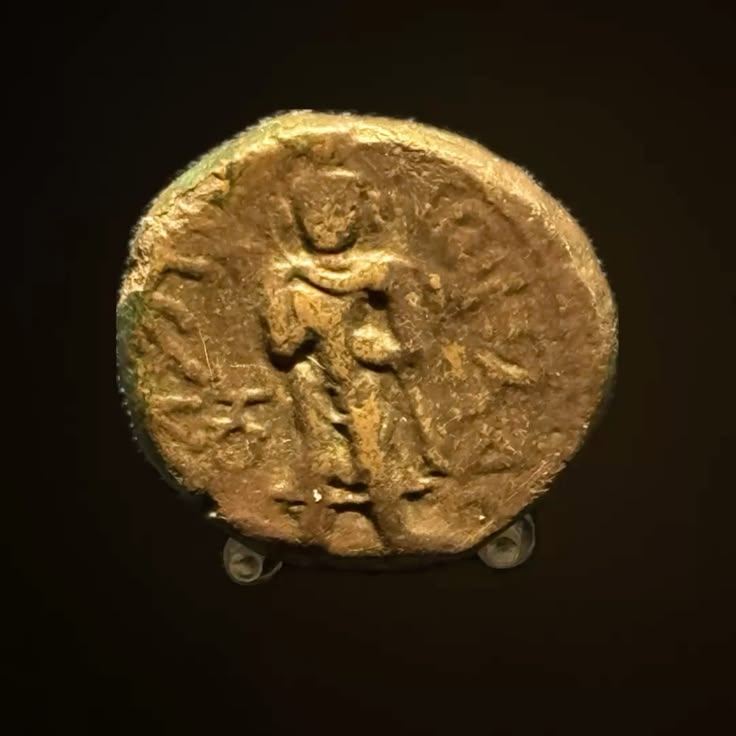
At his capital, Purushapura, now Peshawar, Kanishka raised a stupa that became a wonder of the Buddhist world. Faxian heard it called the finest in all India. In 726 the Korean pilgrim Hyecho found the monastery still called by Kanishka's name, and around 1030 the scholar al-Biruni still knew it as Kanishka's shrine. Its base, more than eighty metres across, was excavated in 1908–09, with a reliquary whose Kharosthi dedication involves Kanishka, though its reading is argued. The bone fragments inside were given to the Buddhists of Burma and are kept at Mandalay.
Tradition also credits Kanishka with a great council of monks, known only from later Buddhist sources. Xuanzang places it in Kashmir; a minority view puts it near Jalandhar.
The Kushan peace carried Buddhist building the length of the Punjab. At Sui Vihar, south-west of Bahawalpur, a stupa yielded a copper plate dated to the eleventh year of Kanishka's reign. Villagers there had their own explanations of the name, through sūī (ਸੂਈ · سوئی), the Punjabi word for a needle, or through the verb used when an animal gives birth. The name is the Sanskrit vihara, a monastery.
Far to the east, at Sanghol in today's Fatehgarh Sahib District, archaeologists uncovered a stupa in 1968. On 1 February 1985 they made a greater find: 117 carved pieces of its Kushan-period stone railing, 69 pillars, 13 coping stones and 35 crossbars, in the mottled red sandstone of Mathura, with women standing beneath flowering trees. The Punjab Department of Archaeology called it the biggest discovery of the century in Indian archaeology. The Archaeological Survey of India dug the site with the state department from 1986 to 1990, but the final report has still not been published, a delay India's national auditor criticised in 2013 and again in 2022.
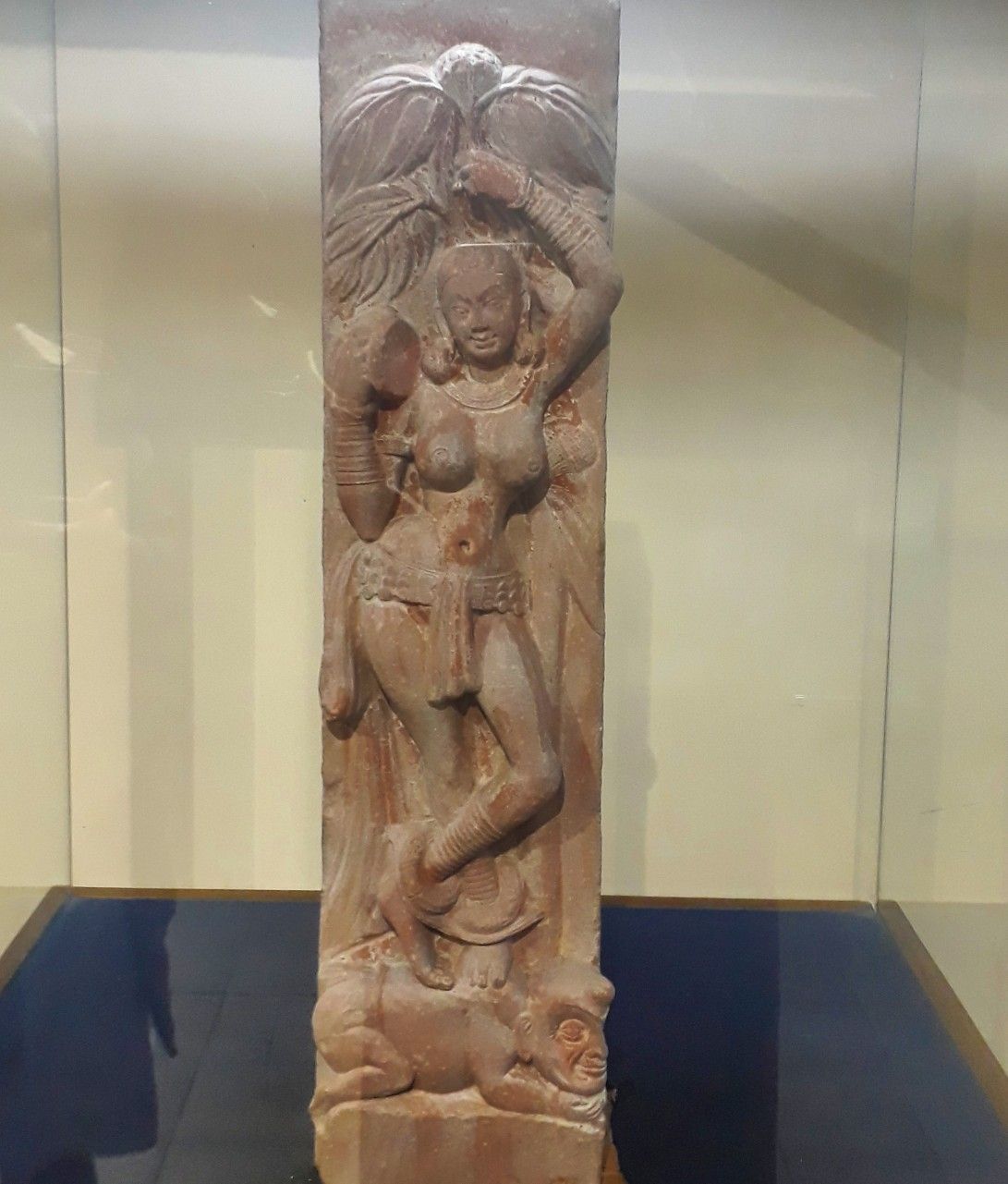
Sanghol points to one of the great puzzles of Asian art. Early Buddhist sculpture mostly showed the Buddha through symbols: a wheel, a footprint, an empty seat. In the Kushan age human images of him appeared in two workshops: Gandhara, with its grey schist figures in wavy hair and heavy robes, and Mathura, with its fuller forms in red sandstone. In 1905 the French scholar Alfred Foucher credited Greek-influenced artists in Gandhara; in 1927 Ananda Coomaraswamy answered that the image grew from Indian roots at Mathura. Most historians now think the two developed side by side, borrowing from each other. The Punjab lay on the road between them, and Sanghol shows its east facing Mathura as surely as Taxila faced Gandhara.
This was also when Buddhism in the north-west began to write itself down. In 1994 the British Library acquired a bundle of birch-bark scrolls, found in a clay pot, probably in eastern Afghanistan, and written in Gandhari, the Prakrit of the north-west, in Kharosthi letters. Provisionally dated to the first century CE, they are probably the oldest Buddhist manuscripts known. The Punjab had its authors too. Xuanzang was told that Katyayana composed a founding treatise of the Sarvastivada school at a monastery east of the Ravi, and that Vasubandhu, one of the most influential Buddhist philosophers of any age, wrote a treatise at Sakala.
What was it like to live in one of these monasteries? One survives well enough to walk through.
A morning at Jaulian
Jaulian sits on a hilltop in the Taxila valley, a stiff climb from the road. It was founded in the Kushan period, in the second century CE, and it was burnt in the fifth. John Marshall, who excavated it, left a description precise enough to walk through, and with it in hand we can imagine a morning there. What follows is a reconstruction, but it stays close to his stones.
What follows is imagined. The buildings and objects in it are the ones Marshall found and described in his Guide to Taxila; the people moving among them are ours.
The day begins in the cells, two storeys of them around a square courtyard, each a few paces across, with niches and a small window in the wall. A stair in one cell climbs to the upper floor. Beyond lie the hall where the community met, a kitchen, a refectory, stores and a small bathroom in a corner of the court. Water is the hilltop's one hardship. It has to be carried up from wells at the foot of the hill, a job, Marshall thought, for novices, and perhaps for slaves.
After the morning's devotions the monks walk down the hill to beg their food in the city, for the monastery lives on gifts. On the terrace above the cells stands the stupa court, crowded with smaller stupas given by pilgrims and patrons, their bases coated in stucco: seated Buddhas in niches with attendants beside them, and friezes of elephants, lions and straining Atlas figures of Greek descent, holding up the tiers above. Short lines of Kharosthi name the images and the people who paid for them, the first such inscriptions ever found on stucco.
In principle monks owned almost nothing, and laypeople gave in the hope of merit. In practice monks gave too. One small stupa carries the words "the pious gift of the monk Budhadeva, friend of the holy community". On the main stupa a seated Buddha has a round hole at its navel and a Kharosthi dedication beneath, recording it as the gift of one Budhamitra, who "delighted in the law". Marshall thought the hole was for a supplicant's finger, pressed there in prayer against some illness of the body. From the freshness of these lines he argued that Kharosthi was still being written at Taxila in the fifth century, two or three centuries longer than scholars had supposed.
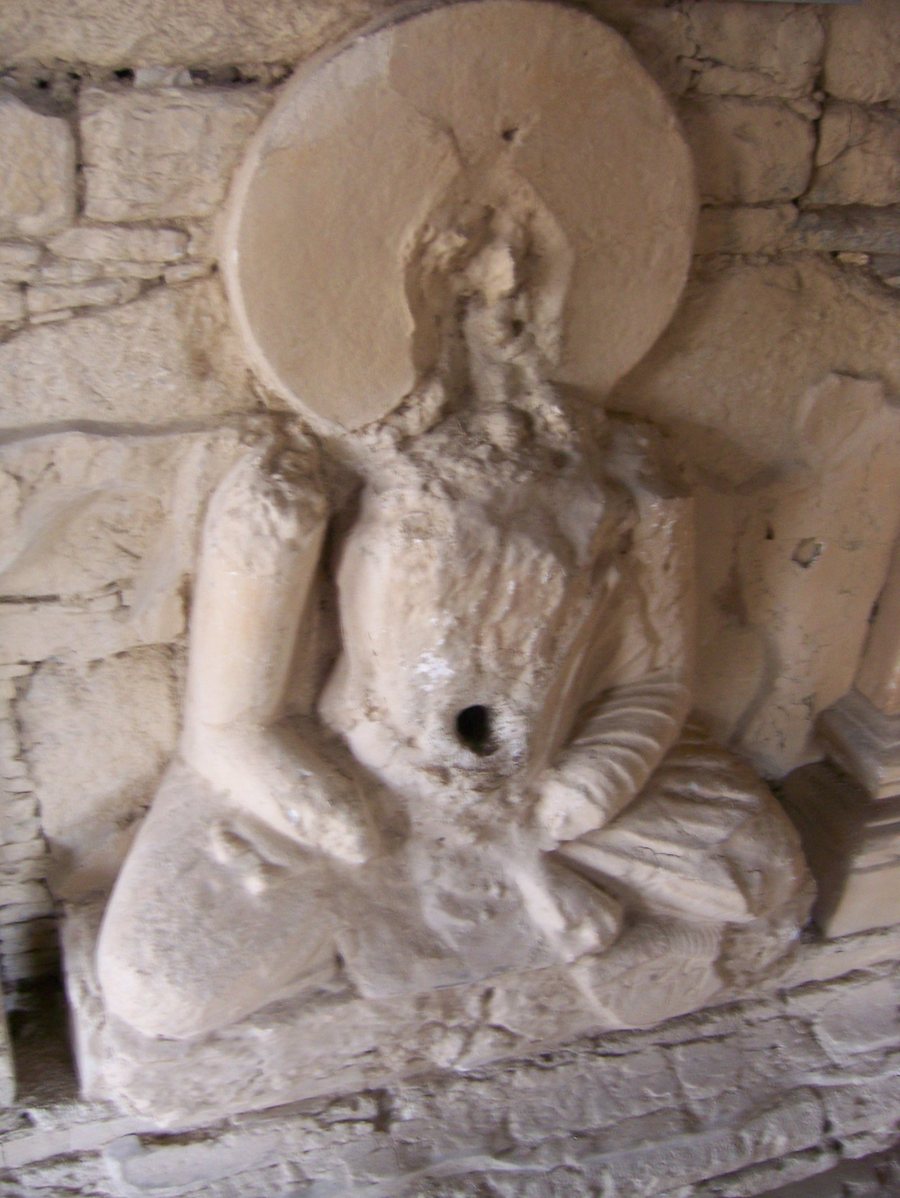
Not everyone in the carvings is local. In front of one cell stood a group of figures around a standing Buddha, and among them a bearded man in a knee-length tunic and trousers fastened with buttons, whom Marshall took to be a foreigner.
The hilltop was less remote than it looks. Taxila's monasteries lined the great road from Bactria to the Ganga that Indian texts call the Uttarapatha, "the northern route". Monks travelled with caravans, merchants endowed monasteries, and wealth moved along the road in both directions. The Buddhism of the Punjab was, to a remarkable degree, a Buddhism of the road. Remember that when we ask why it faded.
One more thing about Jaulian: most of its clay figures survive because of the fire that destroyed it. The heat inside the burning monastery, with its two storeys of timber, baked them into terracotta. Unbaked clay would long since have turned back into mud.
Through the pilgrims' eyes
Our most vivid witnesses came on foot from China, seeking holy places and better copies of scripture than they had at home.
Faxian left Chang'an in 399 and reached the north-west early in the fifth century. He found a landscape arranged around the Buddha's former lives. In Gandhara, he was told, the future Buddha had given away his eyes; at Taxila, whose name Faxian explains with a pilgrim's etymology as "the severed head", his head; and two days' journey to the east, his whole body, to a starving tigress so that she could feed her cubs. With a fourth place, where he ransomed a dove with his own flesh, these were "the four great stupas", and kings, ministers and people vied to honour them with flowers and lamps. Xuanzang later put the "body-offering" south-east of Taxila, and Alexander Cunningham identified the place as Manikyala. Cunningham thought the stupa that marked the exact spot was a smaller one nearby, opened in the 1830s by another of Ranjit Singh's generals, Claude-Auguste Court. But Ventura's great dome stood at the heart of the place Buddhists knew for the tigress story.
Across the Indus, in a country Faxian calls Pe-t'oo, probably in the western Punjab, the
local monks saw Chinese monks arrive and were moved with great pity and sympathy
.
How, they asked, had men from a border-land learned to become monks, and come so far to
seek the teaching? They gave the travellers what they needed. Then Faxian set off
south-east across the plains towards Mathura, and on the way, he writes, he passed a
succession of monasteries whose monks might be counted in myriads. Around 400 CE, the Punjab
plains were thick with them.
Two centuries later Xuanzang found a different country. He reached Taxila on his way to Kashmir, came down from Kashmir into the Punjab plains in the early 630s, stayed about a year and a half, and passed back through in the 640s. At Taxila the royal line had died out and the country answered to Kashmir; its monasteries were many but ruinous and deserted, with very few monks. In the central Punjab kingdom of Takka few people followed the Buddha, though the country had once been full of charitable houses that gave the poor and travellers medicine, food and clothing. At Sakala the old walls were down; a monastery of about a hundred monks remained, and people told stories of a Hun king who had once ruled from there.
A little east of Sakala, in a forest, fifty robbers fell on Xuanzang and his companions, stripped them of their clothes and goods, and drove them at sword-point towards a dried-up marsh. The travellers escaped through a watercourse and ran until they met a Brahmin ploughing his field. He unyoked his oxen, went with them to his village, and called out the people with a conch and drums; about eighty men took up whatever weapons they had, and the robbers fled into the forest. That night, while his companions wept, Xuanzang smiled. His biographer gives his reason: life is the greatest gift a living creature has, and while it lasts, clothes and goods hardly matter.
The next day he reached a great city on Takka's eastern frontier, perhaps Lahore. Most of its people were not Buddhists. In a mango grove outside it lived an aged Brahmin, said, improbably, to be seven hundred years old, learned in the Vedas and in the books of the Buddhist philosopher Nagarjuna's school. He sent word into the town that a robbed pilgrim from China had arrived, and some three hundred people came with cloth and food. Xuanzang stayed a month, reading those books with him. Robbed in a Punjabi forest and rescued by a Punjabi village, the Buddhist pilgrim was then taught by a Brahmin.
East again lay Chinapati, "the Chinese domain", probably around Patti in today's Tarn Taran District. Xuanzang stayed there fourteen months, reading with a learned monk. The name, he was told, went back to Kanishka, whose hostages from the princes west of the Yellow River had spent their winters there. The hostages had planted the country's first peaches and pears, and the fruits were named after them. Then the locals pointed at Xuanzang himself: here was a man from the country of their former rulers. Twelve centuries later, Cunningham found a flat, sweet peach grown in north India still called chini shaftalu, the Chinese peach.
Nearby stood the Dark Forest monastery, Tamasavana, with three hundred monks and relic stupas crowded so close, Xuanzang says, that one overshadowed another. Cunningham placed it at Sultanpur in Kapurthala District, the Sultanpur Lodhi where Guru Nanak lived and worked nine centuries later. The identification is a guess, and the link is one of ground only.
At Jalandhar Xuanzang found the Punjab's Buddhism at its strongest: about fifty monasteries and two thousand monks, beside three temples and some five hundred Pashupata ascetics, devotees of Shiva who smeared themselves with ash. A former king there, he was told, had been made inspector of the Buddhist community across India, and had rewarded the virtuous and punished the disorderly without favour. Xuanzang studied four months at Jalandhar, and on his way home he returned there in the company of its king, Udita.
The seventh-century Punjab, then, was a patchwork: empty monasteries in the west, vigour in the Doaba (ਦੋਆਬਾ · دوآبہ, the land between the Beas and the Sutlej), and everywhere a crowded religious marketplace. Something had happened between Faxian's visit and Xuanzang's. The pilgrims had a name for it.
Why did Buddhism fade from Punjab?
Ask why Buddhism disappeared from the Punjab and you will usually be offered a villain. Neither of the usual candidates survives the evidence intact.
The first is a Hun. In the later fifth century the Alchon Huns, a Central Asian people, took
Gandhara and Taxila, and under Toramana and his son Mihirakula pushed deep into northern
India. The story Xuanzang heard at Sakala runs like this. Mihirakula asked the monasteries
for a learned teacher; they sent him an old servant of the palace who had become a monk; the
insulted king ordered the monks of all India destroyed. A king of Magadha captured him,
and spared his life at the plea of the king's mother. Mihirakula made his way to Kashmir, seized its
throne, and fell on Gandhara, overthrowing one thousand six hundred foundations
, in
Samuel Beal's translation. Before the year was out he died amid thunder, hail and darkness.
John Marshall, finding skeletons in the ruined monastery beside the Dharmarajika, blamed the
Huns.
The trouble is the Huns' own paperwork. In 2006 Gudrun Melzer and Lore Sander published a copper scroll of 492 or 493 recording the dedication of a Buddhist relic stupa, which names four Alchon kings, Khingila, Toramana, Javukha and the reigning Mehama. Its place-name, Talagan, may be Talagang, in the Salt Range country of Pakistan's Punjab, or a district of the same name in Bactria; scholars disagree. An inscription from Kura, also in the Salt Range, records a monastery given to the monks of the Mahishasaka school in Toramana's reign, with the donor sharing the merit of his gift with the king and his family. Mihirakula was a devotee of Shiva, and real persecution under him is Probable. But Xuanzang's figures were hearsay a century old, and the Hun kings turn out to have been patrons as well as destroyers.
The second villain comes later: Mahmud of Ghazni, whose armies conquered the Punjab in the early eleventh century. In eastern India the destruction of great monasteries around 1200 was real and devastating. In the Punjab plains the timing does not fit. Around 1030 al-Biruni, a scholar at the Ghaznavid court, wrote a long and careful book on India. He knew Brahmanical learning in detail, and he knew Kanishka's shrine at Peshawar by name. But of the Buddhists, whom he called Shamaniyya, from the Sanskrit shramana, "ascetic", he admits that he had never found a Buddhist book, and never known a Buddhist from whom he might learn their teachings. Whatever the Ghaznavids destroyed in the Punjab, a thriving Buddhist establishment was not among it.
What replaces the villains is slower, and in some ways sadder. Four processes, working together over centuries, did most of the work.
The first was money. Monasteries lived on gifts, and in the Punjab the gifts came disproportionately from kings, officials and merchants on the trade roads. Kurt Behrendt, a leading historian of Gandharan architecture, puts the region's Buddhist prosperity at its height from the third to the fifth century, and sees patronage falling away from the late fifth, as Hun rule disrupted the economy that paid for it. The art lasted into the eighth century further west, in Afghanistan. In the Punjab, the Buddhism of the road withered as the roads and the towns changed.
The second was competition. Xuanzang's counts show temples outnumbering monasteries across much of the Punjab, and Shiva's ascetics thriving even in Buddhist Jalandhar. Kings increasingly gave land to Brahmins and temples, and between the seventh and tenth centuries the rulers of the north-west raised stone temples to Shiva and Vishnu across the Salt Range.
The third was absorption. By the time the Puranas took their final shape, Brahmanical tradition counted the Buddha among the avatars of Vishnu, an honour that also took him into another family.
The fourth was movement. Buddhism did not so much die in the north-west as move uphill, lasting centuries longer in Kashmir and never leaving the Himalaya.
Historians still argue over the weight of each. Giovanni Verardi has argued that Brahmanical hostility was harsher than the gentle story of absorption allows; others stress economics and fragile institutions. What almost no specialist now accepts is a single cause, a single date or a single villain. And the dome at Manikyala, as we will see, was still being reopened for offerings long after Mihirakula was dust.
What the soil remembers
A thousand years does not vanish without trace. It goes into the ground, into museums, into alphabets and into a few words.
Across both Punjabs, villages stand beside or on top of a theh (ਥੇਹ · تھیہ), the mound of an abandoned settlement, some holding layers from the Harappan age to the present. Sanghol is also called Ucha Pind (ਉੱਚਾ ਪਿੰਡ · اُچا پنڈ), "the high village", because it stands on its own ancient mound. Manikyala's village is still Tope Mankiala, after the monument nineteenth-century Europeans learned to call a "tope", from the local thup.
Look, too, at how Punjabi is written. Gurmukhi descends, through Sharada and the Landa scripts of Punjabi traders, from Brahmi, the alphabet of Ashoka's pillar at Topra. Shahmukhi uses the Perso-Arabic script, whose ancestry runs back through Arabic and Nabataean to Aramaic, the alphabet of "our lord Priyadarshi" at Taxila. Aramaic's other child in the region, Kharosthi, fell out of use in the fifth or sixth century and had to be deciphered in the 1830s from the two-alphabet coins of Menander and his fellow Indo-Greek kings. Neither of today's scripts is Buddhist, but both have ancestors that were written in Mauryan Punjab. The Buddhist Millennium is where their family histories cross.
The age left fewer Punjabi words than you might expect, because Buddhists shared an Indian vocabulary with their neighbours. Buddh (ਬੁੱਧ · بدھ) names the Buddha, "the awakened one"; in both scripts the same spelling also means good sense, and names Wednesday, after Budha, the planet Mercury. All three grow from the Sanskrit root budh, "to wake, to know". A Buddhist monk is a bhikshū (ਭਿਕਸ਼ੂ · بھکشو), literally "one who lives on alms", a cousin of the everyday bhīkh (ਭੀਖ · بھیکھ), "alms". A stupa, in learned Punjabi, is a satūp (ਸਤੂਪ · ستوپ).
In Lahore, the ajāib ghar (ਅਜਾਇਬ ਘਰ · عجائب گھر), the "house of wonders" that is the everyday word for a museum, keeps one of the masterpieces of Gandharan art. The Fasting Buddha was dug out of a niche high on the outer wall of a monastery at Sikri, in the Yusufzai country near Mardan, in 1889; its broken-off hands were later recovered from the debris. It shows the future Buddha in the years of self-starvation he later rejected, every rib and vein cut in grey schist. Here Rudyard Kipling opened Kim (1901), whose father was the museum's curator, with a Tibetan lama come to the "Wonder House" to see its Buddhist sculptures.
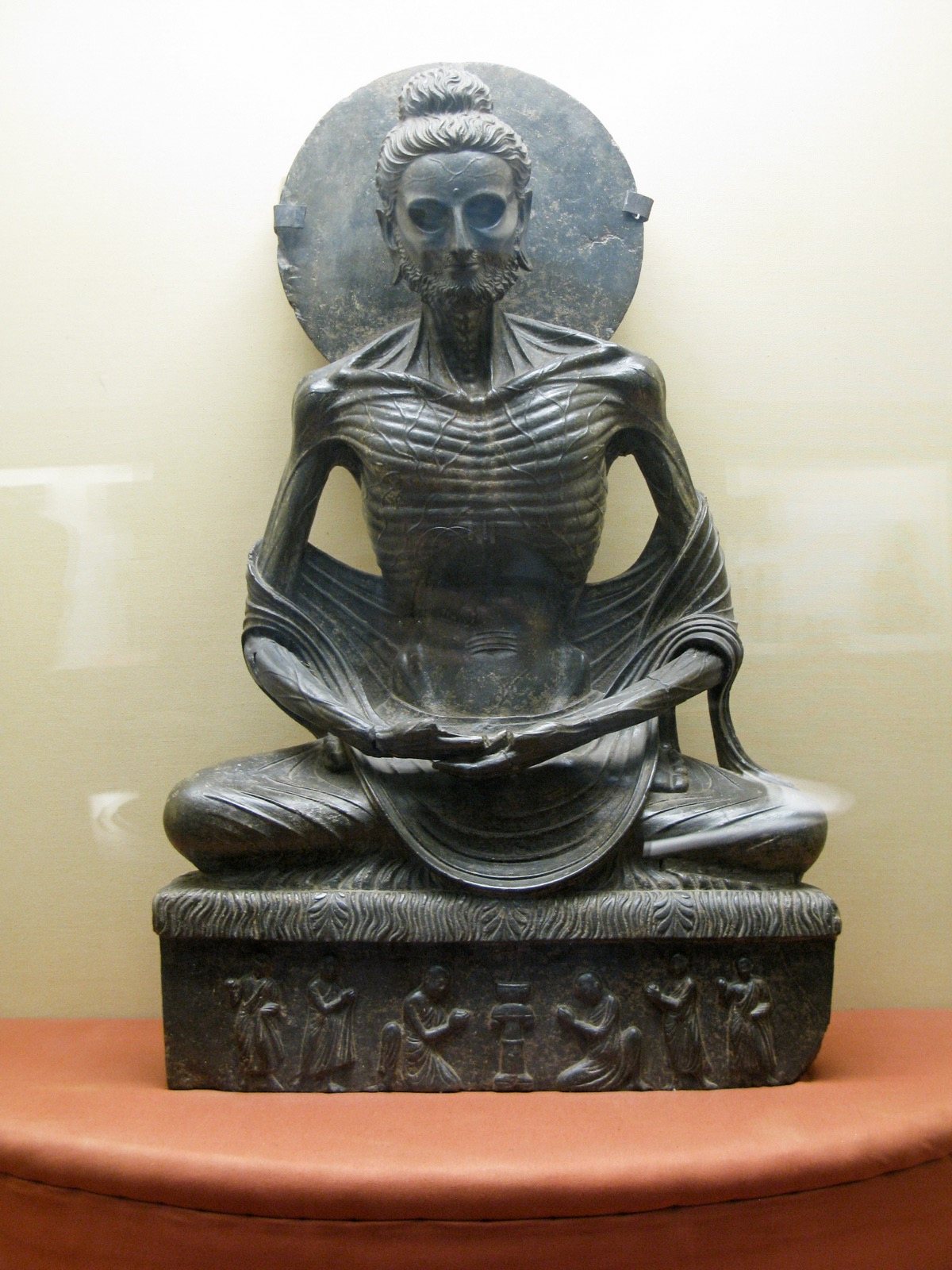
After Partition the museum's collection was divided, on 10 April 1948: sixty per cent stayed in Pakistan and forty went to India. India's share, mostly Gandharan sculpture and miniature painting, was housed in turn at Amritsar, Shimla and Patiala, until the Government Museum and Art Gallery in Chandigarh opened in 1968 to hold it. Even the Buddhas were partitioned.
Buddhism in the Punjab today is small, and it came by new roads. India's 2011 census counted 33,237 Buddhists in Indian Punjab. Pakistani Punjab has no sizeable Buddhist community, but its heritage draws pilgrims from across Buddhist Asia, and Taxila has been a UNESCO World Heritage Site since 1980. And from 1960 to 1966 the Dalai Lama's home at Dharamshala lay in Kangra District of the Indian state of Punjab.
Reading the dome
Go back to Manikyala now, to the shaft Ventura cut, and read it from the bottom up.
At the base, in the sealed chamber, lies the Kushan age, when the Punjab's Buddhism was at its richest. The copper box had once been wrapped in silk and sealed with wax. The brass casket inside it carries the line of dotted Kharosthi that nobody in Ranjit Singh's Lahore could read; it records the gift of a satrap of Kapisa, near Kabul, the son of a man named Granavhryaka. With it lay coins of Kanishka and Huvishka. The stupa was founded, or grandly rebuilt, in their time, and a governor from beyond the passes paid for the gift at its heart, at a place that Buddhists believed had witnessed the Buddha-to-be give his body to a hungry tigress. That is a story rather than a history, but it is the story that drew kings and pilgrims here for centuries.
Higher up come the Sasanian coins, the silver of Persia, one of them struck for Khusrau II, who died in 628; the deposit above them, with its crystal stupa and tiny gold cylinder, was sealed in the seventh century or soon after, around the time Xuanzang was finding the Punjab's monasteries thin and its temples full. Higher still, the lotus box, with coins from Merv, Kabul and Kannauj: someone reopened the dome again, around 700 or later, and made an offering with the money of three worlds, after Islam had reached the lands to the west.
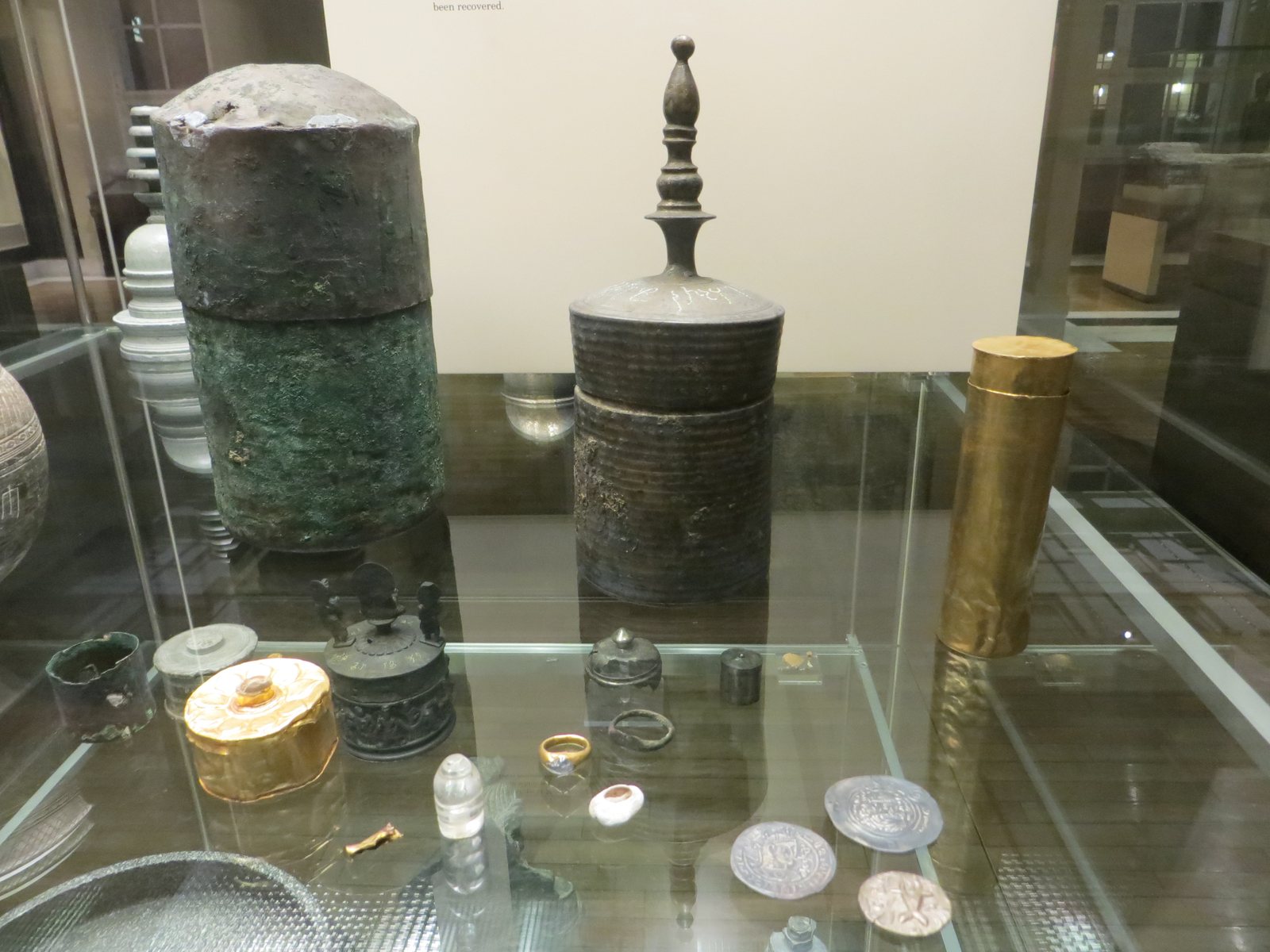
Ventura did not keep his treasure. In 1833 he offered the whole find, through a British officer at Ludhiana, to James Prinsep in Calcutta, asking only for a description in French of whatever Prinsep could decipher. Prinsep published it the next year. After his death the objects were bought from his estate, and they are on display in the British Museum today. The script on the casket was deciphered within the decade.
Read that way, the stupa is a column of time, and it tells the story this article has told. No single blow ended the Buddhist Millennium. It thinned out over centuries, as patrons turned elsewhere, roads moved and monks went uphill, until the people living beside one of the four great stupas of the north-west said it had been built by the gods.
So the last question is not really who destroyed it. It is what else lies beneath the fields of the five rivers, box inside box, waiting, like Manikyala, for someone to learn to read it.
The Buddhist Millennium through time
| Date | Event | What kind of claim |
|---|---|---|
| c. 520 BCE | Darius I lists Gandhara among his provinces; Persian rule brings Aramaic writing to the north-west | Established consensus |
| c. 400 BCE | Death of the Buddha in the Ganga plain; no reliable evidence that he came to the Punjab | Established consensus on the place; competing interpretation on the date |
| 326 BCE | Alexander at Taxila, then on the Jhelum against Porus | Established consensus |
| c. 268–232 BCE | Ashoka: Kharosthi edicts at Shahbazgarhi and Mansehra, the Brahmi pillar at Topra, perhaps the Aramaic inscription at Taxila | Established consensus; the Taxila reading probable |
| c. 185 BCE | Pushyamitra overthrows the Mauryas; later Buddhist legend accuses him of persecution at Sakala | Established consensus on the event; folklore on the persecution |
| Mid-2nd century BCE | Menander rules from Sagala, most likely Sialkot | Established consensus; the site contested |
| c. 77 and 79 CE | Chandrabhi at Kalawan and Urasaka at the Dharmarajika enshrine relics, recorded on copper and silver | Established consensus |
| 1st century CE | The Gandhari birch-bark scrolls are written | Established consensus; the date provisional |
| c. 127 CE | Kanishka's reign begins: the Buddha on his coins, the great stupa at Peshawar | Established consensus; the year competing |
| 1st–2nd centuries CE | Sanghol's carved stone railing; the great stupa at Manikyala founded or rebuilt | Established consensus |
| 2nd century CE | Jaulian founded above Taxila | Established consensus |
| c. 400 | Faxian crosses the north-west and the Punjab plains | Established consensus |
| 492/493 | The Talagan copper scroll names four Hun kings in the dedication of a Buddhist stupa | Established consensus; the place contested |
| c. 500 | A monastery is given in the Salt Range in Toramana's reign | Established consensus |
| Late 5th century | Jaulian burns | Established consensus; the cause competing |
| Early 6th century | Mihirakula rules from Sakala; Buddhist memory makes him a persecutor | Established consensus on the reign; religious tradition on the persecution |
| Early 630s | Xuanzang studies in the Punjab for about a year and a half | Established consensus |
| 7th century | A deposit is sealed in the Manikyala dome above a coin of Khusrau II | Established consensus |
| c. 700 or later | Coins from Merv, Kabul and Kannauj are sealed in Manikyala's highest deposit | Established consensus |
| 726 | Hyecho finds Kanishka's monastery at Peshawar still standing | Established consensus |
| c. 1030 | Al-Biruni can find no Buddhist to learn from | Established consensus |
| 1356 | Firoz Shah Tughlaq moves the Topra pillar to Delhi | Established consensus |
| 1809 | Elphinstone's party sees the Manikyala dome | Established consensus |
| 1830 | Ventura opens it | Established consensus |
| 1835–1838 | Kharosthi deciphered from Indo-Greek coins; Prinsep deciphers Brahmi (1837) | Established consensus |
| 1889 | The Fasting Buddha excavated at Sikri | Established consensus |
| 1908–09 | Kanishka's stupa at Peshawar excavated | Established consensus |
| 1948 | The Lahore Museum's collection divided between Pakistan and India | Established consensus |
| 1960–66 | The Dalai Lama at Dharamshala, then in the state of Punjab | Established consensus |
| 1968; 1985 | Sanghol: the stupa excavated; 117 railing pieces found on 1 February 1985 | Established consensus |
| 1980 | Taxila inscribed as a UNESCO World Heritage Site | Established consensus |
| 1994 | The British Library acquires the Gandhari scrolls | Established consensus |
| 2006 | The Talagan copper scroll published | Established consensus |
Quick answers
Was Punjab ever mostly Buddhist?
Nobody knows, and the evidence does not support a confident yes. No ancient census exists. Inscriptions, ruins and pilgrims' accounts show that Buddhism was one of the Punjab's great religions for about a thousand years, richly endowed and especially prominent in towns and along trade routes. But it always shared the land with Brahmanical, Jain and other traditions, and in the 630s the pilgrim Xuanzang counted temples outnumbering monasteries across much of the region.
Did the Buddha visit Punjab?
There is no reliable evidence that he did. The historical Buddha lived and taught in the middle Ganga plain. Later Buddhist tradition placed his footsteps and the stories of his former lives across the north-west, Taxila and Manikyala among them, and those traditions shaped where stupas were built. They are religious tradition, not documented history.
When did Buddhism reach Punjab?
By the third century BCE at the latest, when Ashoka's inscriptions appear at Topra and at Taxila and nearby in Gandhara. It may have arrived earlier with traders and wandering monks, but there is no firm evidence before Ashoka.
Why did Buddhism disappear from Punjab?
Gradually, and for several reasons: the loss of royal and merchant patronage as trade and towns declined; the upheavals of the Hun period in the late fifth and sixth centuries; competition from, and absorption into, Brahmanical traditions; and a shift of Buddhist life into Kashmir and the Himalaya. Most of the decline in the Punjab plains happened before the Ghaznavid conquest of the eleventh century.
Where can you see Buddhist sites and art from Punjab today?
In Pakistan: the Taxila valley, a UNESCO World Heritage Site since 1980, with the Dharmarajika stupa, the monasteries of Jaulian, Mohra Moradu and Kalawan, and the Taxila Museum; the Manikyala stupa near Rawalpindi; and the Gandhara galleries of the Lahore Museum. In India: the stupa site and museum at Sanghol in Fatehgarh Sahib District, and the Gandhara collection of the Government Museum and Art Gallery in Chandigarh. Ashoka's pillar from Topra stands at Feroz Shah Kotla in Delhi, and the Manikyala relics are in the British Museum.
What language did Punjab's Buddhists speak?
Not Punjabi, which took shape as a distinct language only in the centuries after this story ends. People in Buddhist-era Punjab spoke Middle Indo-Aryan languages called Prakrits. In the north-west, monks wrote Buddhist texts in Gandhari, in the Kharosthi script, and Sanskrit increasingly became the language of learning. Rulers also used Greek, Aramaic and Bactrian at different times.
Are there Buddhists in Punjab today?
Yes, in small numbers. India's 2011 census recorded 33,237 Buddhists in Indian Punjab, whose faith reached them through modern movements and migration rather than an unbroken local line. Pakistani Punjab has no sizeable Buddhist community, though its heritage sites draw pilgrims from across Buddhist Asia. From 1960 to 1966 the Dalai Lama's home at Dharamshala lay within the Indian state of Punjab.
Punjabi words in this article
| Word | Say it | Meaning |
|---|---|---|
| sūīਸੂਈ · سوئی | “SOO-ee” | a needle |
| duābāਦੋਆਬਾ · دوآبہ | “do-aa-baa” | the land between two rivers; in Punjab, above all the land between the Beas and the Sutlej |
| thehਥੇਹ · تھیہ | “tay”, with a breathy t; the written ਹ is heard as a tone, not a sound | mound of ruins; tell |
| buddhਬੁੱਧ · بدھ | “budh”, the u short as in “put”; the final ਧ is heard as a change of pitch on the vowel, not a breathy dh | Wednesday; good sense; the Buddha, “the awakened” |
| bhikshūਭਿਕਸ਼ੂ · بھکشو | “pik-SHOO”; the ਭ is heard as a p on a low tone, not a breathy b | a Buddhist monk; literally, one who lives on alms |
| bhīkhਭੀਖ · بھیکھ | “peekh”, on a low tone | alms; what is given to someone who asks for charity |
| satūpਸਤੂਪ · ستوپ | “suh-TOOP” | a stupa; the learned form |
| ajāib gharਅਜਾਇਬ ਘਰ · عجائب گھر | “uh-JAA-ib kur”; the ਘ of ghar is heard as a k on a low tone | a museum; literally, a house of wonders |
Names
| Name | Say it | What it is |
|---|---|---|
| Uchā Pindਉੱਚਾ ਪਿੰਡ · اُچا پنڈ | “UCH-chaa pind” | “the high village”, the local name of Sanghol, which stands on its own ancient mound |
| Tope Mankialaਟੋਪ ਮਾਨਕਿਆਲਾ · ٹوپ مانکیالہ | “tope MAAN-ki-aa-laa” | the village beside the great stupa at Manikyala, named after the monument |
Punjabi is written in two scripts, Gurmukhi and Shahmukhi. Each word in the first table links to its full entry in the Punjabi word archive, with its origin, cultural background and an example sentence. All Gurmukhi and Shahmukhi on this page are awaiting review by a native reader.
Glossary
- Alchon Huns
- A Central Asian people who ruled the north-west in the late fifth and sixth centuries CE
- Bodhisattva
- A being on the path to becoming a Buddha; in the Jataka stories, the Buddha in his former lives
- Brahmi
- An ancient Indian script written from left to right; the ancestor of most scripts of South and Southeast Asia, Gurmukhi among them
- Dharma (Pali dhamma)
- The Buddha's teaching; for Ashoka, a public moral code
- Gandhara
- The ancient region around the Peshawar valley; Taxila is often called its eastern capital
- Gandhari
- The Prakrit of the north-west, in which some of the earliest Buddhist texts were written
- Indo-Greeks
- Greek kings descended from Alexander's successors in Bactria, who ruled parts of the north-west and the Punjab in the second and first centuries BCE
- Jataka
- Stories of the Buddha's former lives
- Kharosthi
- A script adapted from Aramaic and written from right to left, used in the north-west from about the third century BCE to the fifth or sixth century CE
- Kushans
- A dynasty from Central Asia that ruled the north-west and much of northern India in the first to third centuries CE
- Mahayana
- "The Great Vehicle", the family of Buddhist traditions centred on the bodhisattva path
- Pashupata
- An early order of ascetic devotees of Shiva
- Prakrit
- The everyday Indo-Aryan languages of ancient India, as distinct from Sanskrit
- Relic
- Bodily remains of the Buddha or a saint, or objects associated with them, enshrined in a stupa
- Sangha
- The community of Buddhist monks and nuns
- Sarvastivada
- An influential early Buddhist school, strong in the north-west and Kashmir
- Stupa (tope)
- A solid dome raised over relics, walked around in reverence
- Vihara
- A Buddhist monastery
Keep going: Taxila: The City of Teachers, the valley at the heart of this story; the Battle of the Hydaspes, where the Greeks first came; and Harappan Punjab, the cities beneath the older mounds.