In the middle of May 1739 the richest army in the world began its march home.
Nader Shah of Iran had come down on Mughal India the winter before, and nothing had stopped him. At Karnal, on 24 February, his army broke the forces of the emperor Muhammad Shah in a few hours. In Delhi, a month later, a rumour that the Shah had been killed set off a riot in which some of his soldiers died, and on the morning of 22 March he ordered a general massacre. By the usual estimates somewhere between twenty and thirty thousand people were killed before he called it off that afternoon. Then came the collecting. For weeks his officials drained the treasuries and jewel-houses the Mughals had been filling for two centuries, and pressed the nobles and merchants of the city for whatever the treasuries had missed.
What left Delhi that May was less a column than a moving city. There were elephants, camels and carts beyond counting, loaded with coin and plate and bolts of cloth. There were thousands of captives, among them artisans, boys and young women. There was Shah Jahan's Peacock Throne. And somewhere in that procession, set into the throne according to the diamond's most careful modern historians, was a stone the size of a small egg that Nader would make famous under the name Koh-i-Noor, the "Mountain of Light". The haul was so large that Nader is said to have excused his subjects in Iran three years of taxes on the strength of it.
To spare his men the killing heat of the plains, Nader took a northern road, close under the foothills. The baggage, heavy and slow, fell far behind the fighting troops. That was when the riders came out of the scrub.
We do not know how many there were, or exactly where they struck first. What the Sikh chroniclers remembered, and what later historians have generally accepted, is that small bands of Sikh horsemen fell on the rear of the Persian column again and again over many days. They cut out pack animals and treasure and freed a good number of the captives, and by the time Nader reached Akhnur, on the Chenab, he had learned that the bandits of the Punjab had lightened his load. Later Sikh tradition gives the credit for planning the raids to a twenty-one-year-old named Jassa Singh, who would one day command the whole Sikh army; that is tradition rather than record.
Then comes the part of the story that everyone remembers. Nader, the tradition says, sent for Zakariya Khan, the Mughal governor of Lahore, who had submitted to him on the way in. Who were these people? Zakariya answered that they were faqirs, holy beggars of a sort, who gathered twice a year to bathe in their Guru's pool at Amritsar and then vanished. And where were their homes? Their homes, said the governor, were the saddles of their horses. Nader's reply is the line that has echoed ever since. Take care, he warned: the day is not far off when these rebels will take possession of your country.
Three threads leave that road in 1739, and we follow all three.
The first is the prophecy. In 1739 the Sikhs were a hunted people with a price on their heads. Within a generation they would hold Lahore, and within sixty years one of their chiefs would make it the capital of a kingdom.
The second is a young Afghan. On Nader's personal staff that spring was a seventeen-year-old from the Abdali tribe named Ahmad Khan, who would rise to command the Abdali horsemen in Nader's army. He watched the Mughal empire crack open in front of him. Eight years later he would come back as a king, and he would keep coming back.
The third is the diamond. Keep an eye on it. It is going to make a long journey, and it will end up somewhere nobody on that road could have imagined.

At a glance
- Period
- 1739 to 1799, from Nader Shah's sack of Delhi to Ranjit Singh's capture of Lahore
- The invader
- Ahmad Shah Durrani, also called Ahmad Shah Abdali (c. 1722–1772), founder of the Durrani empire and of the Afghan state. Eight or nine expeditions into India, 1747–1769, every one of them through the Punjab
- The rising power
- The Sikh misls, a dozen or so self-governing bands of horsemen who combined as the Dal Khalsa in 1748 and divided most of the Punjab between them from the 1760s
- The worst day
- 5 February 1762, the Vadda Ghallughara near Kup, outside Malerkotla
- The turning point
- April 1765, when Sikh chiefs took Lahore and struck coin in the name of the Gurus
- The ending
- Ranjit Singh, grandson of a misl chief, takes Lahore in 1799; the Koh-i-Noor reaches him there in 1813
A land on the road to Delhi
To understand why the Punjab suffered what it suffered in the eighteenth century, begin with a map.
The Punjab takes its name from its five rivers, the Jhelum, the Chenab, the Ravi, the Beas and the Sutlej, which run out of the mountains and cut the plain into long wedges of land called doabs, "two waters", each lying between a pair of rivers. It was, and is, some of the richest farmland in Asia. It was also the only practical road into Hindustan from the north-west. An army from Kabul came down the Khyber Pass to Peshawar, crossed the Indus at Attock, and then had to cross the Jhelum, the Chenab, the Ravi at Lahore, the Beas and the Sutlej before it reached Sirhind and the open road to Delhi. Every invader since Mahmud of Ghazni had walked that route. Punjabis did not choose to live on a highway; geography chose it for them.
For most of the seventeenth century the Mughal empire had kept that road closed. By the 1730s it could not. After the emperor Aurangzeb died in 1707 the empire slid into a long crisis of money, loyalty and command, and its provinces became kingdoms in all but name. The Punjab, meanwhile, had been torn by the Sikh rising under Banda Singh Bahadur, which ended with Banda's execution in Delhi in 1716 and began decades of state persecution of the Sikhs. Nader Shah showed the world that the door to Delhi now stood open. Ahmad Shah Durrani walked through it again and again.
It is worth saying at the start who paid for this, because the century is usually told as a two-sided contest between Afghans and Sikhs, and most Punjabis were neither. The armies that crossed the province year after year took the harvests, burned the towns and carried off the people along their road, Muslim, Hindu and Sikh alike. The people who lived beside that road developed a way of thinking about it that survives in a proverb still heard on both sides of today's border:
ਖਾਧਾ ਪੀਤਾ ਲਾਹੇ ਦਾ, ਰਹਿੰਦਾ ਅਹਿਮਦ ਸ਼ਾਹੇ ਦਾ
کھادا پیتا لاہے دا، رہندا احمد شاہے دا
khādhā pītā lāhe dā, rahindā Ahmad Shāhe dā
"What we eat and drink is our gain; what is left belongs to Ahmad Shah."
The Gujrat District Gazetteer found it still in everyday use in 1883, and it has not gone out of use since; many speakers today say bāqī, "the rest", in place of rahindā. It is funny, and it is bleak. It is the voice of a farmer who has learned that saving is pointless, because whatever is stored will be taken.
The other side of the century is the story we tell here, and it is a paradox that historians have been turning over ever since. Ahmad Shah Durrani was one of the great commanders of his age. He beat the Mughals, he destroyed the Maratha army at Panipat in one of the bloodiest battles of the century, and he inflicted on the Sikhs the worst single day in their history. He won almost every battle he fought in the Punjab. And he lost the Punjab anyway, to men his own chronicler dismissed as dogs. How that happened is the real subject here.
The hunted years, 1716–1747
When Nader Shah's column passed through, the Sikhs had already survived a generation of being hunted.
After Banda Singh's execution, the Mughal governors of Lahore set out to finish what Delhi had started. Zakariya Khan, governor from 1726 to 1745, was the most determined of them. Sikh chroniclers remembered a scale of rewards for anyone who brought in a Sikh, dead or alive, and whatever the exact rates, the policy was real. Sikhs who wanted to live took to the places the state could not easily reach: the Shivalik foothills, the chhambs, or marshes, of the Majha, the thorn scrub of the Lakhi Jungle around modern Bathinda, and the edges of the Rajasthan desert. They moved in small armed bands called jathas, lived off the land and off the government's convoys, and came out to raid when they could.
Force did not work, so in 1733 Zakariya tried money. He offered the Sikhs a jagir, a grant of land revenue, and the title of Nawab for their leader. After some argument the Sikhs accepted, and the title went to Kapur Singh, a respected senior fighter whom tradition remembers as the man least eager to take it. Nawab Kapur Singh used the breathing space well. He organised the fighters into two bodies, the Buddha Dal, the "army of elders", and the Taruna Dal, the "army of the young", which was itself divided into five jathas, each with its own banner and drum. The truce collapsed within two years, but the structure survived it. The Sikhs now had a shape.
The years around Nader's invasion were among the hardest. Bhai Mani Singh, the learned custodian of the Harmandir at Amritsar, was executed at Lahore in the 1730s. Mughal troops occupied the precincts of the Harmandir and closed them to Sikh pilgrims. And yet the stories the Sikhs told about these years are, surprisingly often, stories of defiance with a grin on its face.
The best of them belongs to Bota Singh, a Sikh of the Majha, the country around Amritsar. According to the tradition, he overheard some travellers joking that the Sikhs must be finished, since no real Sikh would hide in the bushes. Stung, he and a companion named Garja Singh, a Ranghreta Sikh from one of the lowest-ranked communities of the Punjab, took their stand on the imperial highway near the Sarai of Nur-ud-Din, not far from Tarn Taran. Armed with nothing more than heavy sticks, they began charging a toll on the emperor's own road: an anna for every cart, a paisa for every donkey. Nobody refused. And to make sure the government noticed, Bota Singh sent the governor a letter, which Punjabi folk memory has kept in verse:
ਚਿੱਠੀ ਲਿਖੀ ਸਿੰਘ ਬੋਤਾ, ਹੱਥ ਹੈ ਸੋਟਾ, ਵਿੱਚ ਰਾਹ ਖਲੋਤਾ।
ਆਨਾ ਲਾਇਆ ਗੱਡੇ ਨੂੰ, ਪੈਸਾ ਲਾਇਆ ਖੋਤਾ।
ਆਖੋ ਭਾਬੀ ਖ਼ਾਨੋ ਨੂੰ, ਯੂੰ ਆਖੇ ਸਿੰਘ ਬੋਤਾ।
چٹھی لکھی سنگھ بوتا، ہتھ ہے سوٹا، وچ راہ کھلوتا۔
آنا لایا گڈے نوں، پیسہ لایا کھوتا۔
آکھو بھابی خانو نوں، یوں آکھے سنگھ بوتا۔
Chiṭṭhī likhī Siṅgh Botā, hatth hai soṭā, vich rāh khalotā.
Ānā lāiā gaḍḍe nūṅ, paisā lāiā khotā.
Ākho bhābī Khāno nūṅ, yūṅ ākhe Siṅgh Botā.
"Singh Bota writes this letter, stick in hand, standing in the road.
An anna he has put on a cart, a paisa on a donkey.
Go and tell sister-in-law Khano: this is what Singh Bota says."
"Sister-in-law Khano" is Zakariya Khan himself, his name bent into a woman's and his dignity into a family joke; Hari Ram Gupta glosses the line exactly so. The governor sent a troop of horse. The two men refused to surrender and died fighting on the road, in 1739, the year Nader Shah passed through.
A year later came a bolder act. A local official named Massa Ranghar, placed in charge of the occupied Harmandir, was said to be using the sanctuary for drinking parties and dancing girls. In 1740 two Sikhs, Mehtab Singh and Sukha Singh, rode in disguised as revenue collectors carrying bags of "payment", killed him inside the precincts, and escaped. Whatever the embroidery, the episode shows how the Harmandir had become the symbol that both sides understood. Control of that pool at Amritsar meant something no amount of land revenue could buy.
Zakariya Khan died in July 1745. His son and successor, Yahiya Khan, and Yahiya's minister, a Hindu Khatri administrator named Lakhpat Rai, brought the persecution to a peak. Lakhpat Rai's brother Jaspat Rai had been killed in a clash with a Sikh band, and Lakhpat Rai swore revenge. In the spring of 1746 a government army trapped a large body of Sikhs in the marshy jungle of Kahnuwan, in today's Gurdaspur district, and hunted them through the swamps and into the foothills. Hari Ram Gupta reckons that seven to eight thousand Sikhs were killed or captured; the captives were taken to Lahore and beheaded. The Sikhs called it the Chhota Ghallughara, the "Lesser Holocaust".
They could not know that the word would need a larger form.
Within a year the government that had hunted them began to eat itself. Zakariya Khan's sons fought a civil war over his inheritance in 1746 and 1747. The winner, Shah Nawaz Khan, was worried enough about Delhi to look for a patron on the other side of the Indus. He sent a letter to a new king in Kandahar.
The Pearl of Pearls, 1747
In June 1747 Nader Shah was murdered in his tent near Quchan, in Khorasan, by his own officers. The empire he had held together by terror came apart overnight.
In the chaos the commander of Nader's Abdali horsemen moved fast. At dawn he took his men to the royal tent, found the Persians already plundering the camp, cut his way back out through them, and started for Kandahar. What he carried with him is a small mystery of its own.
His name was Ahmad Khan, and he was about twenty-five. The sources disagree about where he was born, some saying Herat and others Multan, which would make the future scourge of the Punjab a Punjabi by birth. What is not in dispute is his lineage. He came from the Sadozai clan of the Popalzai, the leading family of the Abdali confederation, and he arrived at the tribal council near Kandahar with a loyal, battle-hardened cavalry force and a large share of Nader's money. The council chose him as king.
Almost every Persian writer on Ahmad Shah tells the same story about the moment. A dervish named Sabir Shah, who had attached himself to Ahmad Khan in Nader's camp and foretold his rise, raised a little platform of earth at the shrine where the chiefs had met, sat him on it, and said: this is the throne of your kingdom. Then he picked a few green shoots of barley from a nearby field and tucked them into Ahmad Khan's turban: and let this be the plume of your crown. He hailed him as Durr-i-Dauran, "Pearl of the Age". Ahmad changed one word and styled himself Durr-i-Durran, "Pearl of Pearls", and his Abdali tribesmen were known from then on as the Durranis. Two of the chroniclers add a detail the Punjab may enjoy. Sabir Shah was a Lahori, a farrier by trade, who had shod horses in the city before he took up the dervish's life. In Afghanistan the king he crowned is remembered to this day as Ahmad Shah Baba, "Ahmad Shah the Father".
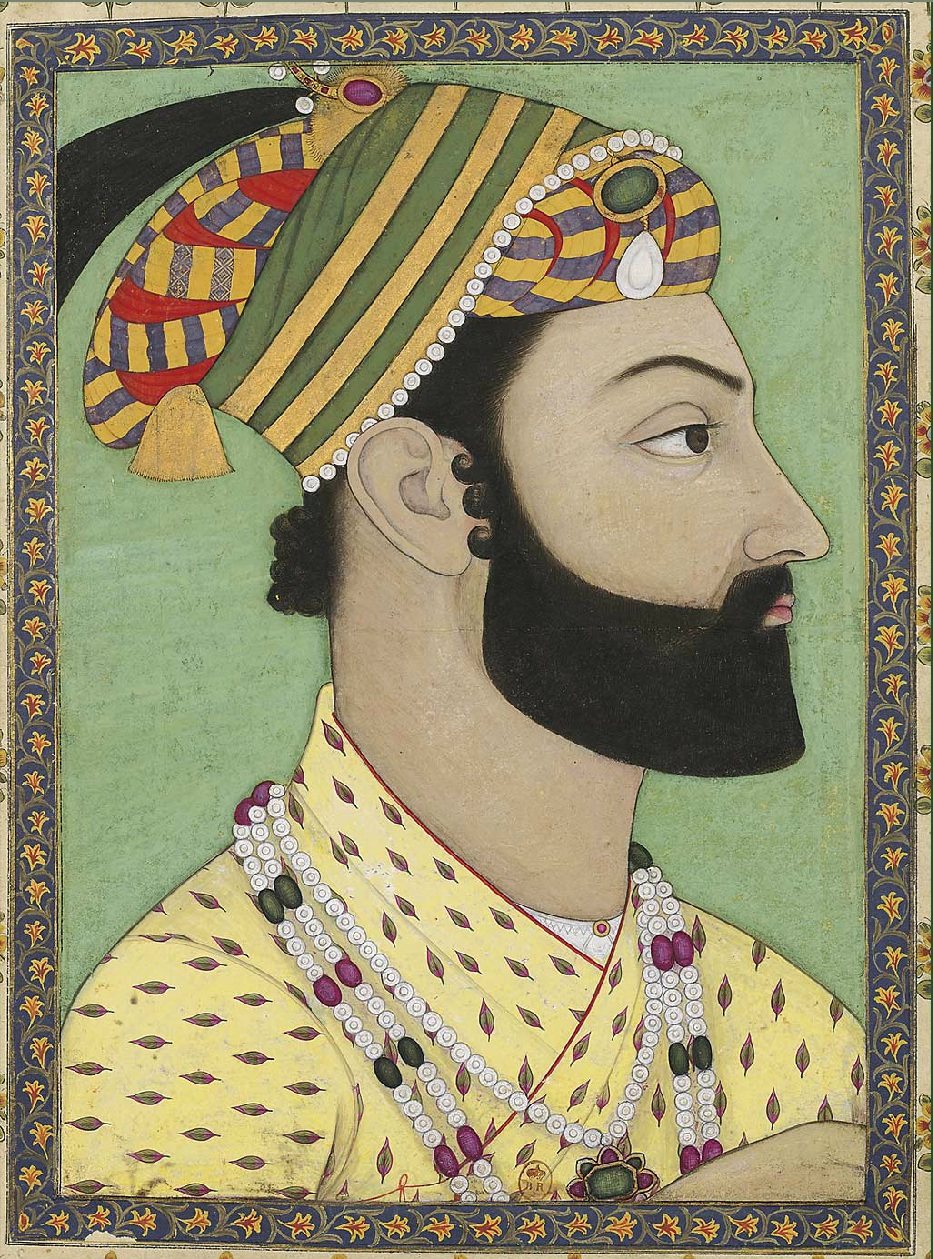
Why did he turn so quickly towards India? Partly because he claimed to be the heir of Nader's eastern conquests, and Nader had forced the Mughals to cede everything west of the Indus. But there was a harder reason. Ahmad Shah's kingdom was a confederation of proud tribal chiefs who followed him because he led them to victory and rewarded them for it. Afghanistan's own revenues could not pay for that loyalty. The wealth of Hindustan could. Historians such as Jos Gommans have described the early Durrani state as, in effect, an empire living on the resources of the plains below the passes: tribute, plunder, horses and trade. The invasions were not a hobby. They were how the state paid its bills.
And Shah Nawaz Khan, in Lahore, had just sent him an invitation.
First blows, 1748–1753
Ahmad Shah set out from Peshawar in December 1747 with perhaps twelve thousand horsemen. Shah Nawaz Khan, having invited him, lost his nerve, tried to resist, and fled. On 12 January 1748 the Afghans occupied Lahore.
The Mughal court finally stirred. An imperial army under the crown prince, the grand wazir Qamar-ud-Din and the wazir's son Mu'in-ul-Mulk met the Afghans at Manupur, near Sirhind. Qamar-ud-Din was killed by a cannonball, but on 11 March 1748 his son won the day, and Ahmad Shah, outnumbered and short of artillery, withdrew towards the Indus with Sikh bands harrying his stragglers all the way. It would be the last clear defeat he suffered in India.
Mu'in-ul-Mulk, remembered in the Punjab by his nickname Mir Mannu, became governor of Lahore. The Sikhs, meanwhile, did something that turned out to matter more than the battle.
On Baisakhi, 29 March 1748, the Sikh bands gathered at Amritsar. There were by then about sixty-five of them, each loyal to its own leader, all acknowledging the seniority of the ageing Nawab Kapur Singh. Kapur Singh urged them to unite, and through a gurmata, a resolution passed in the presence of the Guru Granth Sahib and binding on all, they merged into one force called the Dal Khalsa, the Army of the Khalsa. The sixty-five bands were grouped into eleven larger units, each with its own leader, name and banner. Supreme command went to Jassa Singh Ahluwalia, the young man who had grown up in Delhi in the household of Mata Sundari, the widow of Guru Gobind Singh, and whom Kapur Singh had raised as his own successor.
The units came to be called misls. The word is Arabic in origin, and scholars still argue about which of its meanings the Sikhs had in mind: "alike" or "equal", which would describe a brotherhood of peers, or a "file" of papers, which might refer to the records in which each band's share of conquests was noted. It was already in Sikh use for a troop of armed horsemen in Sainapati's Sri Gur Sobha, one of the earliest poems about the Khalsa. The Dal Khalsa was not a state. It had no written constitution, no treasury and no capital. It was a way for independent bands to act as one when they had to, and to go their own ways when they did not.
That same year the Sikhs built a small mud fort outside Amritsar and called it Ram Rauni. It was nothing much, but it was theirs, and it showed where they meant to stay.
Mir Mannu set out to crush them. He took Ram Rauni by siege, and his troops hunted Sikhs across the countryside with a thoroughness that surpassed even Zakariya Khan's. Yet he was also a practical governor fighting on several fronts at once, and the Punjab under him was never simple. When Ahmad Shah returned in December 1748, Mannu bought him off with the revenues of four rich districts, Sialkot, Pasrur, Gujrat and Aurangabad, worth fourteen lakh rupees a year. When Delhi then set a rival over Multan, Shah Nawaz Khan again, Mannu's Hindu minister Kaura Mal marched against him with an army that included newly recruited Sikh horsemen under Jassa Singh Ahluwalia. They won, Shah Nawaz was killed, and Kaura Mal, who was close to the Sikhs and known among them affectionately as Mitha Mal, "Sweet Mal", won them a respite and some grants of land. Enemies one season, paid allies the next: that was the eighteenth-century Punjab.
Ahmad Shah came a third time in the winter of 1751–52 and besieged Lahore for months. Kaura Mal was killed in the fighting in March 1752, and the Sikhs' friend at court died with him. Mannu surrendered. Ahmad Shah, who admired his courage, kept him on as governor, now in the Durrani king's name, and the Mughal emperor formally ceded Lahore and Multan to the Afghans. The Punjab had changed empires.
It had not changed its governor's policy. Mannu's last years were the ones the Sikhs remembered most bitterly. Sikh men were hunted down. Sikh women and children were imprisoned at Lahore, where, the tradition says, the women were made to grind corn in heavy quern-stones on starvation rations and forced to watch their children killed. A shrine in Lahore's old city, Gurdwara Shahid Ganj Singhanian, marks the place Sikh memory associates with them. Out of those years came a couplet the Sikhs sang in defiance:
ਮੰਨੂ ਸਾਡੀ ਦਾਤਰੀ, ਅਸੀਂ ਮੰਨੂ ਦੇ ਸੋਏ।
ਜਿਉਂ ਜਿਉਂ ਮੰਨੂ ਵੱਢਦਾ, ਅਸੀਂ ਦੂਣ ਸਵਾਏ ਹੋਏ।
منّو ساڈی داتری، اسیں منّو دے سوئے۔
جیوں جیوں منّو وڈھدا، اسیں دُون سوائے ہوئے۔
Mannū sāḍī dātrī, asīṅ Mannū de soe.
Jiuṅ jiuṅ Mannū vaḍḍhdā, asīṅ dūṇ savāe hoe.
"Mannu is our sickle, and we are the crop he mows.
The more that Mannu cuts us down, the more, twice over, we grow."
The crop in the original is soā, dill. The couplet has several versions, as folk verse does; Gupta prints one in which the Sikhs come back a hundred times over. Its meaning never changes.
In November 1753 Mir Mannu died suddenly. His death left the Punjab without a strong hand at the moment the countryside most needed one, and the Sikhs moved into the gap with an idea that would, in time, turn raiding bands into governments.
The idea was called rakhi, "protection". A village placed itself under the protection of a Sikh band, which undertook to defend it against other raiders, Afghan or Mughal troops, and tax-collectors of every kind. In return the village paid a share of its harvest, usually reckoned at about a fifth, twice a year; the Englishman James Browne, writing in the 1780s, gives the same fraction. In a province where no government could keep the roads safe, it was the only protection on offer, and the Sikh bands had every reason to deliver it, because a village that was plundered could not pay. Rakhi turned a raiding band into a landlord, and a landlord, with time, into a ruler.
Delhi sacked, Amritsar defiled, 1756–1758
For two years after Mannu's death, Lahore was governed, after a fashion, by his widow, Mughlani Begum, a woman of real ability in an impossible position, playing Delhi, Kabul and her own officers against one another. When Delhi's wazir seized the city and carried her off, she appealed to Ahmad Shah. He answered with his fourth and most destructive expedition.
In the winter of 1756–57 he marched straight through to the Mughal capital. Delhi was plundered again, less than twenty years after Nader. From there his armies turned south to the Hindu holy land of Braj, and in the spring of 1757 they fell upon Mathura and Vrindavan, sacking temples and slaughtering pilgrims and townspeople in some of the worst atrocities of the whole period. Only an outbreak of disease in his camp, probably cholera, turned him back. Before he left he married Hazrat Begum, daughter of the late emperor Muhammad Shah, married his son Timur to a daughter of the reigning emperor Alamgir II, and left Timur, a teenager, as viceroy at Lahore, with a hard-bitten general named Jahan Khan to do the actual governing.
As the Shah's overloaded army dragged itself home through the Punjab, the Sikhs were waiting on its flanks, as they had waited for Nader. They took baggage and freed captives. The Afghans answered by striking at the place they now understood to be the heart of the matter. In 1757 Afghan troops occupied Amritsar, damaged the Harmandir and its buildings, and filled the sacred pool with rubbish.
The Sikh response was led by an old man. Baba Deep Singh, a scholar and scribe of scripture who led the band later known as the Shaheedan, "the martyrs", rode from Talwandi Sabo in the south-west of the Punjab with a following that swelled as it went, vowing to free the Harmandir or die in the attempt. In November 1757 his force met an Afghan army on the outskirts of Amritsar, and he was killed.
What is historical is the effect. Every desecration of Amritsar in these years produced not fewer Sikhs in arms, but more.
The man who finally broke Afghan rule in the Punjab, for a time, was neither Sikh nor Afghan. Adina Beg Khan, an Arain from the country near Lahore, was governor of the Jalandhar Doab, the land between the Beas and the Sutlej that Punjabis still call the Doaba, and one of the great survivors of the century, having served the Mughals, the Afghans and, when it suited him, the Sikhs. Squeezed by Jahan Khan, he invited in the Marathas, the rising power of western and central India, whose armies were already in Delhi. In the spring of 1758 a Maratha army under Raghunath Rao, joined by Adina Beg's troops and by Sikh horsemen, swept through the Punjab. Timur Shah and Jahan Khan fled. Lahore fell in April, and by May Maratha outposts stood at Attock on the Indus and at Peshawar beyond it. For the first time in centuries, a power from the south of India held the gates of the north-west. Sikh tradition adds a pointed detail: Afghan prisoners taken in these battles were marched to Amritsar and made to clean out the pool they had filled.
It did not last. Adina Beg died later that year, and with him went the last working government of the Mughal province of Lahore. The Marathas' hold on the far north was thin, and Ahmad Shah was not a man to leave an insult unanswered.
Panipat and the vacuum, 1759–1761
He came back at the end of 1759 and drove the Maratha garrisons out of the Punjab. The war that followed was fought mostly outside the Punjab, but it decided the Punjab's future.
On 14 January 1761, at Panipat, north of Delhi, Ahmad Shah and his Indian allies, among them the Rohilla Afghans and the Nawab of Awadh, met the grand army of the Marathas under Sadashiv Rao Bhau. It was one of the largest battles of the eighteenth century anywhere in the world, and one of the bloodiest. Ahmad Shah handled his army brilliantly, with swivel guns mounted on camels, the zamburaks, and a reserve of fresh cavalry held back until the decisive hour. The Maratha army was destroyed. Tens of thousands were killed in the battle and in the massacre of fugitives and camp followers that followed.
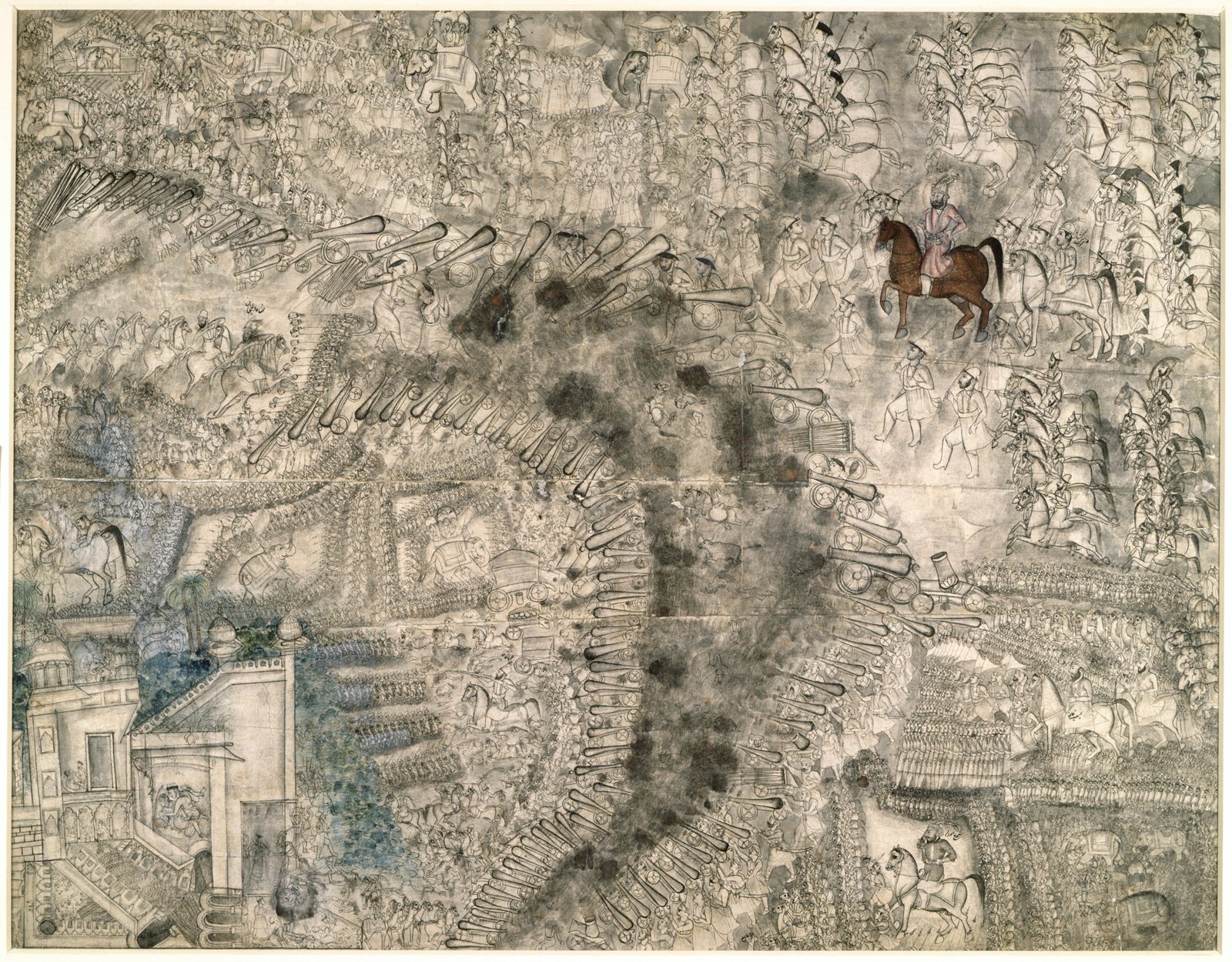
The Sikhs stayed out of it. But if Panipat was Ahmad Shah's greatest victory, it was also a strange one. It broke Maratha power in the north for a decade. It did nothing to revive the Mughals. And it left the Shah's own army exhausted, homesick and unwilling to stay in India. In the Punjab there was now no rival great power left standing, neither Mughal nor Maratha. There was the Afghan king, whose home was far beyond the Indus, and there were the Sikhs, whose home was here.
The pattern of the return march was familiar by now. As his army crossed the Sutlej and the Beas in the spring of 1761 with its plunder and its captives, the Sikh bands closed in behind. At the ferry of Goindwal on the Beas, Hari Ram Gupta records, they are said to have freed a number of the captives and sent them home. Sikh tradition puts the number at 2,200 women, and gives Jassa Singh Ahluwalia the title Bandi Chhor, "liberator of captives", for it. The number cannot be checked; that the Sikhs preyed on the Afghan captive trains is well established.
Once the Shah had gone, the Sikhs moved faster than ever before. They drove out Afghan officials across the Jalandhar Doab. When the Shah's general Nur-ud-Din Bamezai crossed the Jhelum in the summer of 1761 to punish them, destroying the towns of Bhera, Miani and Chak Sanu, Charat Singh, a rising chief of the Sukerchakia misl, checked him on the Chenab. When the Afghan governor of Lahore besieged Charat Singh in his base at Gujranwala, the Dal Khalsa came to his relief and the governor fled. At Diwali in October 1761 the Sikhs met at Amritsar and resolved to take Lahore, and in November they did. They proclaimed Jassa Singh Ahluwalia Sultan-ul-Qaum, "King of the Nation".
A coin is said to have been struck at Lahore at this moment, bearing a Persian couplet to the effect that Jassa the Kalal, the distiller, had seized the country of Ahmad by the grace of God.
If anyone meant it to bring the Shah back, it worked.
The Sikhs also resolved to punish the Shah's allies in the Punjab. One was Aqil Das of Jandiala, near Amritsar, head of the Niranjania sect, a religious community with its own rivalry with the Khalsa. Besieged by the Sikhs, Aqil Das sent a messenger to Ahmad Shah, who was already on his way. It is worth pausing on that detail. This was not a simple war of one religion against another. It was a struggle for the Punjab in which Muslim, Hindu and Sikh leaders could be found on every side, as interest and survival dictated.
The Great Holocaust, 1762
Ahmad Shah was at Lahore at the beginning of February 1762 when he learned that the main body of the Sikhs had fallen back across the Sutlej into the Malwa country, and that they were moving slowly, because they had their families with them. The fighters were escorting a vahir, a great moving camp of women, children and old people, towards the safety of the sandy country around Bathinda.
What he did next is the clearest proof of his quality as a general. He left Lahore on 3 February, crossed the Beas and the Sutlej, and drove his cavalry more than two hundred kilometres in less than two days; Hari Ram Gupta makes it 225 kilometres in thirty-six hours. Word went ahead to his allies, the Afghan governor of Sirhind, Zain Khan, and the Nawab of Malerkotla, to strike the Sikhs from the front. At dawn on 5 February 1762 the Durrani cavalry caught the vahir near the villages of Kup and Rahira, a few kilometres from Malerkotla.
The Sikhs could not run: families cannot outrun cavalry. So they did something extraordinary. The fighting men formed a moving ring around the non-combatants and kept the whole mass moving south-west, fighting as they went, turning to charge, then closing up again. For hours the ring held. Wherever the Afghans broke into it, the killing was terrible, and by the end of the day the fighting had covered many kilometres. Sikh leaders, Jassa Singh Ahluwalia and Charat Singh among them, were wounded again and again. By late afternoon the survivors reached the country near Barnala, where the pursuit finally broke off.
Nobody counted the dead. The Sikhs call it the Vadda Ghallughara, the Great Holocaust, and it remains the darkest single day in their history.
Ahmad Shah then turned on the one Sikh chief who had not been with the vahir. Ala Singh of Patiala, founder of the Phulkian family, had kept his distance from the Dal Khalsa, but that did not save him. The Shah plundered his base at Barnala and held him until he paid a ransom of several lakhs of rupees.
Then the Shah went to Amritsar. On 10 April 1762, the day before Baisakhi, when Sikhs would normally have gathered there by the thousand, he had the Harmandir blown up with gunpowder, its surrounding buildings razed, and the sacred pool defiled with the blood and bones of men and cows and filled with rubble. Ganda Singh, his biographer, records that while the building was being blown up a flying piece of brick and lime struck the Shah on the nose and wounded him. In his last years Ahmad Shah suffered from a spreading, ulcerated sore on his face, which contemporaries described in terms that suggest a cancer, and which eventually killed him. Sikh tradition has always linked the two. The injury is recorded, the illness is real, and the connection between them is a matter of belief.
What the Shah could not do was make the Sikhs stay down. By May they were raiding Sirhind again. In October, at Diwali, a little more than eight months after the Great Holocaust, they gathered in their tens of thousands at the ruined Harmandir, and when the Shah came out from Lahore to finish them, they fought him.
The Battle of Amritsar was fought on 17 October 1762 and lasted from morning until nightfall. In the afternoon the sky went dark. There was an eclipse of the sun that day, and Sikh memory has always described it as total, the Guru's favour made visible over the battlefield. Here science adds a footnote the chroniclers could not. The astronomer R. C. Kapoor, of the Indian Institute of Astrophysics, reconstructed the eclipse in 2010 and found that at Amritsar itself it was not quite total: about ninety-nine per cent of the sun was covered, and the path of totality missed the town by more than fifty kilometres. For the men fighting beneath it the difference would hardly have mattered. The afternoon turned to dusk, the fighting went on into the night, and under cover of the dark Ahmad Shah pulled his army back to Lahore.
It was not a Sikh victory in the ordinary sense. The Sikhs withdrew in their turn, and the Shah stayed in the Punjab until December. But the most powerful king in Asia had marched out to destroy an enemy he had supposedly broken in February, and had been fought to a standstill in front of the ruins of that enemy's holiest shrine. Sikh tradition says the survivors of the Great Holocaust took it as a refining fire: only the dross had burned away. In December 1762 Ahmad Shah went home to Kandahar, having won every battle of the year but one, and having settled nothing.
"Do not call them dogs", 1763–1765
The Sikhs spent the next two years proving that 1762 had changed nothing.
In 1763 a Bhangi force stormed Kasur, the walled town of the Pathan Afghans south of Lahore, where the Sufi poet Bulleh Shah had lived and died a few years earlier. Sikh tradition says the trigger was a Brahmin's plea for help after the town's chief had carried off his wife. The town was sacked, and its Afghan leaders were killed or ransomed. Sikh tradition tells it as a rescue; for the people of Kasur it was a sack. Both are true.
Then the Dal Khalsa turned on Sirhind, the city they hated above all others. It was there, in the winter of 1704–05 (the sources differ on the year), that the Mughal governor Wazir Khan had put to death the two youngest sons of Guru Gobind Singh, still small boys. On 14 January 1764 the Sikhs defeated and killed Zain Khan, the Afghan governor, and took the city. Much of it was sacked and pulled down, and for generations Sikhs passing by would carry away a brick from the ruins as a gesture of remembrance. Sirhind itself soon passed to Ala Singh of Patiala. The Sikhs spread east to the Yamuna. Nearly all the country between the Indus and the Yamuna was now either held or raided by the misls.
Ahmad Shah's seventh expedition, in the winter of 1764–65, was aimed at them alone. This time he brought an ally, Mir Nasir Khan, the Baloch ruler of Kalat, and in Nasir Khan's train rode a qazi, a judge and scholar, named Nur Muhammad, who wrote an account of the campaign in Persian verse called the Jangnama, the "Book of War". It is the only eyewitness narrative of this campaign that survives, and one of the most revealing documents of the century, precisely because its author hated the people he was describing.
Nur Muhammad calls the Sikhs dogs, infidels and worse, on almost every page. He was in the fighting himself, and came close to being cut down by a Sikh horseman. He describes, with grudging precision, how they fought: a Sikh troop that seemed to break and run was not beaten but baiting, drawing the angry enemy on until the pursuers were strung out and far from help, and then turning to surround them. He describes how, when the Shah reached Amritsar at the start of December 1764, the town seemed empty, and how a band of just thirty Sikhs came out of the fort beside the Harmandir and threw themselves at the Afghan army, knowing they would die. Sikh tradition names their leader as Gurbakhsh Singh.
And then, in a chapter towards the end, the qazi stops. Do not call the Sikhs dogs, he tells his readers: they are lions. Their title, Singh, he explains for readers who do not know Hindi, means lion, and in battle they deserve it. He goes further. They never kill a coward, he writes, and do not obstruct one who flees the field. They do not rob a woman of her gold and ornaments, whether she is a queen or a slave-girl. There is no adultery among them, and none of them is a thief.
In the same passage he mourns what a Sikh army had lately done to Multan, a plunder so terrible, he says, that his heart will not let him describe it. Read both the way a historian must, as the testimony of an enemy. Nur Muhammad was writing for a Muslim court in the language of holy war, and nothing obliged him to praise the Sikhs at all. That he did so anyway is some of the strongest evidence we have for how the Khalsa of the 1760s conducted itself in the field, and for the reputation it had earned even among those sent to destroy it. That he set the praise beside Multan is a reminder of what the same army could do to a city.
The seventh campaign ended like the others. The Shah marched as far as Sirhind without bringing the main body of the Sikhs to battle, turned for home, and was harassed all the way through the Jalandhar Doab. He left Lahore in the hands of a Hindu governor, Kabuli Mal, and was barely gone before the Sikhs moved in.
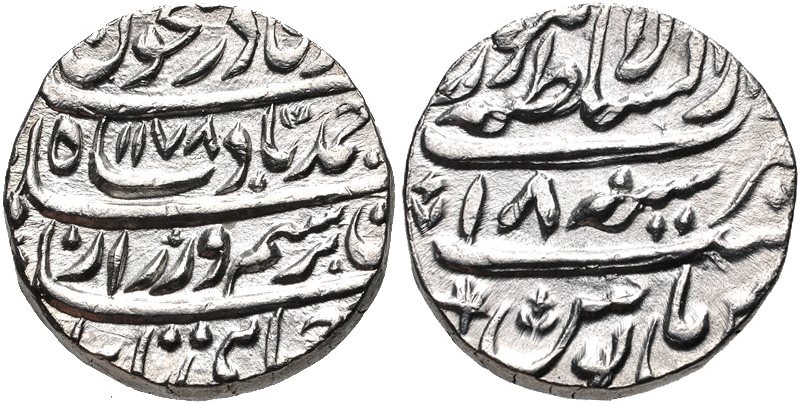
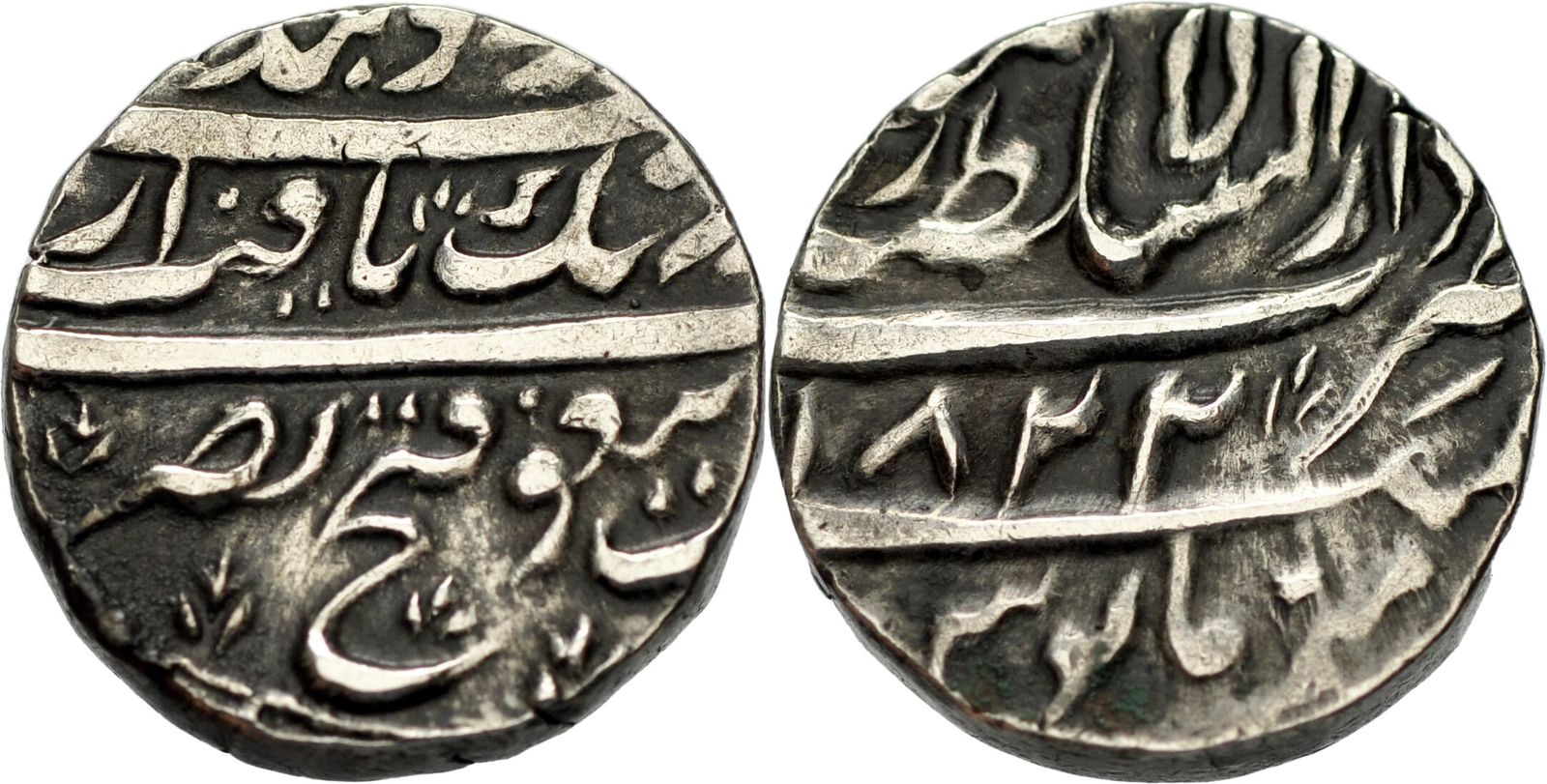
In April 1765 two Bhangi chiefs, Lehna Singh and Gujjar Singh, took Lahore, and Sobha Singh of the Kanhaiya misl joined them. The three divided the city between them and ruled it for the rest of their lives. At Amritsar that month the Sarbat Khalsa, the general assembly of the Sikhs, resolved to strike coins, and the new rupees of Lahore carried the name of no Sikh chief. Their Persian legend gives the credit to the Gurus. Guru Gobind Singh, it says, received from Guru Nanak the deg, the tegh and fateh, "the cauldron, the sword, victory": the cauldron standing for the community's kitchen that fed all comers, the sword for its power to protect them. The same words had appeared on the seal of Banda Singh Bahadur half a century before.
Put that coin beside the rupees Ahmad Shah had struck at the same Lahore mint and the whole contest is written in silver. The Durrani coins carried the king's own couplet: command had come from God, the Peerless, to Ahmad the king, to strike coin on silver and gold from the fish at the bottom of the sea to the moon. One coin claimed a sovereignty given by God to a man. The other claimed a sovereignty given by the Gurus to a people. After 1765 it was the second kind that circulated in Lahore.
The last campaigns and the poet-king, 1766–1772
Ahmad Shah came once more in earnest, in the winter of 1766–67, and once more the Sikhs gave ground rather than battle. Lehna Singh left Lahore without a fight. What happened next comes from the Persian chronicler Ali-ud-Din Mufti, as Hari Ram Gupta retells it. When the Shah reached the city on 22 December, a deputation of its leading citizens came to tell him that Lehna Singh had been a good ruler, who made no distinction between Hindus and Muslims and at Eid gave turbans to the city's qazis, muftis and the imams of its mosques. The Shah, seeing sense in it, wrote to the Sikh chief offering him the governorship, with a present of dried fruit from Kabul. Lehna Singh refused both. He sent the fruit back with a sample of the plain grain he lived on: fruit, he said, was the food of kings. The story has been polished in the retelling. But the refusal fits everything else we know. The Sikh chiefs no longer wanted to be the Shah's governors. They wanted to be nobody's.
Not every Sikh chief took that view, and it would be dishonest to pretend otherwise. The Phulkian family of Patiala, south of the Sutlej, had long preferred negotiation. Ala Singh had accepted honours from Ahmad Shah and paid him tribute, and in March 1767, after Ala Singh's death, the Shah granted the government of Sirhind to his grandson Amar Singh, who struck coins in the Shah's name with the Shah's couplet on them. That couplet went on appearing on the money of Patiala, Jind and Malerkotla, Ganda Singh wrote in 1959, "till recent times". To the Dal Khalsa this looked like collaboration. To the Phulkians it looked like survival. Historians still argue about which it was, and the honest answer is probably both.
Ganda Singh counts eight invasions of India. Many histories count nine, adding a last march in 1769 that turned back before it reached the Sikh heartland, reportedly when the Shah's own troops, weary of campaigns that no longer paid, refused to go on. His illness was worsening. In the summer of 1772 he withdrew to a palace at Toba Maruf, in the hills some ninety miles east of Kandahar, and he died there in October, on the night of the 23rd by the Afghan chroniclers' reckoning, though other sources give dates from 1771 to 1773. He was about fifty. He was buried at Kandahar, beside the shrine that houses the cloak of the Prophet Muhammad, which he himself had brought to the city, and his mausoleum remains one of the most revered places in Afghanistan.
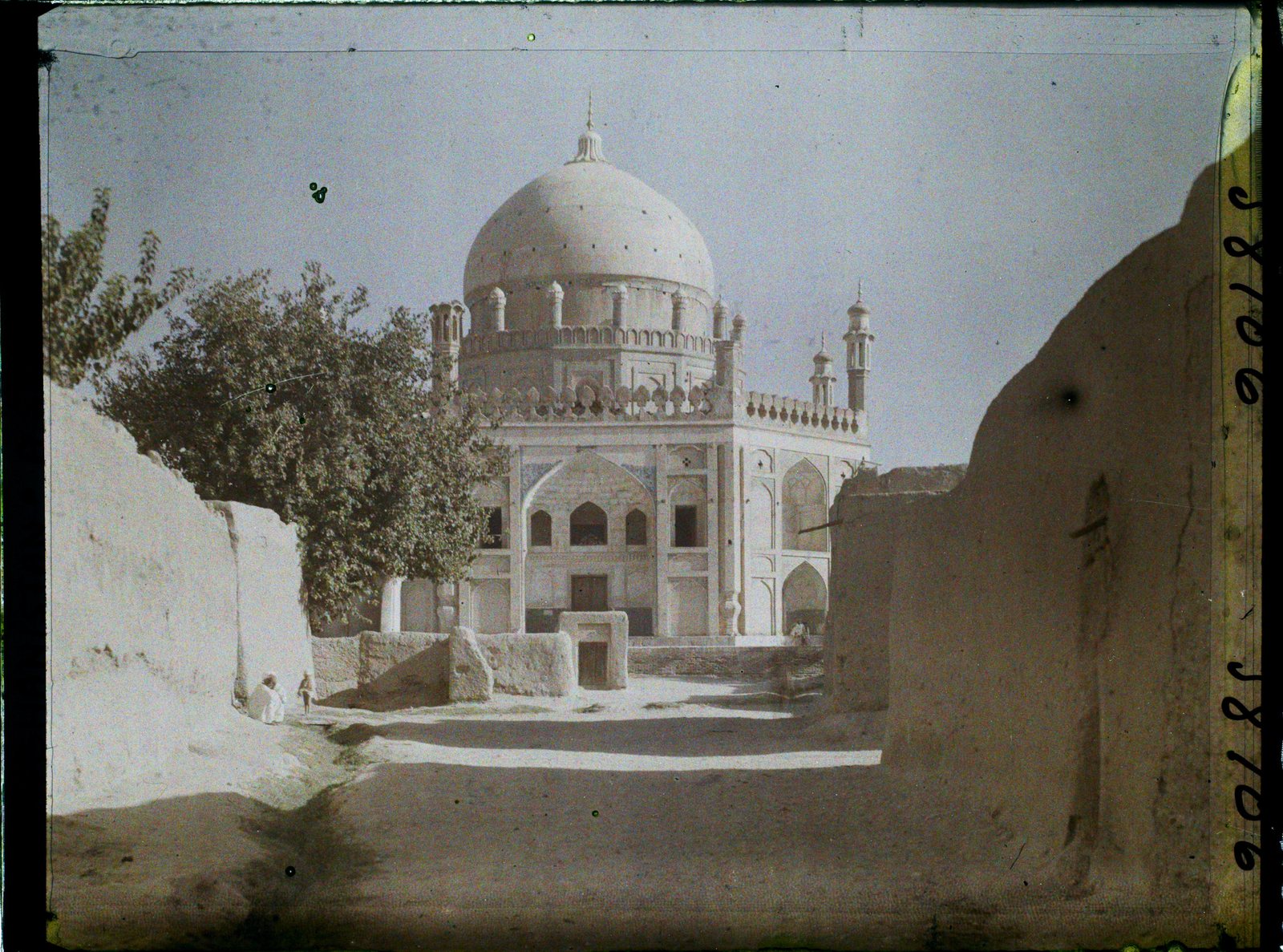
It is important to see him whole. To Punjabis of every faith he was a destroyer, the man of the proverb, whose armies emptied granaries, burned towns and carried off men and women into slavery. To Afghans he is the father of the nation, the chief who united quarrelsome tribes into a state that has outlived every attempt to break it. He was also a poet, who wrote in Pashto, and one couplet attributed to him is still quoted with deep feeling:
Da Dili takht herawama che rayad kram, zma da shkule Pakhtunkhwa da ghro saruna
"I forget the throne of Delhi when I remember the mountain peaks of my beautiful Pashtun land."
There is a sadness in that line which the Punjab never saw. The king who took Delhi more than once did not want it. What he wanted from the plains was their wealth, not their government, and that, in the end, is the best explanation of why he lost them. Some historians working from the Persian sources of the Durrani court have gone further and asked whether "invasions" is even the right word for his campaigns, since he claimed the Punjab as a lawful inheritance from Nader Shah, appointed governors, struck coins and sought the loyalty of local notables. The word is still the natural one in the Punjab, and with reason. But the question is a good reminder that the same events look very different from Kandahar.
What defeated him was not a single battle. It was arithmetic. Every winter he could bring an army down the passes that no one in the Punjab could face in open battle. Every spring he had to take it home again, because it had to be paid and fed, and because the chiefs who made up his army had homes and quarrels of their own. The Sikhs could not match his army, so they declined to fight it on his terms. They let the Shah have the battlefield in the winter and took back the country in the summer. And because they lived there, and their families lived there, and their Guru's pool was there, they were always going to be there when he left.
How the misls worked
By the 1770s the misls held nearly all of the Punjab between the Indus and the Yamuna, and no traveller could speak any longer of a Mughal or an Afghan Punjab. It was a Sikh Punjab, but it was not a single Sikh state. It was a patchwork of territories held by a dozen or so confederacies, each led by a chief called a misldar or sardar. By convention there were twelve misls, though the number shifted and the sources list them differently. Territories moved constantly, so the boundaries below are approximate:
| Misl | Founder or leading chiefs | Heartland, and where it is today |
|---|---|---|
| Ahluwalia | Jassa Singh Ahluwalia | Jalandhar Doab; later Kapurthala. Today Kapurthala and Jalandhar, Punjab, India. |
| Bhangi | Hari Singh; later Lehna Singh, Gujjar Singh, Jhanda Singh | Lahore, parts of Amritsar, Gujrat, Sialkot, at times Multan. Today mostly Punjab, Pakistan; Amritsar, India. |
| Kanhaiya | Jai Singh Kanhaiya | Batala and the country towards the hills. Today Gurdaspur and Hoshiarpur, Punjab, India. |
| Ramgarhia | Jassa Singh Ramgarhia | Sri Hargobindpur and the upper Bari Doab. Today Gurdaspur, Punjab, India. |
| Sukerchakia | Charat Singh; later Maha Singh, then Ranjit Singh | Gujranwala and the Rechna Doab. Today Gujranwala, Punjab, Pakistan. |
| Nakai | Hira Singh Nakai | The Nakka country south-west of Lahore. Today Kasur and Okara, Punjab, Pakistan. |
| Dallewalia | Gulab Singh; later Tara Singh Ghaiba | Rahon and the north bank of the Sutlej. Today Nawanshahr and Jalandhar, Punjab, India. |
| Faizullapuria (Singhpuria) | Nawab Kapur Singh | Lands in the Jalandhar Doab and along the Sutlej. Today Jalandhar and Rupnagar, Punjab, India. |
| Karorsinghia | Karora Singh; later Baghel Singh | East of the Sutlej towards the Yamuna. Today eastern Punjab and northern Haryana, India. |
| Nishanwalia | Dasaundha Singh | Ambala and Shahabad. Today Ambala and Kurukshetra, Haryana, India. |
| Shaheedan | Baba Deep Singh; later Karam Singh | Talwandi Sabo; Shahzadpur. Today Bathinda, Punjab, and Ambala, Haryana, India. |
| Phulkian | Ala Singh | Patiala, Nabha and Jind; not part of the Dal Khalsa. Today Patiala and Sangrur, Punjab, and Jind, Haryana, India. |
Twice a year, at Baisakhi in spring and Diwali in autumn, the chiefs and their followers met at Amritsar as the Sarbat Khalsa, the whole Khalsa assembled, and took decisions on matters of common concern by gurmata. They would choose a leader for a joint campaign, agree on a common enemy, or settle a dispute. In between, each misl went its own way. Inside each misl, horsemen followed a chief of their own choosing and could, in principle, leave him for another. When territory was won it was shared out among the chief and his followers in proportion to what each had contributed. The rakhi villages of the 1750s had become estates; the estates became little principalities.
Europeans watching from Delhi struggled to name the thing. Antoine Polier, a Swiss engineer in Mughal service, wrote in 1776 of "that formidable aristocratic republick", and in the next breath called it "the snake with many heads". Both halves are fair.
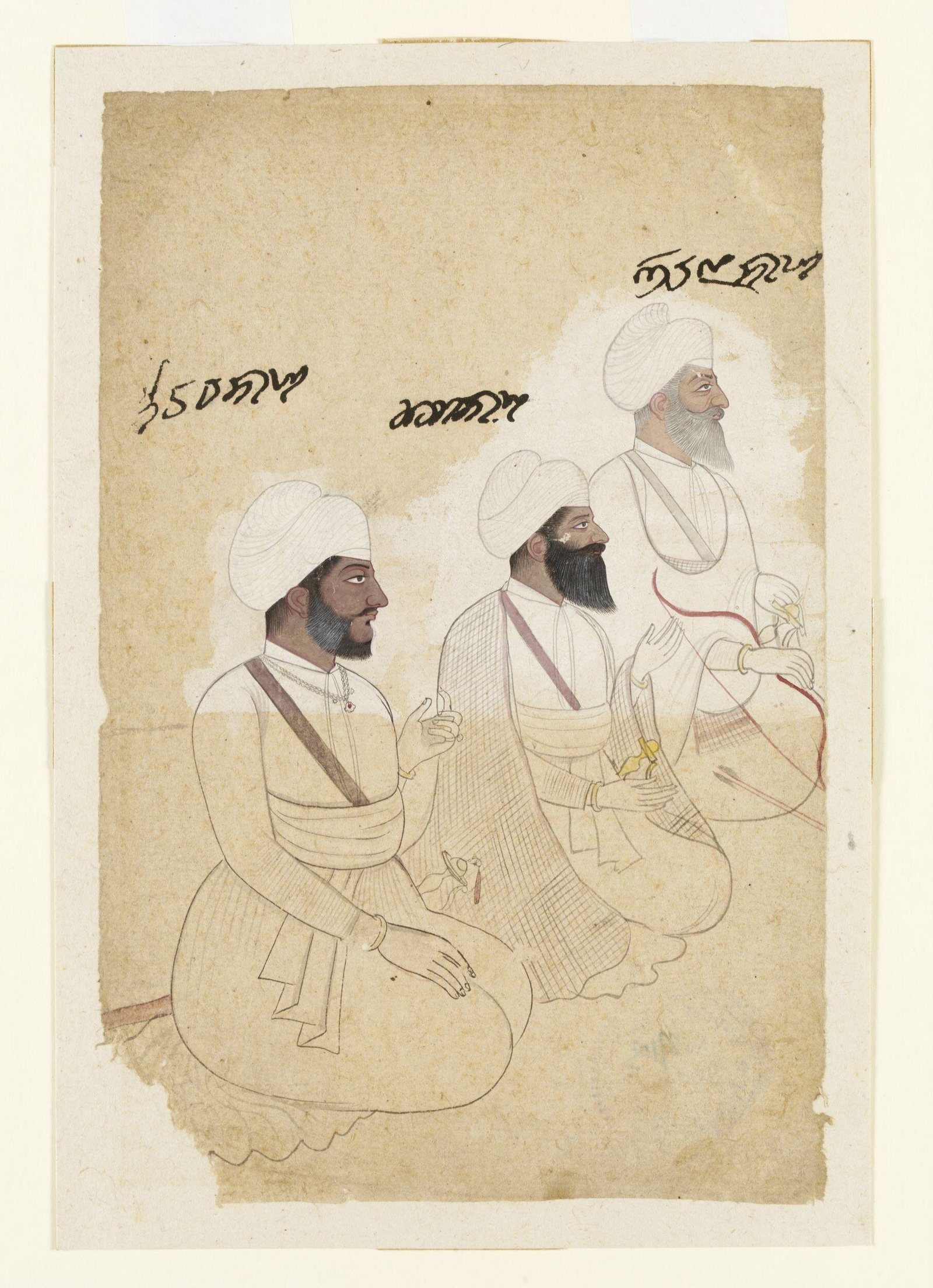
The system had one quality that struck contemporaries more than any other: it let men rise. The Dal Khalsa's commander, Jassa Singh Ahluwalia, came from a family whose hereditary occupation was distilling, which is why his enemies sneered at him as a kalal. Jassa Singh Ramgarhia, one of the most formidable chiefs of the age, came from a family of carpenters. Garja Singh, who died beside Bota Singh on the highway, was a Ranghreta, from a community near the very bottom of the caste order. In a society where birth usually decided everything, the Khalsa made it possible, though never easy, for a man of low status to become a lord. The historian Purnima Dhavan called her study of the eighteenth-century Khalsa When Sparrows Became Hawks, taking up an image the Sikhs themselves used: a saying attributed to Guru Gobind Singh promised that he would make sparrows fight hawks.
Not everyone in the Punjab saw it as a promise kept. Bulleh Shah, the Sufi poet of Kasur, who died in 1757, wrote a kafi whose refrain is ulṭe hor zamāne āe, "other times have come, upside down":
ਕਾਂ ਲਗੜ ਨੂੰ ਮਾਰਨ ਲੱਗੇ, ਚਿੜੀਆਂ ਜੁੱਰੇ ਖਾਏ
کاں لگڑ نوں مارن لگے، چڑیاں جرے کھائے
kāṅ lagaṛ nūṅ māran lagge, chiṛīāṅ jurre khāe
"Crows have begun to strike down the hawk, and sparrows to devour falcons."
Readers have long heard in it the social upheaval of Bulleh Shah's century, and perhaps it is there. But upside-down verse is also an old device of mystical poetry, in which the reversal of the world stands for the reversal of the soul, and the kafi's own last line points that way: "Bulleh, the order has come from the Presence; who can turn it aside?" It would be unwise to read it as a news report.
Waris Shah was more direct. He finished his Heer at Malka Hans, in what is now Pakpattan district, and dated it twice over in a stanza near the close, by the Hijri year 1180 and the Bikrami year 1823, which overlap in 1766-67. In the same stanza he describes the times:
ਜਦੋਂ ਦੇਸ ਤੇ ਜੱਟ ਸਰਦਾਰ ਹੋਏ, ਘਰੋ ਘਰੀ ਜਾਂ ਨਵੀਂ ਸਰਕਾਰ ਹੋਈ।
ਅਸ਼ਰਾਫ਼ ਖ਼ਰਾਬ ਕਮੀਨ ਤਾਜ਼ੇ, ਜ਼ਿਮੀਂਦਾਰ ਨੂੰ ਵੱਡੀ ਬਹਾਰ ਹੋਈ।
جدوں دیس تے جٹّ سردار ہوئے، گھرو گھری جاں نویں سرکار ہوئی۔
اشراف خراب کمین تازے، زمیندار نوں وڈی بہار ہوئی۔
Jadoṅ des te Jaṭṭ sardār hoe, gharo gharī jāṅ navīṅ sarkār hoī.
Ashrāf kharāb kamīn tāze, zimīṅdār nūṅ vaḍḍī bahār hoī.
"When the Jatts became the chiefs of the land, every household became a
new government.
The well-born were ruined, the lowly thrived, and for the landholder it was high
spring."
The next line makes thieves into headmen. Waris Shah was a Sayyid and a scholar, and in the rise of the misls he saw not liberation but the proper order of the world overturned, the low set over the well-born. It is the very change Dhavan's sparrows describe, seen from the other side. His view deserves its place in the story too.
He had a point. Once the Afghan threat receded, the misls turned on one another. The Bhangis, the Kanhaiyas, the Ramgarhias and the Sukerchakias fought over towns, forts and river crossings, made alliances by marriage and broke them by war. The Ramgarhia chief was driven into exile for years by his rivals. The commonwealth was also a battlefield.
Yet at their height the misls could still act together. In March 1783 a Sikh army under Baghel Singh of the Karorsinghia misl, with Jassa Singh Ahluwalia and Jassa Singh Ramgarhia, rode into Delhi, entered the Red Fort and forced a settlement on the Mughal emperor Shah Alam II. By Hari Ram Gupta's account, the Sikhs seated Jassa Singh Ahluwalia on the throne in the Hall of Public Audience and hailed him as Badshah Singh, and he declined the honour at once. Baghel Singh stayed on in the city with four thousand horsemen and a share of its customs revenue, and in the months that followed he located and built shrines at places in Delhi associated with the Gurus, among them the sites of today's Gurdwaras Sis Ganj, Rakab Ganj and Bangla Sahib. Jassa Singh Ramgarhia, the story goes, carried home a great stone slab from the Red Fort, said to have served for Mughal coronations; a slab believed to be that stone is still shown in the Ramgarhia Bunga beside the Harmandir.
That same year an English traveller named George Forster passed along the eastern edge of Sikh country on his way overland from Bengal. He was impressed and alarmed in about equal measure by the Sikh horsemen he met, and in the account of his journey, published in London in 1798, he made a prediction. Should the Sikhs ever be driven to combine, he wrote, "we may see some ambitious chief led on by his genius and success, and, absorbing the power of his associates, display, from the ruins of their commonwealth, the standard of monarchy."
The year his book came out, that chief turned eighteen.
Epilogue: the diamond comes home
Ahmad Shah's successors never found his touch. His son Timur Shah moved the capital to Kabul and held the empire together with difficulty. His grandson Zaman Shah came down into the Punjab three times in the 1790s and each time had to go home again. On the last retreat, in the winter of 1798–99, a dozen of his heavy guns went into the flooded Jhelum. A famous story says that a young Sikh chief fished them out, sent them on after the Shah, and was rewarded with a royal grant of Lahore; the grant rests on a single British officer's report. The chief never needed it. On 7 July 1799 the city's leading Muslim families, who had had enough of the heirs of the chiefs who took Lahore in 1765, opened a gate for him, and he rode in.
He was Ranjit Singh, head of the Sukerchakia misl, grandson of the Charat Singh who had held Gujranwala against the Afghans in 1761. In 1801 he was proclaimed Maharaja. Over the next twenty years he absorbed or subdued the other misls north of the Sutlej, exactly as Forster had foreseen, and built the Sikh Empire; the Phulkian states south of the river passed under British protection instead. His story is told in full in our article on Maharaja Ranjit Singh.
The Durrani dynasty, meanwhile, devoured itself. Zaman Shah was overthrown and blinded by his own brother. Another brother, Shah Shuja, lost the throne in turn and, after years as a fugitive, found himself at Lahore in 1813, in Ranjit Singh's hands, with one thing left to bargain with. It was the jewel his grandfather Ahmad Shah had worn on his arm, the stone Nader Shah had carried out of Delhi in 1739 along the road where the Sikh riders came out of the scrub. On 1 June 1813, after weeks in which his household was guarded and for two days went without food, he gave it up.
Seventy-four years had passed since Nader's baggage train crawled north under the hills. The hunted faqirs whose homes were their saddles now ruled from the fort at Lahore, and the most famous stone in Asia sat on a Sikh maharaja's arm, as it had once sat on Ahmad Shah's. Within a generation more, Sikh armies had taken Peshawar itself, the old Durrani winter capital, and the road that had carried so many invasions down into the Punjab was, for a few decades, carrying Punjabi armies up towards the Khyber. That story belongs to Hari Singh Nalwa.
Nader Shah's warning, if he ever gave it, had come true in every particular.
Why it still matters
The eighteenth century is not distant history in the Punjab. It is in the names of places and the calendar of commemorations. Sikhs still mark the Chhota and Vadda Ghallugharas every year, and the Harmandir that pilgrims visit today stands on foundations laid in the 1760s, in the very years of this story; its gold came later, from Ranjit Singh. In Kandahar, Ahmad Shah's tomb is still a place of pilgrimage for Afghans who see in him the founder of their country. In both Punjabs, people who have never read a history book still say that what they eat and drink is theirs and the rest belongs to Ahmad Shah.
The period left the Punjab a political idea that outlived the misls: that sovereignty could belong to a community, the Khalsa, and not only to a king. It left the Punjab, for the first time in many centuries, governed by people from the Punjab. Everything on our timeline from 1799 to 1849 begins here: the Sikh Empire, its army, and the administration the British inherited at annexation. And it left a lesson about power that the proverb-makers had already grasped. Armies can take a country. They cannot live in it. The people who live in it, if they will not give up, generally end up with it.
Quick answers
Was Ahmad Shah Abdali the same person as Ahmad Shah Durrani?
Yes. He was born Ahmad Khan, of the Abdali tribal confederation. When he became king in 1747 he took the title Durr-i-Durran, "Pearl of Pearls", and his tribe became known as the Durranis. Punjabi and Indian sources usually call him Ahmad Shah Abdali; Afghan sources usually call him Ahmad Shah Durrani, or Ahmad Shah Baba.
How many times did Ahmad Shah Abdali invade India?
Ganda Singh, his fullest biographer, counts eight invasions between 1747 and 1767. Many histories count nine, adding a march in 1769 that turned back early. Not all of them reached Delhi, but every one of them passed through the Punjab.
What were the Sikh misls?
Self-governing confederacies of Sikh horsemen, each led by a chief, which grew out of the armed bands of the 1730s and 1740s. In 1748 they combined as the Dal Khalsa. By the 1770s the misls, conventionally counted as twelve including the Phulkians of Patiala, held most of the Punjab. Ranjit Singh absorbed most of them into his kingdom after 1799.
What was the Vadda Ghallughara?
The "Great Holocaust" of 5 February 1762, when Ahmad Shah's army caught a Sikh column escorting its families near Kup and Rahira, close to Malerkotla. Estimates of the dead run from five thousand to fifty thousand, and the true number cannot be known. It is distinguished from the Chhota Ghallughara, the "Lesser Holocaust", of 1746.
Did the Sikhs really attack Nader Shah's army?
Sikh chronicles and later historians agree that Sikh bands raided the rear of Nader Shah's army as it returned from Delhi in 1739, seizing baggage and freeing captives. The scale is unknown. The famous conversation in which Nader warns the governor of Lahore that the Sikhs will one day rule is preserved in later tradition, not in any eyewitness account. The raiders never came near the Koh-i-Noor, which passed from Nader to Ahmad Shah in 1747.
Where does the "twelve o'clock" story come from?
A popular modern explanation says the old jokes about Sikhs and twelve o'clock began with midnight raids on Nader Shah's or Ahmad Shah's camp to free captives. None of the eighteenth-century accounts that historians rely on says anything of the kind. It is best treated as recent folklore.
When did the Sikhs capture Lahore?
Sikh forces held Lahore briefly in November 1761. In April 1765 the Bhangi and Kanhaiya chiefs took it and, apart from Afghan reoccupations under Ahmad Shah in 1766–67 and his grandson Zaman Shah in the 1790s, it stayed in Sikh hands. Ranjit Singh took it in 1799 and made it the capital of the Sikh Empire.
Why is Ahmad Shah called "Baba" in Afghanistan?
Because he is regarded as the founder of the Afghan state. He united the Pashtun tribes under a single monarchy in 1747, and the kingdom he founded is the ancestor of modern Afghanistan. His tomb in Kandahar remains a national monument.
Timeline
1716
Banda Singh Bahadur executed
Decades of state persecution of the Sikhs begin.
1733
A title for Kapur Singh
A short truce; the Buddha Dal and Taruna Dal are organised.
1739
Nader Shah sacks Delhi
Sikh bands raid his baggage on the road home. Bota Singh sets up his toll.
1746
The Chhota Ghallughara
Sikhs hunted down in the marshes of Kahnuwan.
1747
Ahmad Shah made king
Chosen near Kandahar after Nader Shah is murdered.
1748
Lahore, Manupur, the Dal Khalsa
The Afghans take Lahore and are beaten at Manupur; on 29 March the Sikh bands unite at Amritsar.
1752
Lahore changes empires
The Mughals cede Lahore and Multan to the Durrani king.
1756–1757
Delhi, Mathura, Amritsar
Delhi and Braj sacked; the Harmandir desecrated; Baba Deep Singh killed.
1758
The Marathas reach Peshawar
With Adina Beg and Sikh support. Adina Beg dies that year.
14 January 1761
Panipat
The Maratha army destroyed. In November the Sikhs take Lahore.
1762
The Vadda Ghallughara
5 February, near Kup. The Harmandir blown up on 10 April. The Battle of Amritsar under a near-total eclipse, 17 October.
1764
Sirhind falls
Qazi Nur Muhammad rides with the Shah's seventh expedition.
April 1765
Lahore, and a coin for the Gurus
Bhangi and Kanhaiya chiefs take the city and keep it.
October 1772
Ahmad Shah dies
At Toba Maruf; buried at Kandahar.
March 1783
The Sikhs in the Red Fort
Baghel Singh stays on to build the Delhi gurdwaras.
7 July 1799
Ranjit Singh takes Lahore
In June 1813 the Koh-i-Noor passes to him there.
Modern place-names
Lahore, Kasur, Gujranwala, Sialkot, Gujrat, Pasrur, Bhera, Miani, Multan, Malka Hans and Attock are in Punjab, Pakistan; Peshawar is in Khyber Pakhtunkhwa. Amritsar, Tarn Taran, Kahnuwan, Goindwal, Jandiala, Kapurthala, Sirhind, Barnala, Talwandi Sabo, Kup and Malerkotla are in Punjab, India; Karnal and Panipat are in Haryana. Akhnur, on the Chenab, is in Jammu. Kandahar is in Afghanistan, and Quchan in Iran.